
Your Tesla streams music flawlessly, yet the moment you speak, your caller hears absolute silence. Not a glitch — a predictable failure buried inside the hands-free profile, MCU firmware, and overhead console microphone assembly. Most drivers assume a simple restart will fix it. It won’t. Understanding exactly which layer is breaking down is the only thing standing between you and a permanent fix.
Why Does Your Tesla Bluetooth Mic Stop Working During Calls?
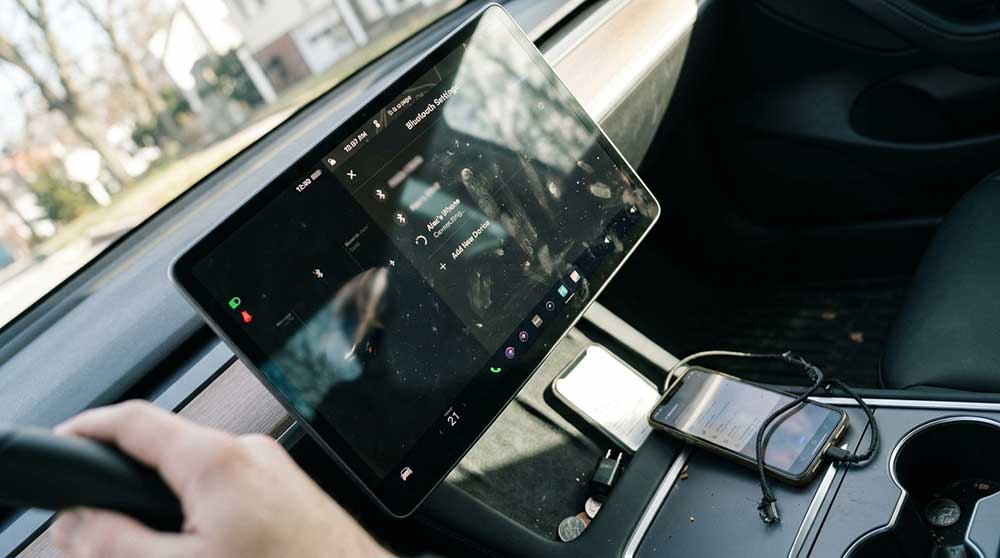
When your Tesla’s Bluetooth mic cuts out mid-call while music still plays flawlessly through the same connection, the problem isn’t a total Bluetooth failure — it’s a breakdown in a specific communication channel. Tesla’s Bluetooth system runs media playback and hands-free calling through separate profiles. Music uses one path; your microphone uses another. When the calling profile breaks, audio output can survive while your voice disappears entirely on the far end.
Several culprits trigger this. A software regression after a Tesla update can corrupt the hands-free profile without touching the media layer. A profile mismatch between your phone’s Bluetooth firmware and the vehicle’s current software state produces identical symptoms. Your phone connects, streams perfectly, but the microphone handshake quietly fails. The MCU generation installed in your vehicle can also play a role, as older hardware like MCU1 and MCU2 carry greater variability in how Bluetooth profiles are maintained across software versions.
The frustrating part? Your phone shows an active call. Tesla’s screen confirms the connection. Yet nobody hears you — because the breakdown is surgical, not systemic. A reboot of the infotainment system by holding both steering-wheel scroll buttons simultaneously until the Tesla logo appears can restore the hands-free profile without erasing your settings.
Bluetooth mic issues in a Tesla often show up at the worst time—mid-call, during navigation prompts, or when the system quietly switches audio routing without warning, leaving you speaking while the other side hears nothing. Many owners reduce that unpredictability by using a USB Bluetooth Audio Adapter, creating a more stable connection path that helps keep call audio and microphone input consistent instead of drifting between profiles or dropping out entirely.
Quick Fixes for Your Tesla Bluetooth Mic
If toggling doesn’t hold, perform a soft reset by pressing and holding both steering-wheel scroll wheels for roughly ten seconds until the touchscreen goes dark and reboots. This clears software-level Bluetooth glitches and is consistently the fastest reported fix for call audio failures. You can confirm your current software build by navigating to the car icon → Controls → Software screen, where the build number is displayed.
A phone restart works well as an isolation step — it rules out local radio errors on your device’s end.
Still, if the mic recovers briefly then drops again, the fault lives in Tesla’s software stack, not your phone. The 2028.2 update merged phone volume and car media volume controls, which directly triggered microphone transmission failures for some drivers.
Which Tesla Settings Control Bluetooth Call Quality
Digging into Tesla’s settings menu reveals more call-quality levers than most owners realize exist. Start with audio routing — proceed to your phone’s Bluetooth settings and confirm the vehicle’s sound system is selected as the active output source. Wrong routing silently kills call clarity before you even suspect the microphone.
Next, check your software version under Controls > Software. Tesla’s over-the-air updates regularly patch Bluetooth stack issues, and one notable release introduced automatic Bluetooth continuity mode for seamless reconnection. Outdated firmware creates ghost problems that look like hardware failures. Tesla’s over-the-air updates also improve vehicle functionality well beyond bug fixes, meaning a single software push can alter how the entire audio stack behaves across all trim levels sharing identical hardware.
Then open the Tesla app on your phone and probe equalizer tuning. Adjusting frequency bands reduces distortion during calls, particularly in noise-prone environments. Some owners also report that disabling Immersive Sound (found in audio settings) eliminates echo artifacts, though Tesla’s manual doesn’t officially confirm this. Urban-mode Bluetooth enhancing, introduced in select updates, helps in 5G-dense areas where interference compounds signal degradation. Tesla’s aggressive power management settings can automatically disconnect idle Bluetooth devices, which mimics dropout symptoms and degrades call quality without any obvious warning.
When to Replace Your Tesla Bluetooth Mic Assembly
Persistent mic failure — not the occasional glitch that a reboot clears — is the real signal that you’re dealing with a hardware problem rather than a software mood swing.
Persistent mic failure that survives a reboot isn’t a glitch — it’s hardware telling you something definitive.
If your mic works after a reboot but dies again mid-call repeatedly, that’s an unstable condition worth tracking.
Once you’ve crossed the diagnostic thresholds — failed soft reset, failed re-pairing, failed MCU reset — and calls still default to speaker-only with zero mic restoration, assembly replacement becomes the logical next step.
On the Model 3 specifically, Tesla doesn’t swap the mic alone.
The Bluetooth microphone is integrated into the front overhead console, so you’re looking at a full assembly replacement rather than a clean component pull.
That means removing the overhead console, disconnecting leads, and repositioning the mic bracket precisely into the console cutouts before securing it.
It’s moderate-to-high labor — not a weekend DIY unless you’re genuinely comfortable with interior disassembly.
When deciding between OEM and aftermarket for the replacement assembly, keep in mind that used OEM electronics like MCU and ECU units often integrate seamlessly where aftermarket alternatives frequently cannot match factory wiring compatibility.
When Tesla Bluetooth mic issues hit, it usually happens at the worst moment—mid-call or while relying on voice input—leaving you talking while the system quietly fails to transmit anything clearly. Many owners keep a USB-C to 3.5mm Headset with Inline Microphone as a simple backup, giving them a direct, wired audio path that avoids Bluetooth glitches entirely and keeps voice calls and input working when the car’s wireless connection doesn’t cooperate.
Frequently Asked Questions
Can a Tesla Software Update Permanently Fix Bluetooth Microphone Issues?
It’s not a silver bullet—software updates can permanently fix firmware-related Bluetooth mic issues, but if hardware diagnostics reveal a physical fault, you’ll need a microphone assembly replacement instead.
Does Tesla Warranty Cover Bluetooth Microphone Assembly Replacement Costs?
Tesla’s Basic Vehicle Limited Warranty can cover your Bluetooth microphone assembly replacement if Tesla confirms a defect. Don’t overlook warranty transfers or deductible questions—these details directly affect what you’ll actually pay out of pocket.
Which Tesla Models Are Most Commonly Affected by Bluetooth Mic Problems?
Surprise, surprise — your Model 3 tops the list, with Model S close behind. You’ll also find Model Y joining the party, while Model X stays relatively quiet on Bluetooth mic complaints.
Can Third-Party Bluetooth Microphones Be Used as a Tesla Replacement?
You can’t use third-party Bluetooth microphones as a Tesla replacement due to third-party compatibility limitations. Tesla’s integrated audio system controls call routing, and audio latency issues would compound since it doesn’t support external mic substitutes.
Does Extreme Temperature Affect Tesla Bluetooth Microphone Performance and Reliability?
Extreme temperatures *can* stress your Tesla’s Bluetooth mic. Heat strains connectors, cold stiffens assemblies, condensation effects corrupt signal quality, and microphone sensitivity drops—but software glitches and pairing failures remain the more confirmed culprits you’ll likely encounter first.