That weird whine your Tesla makes? It might be the sound of everything working perfectly. Electric vehicles strip away the engine noise that kept dozens of subtle sounds hidden in gas cars—leaving you hyper-aware of every click, hum, and buzz. Some of these sounds are completely harmless. Others are early warnings you genuinely cannot afford to ignore. Before you book a service appointment or talk yourself out of one, learn exactly which noises deserve your attention.
Why Teslas Sound So Different From Gas Cars
When you sit inside a running Tesla for the first time, the silence can feel almost unsettling — because unlike a gas car, there’s no internal combustion engine cycling through thousands of controlled explosions per minute, no exhaust pulses, and no multi-part mechanical drivetrain generating that familiar low-frequency rumble under the hood. That constant combustion noise you grew up with was actually masking dozens of smaller sounds.
Tesla’s electric motors replace all of that with a clean electric hum — electromagnetic rotation instead of controlled explosions. The result is cabin quieting so effective that sounds you’d never notice in a gas car suddenly become obvious: tire contact noise, wind buffeting, coolant pumps, cooling fans. Human hearing is especially sensitive between 1–5 kHz, which is precisely where electric motor tones land. So yes, that faint whirr during acceleration is completely normal — your ears just finally have room to hear it.
Tesla’s onboard systems also contribute their own layer of subtle sound — cooling fans and thermal management components activate automatically as the neural networks processing sensor data generate heat during real-time object detection and control computations. In fact, the absence of natural engine noise has prompted regulators to act — U.S. law enacted in September 2020 now requires electric and hybrid vehicles to emit artificial sounds so pedestrians can detect them at low speeds.
Normal Tesla Noises While Driving and Accelerating
Now that you know why a Tesla sounds so different from a gas car, the natural next question is: which of those unfamiliar noises are actually fine?
Most driving sounds fall into predictable categories. Motor whine during acceleration is completely normal — pitch rises and falls with pedal input and speed, which reflects inverter and motor operation rather than anything mechanical failing. You’re just hearing what’s always been there in electric motors, minus the combustion noise that used to drown it out.
At low speeds, light brake tapping from the calipers is also expected. Tesla attributes that clicking to brake pad abutments contacting the caliper body (essentially metal touching metal during minor pad movement). Because Tesla’s regenerative braking handles most deceleration, brake pads last significantly longer than in gas vehicles — around 100,000 miles compared to a typical 50,000-mile interval.
Tire noise increases with speed and changes with road texture — that’s physics, not a fault. Brief drivetrain rattles under hard acceleration, lasting roughly one second, can occur on AWD models during high-load situations and aren’t automatically concerning.
Noises that sound familiar and consistent with what you’ve heard before are generally considered normal, but any sound that seems new or different from what you’re accustomed to warrants a closer look.
That faint buzz or trim rattle you keep hearing usually doesn’t mean something is broken—but it will keep getting more annoying every drive if you ignore it. Stop chasing random noises and fix the source with a Tesla interior anti-rattle kit so your cabin stays quiet, solid, and distraction-free.
Sounds You Should Expect While Parked or Charging
Parked doesn’t mean silent — a Tesla at rest can sound surprisingly busy, and that’s by design. Your battery’s thermal system runs continuously, cycling coolant circulation through pumps and radiators to maintain ideal cell temperature. That low battery whine you hear? Likely the coolant pump managing heat after a long drive or during extreme weather.
Charging adds more to the soundtrack. Clicking, buzzing, and pulsing sounds come from onboard chargers, cell-balancing activity, and electrical contactors engaging. Fan noise runs louder on hot days because the system actively manages charging temperature to protect battery health. When charging at a Supercharger V3 station, the liquid-cooled cable connection may also produce a faint hum as high-power DC flows directly into the battery pack.
Shifting into Park triggers its own brief sounds — the parking brake engaging, disc brakes holding wheels in place, or contactors opening to conserve high-voltage energy. Scheduled departures, phone-key proximity, or app interactions can wake a sleeping Tesla, producing short clicks or clunks. None of this signals trouble unless a dashboard alert appears alongside it. Air suspension systems may also activate while parked, gently raising or lowering the vehicle to maintain balance on uneven ground.
How to Find Where a Tesla Noise Is Coming From
Compare the sound across smooth concrete versus coarse asphalt. A dramatic change means tires, not mechanics.
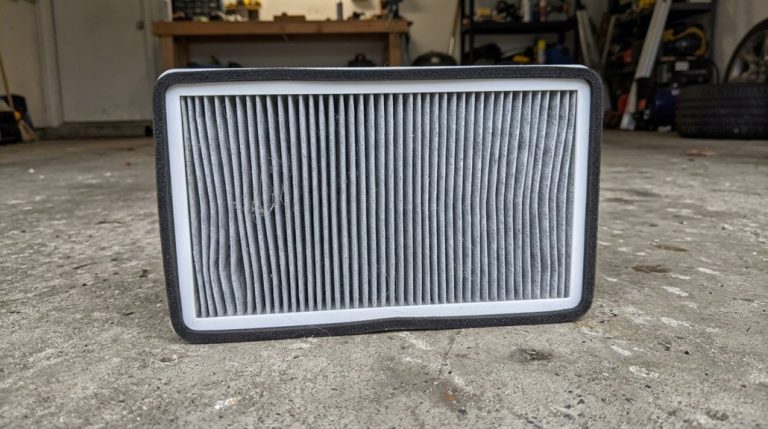
If the noise seems to originate from the front of the dashboard area, check whether the front air intake cover under the hood has loose or missing clips that could be rattling.
You can also pull software diagnostics through the Tesla app to check for logged fault codes before your appointment — occasionally, the car already knows. Tesla’s over-the-air updates can also resolve certain software-triggered alerts that might be misread as mechanical issues.
Tesla Noises That Signal a Real Problem
Some Tesla noises genuinely demand your attention, and grinding or scraping sounds top that list — worn brake pads grinding against rotors, a pebble trapped between the rotor and backing plate, or a damaged caliper can each produce metallic friction noise that gets worse under load.
If that grinding shows up alongside a warning light on your touchscreen, you’re no longer diagnosing a quirk; you’re looking at a confirmed mechanical fault that a service center needs to address before the next drive.
Pay attention to whether the noise is speed-dependent or braking-dependent, since that distinction (rotor contact vs. caliper wear) narrows the cause considerably and tells you how urgent the repair actually is.
For brake-related noise specifically, keeping safety-critical systems OEM is worth considering, as aftermarket brake components carry a higher risk of premature wear and can complicate warranty claims if a fault develops.
Grinding and Scraping
Grinding and scraping noises hit differently than the soft hums and clicks covered earlier — these sounds demand attention.
A metallic scrape from your wheel area often traces back to a rock wedged between the brake shield and rotor. Try steering fully left, then right, and nudging the car forward and back — the debris sometimes drops out on its own. If the scraping persists after that, you’re likely dealing with rotor wear or a sticking caliper keeping the pad in constant contact with the rotor surface. That’s a mechanical inspection, not a driveway fix.
Grinding that shifts during turns points toward CV joint wear (check for grease leakage near the boot). None of these resolve themselves, so don’t postpone getting them checked. Owners of the Model S Plaid should be especially vigilant, as the tri-motor system’s independent torque vectoring places additional rotational stress on driveline components during aggressive cornering.
Tesla cabins are quiet until road noise starts creeping in at highway speeds, making every drive feel louder than it should. If you’re noticing that shift, it usually means your interior is missing basic sound absorption, which only gets worse over time. Add a set of premium noise-reducing floor mats so your cabin stays calmer, more comfortable, and far less fatiguing on longer drives.
Warning Lights Accompanying Noise
When a warning light appears alongside an unusual noise, the car’s telling you something specific — don’t treat the two signals as separate events.
A brake warning paired with grinding or squealing isn’t just worn pads making noise; it’s your braking system flagging reduced safety margin.
Similarly, wheel noise combined with a tire warning could mean underinflation, uneven tread wear, or early wheel-bearing deterioration — all speed-dependent problems that worsen with continued driving.
Stability or ABS lights alongside unusual sounds often indicate sensor failure rather than harmless mechanical quirks.
Tesla’s hydraulic unit runs a normal self-test at startup, but that sound only stays “normal” when no warning appears.
Tesla’s eight-camera system continuously monitors your surroundings, so when a sensor-related warning light triggers alongside an unusual noise, the perception system may already be compensating for a compromised input.
Two simultaneous signals (light plus noise) demand inspection. One signal alone? Maybe monitor it. Both together? Schedule service immediately.
When to Schedule Tesla Service vs. Wait and Watch
Deciding whether a Tesla noise needs immediate service or just a few days of observation usually comes down to two questions: Is there a warning light, and has the vehicle’s behavior changed?
If you answered yes to either, service prioritization shifts from optional to necessary. A red warning light means schedule immediately—don’t wait. Amber alerts paired with a repeating or worsening noise suggest sooner-than-later appointment timing, ideally within days rather than weeks.
No warning lights and unchanged performance? You’re likely fine watching the sound for a short window. Tesla officially documents brake ticks, contactor clicks, and battery-conditioning hums as normal. Those don’t need a service bay.
The real threshold is functional change. Braking feels different, charging throws an alert, or acceleration behaves oddly—those details convert a curious noise into a legitimate concern. Trust what the car’s doing, not just what it’s saying. Tesla’s over-the-air updates can also introduce or resolve certain software-driven sounds without any visit to a service center, so checking whether a recent update preceded the noise is worth noting before booking an appointment.
Frequently Asked Questions
Can Cold Weather Cause My Tesla to Make Unusual Noises Temporarily?
Yes, cold weather can temporarily cause your Tesla to make unusual noises. You’ll notice sounds from battery settling, louder HVAC systems, and door seals contracting. They typically fade once your car warms up.
Do Tesla Noises Differ Between Model 3, Model Y, and Model S?
You’ll find most sounds overlap, but wheel bearings and suspension tuning create model-specific differences. Model 3’s battery thumps and Model S’s air-suspension wooshes set them apart slightly.
Will Tesla’s Warranty Cover Repairs for Noise-Related Mechanical Issues?
Tesla’s warranty may cover noise-related repairs if a defective part causes the sound. You’ll need to document the issue and steer the claim process, as warranty exclusions apply to normal operating sounds.
Can Software Updates Change or Eliminate Certain Tesla Operating Sounds?
Yes, software patches can alter your Tesla’s sound profiles. Firmware tweaks adjust system logic, which shifts cabin acoustics—like pedestrian warnings or thermal hums—making some noises appear, disappear, or change intensity without indicating any mechanical fault.
Does Towing or Hauling Cargo Affect the Noises My Tesla Makes?
Towing turns your Tesla into a noise amplifier. Cargo shift, trailer sway, and poor load distribution stress your suspension wear points, making hitch rattles and road sounds you’d normally never notice suddenly impossible to ignore.