
Metallic paint on a Model Y looks stunning—but is it actually worth the premium Tesla charges? Watch silver shift from warm gray to liquid chrome in afternoon light, and it’s easy to say yes. But sentiment and spreadsheets rarely agree. Before you configure your next build, there’s a calculation most buyers skip entirely, and it changes everything about how you’ll answer this question.
What Makes Quicksilver Different From Midnight Silver Metallic?
Although both carry the “metallic” label, Quicksilver and Midnight Silver Metallic aren’t the same animal. Midnight Silver Metallic plays it safe — it’s understated, familiar, and quietly competent.
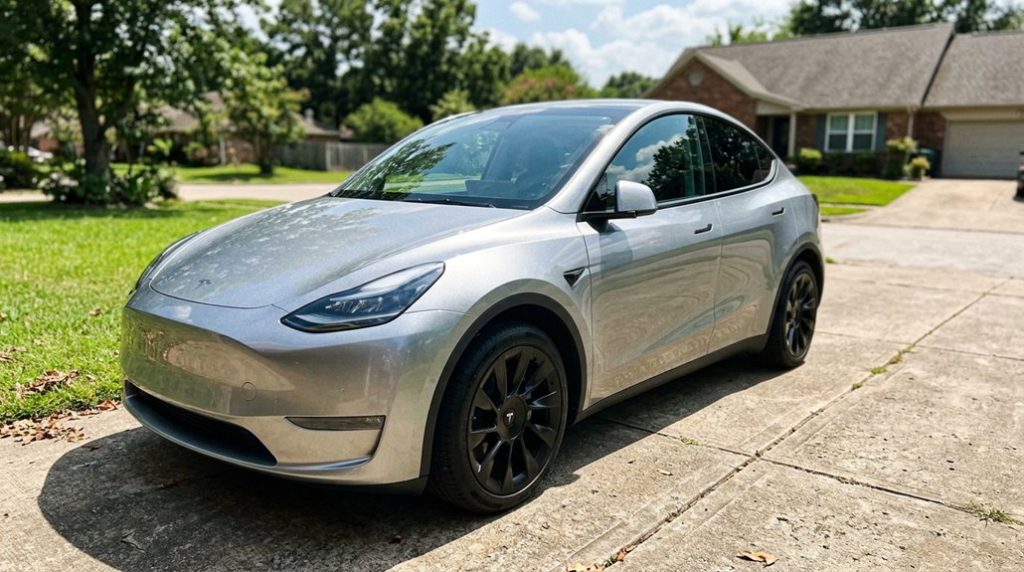
Quicksilver, by contrast, is built around a liquid metal finish that shifts between silver and platinum tones depending on how light hits it. That’s not marketing fluff; it’s layered paintwork techniques doing real work.
Tesla’s Berlin facility applies up to 13 distinct layers to achieve Quicksilver’s depth. Those layers create visual complexity that a single-stage metallic simply can’t replicate. Think of it like the difference between a standard photo print and a high-gloss exhibition print — same subject, dramatically different presence.
Midnight Silver Metallic suits buyers who want a clean, low-key look. Quicksilver suits buyers who want the car to announce itself. Neither choice affects how the Model Y drives, but one definitely makes people look twice. This obsession with surface finish and long-term appearance stands in contrast to the Cybertruck’s bare 30X cold-rolled stainless exterior, which foregoes paint entirely in favor of corrosion-resistant metal that needs no recoating over decades. In the evening, Quicksilver takes on a ghostlike platinum appearance, while Midnight Silver Metallic simply fades into the background.
Why Silver Metallic Paint Looks Different in Every Light
What makes Quicksilver look like liquid metal in direct sun but flatten out in a parking garage isn’t magic — it’s physics.
Tiny aluminum flakes suspended in the base coat produce directional reflection, meaning light bounces back toward your eye at specific angles rather than scattering evenly. You’re basically looking at thousands of micro-mirrors, each responding differently depending on where the light originates.
Thousands of micro-mirrors, each angled differently — bouncing light back toward your eye rather than scattering it in every direction.
Flake orientation is the controlling variable. When flakes settle flatter during application, the finish reads brighter and more uniform. Curved panels — fenders, quarter panels, door arches — tilt those flakes at varying angles simultaneously, so one body panel can display multiple apparent shades at once.
In sunlight, the flakes activate fully.
In diffuse indoor lighting, that contrast disappears. The paint hasn’t changed. Your light source has. That variable behavior is exactly what you’re paying the premium for.
The clear coat layer sitting above the metallic base doesn’t just protect against UV radiation and minor scratches — it adds a refractive quality that makes the finish appear deeper than it actually is. Preserving that clear coat long-term is where paint protection film becomes a practical investment, since even minor surface damage to metallic finishes can be difficult and expensive to repair to factory-matching tolerances.
What Does Silver Metallic Paint Cost on the Model Y?
Tesla’s Silver Metallic pricing on the Model Y has shifted so many times that checking the live configurator beats trusting any fixed number you’ll read online.
In earlier U.S. pricing structures, Midnight Silver Metallic ran a $1,000 upgrade over the included white, though Tesla has since flipped that hierarchy and listed silver as the base-included color (meaning a $0 added cost) while charging $1,000–$2,000 for other finishes like red or blue. Tesla’s configurator is also region-specific, meaning EU and North American pricing structures, available colors, and included features can differ significantly from one market to the next.
Whether that premium is justified depends entirely on which side of Tesla’s pricing toggle you’re ordering from—silver either costs you nothing or saves you money compared to the alternatives. With white and black now each carrying a $1,500 added cost, buyers who previously assumed white was the safe, budget-friendly default may want to recalculate before finalizing their configuration.
Silver metallic paint looks incredible on a Model Y, but it also makes every chip, scuff, and door ding far more noticeable than you expect over time. Protect the high-impact areas before the damage starts with this Tesla Model Y paint protection film door edge and fender kit so your finish stays clean, sharp, and factory-fresh for longer.
Silver’s Exact Price
Midnight Silver Metallic carries a price tag that might surprise you: $0. Tesla includes it as the standard no-cost exterior option on the U.S. Model Y, which means color psychology works in your favor before you spend a single dollar.
That’s genuinely rare in premium automotive configuration.
Here’s what you need to know about silver’s pricing history:
- Silver previously carried a $1,000 upcharge before Tesla flipped it to standard
- Pearl White Multi-Coat now costs $1,000 when silver holds the free slot
- Red Multi-Coat runs $2,000, making silver’s resale impact even more financially persuasive
- Tesla’s configurator has changed rapidly, so always verify current pricing before ordering
Zero dollars for a metallic finish isn’t a compromise — it’s genuinely the smart pick. Paint color upgrades typically add approximately $1,000–$2,500 upfront, meaning silver’s free status represents a meaningful saving that flows directly into your five-year cost-to-own calculation. Midnight Silver earns its reputation as the easiest colour to maintain year-round, as its deep silver-grey tone requires the least upkeep across all seasons.
How It Compares
| Color | Type | Added Cost |
|---|---|---|
| Midnight Silver Metallic | Metallic | $0 |
| Pearl White Multi-Coat | Multi-Coat | $1,000 |
| Deep Blue Metallic | Metallic | $1,000 |
| Solid Black | Solid | $1,500 |
| Red Multi-Coat | Multi-Coat | $2,000 |
Red costs you $2,000 more while providing debatable resale value gains. Silver offers metallic depth — light-catching aluminum flake suspended in clear coat — without touching your wallet. That’s a genuinely hard position to argue against. That $2,000 saved on paint stays in your pocket, or helps offset the five-year ownership costs that already run close to $60,000 on a Long Range model.
Is It Justified
– Tesla’s over-the-air software updates mean feature availability and vehicle configuration can change post-purchase without a dealership visit.
Factor in long-term touch-up costs separately — factory paint pricing and repair budgets aren’t the same conversation.
Is the Model Y Silver Metallic Paint Worth the Price?
When Tesla made Midnight Silver Metallic the base-included color for the U.S. Model Y, the value equation shifted dramatically. You’re no longer paying the historic $1,000 premium—you’re getting a neutral metallic finish at no additional cost. That’s genuinely hard to argue against.
From a resale predictability standpoint, silver sits comfortably within the 1–3% color-swing range that separates neutral tones over a three-year period. On a $45,000 vehicle, that margin represents real money. Buyer demographics for silver skew broad—conservative professionals, fleet-adjacent buyers, and practicality-first owners all find it acceptable. Nobody loves it passionately, but almost nobody rejects it either.
Compare that against polarizing choices like Ultra Red, where a narrower buyer pool can slow your resale timeline. Silver won’t generate auction excitement, but it won’t scare anyone off. Sometimes “reliably fine” is exactly the right financial decision. Keeping ownership costs in check matters too, and the Model 3’s five-year total cost of $29,000–$32,000 new illustrates just how much depreciation and recurring expenses shape the overall value picture on closely related Tesla models.
Silver metallic paint shows everything—dust after a single drive, water spots after rain, and light swirl marks that slowly dull that showroom shine. Lock in a cleaner, glossier finish with this Tesla ceramic coating spray kit that helps repel grime, protect the paint, and keep your Model Y looking freshly detailed for far longer between washes.
Does Silver Metallic Actually Hide Scratches and Heat Better?
Silver metallic earns its reputation as a forgiving finish, but that reputation comes with some important asterisks.
For scratch visibility, the reflective base coat genuinely masks swirl marks and light wash-induced scuffs better than darker finishes—low contrast does the heavy lifting. Once a scratch breaks through the clear coat into primer or metal, though, silver’s sparkle works against you, making repair blend lines easier to spot at certain angles.
Temperature perception is trickier. Light-colored finishes reflect more solar radiation, reducing surface heating—that’s real physics, not marketing.
However, your cabin temperature depends far more on glazing, interior color, and sun exposure duration than exterior paint.
Here’s what silver metallic actually delivers:
- Hides fine swirl marks effectively
- Struggles to conceal deep edge chips
- Reflects solar radiation better than dark finishes
- Makes touch-up repairs noticeably difficult to blend
Manage expectations accordingly, and silver rewards you. One often-overlooked factor is that the Model Y’s battery pack weight of 800–1,200 pounds increases tire stress, meaning more frequent rotations that risk introducing new surface scratches near wheel arches during the process.
How PPF and Ceramic Coating Protect Silver Metallic Paint
Knowing silver metallic’s actual limits—great at hiding swirl marks, less forgiving with chips and blending repairs—points you toward a practical next question: what’s worth doing to protect it before damage happens?
Two products dominate that answer: PPF and ceramic coating, and they solve different problems.
PPF benefits center on physical impact resistance. The urethane film absorbs rock chips and road debris before they reach your factory paint, and modern versions self-heal light scratches with heat exposure.
Properly installed, it lasts roughly 7–10 years.
Ceramic durability works differently—it chemically bonds to the surface, creating a hydrophobic, UV-resistant layer that makes cleaning notably easier and slows environmental wear.
Expect 2–5 years per application.
The smartest move is layering both: PPF applied directly to paint first, ceramic coating applied over it.
PPF handles the hard hits; ceramic handles everything else.
Neither system is damage-proof, but together they’re close.
If you’re planning road trips and frequent highway miles, the rock chip exposure risk increases substantially, making front-end PPF coverage especially worth prioritizing on silver metallic finishes where touch-up blending is already difficult.
Frequently Asked Questions
Does Silver Metallic Paint Affect the Model Y’s Resale Value?
Silver metallic paint does affect your Model Y’s resale value, though modestly. Market perception favors neutral tones, but regional demand varies. Data shows silver depreciates around 50.9%, making white a stronger long-term retention choice.
Can Silver Metallic Paint Be Repaired Without Visible Color Mismatching?
Yes, you can repair silver metallic paint without visible mismatching, but it’s tricky. Skilled technicians must control blend lines and panel alignment carefully, using proper spray techniques to keep metallic particles oriented consistently.
How Does Silver Metallic Compare to White for Long-Term Ownership Satisfaction?
Silver metallic edges out white for long-term ownership satisfaction if you value maintenance ease, as it hides swirl marks better. White wins on color retention appeal and resale speed for budget-conscious owners.
Is Silver Metallic Paint Available Across All Model Y Trim Levels?
Like a menu without every dish, silver metallic’s factory availability doesn’t span all trim options — you’ll find it’s region-specific, discontinued, or tier-locked, so you can’t order it universally across every Model Y trim.
Does Silver Metallic Show Water Spots More Visibly Than Darker Colors?
You’ll notice less water spoting on silver metallic than darker colors. Its reflective finish supports finish uniformity by softening mineral contrast, making dried deposits far less visible than they’d appear on black or deep gray paint.