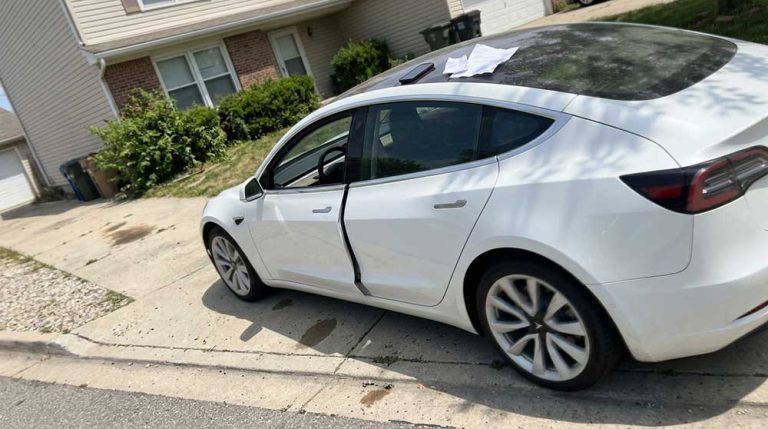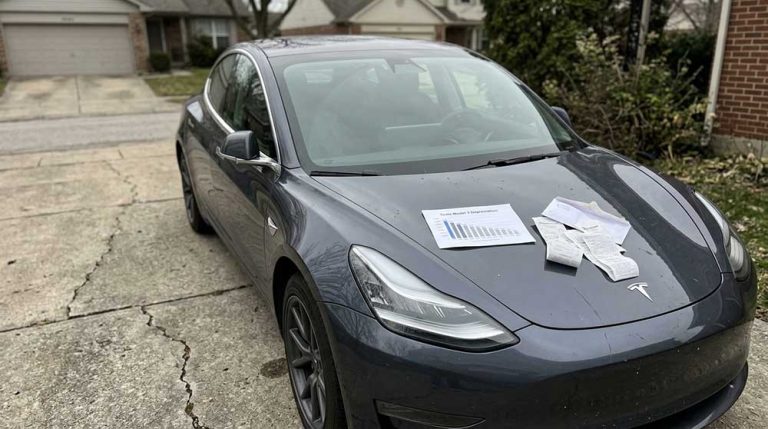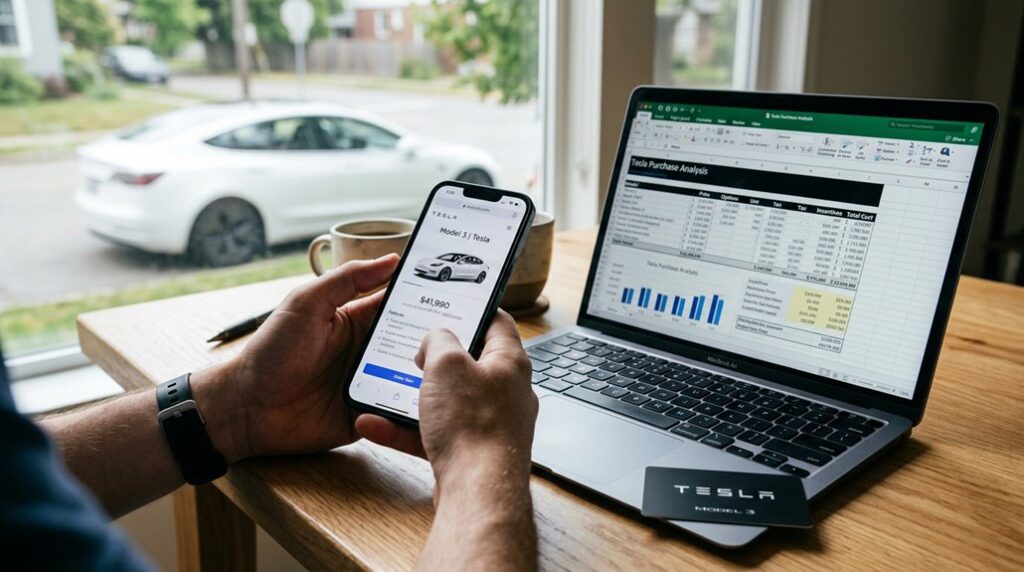

Most Tesla buyers walk away having paid $4,000–$8,000 more than necessary—not from negotiation failures, but from not knowing which numbers actually matter. Federal tax credits worth up to $7,500, first-year depreciation hitting 20–30%, and recurring software subscriptions have quietly transformed what Tesla ownership really costs. The financial picture is far more layered than the sticker price suggests. This guide cuts through every variable that determines whether you get a great deal or an expensive lesson.
What Kind of Tesla Buyer Are You?
Before dropping $40,000 or more on a Tesla, it helps to know which type of buyer you actually are — because Tesla’s lineup isn’t a one-size-fits-all proposition, and the wrong model for your profile is an expensive mistake.
Spending $40,000 or more on the wrong Tesla for your buyer profile is an expensive, avoidable mistake.
Tesla buyers generally split into two camps. The early adopter prioritizes technology, software capability, and innovation — they’ll tolerate an evolving product because the upside excites them.
The pragmatic buyer needs proof first: reliability data, real-world range figures, and charging infrastructure density in their zip code.
Neither approach is wrong, but each carries different financial implications. Early adopters often absorb steeper depreciation on state-of-the-art models. Pragmatic buyers capture stabilized pricing but sacrifice first-mover advantages. Know which camp you’re in before you configure anything. The typical Tesla owner skews toward a higher income bracket, with new owners averaging a household income of roughly $144,341 in 2025.
For drivers cross-shopping EVs, it’s worth knowing that features like tyre pressure display are now standard on modern electric vehicles such as the Tesla Model 3, accessible directly from the internal display screen.
New vs. Used Tesla: Which Market Makes Financial Sense?
Once you’ve identified your buyer profile, the next question is whether to buy new or used — and the answer isn’t sentimental, it’s mathematical. New Model 3 Long Range examples sit around $50,000–$55,000 before incentives. Used 2021–2022 equivalents trade near $36,000–$44,000. That’s real upfront savings worth examining seriously.
| Factor | New Tesla | Used Tesla |
|---|---|---|
| Purchase Price | $50,000–$55,000 | $36,000–$44,000 |
| Tax Credit | Up to $7,500 | Up to $4,000 |
| Depreciation Risk | High (first-year drop steepest) | Lower (prior owner absorbed it) |
Used buyers skip the brutal early depreciation curve — roughly 60% value loss over five years on a Model Y. Someone else paid that tuition. You’re simply buying after the expensive lesson concluded. Beyond the purchase price, the five-year operating costs tell an equally compelling story — a used Model 3 runs approximately $5,500 in energy and maintenance versus $21,000 for a comparable conventional luxury vehicle, a $15,500 advantage that compounds the upfront savings into a decisive financial case.
The 2026 Tesla Lineup at a Glance
Tesla’s 2026 mainstream U.S. lineup keeps things focused: Model 3 (the compact sedan entry point, priced around the mid-$30,000s), Model Y (the refreshed family crossover running $39,990–$57,490, now sporting full-width lighting and a new Standard trim), and Cybertruck (the premium pickup rounding out the volume trio).
You’ll find EPA-rated range landing comfortably in the 250–330 mile window across most trims, with DC fast-charging support at 250 kW or higher on Tesla’s Supercharger network — meaning a meaningful charge stop takes roughly 15–25 minutes rather than a lunch break.
Model S and Model X still technically exist in some reporting, but Tesla’s 2026 volume strategy runs squarely through those three core models, so that’s where your financial analysis should start. Both the Model S and Model X have officially ended production, making them available through the used market only.
Current Models Overview
The 2026 Tesla lineup has narrowed considerably, and that’s not necessarily a bad thing. You’re now choosing between three core models: the Model 3 sedan, the Model Y crossover, and the Cybertruck pickup. Tesla retired the Model S and Model X from mainstream rotation, and the rumored budget “Model 2” never materialized. What remains is a focused, well-supported trio.
Each model splits into distinct trims covering range, performance, and price priorities, so you’re not guessing. Forget the range myths—real-world figures track closely to EPA estimates under normal driving conditions. Maintenance expectations are equally straightforward: no oil changes, fewer brake replacements (regenerative braking does real work), and over-the-air software updates handle many issues remotely. Three models, clear choices, honest numbers.
The 2026 lineup carries no major exterior redesigns, with changes between model years described as minor and functional rather than visual. Across all three vehicles, expect software and hidden hardware to drive the most meaningful improvements year over year.
Range And Charging
Range anxiety is real, but it’s also mostly a math problem—and the 2026 Tesla lineup gives you enough numbers to solve it before you sign anything. The Premium RWD leads with 357 miles on 19-inch wheels—drop to 20s and you’re surrendering range for aesthetics. Charging etiquette matters too: stop at 80% on long trips, and your battery longevity improves measurably over years.
| Trim | EPA Range | 15-Min Charge |
|---|---|---|
| Standard RWD | 294 mi | 160 mi |
| AWD | 327 mi | 152 mi |
| Premium RWD | 357 mi | 182 mi |
| Performance | ~303 mi | 144 mi |
Peak DC fast-charging hits 250 kW on higher trims (225 kW on base). Edmunds clocked roughly 100 miles added in under 15 minutes—solid, if unremarkable. Tesla’s Supercharger V4 network continues expanding worldwide, bringing faster charging speeds and broader compatibility to more drivers than ever before.
Buying a Tesla doesn’t end at delivery—it usually comes with a stack of documents, insurance details, charging info, and finance paperwork that ends up scattered across emails, gloveboxes, and home folders. It rarely feels like a problem at first, until you actually need something quickly and realize it’s not where you thought it was. Keep a Tesla accessories and documentation organizer ready so every important file stays in one place from day one of ownership.
Why Model S and Model X Left the 2026 Lineup
After more than a decade of defining what a premium electric vehicle could be, both Model S and Model X quietly exited Tesla’s 2026 lineup—not with a bang, but with what Tesla itself called an “honorable discharge.” Sales data tells the real story: Model S dropped 52.6% year over year to just 5,889 units, while Model X fell 34.2% to 13,066—numbers that made continued dedicated production lines increasingly hard to justify.
This legacy exit wasn’t accidental. Tesla’s Fremont factory retooling toward Optimus humanoid robot production signals exactly where the company’s priorities now live. Both platforms were aging—Model S from 2012, Model X from 2015—and incremental refreshes couldn’t reverse declining momentum. Tesla effectively chose autonomy and robotics over maintaining two complex, low-volume luxury vehicles consuming precious manufacturing capacity. Existing owners, however, will continue receiving service, parts, and software updates even after production fully winds down through the first half of 2026.
Tesla ownership feels straightforward until a small 12V system issue shows up at the wrong time, leaving the car unresponsive even though the main battery is fine. It’s the kind of situation that catches most owners off guard because it doesn’t behave like a traditional breakdown. Keep a portable jump starter and power bank ready so a low-voltage issue doesn’t turn into an unexpected wait for assistance.
Model 3 vs. Model Y: How to Pick the Right One
With Model S and Model X now retired, Tesla’s core lineup narrows to two vehicles that most buyers will actually choose between: Model 3 and Model Y. The sedan tradeoffs are real — Model 3 delivers better efficiency (115 Wh/km combined vs. 136 Wh/km) and lower entry pricing ($36,990 vs. $39,990). Model Y answers with cargo compromises resolved through its hatchback utility and higher roofline.
| Factor | Model 3 | Model Y |
|---|---|---|
| Base Price | $36,990 | $39,990 |
| 0–60 mph (RWD) | 5.8 sec | 6.8 sec |
| Best EPA Range | 363 miles | 357 miles |
| Combined Efficiency | 115 Wh/km | 136 Wh/km |
| Best Fit | Commuters, performance | Families, cargo |
Your lifestyle determines the winner here, not specs alone. For buyers prioritizing raw acceleration, the Model 3 Performance AWD reaches 60 mph in just 2.9 seconds, making it the quickest vehicle in Tesla’s mainstream lineup.
What the Model 3 RWD Actually Costs in 2026
The 2026 Tesla Model 3 RWD carries a base MSRP of $36,990, making it Tesla’s cheapest sedan entry point — but that number evaporates quickly once you factor in what you’ll actually pay at delivery. Mandatory fees push the figure toward $38,630, and regional taxes, registration, and admin charges stack on top of that.
The true cost image shifts depending on your source. KBB pegs fair purchase pricing around $37,600 — below MSRP, which is actually useful data. Edmunds bundles destination into the $36,990 figure differently than EVChargingStations does.
Do the ownership math before assuming sticker equals reality. You’re looking at a $1,640-plus gap between headline price and out-the-door cost before a single mile gets driven. Stepping up to the Premium RWD adds roughly $5,500 more to that baseline, which buys you a faster onboard charger and a meaningfully quicker 0–60 time.
Model 3 Long Range and Performance Pricing Breakdown
Stepping up from the RWD base trim costs you real money — and you’ll want to know exactly what you’re buying before you commit.
The 2026 Model 3 Long Range (now branded Premium) carries an MSRP of $43,880, with a KBB Fair Purchase Price of $42,100. A solid pricing breakdown shows the RWD variant providing 363 miles of EPA range, while the AWD drops to 346 miles — a meaningful range comparison for long-distance drivers.
The Performance trim jumps to $56,380 MSRP ($55,300 KBB fair price), buying you a 2.9-second 0–60 sprint. KBB’s 5-year cost-to-own for the Long Range hits $66,185, with $31,175 bleeding out through depreciation alone. Performance buyers pay a $12,500 premium over Long Range — spend that consciously.
Both the Long Range and Performance trims share a 79.7 kWh battery and support up to 250 kW peak DC fast-charging, making charging speed a non-differentiator between the two upper trims.
Model Y Trim Levels and What Each One Gets You
Three trims make up the 2025 Model Y lineup — Long Range RWD, Long Range AWD, and Performance — and each one trades something meaningful to gain something else. Range drops as speed climbs. The RWD delivers 337 miles and hits 60 mph in 6.5 seconds. The AWD sacrifices 26 miles for 4.8-second acceleration and adds traction. The Performance cuts range to 277 miles but launches to 60 in 3.5 seconds.
| Trim | 0–60 mph | Range |
|---|---|---|
| LR RWD | 6.5 sec | 337 mi |
| LR AWD | 4.8 sec | 311 mi |
| Performance | 3.5 sec | 277 mi |
Third row options exist only on the AWD trim — seating jumps from five to seven. Wheel size tradeoffs matter too: RWD runs 19-inch wheels, while Performance stretches to 21-inch, which typically reduces ride comfort.
The Performance trim also unlocks vehicle-to-load charging, a capability that lets the car power external devices or equipment directly from its battery.
Wheel Package Upgrades and the Range You Give Up
When you upgrade to larger wheels on your Tesla, you’re trading kilowatt-hours for curb appeal — and the math isn’t flattering.
Aftermarket testing shows that switching from 20-inch performance wheels to 18-inch EV-focused wheels (paired with low-rolling-resistance tires like the Michelin Energy Saver A/S) can recover roughly 15% to 17% of range, because you’re cutting rolling resistance and aerodynamic drag simultaneously.
Bigger wheels carry more unsprung mass, force wider (stickier) tire compounds, and strip away the aerodynamic shielding that aero covers provide — a combination that costs real miles, not hypothetical ones. EPA-derived data reinforces this, showing that 22-inch Model X wheels deliver just 81.6% of the range achieved on 20-inch wheels — a nearly 20% penalty baked into the official numbers before you’ve driven a single mile.
Bigger Wheels, Less Range
Bigger wheels cost you range — that’s the short version, and the physics aren’t subtle about it. Larger diameters increase aerodynamic drag and rotational inertia, both of which pull energy away from forward motion.
A Model 3 Performance switching from 20-inch performance wheels to 18-inch range-focused wheels gains roughly 101 km of range at 100 km/h — that’s not a rounding error. Model Y owners report similar patterns, with wheel changes adding around 30 miles on a 300-mile vehicle (approximately 10%).
Wheel downsizing delivers real, measurable results, though brake caliper clearance can limit your options on performance trims. If full downsizing isn’t feasible, aero covers still recover around 23 miles without touching your wheel package. The data here is fairly unambiguous. Aftermarket options like the Unplugged Performance UPRW FF wheels have also demonstrated efficiency gains, dropping consumption from 241 to 219 Wh/mi on a Model 3 Performance in back-to-back testing.
Efficiency Over Aesthetics
Three compound choices that quietly wreck your range:
- Summer performance tires — 10–15% range reduction
- Winter tires — 15–25% reduction (cold compounds rolling resistance worse)
- Wide-tread performance tires on upsized wheels — compounded 20–25% total loss
LRRC-rated tires from Michelin, Pirelli, or Continental remain your most practical mitigation. Moving to 20-inch wheels alone can increase rolling resistance 8–15%, quietly eroding efficiency before tire compound even enters the equation.
Winter Tires for Your Tesla: Better Value Than Wheel Upgrades
Most Tesla owners eventually face a seasonal crossroads: spend money on flashier wheels or invest in a dedicated winter tire setup. Financially, winter tires win. A Tesla Model Y 19-inch Pirelli winter package runs approximately $2,250–$2,650 installed, including TPMS sensors. That’s real snow performance, not aesthetics.
Here’s the practical logic: a dedicated seasonal rotation protects your stock wheels from road salt, potholes, and corrosive winter grime, extending their usable life considerably. Smaller-diameter winter wheels (think 18-inch versus 20-inch) also allow more sidewall flex, improving pothole absorption on brutal winter roads.
Factor in tire storage costs for off-season sets, and your total ownership math still favors the investment. Better braking, stronger cold-weather grip, and preserved original wheels—wheel upgrades simply can’t compete with that return. Winter tire rubber remains more pliable in cold temperatures than all-season compounds, maintaining grip where standard tires harden and lose traction.
Cybertruck Pricing, Range, and Who It’s Really For
The Cybertruck has come a long way from Elon Musk’s original “starting under $40,000” pitch—a number that aged about as well as a paper truck bed. Pricing transparency reveals the 2025 AWD model starts at $79,990, while the tri-motor Cyberbeast exceeds $100,000. Buyer demographics here skew toward performance-focused premium shoppers, not budget truck hunters.
Three realities shaping your decision:
- AWD vs. Cyberbeast: Roughly $20,000 separates them—choose based on whether tri-motor performance justifies the gap.
- 2026 pricing drop: The Cyberbeast fell $15,000, making timing your purchase genuinely meaningful.
- Five-year ownership: CarEdge estimates $88,325 total, with depreciation ($43,539) dominating every other cost category.
This truck rewards financially prepared buyers, nobody else. The Cyberbeast delivers 845 horsepower and 864 ft-lbs of torque, numbers that help explain why the premium over the AWD model exists at all.
How to Order a Tesla Through the App Step by Step
Ordering a Tesla starts with your account setup — use the same email across the Tesla website and app, or you’ll hit a frustrating mismatch that delays vehicle access post-delivery.
Once you’re in, select your model, configure your trim, color, and wheels (each choice locks in a specific price point), then submit a non-refundable order fee to generate your Reservation Number (RN), which activates your order in the app.
From there, the app becomes your operational hub, walking you through delivery tasks like uploading your ID, confirming your delivery location, and arranging final payment via wire transfer, electronic check, or certified check — all from a single account. The full delivery setup consists of nine structured steps, covering everything from registration and trade-in to proof of insurance and scheduling your pickup.
Setting Up Your Account
Buying a Tesla starts well before you ever sit in the driver’s seat—it begins the moment you create an account and place your order online or at a Tesla store, a process that typically takes only a few minutes.
Your account becomes your command center immediately after purchase.
Three things happen fast once you order:
- You pay a non-refundable $250 order fee that locks in your reservation number (RN).
- Account linking connects your order automatically to the email used at checkout—no manual pairing required.
- App security depends on consistency—signing in with any other email breaks the connection entirely.
Download the Tesla app immediately. Version 4.20 or later handles Phone Key setup, so don’t skip that update. Once your order is active, the app displays an estimated delivery window and prompts you to complete delivery tasks to avoid delays.
Choosing Your Configuration
Once you’ve placed your order, the configuration screen is where the real financial decisions happen—every checkbox you tick either adds resale value, adds cost, or occasionally does both. Paint durability varies by color choice (white resists fading longer under UV exposure), while seat comfort depends on material selection. Choose carefully.
| Configuration Choice | Financial Impact |
|---|---|
| Paint color upgrade | Adds ~$1,000–$2,500 upfront |
| Premium interior/seat comfort | Improves resale by ~3–5% |
| FSD package | Transferable, high-value asset |
Wheel selection affects range efficiency directly—larger wheels increase rolling resistance, trimming real-world range by roughly 5–10%. Performance trims command stronger resale premiums. Review your complete build summary before confirming; reversing decisions post-order costs time and occasionally money. Your order is assigned a reservation RM number immediately upon placement, so keeping your Tesla app ready from the start ensures you can track and manage every configuration detail without delay.
Finalizing Your Order
The Tesla app isn’t just a convenience—it’s the actual mechanism through which your order lives, breathes, and eventually becomes a car sitting in your driveway.
Once you’ve placed your order, every subsequent step runs through it.
Complete these three app tasks before delivery day:
- Upload your government ID and proof of insurance (required after VIN assignment)
- Confirm your delivery location and registration details (errors here delay everything)
- Arrange your final payment via electronic check, wire transfer, or certified check
That last point matters.
Tesla requires final payment from a single account—no splitting sources.
Certified checks need your Reservation Number in the memo line.
Miss that detail, and you’re the reason delivery slows down.
What Happens Between Tesla Order and Delivery Day
Placing a Tesla order kicks off a structured sequence of tasks, approvals, and logistics that can span days to several weeks depending on production capacity and your location. Your pre-delivery checklist appears inside the Tesla app immediately—registration details, financing applications, trade-in inspections. Complete these promptly; incomplete paperwork freezes your delivery logistics timeline cold.
VIN tracking becomes your new hobby once Tesla assigns a vehicle to your order. A VIN appearing in your account typically narrows your estimated delivery window, though reassignments happen. Watch the app daily.
The paperwork timeline runs parallel to shipping coordination. Sign financing documents before Tesla coordinates shipment—delays there push everything back. Once your vehicle enters transit, carriers provide updated timing windows via app notifications and SMS confirmations. For most buyers, the VIN to delivery window runs roughly two to three weeks, though geographic location and carrier availability can compress or extend that range significantly.
How to Inspect Panel Gaps at Tesla Delivery
Tesla’s build quality has improved, but panel gaps still rank as the most common delivery complaint, so you’ll want to train your eye before you sign anything.
Start your inspection with a slow walk-around from 6–8 feet out, scanning for panel lines that kink, widen, or narrow abruptly compared to the opposite side—asymmetry between left and right seams (hood-to-fender, door-to-quarter, trunk-to-bumper) is your first red flag.
On the Model 3 specifically, pay closest attention to the trunk lid against the rear quarter panels and the hood corners against the fenders, since those two zones catch the most out-of-spec assembly.
After your walk-around, run your fingertips slowly across each seam to detect any step where one panel sits proud or sunken against another, because a pronounced ridge or step signals a fitment issue worth flagging before you accept delivery.
Spotting Uneven Panel Gaps
Panel gaps are one of the most reliable indicators of Tesla’s build quality on any given unit, and knowing how to read them before you sign off at delivery can save you from chasing warranty repairs for months.
Your visual inspection starts at 6–10 feet back, scanning each major seam for uneven gap tolerance.
Watch for these three red flags:
- One side visibly double the width of its mirror gap — that’s beyond normal panel alignment tolerance
- Raw metal or compressed weatherstripping visible inside any seam
- Paint scuffing where panels rub — a functional defect, not cosmetic
Add gap measurements and locations to your delivery checklist immediately.
Document everything photographically before signing. Some owners, like one HW4 Model Y buyer in Australia, accepted delivery on consultant advice only to deal with misaligned boot door and tailight issues after the fact.
Common Gap Problem Areas
Knowing where to look matters as much as knowing what to look for. Start at the driver door-to-front-fender gap—Tesla’s panel tolerances place this around 3.0–4.0 mm, consistent top to bottom. Inconsistency here signals a deeper alignment problem.
Move to the hood-to-fender gap on both sides (cited spec: 3.5 mm ±1 mm). Even a millimeter of deviation is worth flagging.
Check trunk-to-rear-fender gaps next, opening and closing the trunk to confirm smooth latching behavior.
Door-to-rear-fender gaps often differ left to right, so compare both sides directly. On Model 3 Performance and Model Y, rear spoiler fitment deserves a close seal inspection—both ends must meet the trunk lid at equal height. Asymmetry there rarely fixes itself.
Also run your palm slowly across the front fender, hood, and driver door to detect fish-eye texture or rough spots that a visual scan alone will miss.
What to Check on Delivery Day Before You Accept the Car
Delivery day is the one window where you hold full negotiating clout before Tesla’s responsibility clock resets to yours. Once you sign, defects become your battle, not theirs. Work through your final checklist methodically before touching any paperwork.
Delivery day is your only window of full leverage—sign the paperwork, and the burden shifts entirely to you.
- Match every VIN on the windshield, center screen, and documents—mismatches signal a paperwork nightmare.
- Photograph every panel, gap, and glass surface (your delivery photos become legal evidence if disputes arise later).
- Test every function—charge port, lights, HVAC, screens, and trunk latches—because “it worked yesterday” means nothing after you accept.
Bring your license, insurance, and payment confirmation. Credit cards aren’t accepted for final payment, so confirm your method beforehand. Document defects immediately; Tesla’s post-delivery goodwill shrinks fast. Plan to test Supercharger within your first week to confirm charging hardware performs as expected before any warranty window closes.
Rejecting a Tesla at Delivery: Your Rights and Process
| Stage | What Happens |
|---|---|
| Refusal logged | Tesla records a rejected delivery event |
| Refund timing | Refunds typically process within days |
| Post-refusal rematch | Tesla assigns a new VIN, not a repaired unit |
You don’t get reinspection rights on the same vehicle—Tesla rematches you instead. That’s actually cleaner. One caution: repeated refusals can trigger system-level limits, so document every defect thoroughly before walking away.
Direct-to-consumer sales are only legally available in certain states, meaning your ability to refuse at delivery depends on where you’re taking possession of the vehicle.
How Tesla’s Trade-In Program Works in Practice
Trading in your old vehicle to Tesla sounds straightforward on paper, but the actual mechanics trip up a surprising number of buyers. You submit your VIN, mileage, condition details, and photos through Tesla’s app or account portal, and their algorithm generates a firm, non-negotiable offer valid for 7 days (sometimes 14, depending on market conditions). Regional supply and demand differences mean your ZIP code influences value in ways that can shift the offer meaningfully compared to neighboring areas.
Tesla’s trade-in process seems simple until the mechanics catch you off guard.
Here’s what actually matters:
- The offer adjusts if your reported condition doesn’t match reality — undisclosed damage during the trade-in inspection drops your credit instantly.
- Title transfer logistics happen at delivery, consolidating lien releases and DMV paperwork into one appointment.
- Outstanding loans don’t disqualify you — Tesla coordinates the payoff directly, though you’ll wire any negative equity beforehand.
Accept the math. Grasp the timeline.
What Tesla Will and Won’t Pay for Your Trade-In
Tesla’s trade-in program hands you convenience, but it quietly hands itself a margin in the process. Expect valuation transparency only up to a point—Tesla’s online tool generates offers tied to year, trim, mileage, and condition, but battery disclaimers apply heavily to older EVs.
A high-mileage 2021 Model 3 might land in the mid-teens, while a clean 2024 example could fetch low-to-mid $20,000s. That $3,000–$7,000 spread between weak and strong offers on identical vehicles isn’t accidental—it reflects market saturation and demand-side caution.
Accident history or title issues compress offers further. Private sales routinely outperform Tesla’s number by several thousand dollars. You’re effectively paying a convenience fee to skip the hassle.
In documented cases, CarMax offers exceeded Tesla’s trade-in valuations by as much as $3,000 on the same vehicle.
Federal EV Tax Credits That Apply to Tesla in 2026
If you were counting on a federal tax credit to soften the price of a new Tesla in 2026, that math no longer works. Federal eligibility effectively ended for vehicles acquired after September 30, 2025. The credit sunset closed the door on both the $7,500 new EV credit and the $4,000 used EV credit.
Here’s what that means practically:
- No point-of-sale discount applies at Tesla checkout for post-cutoff purchases.
- Form 8936 is irrelevant unless your delivery predates the cutoff.
- Leasing exceptions existed, but verify current dealer eligibility before assuming anything.
Shift your financial focus to sticker price, financing rates, and local state incentives instead. However, if you installed a home charger, the Alternative Fuel Vehicle Refueling Property Credit remains active through June 30, 2026, potentially saving you 30% of hardware and installation costs up to $1,000.
State-Level Rebates and Incentives Worth Claiming
With federal EV tax credit eligibility narrowing or expiring for many buyers in 2026, state-level rebates have become the primary financial lever worth pulling when purchasing a Tesla.
These programs vary widely by state — Oregon and Maine top the charts with rebates reaching $7,500 and $8,000 respectively, while Colorado’s credit sits at $3,250 this year (down from $6,000), and states like New Jersey layer a $4,000 rebate on top of a full sales tax exemption — meaning the actual savings stack can surprise you.
You’ll want to verify MSRP caps, income thresholds, and funding availability before committing to a purchase, since most programs run first-come, first-served and close the moment their budget runs dry. Stacking your state rebate with a utility rebate and dealer discount can significantly multiply your total savings beyond what any single program offers.
State Rebates Explained
Connecticut’s CHEAPR program (Connecticut Hydrogen and Electric Automobile Purchase Rebate) is one of the more practical state-level incentives available to Tesla buyers right now, and it’s worth grasping before you sign anything. It delivers point-of-sale rebates, meaning the discount hits immediately—not months later as a tax filing.
Here’s what moves the needle most:
- Income qualified rebates can stack new-vehicle support up to $5,000 for eligible buyers
- Charger stacking combines vehicle rebates with Eversource charger rebates and the federal 30C credit (worth up to $1,000)
- Used Tesla buyers can still capture up to $3,000 through participating dealers
Total stacked savings can realistically exceed $8,000. Connecticut isn’t playing around with these numbers. The program is administered by Connecticut DEEP and remains active and funded through 2026, though dollar amounts and rules are subject to change as the program preserves its budget.
Qualifying for Incentives
State-level rebates aren’t free money handed to everyone who buys a Tesla—you have to actually qualify, and the eligibility rules vary enough between programs that assuming you’re covered is a reliable way to leave cash on the table.
Residency requirements are non-negotiable; most states won’t pay out to buyers who simply registered a vehicle there. Vehicle caps matter too—Connecticut caps eligibility at $50,000 MSRP, which eliminates several Tesla trims outright.
Income limits expand benefits in some programs while quietly disqualifying others entirely. Eligibility windows add another layer: many programs run first-come, first-served until funding dries up, meaning a qualifying buyer in November might find an empty pot.
North Carolina has no statewide EV purchase rebate, but local utilities fill part of that gap—Surry-Yadkin EMC members can collect up to $500 simply for purchasing an electric vehicle.
Check program status before you negotiate, not after you sign.
Stacking Federal and State
Claiming a federal EV tax credit doesn’t disqualify you from a state rebate—most programs are designed to stack, and ignoring that fact is effectively donating money back to the government.
Federal stacking works because state programs operate independently, each with separate funding and eligibility rules.
Pennsylvania buyers, for example, can layer:
- $3,000–$4,000 in state Alternative Fuel Vehicle rebates (income-dependent)
- Up to $7,500 in federal EV tax credits applied at tax filing
- Utility incentives through local providers offering bill credits or smart-charging rewards
Delaware stacks $3,500 state plus federal credits.
Maryland adds a 40% home-charger discount.
These aren’t theoretical—they’re real dollars requiring only paperwork and timing.
Apply early; Pennsylvania‘s program covers roughly 500 rebates annually before funding evaporates.
Tesla Financing vs. Third-Party Auto Loans
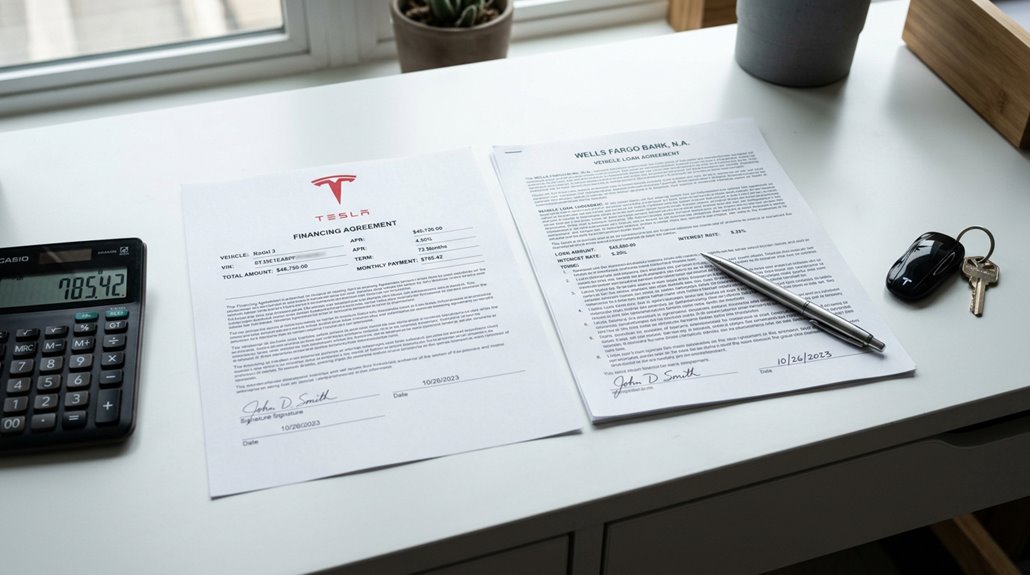
How you finance your Tesla matters almost as much as which Tesla you buy, because a bad loan can quietly erase thousands of dollars in value before you’ve driven a single mile.
Tesla offers in-house financing through its own lenders, typically starting around 1.99%–2.99% APR during promotional periods, but availability varies by state. That’s where loan alternatives become critical. Banks, credit unions, and EV-specialist lenders can all underwrite your purchase, sometimes more competitively. Rate negotiation isn’t optional here—it’s mandatory. Third-party APRs range from 4.85% to 16.20% depending on your credit profile, so shopping multiple lenders before delivery protects your bottom line.
Whichever route you choose, secure financing approval first; Tesla requires funds arranged before handing over the keys.
Is Leasing a Tesla Worth It Financially?
Securing the best loan rate is only half the financing equation—the other half is deciding whether you should borrow at all, or simply lease. Tesla offers 24 or 36-month terms, but leasing carries real constraints worth measuring carefully.
Three financial realities every potential Tesla lessee faces:
Three financial realities hit every potential Tesla lessee—and ignoring even one can cost thousands.
- Mileage strategy matters brutally — exceeding caps costs $0.25–$0.50 per mile, erasing monthly savings fast
- Lease buyout restrictions — Tesla historically limits end-of-term purchases, eliminating residual-value capture
- Tax credit uncertainty — the lessor claims the $7,500 federal incentive, not you
Leasing saves roughly $180 monthly versus financing ($6,500 over 36 months), making cash-flow management genuinely persuasive.
However, without buyout flexibility, you’re renting depreciation rather than building equity.
Total Cost of Tesla Ownership Over 5 Years
Depreciation typically dominates these figures, but charging savings meaningfully offset operating costs — expect around $2,400 to $3,100 in energy expenses over five years, versus considerably more for gasoline alternatives.
Insurance, however, frequently surprises buyers, often exceeding maintenance costs substantially. Maintenance itself stays modest (roughly $1,800 to $2,500), since EVs skip oil changes and experience reduced brake wear entirely.
Tesla Insurance: How It Works and What It Costs
Few ownership costs catch Tesla buyers off-guard quite like insurance, and that surprise cuts both ways — some owners land meaningfully lower premiums through Tesla’s proprietary system, while others find their rates exceed even maintenance and charging costs combined.
Tesla’s usage-based premiums replace traditional demographic factors (age, gender, credit score) with actual driving behavior, Safety Score data, and FSD (Supervised) usage.
Three vehicle-specific coverages worth knowing:
- Autonomous liability protection — covers bodily injury or property damage during self-driving operation
- Wall charger replacement — up to $3,000 for manufacturer-issued hardware
- Cyber identity fraud coverage — $15,000 per occurrence, $30,000 per term
Rates update monthly. Drive cleaner, score higher, pay less. It’s genuinely that mechanical.
How Tesla Tracks Your Driving and What It Does to Your Rate
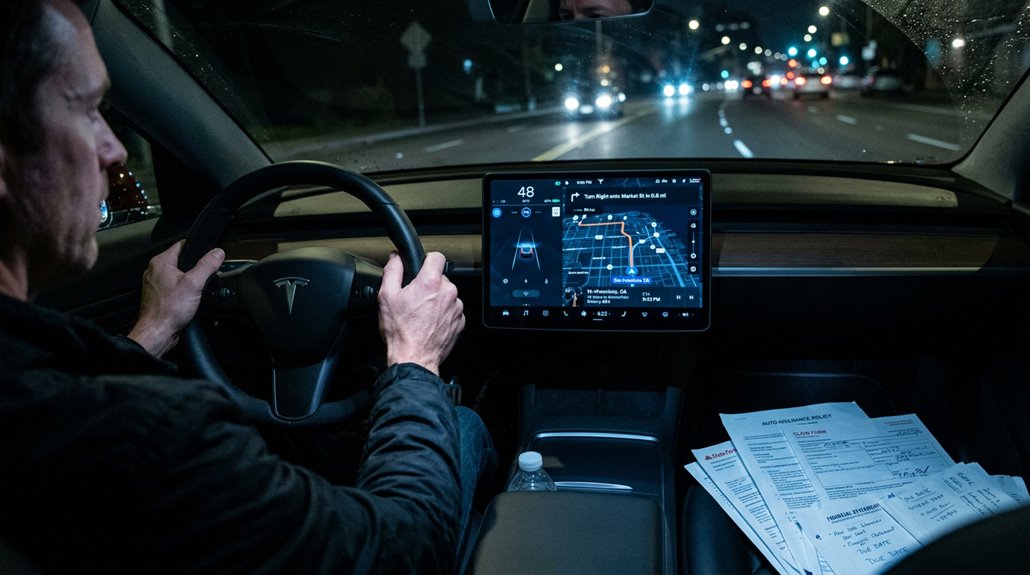
Every Tesla built after mid-2017 logs your trips the moment you shift out of Park, capturing GPS breadcrumbs, speed, road types, braking intensity, and whether Autopilot was active — all at sampling rates that can hit 50 Hz for wheel-speed data alone.
That’s not just engineering telemetry; it’s a detailed behavioral profile that insurers (including Tesla Insurance itself) can use to assess hard braking, sharp acceleration, and high-risk driving patterns with a granularity that traditional actuarial tables simply can’t match.
If you’re shopping a used Tesla or signing onto a telematics-based policy, grasp exactly what the car records — and how those records translate into premium adjustments — is one of the more consequential financial variables you’ll encounter in this purchase.
Data Tesla Collects
When you buy a Tesla, you’re also signing up for one of the most all-encompassing vehicle data collection systems in the consumer automotive market—whether you fully realize it or not. Telemetry transparency isn’t just a buzzword here—Tesla received 2.5 billion telemetry packages globally in Q3 2025 alone (excluding China). That’s staggering scale.
Here’s what’s flowing off your vehicle:
- Trip logs capturing GPS breadcrumbs, speed, road type, and Autopilot activation from every Drive-to-Park cycle
- Camera privacy considerations around cabin monitoring analytics shared for driver-monitoring feature improvement
- Safety telemetry documenting crash events, near-miss incidents, software versions, and your control inputs around those moments
You can adjust sharing settings through the touchscreen’s Data Sharing menu—but disabling features carries real functional tradeoffs.
How Rates Change
Unlike traditional auto insurance—where your rate gets locked in for six months based on your age, zip code, and whether you once forgot to pay a bill in 2019—Tesla Insurance recalculates your premium every single month using actual driving data pulled directly from your vehicle. Your safety score (0–100 scale) updates at month’s end, reflecting the previous 30 days. FSD impact matters here: miles driven with FSD (Supervised) engaged automatically count as 100-point driving, pulling your blended score upward. Miles weighting blends your manual score against your FSD mileage share proportionally.
| Factor | Manual Driving | FSD (Supervised) |
|---|---|---|
| Safety Score Applied | 0–100 (behavior-based) | Fixed at 100 |
| Unsafe Following Tracked | Yes (50+ mph only) | No |
| Monthly Premium Impact | Direct | Dilutes risk score |
Third-Party vs. Tesla Insurance: Which Saves More?
Choosing between Tesla’s own insurance product and a third-party carrier isn’t a brand loyalty decision—it’s a math problem, and the numbers don’t always favor the home team. Tesla’s usage-based pricing rewards clean drivers, but third-party carriers can undercut it markedly, especially with bundling discounts.
Choosing Tesla insurance over a third-party carrier is a math problem, not a brand loyalty decision.
Here’s where the real differences land:
- Tesla insurance averages $240/month versus State Farm quotes near $99/month for comparable coverage
- Tesla’s limited repair network inflates premiums across both Tesla and third-party policies
- Bundling home and auto with third-party carriers can cut hundreds annually—Tesla doesn’t offer that
Your driving profile decides the winner. Run identical coverage comparisons before committing. The cheapest policy isn’t always obvious until you actually check.
The Best Used Tesla Models to Buy Right Now
Once you’ve sorted out insurance costs, the next financial decision hits just as hard: figuring out which used Tesla actually delivers the most value per dollar spent.
Start with the Model 3 (2019–2021 Long Range) or a 2022-or-newer Model Y — both carry the deepest inventory and the most transparent pricing. Run battery diagnostics before committing; degraded capacity directly shrinks your real-world range and resale value.
Certified Preowned listings occasionally surface through Tesla’s own inventory, offering limited warranty coverage worth factoring into your total cost calculation.
Older Model S and Model X flagships can tempt you with premium features at reduced prices, but their repair complexity genuinely costs more long-term. Prioritize clean titles, single-owner histories, and updated hardware generations — HW4 especially — over any cosmetic upgrades.
Why the 2021–2023 Model 3 Long Range Is the Top Used Pick
The 2021–2023 Model 3 Long Range stands out as the clearest value play in the used Tesla market, and the numbers back that up without much debate. You’re getting 353 miles of rated range, 4.2-second 0–60 performance, and battery longevity that typically holds around 90% capacity past 100,000 miles. That’s long range value without the guesswork.
Three reasons this trim wins:
- Battery retention stays strong well past 50,000 miles, reducing your financial risk considerably
- 353-mile range covers nearly any real-world scenario without mid-day charging anxiety
- Premium features (heated rear seats, 15-speaker audio) are included without paying Performance trim prices
It’s not flashy logic. It’s just the math working in your favor.
What a ,000 Used Tesla Actually Gets You
Dropping your budget at $20,000 pulls you into a specific slice of the used Tesla market — one that’s genuinely useful but demands clear-eyed expectations. You’re typically looking at 2018–2020 Model 3 Standard Range units or 2013–2019 Model S examples carrying 54,000–130,000+ miles. Battery longevity becomes your primary evaluation metric here, not aesthetics.
| Model | Year Range | Typical Mileage |
|---|---|---|
| Model 3 Standard Range | 2018–2020 | 64,000–130,000 mi |
| Model 3 Long Range | 2019–2020 | 80,000–100,000 mi |
| Model S (various) | 2013–2019 | 90,000–150,000 mi |
Ownership tradeoffs are real — expired battery warranties, suspension wear, and occasional salvage titles surface regularly. CarGurus lists 2020 Standard Range Plus examples at $16,997–$17,994, confirming genuine availability. Inspect thoroughly before committing.
Best Used Tesla Between ,000 and ,000
Spending between $35,000 and $45,000 puts you in a genuinely competitive price band — one where clean-title, low-mileage examples of Tesla’s most practical models actually surface with regularity. Battery longevity becomes less of a gamble here because you’re targeting newer production years with documented service histories.
Spend in the $35,000–$45,000 range and clean-title, low-mileage Teslas stop being rare finds.
Here’s what this budget realistically opens up:
- 2024 Model 3 Highland — acoustic glass, ventilated seats, and interior upgrades that feel deliberate rather than incidental
- 2023–2024 Model Y Long Range — Hardware 4 cameras, cargo solutions that genuinely accommodate families, and AWD confidence
- 2021–2023 Model 3 Long Range AWD — all-weather traction without the premium price ceiling
Prioritize mileage under 60,000, verify title history, and seriously evaluate aftermarket warranties before signing anything.
How to Verify Battery Health on a Used Tesla
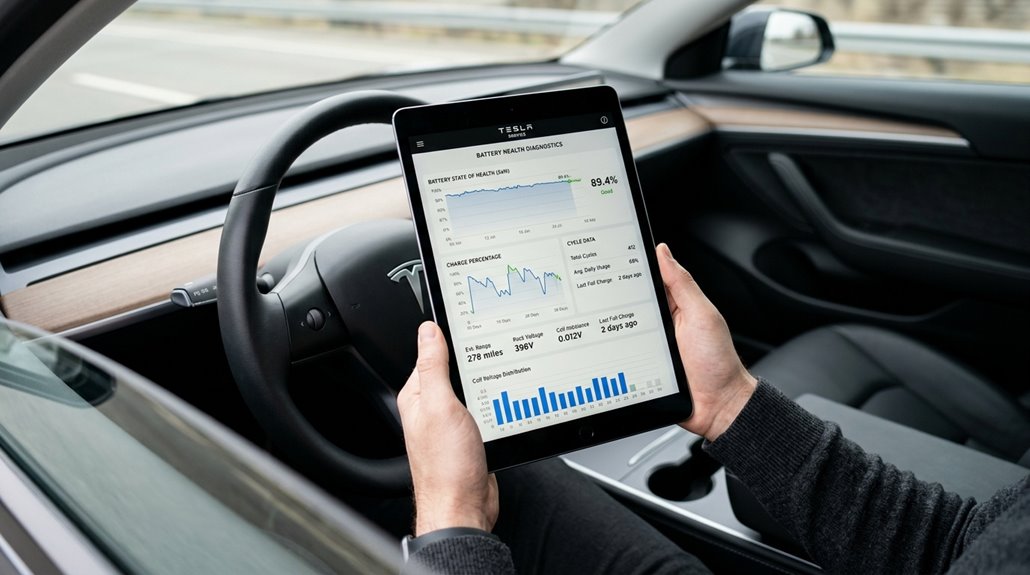
Checking battery range loss on a used Tesla starts with a simple but revealing step: charge the pack to 100% and compare the displayed range to the original EPA-rated figure for that exact trim and model year (a 2021 Model Y Long Range, for example, should show roughly 326 miles at full charge).
Divide the current full-charge reading by the original rated range and multiply by 100 to get an estimated State of Health percentage—anything above 80% is generally solid, while readings below 75% warrant serious negotiation bargaining power or walking away entirely.
From there, pull up the charging history data through the Tesla app or Energy app to check whether range loss tracks consistently across sessions or spikes irregularly, since inconsistent drops often point to cell-level issues rather than normal capacity fade.
Checking Battery Range Loss
Battery degradation is the silent variable that can quietly reshape a used Tesla’s value before you ever sign the paperwork.
Charge the vehicle to 100%, switch the display from percentage to miles, then compare that number against the original EPA rating for that exact model year.
A 2021 Model Y Long Range rated at 326 miles showing 310 miles signals roughly 4.9% capacity loss—useful math for negotiation.
Watch for these red flags:
- Large range shortfalls suggesting abnormal wear beyond expected degradation
- Inconsistent readings pointing toward battery calibration errors rather than true capacity loss
- No long-term monitoring history from apps like Teslafi, leaving you guessing about trend direction
One reading tells a story. A pattern tells the truth.
Reading Charging History Data
Behind every used Tesla’s charging port is a behavioral record most buyers never think to pull.
Open the Tesla app (version 4.5.1 or later), navigate to Charge Stats, and you’ll see monthly energy consumption, estimated costs, and charging location breakdowns—home vs. public splits included.
Charging patterns reveal more than miles do. A vehicle that shows predominantly AC home charging carries significantly less battery wear risk than one dominated by DC fast-charging sessions.
Thermal impact matters here too: frequent Supercharging in hot climates accelerates degradation faster than identical usage in cooler regions.
Watch for red flags: repeated near-empty charges followed by full cycles suggest deep pack stress. Green flags include stable, moderate charging windows and predictable commuter behavior.
Treat this data as supporting evidence, never a standalone verdict.
LFP vs. NCA Battery Packs: What Used Buyers Must Know
When shopping for a used Tesla, the battery chemistry under the floor pan matters more than most listings let on. LFP (lithium iron phosphate) and NCA (nickel-based) packs behave differently, age differently, and demand entirely different charge strategies from you.
Here’s what separates them financially and practically:
- LFP packs tolerate daily 100% charging — that’s not abuse, that’s the manufacturer’s actual recommendation, which means used LFP cars carry less charging-related guilt.
- NCA packs deliver superior range and performance — critical if your commute involves highways or cold winters that punish battery capacity hard.
- Battery chemistry directly predicts your long-term ownership costs — higher cycling frequency on smaller NCA packs accelerates degradation measurably.
Match the chemistry to your driving pattern before negotiating price.
How to Read a Tesla Battery Report Before You Buy
A used Tesla’s listed mileage tells you how far the car traveled — it doesn’t tell you how much battery capacity survived the trip. That’s where battery diagnostics earn their keep.
Tesla’s built-in Battery Health Test (run via touchscreen, battery below 20%, AC charger connected) delivers a state-of-health percentage — your actual remaining capacity versus factory-new.
Watch three numbers: state-of-health percentage, estimated range at 100%, and degradation rate. Cell voltage spread above 50 mV signals trouble.
Abnormal charge etiquette — like unusually slow Supercharging under normal conditions — suggests internal pack stress.
Cross-reference the report against age and mileage benchmarks, not mileage alone. A two-year-old Tesla showing 15% degradation warrants serious scrutiny regardless of odometer reading.
New and Used Tesla Warranty Coverage: What’s Actually Included
Tesla’s warranty structure isn’t one document — it’s a layered stack of overlapping protections, each with its own clock, mileage cap, and fine print. Grasping transferability details matters enormously when buying used, since the battery and drive unit warranty typically follows the vehicle, not the original owner.
Here’s what actually protects you:
- Basic Limited Warranty — 4 years or 50,000 miles, covering workmanship defects across electronics, interior, and body components.
- Battery and Drive Unit Warranty — 8 years with model-specific mileage caps, surviving long after basic coverage expires.
- Used Vehicle Warranty — roughly 1 year or 10,000 miles after original coverage lapses.
Know your warranty exclusions cold: collision damage, misuse, aftermarket modifications, and normal wear aren’t negotiable territory — Tesla won’t budge.
Structural Damage, Suspension Red Flags, and Repair History
Structural damage on a used Tesla isn’t always wearing a name tag. Paint mismatches, overspray on trim, and misaligned body panels often reveal prior collision repairs that sellers conveniently forget to mention. Run the VIN through a vehicle-history report first—insurance and DMV records frequently expose undisclosed claims.
Structural integrity matters more on Teslas because the battery pack is load-bearing (not decorative), meaning underside impacts affect both safety and drivability simultaneously. Check the battery enclosure for scoring, punctures, or coolant leaks.
Suspension inspection deserves equal attention. Uneven tire wear across one axle, steering misalignment, or visible subframe deformation all signal bent components. Tesla’s repair procedures prohibit frame-straightening equipment entirely, so improper prior repairs compromise everything downstream. Always hire a qualified shop before purchasing.
Does Full Self-Driving Transfer on a Used Tesla?
Whether Full Self-Driving transfers to you on a used Tesla depends almost entirely on how the previous owner exited the vehicle—and the answer isn’t the same in every case.
Whether used Tesla FSD transfers to you hinges entirely on how the previous owner exited the vehicle.
Paid FSD typically stays with the VIN through private-party sales. Tesla trade-ins are riskier; Tesla often strips FSD before reselling inventory.
Three scenarios that determine your outcome:
- Private sale — FSD usually remains active, but ownership verification after account transfer is essential.
- Third-party dealer — FSD often survives if Tesla hasn’t intervened.
- Tesla trade-in — Expect FSD removed; feature verification through the Autopilot menu becomes critical before purchase.
Subscription-based FSD never transfers—full stop.
Salvage titles complicate reactivation further.
Confirm FSD status in both the Tesla app and vehicle settings before finalizing any deal.
How to Check FSD Transferability on Any Used Listing
Checking FSD transferability on a used Tesla listing starts with the exact words in the ad — “Full Self-Driving (Supervised)” or “FSD purchased outright” means something specific, while vague phrases like “self-driving capable” or “has Tesla features” confirm nothing and should be treated as red flags.
Once the listing language clears that bar, you’ll need to determine whether the original owner bought FSD outright (the only version that’s VIN-linked and potentially transferable) or simply subscribed to it month-to-month (which evaporates the moment ownership changes).
Before you commit to a single dollar, request the VIN, ask the seller for a screenshot of the active FSD feature in the Tesla app, and verify the FSD status directly with Tesla support — because a seller’s word and a Tesla account’s records aren’t always telling the same story.
Verify FSD Listing Details
Before you hand over a dollar for a used Tesla with claimed Full Self-Driving, you need to verify that FSD is actually purchased and tied to that VIN—not just installed as hardware, bundled as a subscription, or dressed up in vague listing language. Listing verification protects you from paying a premium for features that vanish after account handoff.
Here’s what to confirm immediately:
- Check the source first — Tesla-owned listings typically label FSD clearly; private sellers often don’t.
- Read the language carefully — “FSD capable” or “FSD ready” confirms hardware, not ownership.
- Demand VIN-tied documentation — Original purchase paperwork or a dealer invoice explicitly listing FSD is your strongest protection.
Assumptions here are expensive mistakes.
Confirm Transfer Eligibility
Even if a used Tesla listing claims FSD is included, that claim means nothing until you’ve confirmed the vehicle’s actual transfer eligibility—because listing language and legal entitlement are two entirely different things. Tesla’s transfer program applies only under specific conditions, and not every FSD-equipped car qualifies.
Start your transfer verification by checking the vehicle’s software screen directly. If FSD appears under “Included Packages,” that’s meaningful. If it shows as an available upgrade instead, transferability isn’t established—full stop. Request live confirmation through the seller’s Tesla app rather than accepting screenshots, which can be outdated or staged.
Also check the vehicle’s history for Tesla trade-in or auction records (Carfax helps here), since both events commonly strip FSD entitlement from the car entirely.
Check Subscription Versus Purchased
The distinction between a purchased FSD package and an active subscription is the single most consequential detail you can overlook in a used Tesla transaction—and sellers conflate the two constantly, sometimes out of ignorance, sometimes not. Subscription verification isn’t optional—it’s your financial protection.
Here’s what actually matters:
- Pull up the Tesla app live. Screenshots lie. A real-time walkthrough showing FSD under “Included Package” is the only trustworthy confirmation.
- Demand invoice confirmation. The original Tesla purchase invoice explicitly lists FSD as a paid option if it was bought outright.
- Watch for “Subscribe” or “Available” language. Those words mean you’re inheriting nothing transferable.
Subscriptions evaporate at ownership transfer. Purchased packages don’t. Know which one you’re actually buying.
Hardware 3 vs. Hardware 4: Which Autopilot Version You Actually Need
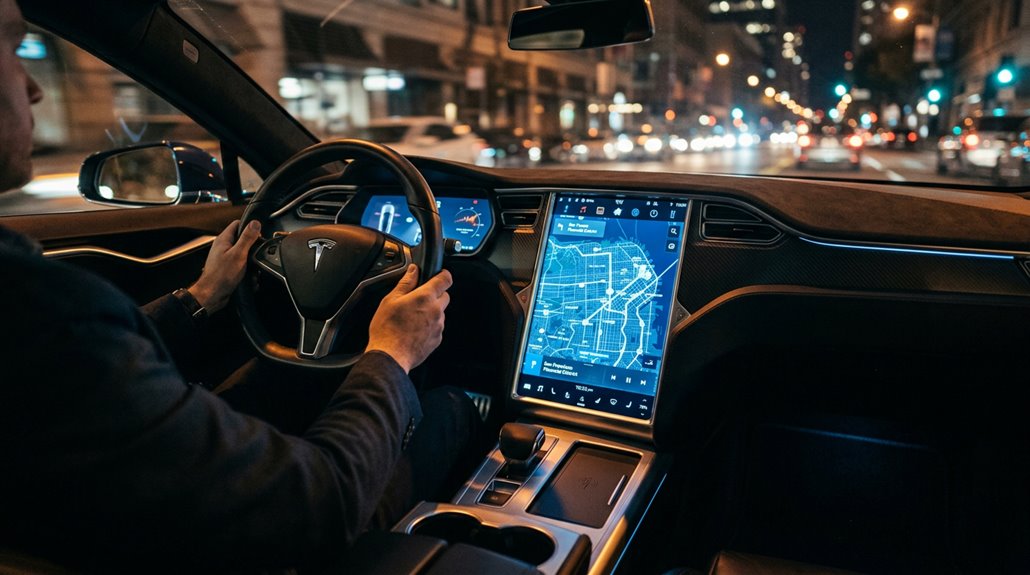
When you’re shopping for a used Tesla with FSD, hardware version matters more than most listings let on. HW3 runs Tesla’s 14 nm chip at roughly 36 TOPS; HW4 uses a newer TSMC process providing around 50 TOPS. Those hardware differences translate directly into feature ceilings. HW4 supports FSD activation from Park, reverse maneuvers, and expanded parking destinations — capabilities HW3 simply can’t execute.
Camera resolution jumps from 1.2 MP to 5 MP, sharpening object recognition considerably. Future-proofing tradeoffs become real when you’re planning five-plus years of ownership — HW3 handles today’s FSD competently but faces tighter constraints as software evolves.
Verify hardware by checking Controls > Software > Additional Vehicle Information before purchasing. “Autopilot Computer 4.0” confirms HW4; anything else warrants scrutiny and corresponding price negotiation.
How to Pull a Used Tesla’s Supercharging History
Here’s how to access that data:
- Check the Tesla app — find your way to Charge Stats (requires software 2021.44.25 or later) for monthly energy totals and session breakdowns.
- Request service logs — Tesla service centers hold charging records beyond what account access displays publicly, including full Supercharger stop histories.
- Use Scan My Tesla — it separates AC versus DC fast-charging totals, revealing whether previous owners leaned heavily on rapid charging (brutal on long-term battery chemistry).
Heavy DC fast-charging usage accelerates degradation measurably.
That history matters financially.
How to Test Drive a Tesla the Right Way
Before you show up to your Tesla test drive appointment, confirm that you’ve got a valid (unexpired) driver’s license, check whether your location requires proof of insurance, and review the specific trim and features on the demo vehicle so you’re not wasting your 30-minute window figuring out basic logistics.
Once you’re behind the wheel, prioritize testing regenerative braking (which decelerates the car the moment you lift off the accelerator, replacing much of the friction-braking load), instant torque delivery from a full stop, and touchscreen responsiveness under real driving conditions — because these three systems define the daily Tesla ownership experience more than any spec sheet will.
If Autopilot is enabled on the demo vehicle, test it only on an appropriate open road or highway stretch, then observe how the system handles lane centering and flexible cruise control, since that hands-on evaluation tells you far more about its real-world behavior than a feature list ever could.
Preparing Before You Arrive
A poorly planned test drive wastes your 30-minute window faster than a Model S Plaid clears 0–60 mph (spoiler: that’s 2.1 seconds). Smart route planning before arrival means you’re evaluating highway acceleration, regenerative braking response, and Autopilot engagement — not circling a parking lot.
Run through this documents checklist before you leave home:
- Valid driver’s license — no exceptions, no workarounds, no “it’s in the car”
- Digital or printed confirmation email — your appointment proof at check-in
- Pre-written questions covering range, charging logistics, and trim differences
Bring a passenger for a second opinion. Wear comfortable clothes — you’ll adjust the seat, mirrors, and steering column. Preparation converts a demo into a genuine evaluation.
Key Features to Test
Once you’re behind the wheel, thirty minutes goes fast — so you need a structured checklist of what to actually evaluate, not just a vague sense of “does this feel nice.” Tesla’s design eliminates mechanical noise, gear changes, and throttle lag, which means your sensory feedback shifts entirely: you’re reading torque delivery curves, regenerative braking linearity, and chassis behavior rather than engine note and clutch feel.
Test regen tuning first — lift off at 35 mph and measure how aggressively the car decelerates. Abrupt or jerky deceleration signals calibration worth noting.
Next, assess steering feedback through a highway ramp; weight should build progressively, not feel artificially numb.
Finally, execute tight parking maneuvers — turning radius separates trims meaningfully, especially between Model Y and Model S.
Evaluating Autopilot Performance
Testing Autopilot during a 30-minute demo drive sounds straightforward until you realize Tesla’s driver-assistance stack — spanning basic Autopilot, Improved Autopilot, and Full Self-Driving (Supervised) — behaves radically differently depending on road type, lane marking quality, and traffic density.
Real world route selection separates useful evaluations from wasted drives.
Prioritize these three assessments:
- Lane centering stability — Hold a highway segment long enough to observe drift correction frequency
- Driver engagement triggers — Count how often the system requests steering input (more than twice per mile signals calibration limits)
- Stop-and-go behavior — City streets expose response latency and following distance consistency
Poor lane markings can prevent activation entirely.
You’re not just test-driving a car — you’re auditing software that you may pay $8,000 to transfer.
Home Charging Setup Costs and What You Actually Need
Before you finalize your Tesla purchase, the home charging setup cost deserves the same analytical scrutiny you’d apply to the vehicle price itself. Level 1 charging (standard 120V outlet) adds roughly 3 miles per hour—technically functional, practically painful. Level 2 delivers up to 30 miles per hour and requires a dedicated 240V circuit.
Installation costs vary noticeably. Simple setups run $700 to $1,200 when your panel cooperates. Complex installs—detached garages, long wire runs, panel upgrades—can reach $3,500 to $7,000+. Most homeowners land between $1,200 and $2,000 all-in.
Hardware itself is straightforward: Wall Connector ($450), Universal Wall Connector ($600), Mobile Connector ($300). Charging speed ultimately hinges on your electrical infrastructure, not just the device bolted to your wall.
Supercharger Access, Costs, and Road Trip Planning
Home charging solves your daily energy needs, but it won’t get you through a 600-mile road trip—that’s Supercharger territory. Tesla’s 80,000-plus global chargers sit along major routes, typically near food, restrooms, and Wi-Fi.
Home charging handles your daily routine. Cross-country road trips demand Superchargers—and Tesla’s 80,000-plus are ready for the journey.
Trip charging costs vary markedly:
- Budget sessions run $6–$15 at off-peak stations (roughly $0.11–$0.25/kWh)
- Average sessions cost around $27 at typical Supercharger pricing
- Peak sessions can hit $50–$60 at high-demand locations ($0.35–$0.60/kWh)
Supercharger etiquette matters financially. Idle fees ($0.50–$1.00/minute) trigger once charging completes, doubling when stations hit full capacity. Congestion fees activate above 80% charge.
Smart strategy: charge to 80%, unplug promptly, and use Tesla’s charging calculator to plan each leg before you leave.
Tesla’s Recurring Software Costs: What You Pay After Purchase
| Scenario | Annual Cost | 5-Year Cost |
|---|---|---|
| No FSD | $0 | $0 |
| FSD Subscription | $1,188 | $5,940 |
| FSD + Hardware Upgrade | $1,188 + $1,500 upfront | $7,440 |
The break-even against the former $8,000 one-time purchase was roughly 6.7 years of continuous payments. Short-term owners benefit from subscriptions; long-term owners overpay. Hardware upgrades compound that math markedly. Know your ownership timeline before committing—the numbers make the decision for you.
Tesla Resale Value by Model and Trim
Knowing how much of your Tesla’s value survives the first five years isn’t guesswork—iSeeCars data puts the Model 3 at 45.5% retained value, the Model Y at 41.9%, and the Model X trailing the pack at 38.9%, giving you a clear depreciation hierarchy before you sign anything.
Trim choice sharpens those numbers further, since Long Range and Performance variants consistently outhold entry-level configurations across every model line. If you’re buying used or planning an eventual exit, matching the right model to the right trim year is the closest thing to a financial strategy this market offers.
Depreciation Trends by Model
Not all Teslas age the same financially, and the gap between models can cost you tens of thousands of dollars if you’re buying or selling without checking the numbers first. Model-specific depreciation follows a clear hierarchy, and market-driven decline hits luxury trims hardest.
Here’s what the data shows:
- Model 3 retains roughly 40–45% of MSRP after five years — the strongest performer.
- Model Y drops about 60–61% over five years, with a 2023 unit currently valued near $29,400.
- Model S and X lose 63–65% — flagship pricing amplifies every percentage point into serious dollar damage.
Price cuts on new inventory reset used-market floors fast, so timing your transaction matters more than most buyers realize.
Best Value Trim Picks
Trim selection separates smart Tesla buyers from expensive ones — and the numbers back that up cleanly.
Long Range configurations consistently outperform base trims in resale, attracting used buyers who prioritize range anxiety prevention over upfront savings.
AWD Benefits compound that advantage — dual-motor all-wheel-drive adds real-world utility while signaling mechanical capability to secondhand shoppers.
Performance Value trims (Model 3 and Model Y specifically) carry stronger buyer interest, though their higher original MSRPs can compress percentage retention slightly.
Your sweet spot typically lands in the 2020–2022 Long Range AWD bracket, where used pricing runs $24,000–$40,000 depending on mileage and condition.
Lower mileage remains the single strongest pricing lever.
Battery health increasingly functions as a secondary filter — especially among EV-literate buyers who actually check the data.
Red Flags That Should Kill Any Tesla Deal
A low sticker price doesn’t make a Tesla deal good—it just makes it look good until you dig into the numbers. Battery redflags and undisclosed accidents hide behind clean listings constantly.
Watch for these deal-killers:
- Repeated battery warnings or charging failures — if a pack’s thrown multiple faults, walk away; replacement costs exceed $10,000 easily.
- Misaligned panels or inconsistent tire wear — both signal undisclosed accidents and potential frame damage nobody’s mentioning.
- Multiple warranty repairs on the same system — recurring fixes mean unresolved problems, not solved ones.
Your total out-the-door cost, factoring financing rates and hidden fees, tells the real story. The advertised price rarely does.
The One Tesla Negotiation Move Most Buyers Never Make
Most buyers walk into a Tesla purchase thinking negotiation is dead—and for custom orders, they’re mostly right. But inventory hunting changes the equation entirely. Tesla occasionally needs to move existing stock quickly, especially near quarter-end or during slow demand periods. That’s your window.
Demo discounts on returned test-drive units or loaner vehicles can shave meaningful dollars off the sticker price while still preserving new-vehicle purchase terms in many markets. These aren’t secret deals—they’re posted publicly—but most buyers never check.
Skip the negotiation script. Instead, monitor Tesla’s inventory page regularly, filter by your preferred trim, and act fast when discounted units appear. Speed matters here. The best Tesla deal rarely comes from clever bargaining; it comes from choosing the right car at the right moment.