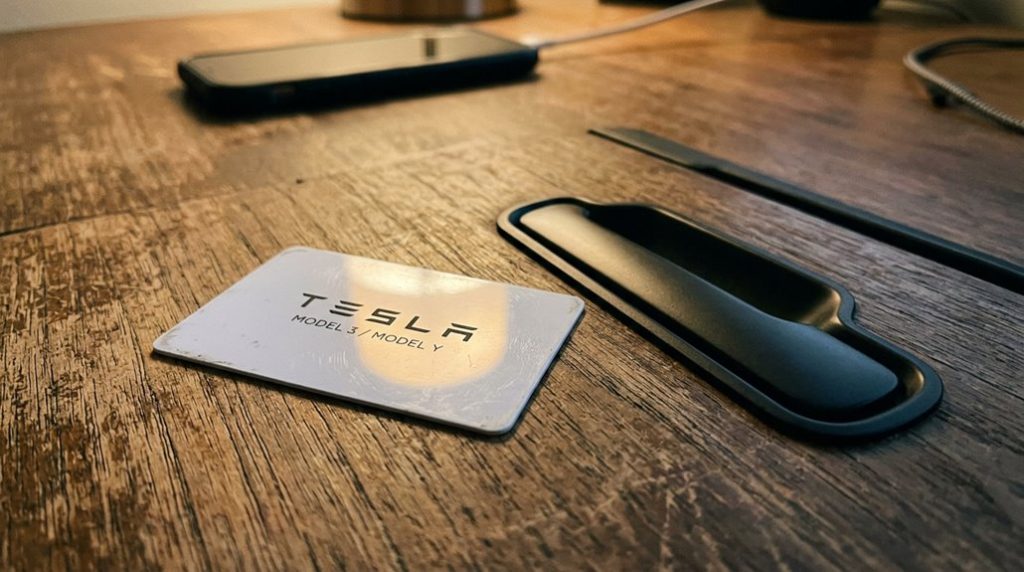

Your wallet might be the reason your Tesla won’t let you in. That slim key card relies on 13.56 MHz NFC — the same frequency as your contactless credit cards — and cramming them together creates a signal-killing interference you never saw coming. But a crowded wallet isn’t always the culprit. A corrupted key entry, a misaligned tap, or a grimy B-pillar reader can produce the exact same frustrating result. The fix exists, but only if you know which problem you’re actually dealing with.
Why Your Tesla Key Card Stops Being Detected
When your Tesla key card stops being detected, the failure almost always traces back to one of three root causes: a broken pairing state, a dead or damaged card, or a vehicle-side software glitch that’s temporarily lost its mind.
Pairing breaks more often than people expect. If the card was removed from Controls > Locks > Keys, your vehicle no longer recognizes it as valid—full stop. Third-party cards carry an additional risk here, since unofficial credentials don’t always survive a software update cleanly.
Physical card failure is the other culprit. Unlike key fobs, these cards have no battery degradation curve to monitor—they’re passive NFC devices—so when they die, they die without warning. Tesla’s remote software updates can occasionally alter key-management behavior overnight, meaning a card that worked perfectly before an update may require re-pairing afterward.
Finally, vehicle-side software can intermittently drop key recognition entirely. The car’s key-management interface is software-dependent, meaning a corrupted state can make a perfectly valid, paired card invisible until you reboot. If you’re researching this issue and land on a dead page, a 404 error message like “Oops! That page can’t be found” is a sign to search elsewhere for solutions.
How the Tesla Key Card NFC Reader Actually Works
Successful authentication triggers exterior light flashes, mirror movement, and optional horn feedback — confirmation the full exchange completed. On Android phones, Tap to Unlock functions as a backup to Phone-as-a-Key when automatic Bluetooth-based unlocking fails to respond immediately. The touchscreen software version can be checked via Controls → Software to ensure your vehicle is running the latest update, which may resolve NFC reader inconsistencies.
Miss the reader by even a centimeter and the handshake never initiates.
Use Your Tesla Phone Key or Key Fob as Backup Access
If your key card’s out of commission, the phone key is your fastest recovery path — it’s already tied to your Tesla account and authenticated to the vehicle, so you’re not starting from scratch. Open the Tesla app, select your vehicle, and tap Set Up Phone Key. Bluetooth, location access (set to Always Allow), and background app permissions all need to be active, or phone key troubleshooting gets complicated fast.
Once paired, the phone key operates as a full standalone key — releasing access and driving without any card involvement.
If your phone’s unavailable, a key fob covers the gap. Add it through Controls > Locks > Keys > Add Key**** on the touchscreen, then scan it at the correct reader location for your build.
Keep the fob battery fresh (fob battery replacement is straightforward — typically a CR2032) because a dead fob is functionally identical to a missing one. Every new Tesla comes with two key cards included as default physical keys, so keep at least one stored somewhere accessible as a last-resort backup. Bear in mind that vehicle controls and settings, including key management, are handled through Tesla’s touchscreen interface, which consolidates functions that traditional vehicles would spread across physical hardware.
A Tesla key card that suddenly stops working is usually not “random”—it’s often just wear, scratches, or interference building up until the car no longer reads it reliably. Avoid getting locked out over something so small by keeping your card protected with a RFID/NFC protective key card wallet case that shields your Tesla key card from bending, damage, and signal interference before a simple pocket carry turns into a frustrating “card not detected” moment in a parking lot.
Position Your Key Card Correctly at the B-Pillar Reader
Having a phone key or fob as backup is solid insurance, but if you’re troubleshooting the key card itself, placement is where most failures actually originate.
A backup phone key or fob is smart insurance—but most key card failures come down to placement, not the card itself.
The B-pillar reader on Model 3 and Model Y sits roughly one-third up the driver-side pillar, just beneath the Autopilot camera. Most people tap somewhere vague on the pillar and wonder why nothing happens. Tesla’s Autopilot system relies on eight surrounding cameras mounted across the vehicle to continuously feed visual data to onboard neural networks.
Get these right every time:
- Hold the card flat against the pillar for best alignment—angled placement kills the read
- Maintain steady contact for 1–2 seconds (the reader needs dwell time, not a swipe)
- Remove the card from your wallet before tapping; stacked contactless cards create interference
- Watch for headlight flashes or mirror movement as confirmation signals
Wrong side of the car, too low, too high, or too fast—any of these will produce exactly nothing. Precision matters here. If the reader surface or card face has accumulated dirt or residue, clean both with a microfiber cloth before attempting again.
Clean the B-Pillar Reader and Reduce Signal Interference
Dirt and residue on the B-pillar applique can quietly degrade NFC read performance even when your placement technique is perfect.
Start with the outer surface: apply Zep windshield cleaner to one microfiber cloth, then wipe the applique using a second dry cloth in circular motions until no stains or residue remain. Adhesive removal matters here — leftover adhesive interferes with the signal path before it even reaches the reader.
For the inner surface, use Zeiss lens wipes first, then follow with dry Tramado or cleanroom wipes to eliminate streaking. Touch-up sticks clear debris from tight crevices between glass and trim (easy to overlook, harder to ignore when your key card fails). Clean the camera lens with the same Zeiss-then-Tramado sequence.
Do a flashlight inspection around the camera opening and applique perimeter to confirm no residual contamination remains.
Then verify your key cards authenticate normally before closing the door. When selecting cleaning products for sensor-adjacent areas, OEM-specified materials eliminate guesswork on tolerances and compatibility, reducing the risk of inadvertently degrading the surfaces Tesla engineered those components to protect.
Delete and Re-Pair a Corrupted Tesla Key Card
If your key card has moved past the point of a simple reader cleaning, the next step is pulling it out of the vehicle’s key list entirely and re-pairing it fresh.
You’ll access this through the touchscreen key-management menu (Settings → Locks → Keys), where you’ll tap the trash icon next to the corrupted card — though Tesla requires an authenticated second key to confirm that deletion, so have a working key card or key fob ready before you start.
Once the corrupted card is gone from the list, re-pairing follows the standard Add Key Card flow, scanning the card on the center console reader (behind the cup holders on pre-2024 builds) or either wireless charger pad (2024 and newer) until the vehicle chimes to confirm a successful pairing. This process works entirely through the minimalist touchscreen interface that serves as the central hub for all in-vehicle settings and controls, eliminating the need for any external tools or dealership visits.
Accessing Tesla Key Settings
Once you’ve located the corrupted card in the list, delete it before attempting to re-pair.
The app confirms successful pairing with an on-screen message, and the new card appears immediately in the touchscreen key list. Many vehicle settings and security features, including key management, can also be updated remotely through over-the-air updates without requiring a service visit.
Deleting the Corrupted Card
Tap the trash icon next to the corrupted entry, then confirm deletion by scanning a working authenticated key at the card reader—this security step functions as part of Tesla’s accountability logs, ensuring unauthorized removal isn’t possible.
Think of it as a two-factor check before purging the credential permanently. Once deleted, the card disappears from the key list entirely.
Emergency procedures aside, if no working key remains, Tesla’s standard deletion flow breaks down completely, so always maintain at least one verified backup. Removal is straightforward when a functional key is available for authorization confirmation. For broader Tesla access management, the same NACS connector standard that unifies Tesla’s charging ecosystem reflects the company’s wider push toward streamlined, single-system authentication across its hardware.
Re-Pairing Your Key
With the corrupted card gone from the key list, you can now bring a replacement card back into the fold. There’s no offline pairing option or emergency protocol here—Tesla’s standard Add Key workflow handles everything.
Navigate to Controls > Locks > Keys > Add Key on the touchscreen, then scan your replacement card on the correct reader:
- Pre-January 2024 builds: reader sits behind the cup holders on the center console
- Post-January 2024 builds: either wireless phone charger pad works
- Authorization step: an already-paired key card or fob must confirm the new card
- Completion signal: the new key appears in the key list with a confirmation message
Rename it via the pencil icon to keep your key list organized. Tesla also pushes over-the-air updates that can occasionally resolve underlying software glitches affecting key recognition before a full delete-and-re-pair becomes necessary.
Contact Tesla Support for Persistent Key Card Failures
If you’ve worked through card placement, cleaning, backup-card testing, and a full vehicle reboot without restoring detection, Tesla support is the next logical move. Support verification confirms whether the vehicle’s key list still includes your card or whether the entry was inadvertently removed. That distinction matters—a missing key entry and a failed card reader require completely different fixes.
Before contacting Tesla, document your symptoms precisely: no response, intermittent detection, or failure isolated to one pillar reader. Note your model year, app version, and mobile access settings. Account troubleshooting often surfaces misconfigured permissions or account-status issues that silently block key functionality. Have your troubleshooting history ready—Tesla support moves faster when you’re not retracing steps together.
If remote support can’t resolve it, a service-center visit handles hardware faults or replacement card issuance directly. Some problems simply require hands-on diagnosis. Tesla’s vehicle systems rely on a real-time BMS negotiation process during charging that similarly depends on verified communication handshakes, illustrating how deeply authentication and detection logic are embedded across the vehicle’s architecture.
A Tesla key card failure rarely happens at a convenient time—it usually shows up when your phone is dead, you’re in a rush, or you’re already standing outside a locked car. Avoid getting stranded over a single point of failure by keeping a spare ready with a Tesla key card replacement and backup set that ensures you always have a working entry option.
Frequently Asked Questions
Can Extreme Temperatures Permanently Damage a Tesla Key Card’s NFC Chip?
Heat exposure can permanently destroy your Tesla key card’s NFC chip by melting the internal antenna. Cold shock’s more likely to cause temporary issues—you won’t typically see irreversible chip damage from freezing alone.
How Many Key Cards Can Be Paired to a Single Tesla Simultaneously?
The more, the merrier—your Tesla supports up to 19 total keys. You can pair multiple key cards simultaneously, but the key limit caps your options. Manage your pairing process wisely to maximize access.
Does a Tesla Key Card Work if the 12V Battery Is Completely Dead?
No, your Tesla key card won’t work if the 12V battery’s completely dead. The card encryption requires tesla proximity reader power to authenticate—once low-voltage power’s restored via jump-starting, your card reader regains functionality.
Can a Tesla Key Card Be Re-Encoded or Reprogrammed After It Fails?
Why risk it? You can’t re-encode a failed Tesla key card—it’s cryptographically bound. Reprogramming services exist only at the service-center level, and the security implications make consumer-level intervention impossible.
Will a Factory Reset Erase All Paired Key Cards From the Vehicle?
A factory reset won’t reliably handle key deletion for paired cards. For proper removal methods, you’ll need to manually delete each key via Controls > Locks > Keys to guarantee revoked access.