
Tesla headrests don’t move — and that’s exactly the point most drivers miss. While everyone else fights with tilt mechanisms and sliding rails, Tesla quietly engineered a smarter system: adjust your seat, and the headrest follows. Seat height, recline angle, and lumbar depth all shift your head’s position relative to that fixed foam block, landing your skull within the critical 2–4 cm comfort zone. It sounds counterintuitive, but getting this geometry right transforms brutal highway slogs into something almost effortless.
Are Tesla Headrests Actually Adjustable?
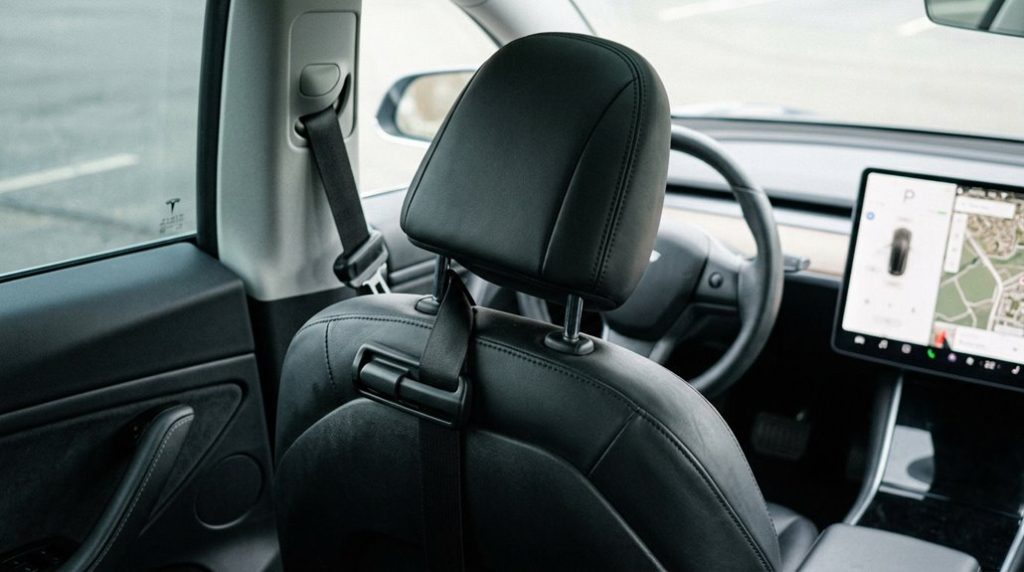
If you’ve been tugging at your Tesla’s headrest hoping it’ll budge up or down, you’re not alone—but Tesla Service is clear that front seat headrests aren’t adjustable, and Tesla doesn’t recommend trying to alter them.
Tesla’s front seat headrests aren’t adjustable—and Tesla Service strongly advises against attempting to alter them.
Factory fixedness isn’t a Tesla quirk; it’s a deliberate design choice shared across many modern vehicles, where headrests are built into a fixed position tuned for safety rather than personal preference.
That said, model variability complicates the image. Some Model S owners have reported screen-based controls that briefly included headrest-related functions—though software updates often removed them.
A handful of third-party guides claim certain Tesla headrests move vertically or horizontally, but Tesla Service doesn’t confirm this. Forum debates run hot on both sides.
The honest answer? What looks like adjustment is frequently just seat profile switching or, occasionally, headrest removal—which Tesla explicitly warns increases your collision injury risk. For optimal safety, the headrest top should sit level with the top of your head and be positioned as close to the back of your head as possible.
It’s also worth noting that Tesla’s seat material and ergonomics have evolved considerably across model years, with later builds showing incremental enhancements in cushioning and support that can influence how the fixed headrest position feels in practice.
What to Know Before Modifying Your Tesla Headrest
Before you grab a screwdriver or start browsing aftermarket neck pillows, you need to grasp exactly what you’re dealing with—because Tesla headrests aren’t comfort accessories, they’re head restraints, and that distinction matters legally, mechanically, and physically.
That single word swap carries real weight. Head restraints exist to limit rearward head movement during rear-impact collisions, and altering them touches safety standards directly. Modify yours incorrectly, and you’ve potentially compromised rear-impact protection while simultaneously creating legal liability exposure if an accident occurs afterward.
Here’s what the numbers actually say: the headrest top should align within ±0.5 inches of your seated ear top, and the gap between your occiput (the back of your skull) and the headrest face should stay at 25 mm or less. These aren’t suggestions—they’re fit guidelines rooted in impact physics. Stray outside them, and your “upgrade” quietly becomes a safety regression.
Drivers outside average height ranges are especially vulnerable to this regression. Tesla’s rigid, vertically fixed design means that drivers under 5’4″ or over 6’2″ frequently experience gaps exceeding four inches between their head and the restraint surface, a misalignment that doubles cervical injury risk in low-speed rear impacts.
Any replacement or aftermarket headrest component you consider should be verified against your specific model year and trim, since model-year incompatibility has caused fitment failures across Tesla lineups when buyers assumed shared compatibility without confirming it first.
If your Tesla headrest feels slightly off, you’ll notice it most on longer drives—tight neck muscles and awkward posture. Instead of putting up with it, add proper support where it actually matters with this memory foam neck pillow so your head and neck stay aligned and comfortable every time you drive.
How to Adjust Tesla Headrests for Neck Support
Getting a Tesla headrest to actually support your neck starts with a frustrating reality: most Tesla headrests are fixed, not freely adjustable like you’d find on a conventional sedan. That means your seat posture does the heavy lifting here.
Start by adjusting your seat height until your sightline clears the dashboard comfortably, then recline your seatback until your spine feels fully supported — not propped forward. Lumbar support alignment directly shifts your upper-body angle, which is effectively informal pressure mapping: redistribute load through your lower back, and your head naturally moves closer to the headrest.
The target? Headrest top level with the crown of your head, positioned close enough that the gap behind your skull measures roughly two to four centimeters. That proximity is what reduces whiplash risk during sudden stops.
If your model includes a side seat button labeled “Headrest,” experiment with small incremental adjustments through the center screen before assuming it’s fully locked. For drivers who want more control over neck positioning, aftermarket options like the Yesak adjustable headrest pillow offer height and angle fine-tuning via built-in adjustment levers designed specifically for Tesla models. Unlike traditional vehicles that require frequent mechanical servicing, Tesla’s compact drivetrain design eliminates many conventional wear points, keeping ownership focus on comfort and efficiency adjustments like these rather than engine-related upkeep.
How to Remove Tesla Model 3 Headrests Without Damaging the Seat
Knowing your headrest’s position matters is one thing — actually pulling it out without wrecking the seat foam or upholstery is another. Tesla doesn’t recommend removing front headrests, and for good reason: doing so increases collision injury risk. If removal is genuinely necessary, start with painter’s tape along the seatback edge (foam protection against tool slippage).
Here’s the mechanical reality. Each front headrest post contains hidden clips, positioned just left of the post. Press the surrounding foam downward to expose them. Using a pick or thin blunt stick, push each clip leftward to disengage. Release one post first, then immediately support the headrest with your free hand — otherwise it sinks and re-locks (frustrating, but physics).
Once both posts disengage, lift straight up. The rear center support follows a different path: raise it fully, press the base button, insert a flat-head screwdriver into the left post’s inner opening, then pull upward. Many issues unrelated to physical adjustments, such as seat position memory or display errors, can be resolved through over-the-air updates without any hands-on intervention. Removal of the center head support is typically reserved for situations requiring improved rearward visibility, making it an uncommon need rather than a routine adjustment.
Neck Pillows and Post-Bending Mods for Tesla Headrest Comfort
Even with the headrest dialed into the right height, the factory foam may still leave your neck floating in an ergonomic no-man’s-land — that’s where neck pillows and post-bending mods come in.
Factory foam often leaves your neck unsupported — neck pillows and post-bending mods close that ergonomic gap.
Tesla’s official Model 3/Y headrest pillow pairs with a lumbar cushion, but third-party memory foam options often outperform it for cervical curve support.
The attachment design matters more than most owners realize. Cheaper strap-based pillows wobble; better-engineered ones clip directly behind the headrest, locking position without drift. Look for silver-tab systems offering roughly 4–5 inches of vertical adjustment — enough to shift contact from upper-neck to mid-head support depending on your preference.
Post-bending denotes physically repositioning the pillow angle to match your cervical curve rather than swapping seat components entirely. Higher placement favors upright driving posture; lower placement suits relaxed highway cruising. Memory foam conforms over time, making placement decisions increasingly personal the longer you use it. If long-haul comfort is a priority, it’s worth noting that Tesla’s built-in trip planner handles Supercharger stop insertion and battery preconditioning, meaning you can schedule rest breaks that double as opportunities to reassess and readjust your seating position on extended drives.
A Tesla headrest can feel uncomfortable when your back isn’t properly supported, forcing your neck into a strained position over time. Fix the root cause instead of constantly adjusting your posture with an adjustable car seat lumbar cushion.
Frequently Asked Questions
Can Tesla Seat Position Memory Settings Affect Headrest Comfort Automatically?
Your memory presets can’t trigger automatic recline of Tesla’s fixed headrests, but they do indirectly improve comfort by restoring your full seat posture, which naturally realigns your head to the integrated head support.
Do Tesla Warranties Cover Damage Caused by Headrest Removal Attempts?
No, Tesla’s warranty won’t cover headrest removal damage. You’ll own the repair liability fully. Misuse, negligence, and improper maintenance trigger warranty exclusions—protecting yourself means leaving headrest adjustments to authorized Tesla service technicians.
Are Tesla Rear Seat Headrests Adjustable Compared to the Front Seats?
Your rear center seat offers rear adjustability—you can raise, lower, or even perform headrest removal. Front seats don’t share this flexibility; they’re fixed and shouldn’t be removed due to collision injury risks.
Can Children Safely Use Tesla Seats With Fixed Non-Adjustable Headrests?
Yes, your child can safely use Tesla’s fixed headrests when you guarantee proper booster compatibility, utilize integration, and neck protection. If the headrest blocks a snug fit, Tesla permits temporary removal for improved child safety.
Does Tesla’s Mobile Service Assist With Headrest Adjustments at Home?
Ironically, Tesla’s mobile service isn’t your headrest adjustment solution—it’s for repairs. You can schedule on-site assistance through appointment scheduling, but they’ll focus on damaged or stuck headrests, not comfort repositioning.