
Tesla owners spend thousands on a car they barely know how to use. Hidden behind a simple voice prompt are commands that release compartments, arm Sentry Mode, and trigger easter eggs most drivers will never stumble across. These aren’t buried in a manual — they’re spoken out loud, right in the cabin. Tesla doesn’t advertise them, and that silence is doing owners a real disservice. The specific phrases that work, the ones that fail, and the commands that will genuinely change your daily drive are all laid out ahead.
How Tesla Voice Commands Work Before You Try Anything
Before you start barking commands at your Tesla like it owes you something, it helps to grasp exactly how the system receives and processes your voice. Tesla’s voice basics rely on a natural language processor, meaning the system interprets colloquial phrasing rather than demanding rigid keyword strings. You don’t need to memorize exact commands — speak naturally, and the system follows.
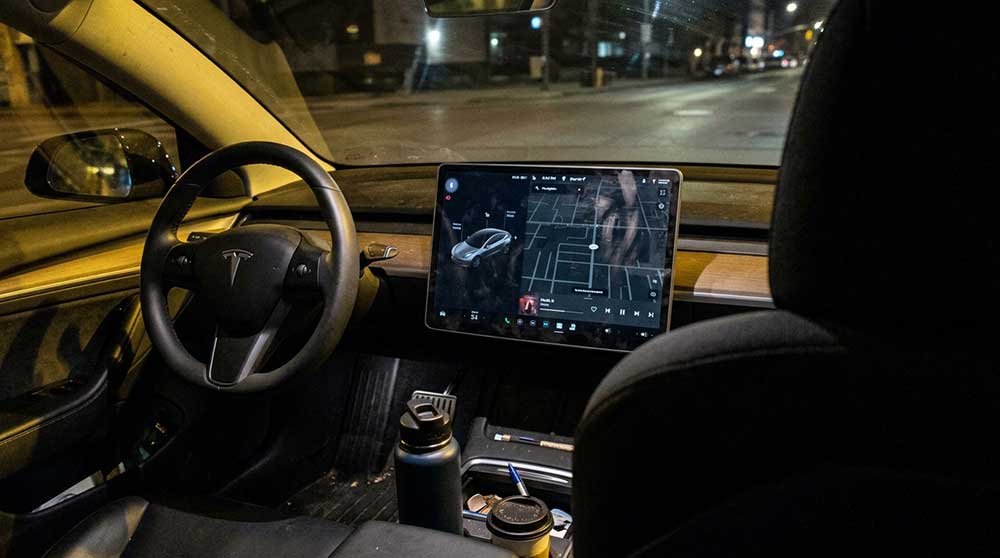
Activation timing matters more than most owners realize. On Model 3 and Model Y, press the right scroll wheel button or tap the microphone icon on the touchscreen. Model S and Model X owners tap the voice button on the steering wheel’s upper right side. Either way, wait for the chime before speaking. That tone confirms the system is actively listening. Speaking before the chime means your command gets clipped or ignored entirely — a small but frustrating detail worth remembering from your very first attempt. Tesla’s over-the-air software updates can expand or refine voice command capabilities after you’ve already driven the car off the lot, meaning the system you buy today may perform better tomorrow without any action on your part. If you’re ever unsure what the system is capable of, simply saying “what can you do” opens the browser to a voice commands webpage and lists its capabilities on the spot.
Hidden Tesla Voice Commands Most Owners Don’t Know Exist
Most Tesla owners tap through menus for everything — charge port, glove box, Sentry Mode — never realizing the voice system handles all of it faster and, in some cases, with considerably more personality. These commands also double as solid accessibility options for drivers managing physical limitations.
| Command | What It Does |
|---|---|
| “Open glove box” | Opens the glove compartment hands-free |
| “Keep Tesla Safe” | Toggles Sentry Mode on instantly |
| “Open front” | Pops the frunk without menu guidance |
Say “Enable Sentry Mode” or “Keep Summer Safe” — both work. For privacy concerns around Sentry recordings, you can disable it just as fast with “Disable Sentry Mode.” The voice system also handles “Lock doors” and “Unlock doors” cleanly. These aren’t buried features; they’re functional shortcuts Tesla built in and simply never advertised loudly enough for most owners to notice. Your current software build number is displayed under Controls → Software on the touchscreen, and keeping it updated ensures voice commands reflect the latest supported feature set. For climate control, saying “Make me hot” sets the system to its maximum HI preset, while “How Low Can You Go” drops it to LOW — no screen interaction required.
Voice control in a Tesla is only as useful as the apps you can actually reach quickly, and fumbling for your phone mid-drive defeats the point of hands-free convenience. A Tesla Center Console Phone Mount keeps your phone stable, visible, and ready for instant voice-triggered navigation or media control without breaking focus.
Climate and Seat Commands That Change How You Drive
Fumbling with the touchscreen while merging onto a highway is exactly the kind of distraction Tesla’s climate voice commands were designed to eliminate.
You can control nearly every comfort setting hands-free, and most owners never use it.
Here’s what your voice can actually manage:
- Set split temperature — Tell Tesla to set the driver side to 72°F and the passenger side to 68°F simultaneously, activating dual-zone split temperature without touching the screen.
- Adjust seat climate intensity — Commands like “set driver seat heater to high” or “turn off rear left seat heater” work precisely as stated.
- Target specific seats — You can address the rear middle seat independently, which most owners uncover accidentally.
- Toggle defrost — Front and rear defrosters respond to direct voice commands instantly.
- Activate keep climate — Telling Tesla to keep the climate on while parked ensures the cabin stays at your set temperature, with the system automatically shutting off if the battery drops to 20%.
Beyond comfort, voice control over climate also plays a practical role in battery efficiency — for example, preconditioning your cabin before a Supercharger stop lets the vehicle’s heat pump and octovalve redistribute thermal energy more efficiently, helping the battery reach optimal charging temperature faster.
These commands don’t just add convenience — they keep your eyes where they belong.
Tesla Voice Commands That Activate Security in Seconds
Your Tesla’s voice command system doubles as a surprisingly capable security interface, letting you trigger Sentry Mode, start Dashcam recording, and lock the cabin without ever touching the screen.
Say “Activate Sentry Mode” (or the less corporate “Keep Tesla Safe”) and the car shifts into full surveillance posture in seconds, with cameras scanning a 360-degree perimeter and logging any detected threats to onboard storage. Tesla’s system relies on eight surrounding cameras feeding continuous visual data to onboard neural networks, giving Sentry Mode comprehensive situational awareness around the vehicle.
Whether you’re rushing into a parking garage or leaving the car in a sketchy lot, these commands cut the usual touchscreen guidance down to a single spoken phrase. On Model 3 and Y, simply press and release the right scroll wheel to activate voice input before speaking any security command.
Tesla voice commands cover a lot, but in real driving moments—traffic, calls, quick navigation changes—reaching the screen or repeating commands isn’t always practical. A Bluetooth Voice-Control Remote gives you a simple, physical way to trigger voice assistants and controls instantly, without breaking focus or slowing down your response time.
Activating Sentry Mode Instantly
When you’ve just parked in a sketchy lot with your hands full of groceries, the last thing you want is to find your way through three touchscreen menus to activate Sentry Mode. Just say it instead.
Your fastest activation options:
- Say “Activate Sentry Mode” after the chime confirms readiness
- Use “Keep my car safe” as an alternative phrase
- Tap the voice toggle icon in the screen’s top-right corner for a single-tap shortcut
- Configure location exclusions so Home and Work never trigger Sentry Mode automatically
Tesla’s natural-language processor maps multiple phrases to the same security action, so rigid phrasing isn’t required. The vehicle must be in Park before any command registers—no exceptions. Unlike traditional vehicles that rely on mechanical adjustments and manual inputs, Tesla handles many functions like this through remote software updates that continuously refine voice recognition, security behavior, and system responses overnight via Wi-Fi.
Dashcam Voice Recording Commands
Avoid “Start Dashcam“; it’s reportedly inconsistent with Tesla’s speech processor (a frustrating quirk for a feature this useful). Note that certain security-related voice recording commands require Park to execute. Either way, you’re preserving collision evidence in seconds—faster than any touchscreen tap. Tesla’s Supercharger network, which launched in September 2012 and has since scaled to 75,000+ connectors worldwide, reflects the same philosophy of reducing friction that makes voice-triggered dashcam saves so valuable on long drives.
Quick Dog Mode Activation
Leaving a pet in a parked Tesla without activating Dog Mode is, practically speaking, a gamble on ambient temperature—and ambient temperature rarely cooperates.
Quick activation via voice skips the HVAC screen entirely.
Here’s the fast sequence:
- Press the right steering wheel microphone button fully until you hear the chime.
- Say “Turn on Dog Mode” clearly and directly.
- Confirm the cabin display shows the active temperature.
- Monitor your Tesla app—you’ll receive a silent notification if battery drops below 20%.
Dog Mode maintains your selected temperature using both heating and cooling systems simultaneously.
The cabin screen reassures passersby that your pet’s comfortable—not trapped.
Voice deactivation works identically once you’re back inside and ready to drive.
You can also use the Tesla app to precondition the cabin before you even reach the vehicle, giving Dog Mode a climate-controlled starting point rather than playing catch-up with an already-hot interior.
Easter Egg Commands Worth Trying at Least Once
Tesla’s Easter egg commands don’t control anything critical, but they’re a deliberate nod to the engineers who built a sense of humor directly into the firmware. Say “Ho Ho Ho” to trigger Santa Mode, which swaps your driver display to a reindeer-and-sleigh scene and pipes Chuck Berry’s “Run Rudolph Run” through the cabin speakers — a fully functional distraction dressed up as a holiday card.
Activate Autopilot four times in rapid succession and Rainbow Road (yes, the Mario Kart one) takes over your driver visualization with a colorful, animated road overlay that makes highway driving feel considerably less mundane. These playful features are delivered through the same over-the-air update process that pushes major firmware releases roughly once a month, meaning new Easter eggs can appear in your car overnight without any visit to a service center.
Santa Mode Surprises
Not every Tesla voice command is built for productivity — some exist purely to remind you that the engineers had fun building this thing. Santa Mode is the clearest proof.
Here’s what happens when you say “Ho Ho Ho”:
- Your vehicle avatar converts into sleigh visuals, replacing the standard car icon.
- Nearby vehicles render as prancing reindeer on your display.
- Chuck Berry’s “Run Rudolph Run” delivers immediate festive audio — one playthrough, no loop.
- Autopilot lane markings shift to an icy road graphic with snowflakes.
Say “Ho Ho Ho, Not Funny” instead, and you’ll trigger “Grandma Got Run Over by a Reindeer” — a deliberate second variation.
Enable “Spread Cheer” through Toy Box to broadcast the audio externally. Yes, outside the car.
Unlike functional modifications, Easter egg activations like Santa Mode carry no risk of triggering warranty audit concerns the way wiring alterations or unsupported tire sizes can.
James Bond Secret Code
Santa Mode proves Tesla’s engineers aren’t above a good joke, but if you want to see where their pop culture obsessions run deepest, press and hold the Tesla “T” icon at the top center of your touchscreen for about four to five seconds. Release once the ripple graphic appears, then enter “007” into the access-code dialog and confirm.
Your vehicle metamorphoses into the iconic Lotus Esprit submarine from *The Spy Who Loved Me*. Steer to your Suspension screen, and ride-height controls disappear entirely, replaced by depth controls measured in Suspension Leagues, ranging from sea level down to 20,000 leagues. Your air suspension actually raises and lowers responding to your selected depth. Hardware matters here — air suspension is required for the full experience. This kind of software-driven personality is part of what distinguishes Tesla’s approach, where over-the-air updates continuously deliver new features and easter eggs without requiring a trip to the dealership.
Rainbow Road Visual Trick
Engaging Autopilot four times in rapid succession does something that has nothing to do with driving assistance — it converts your Autopilot visualization display into a multicolored, Mario Kart-style Rainbow Road track.
Visual placement varies by model, appearing on either the gauge cluster or infotainment screen. Here’s what else to know:
- Activation variations exist across models — newer Model 3 Highland owners without a stalk use the Toybox menu or steering wheel button instead.
- Some software versions offer an “Always Rainbow” Toybox setting that triggers the visual every Autopilot engagement.
- A cowbell sound briefly plays through the speakers (Elon Musk literally called it “psychedelic cowbell road”).
- No gameplay exists — no shells, no shortcuts, just a decorative track overlay.
When a Tesla Voice Command Fails and What to Do
Even the most polished voice recognition system has bad days, and Tesla’s is no exception.
Start with mic troubleshooting basics: confirm you’re pressing the right scroll wheel (Model 3/Y) or microphone button (Model S/X), then wait for the beep before speaking. Speaking before that tone guarantees a miss.
Press the correct button, wait for the beep, then speak — skipping that tone means your command won’t register.
Phrase optimization matters more than you’d think. Tesla’s system responds to canonical wording, so “turn on Sentry Mode” outperforms creative alternatives every time.
Reduce cabin noise, lower the music, and speak at a normal dialog volume.
If the command still fails, check vehicle state requirements — some functions only work while parked or below certain speeds. Try an equivalent built-in phrase before giving up entirely.
Still nothing? Use the touchscreen to confirm the feature actually works. Persistent failures likely signal a software glitch, and a reboot usually clears it. The car isn’t ignoring you; it just needs precise instructions.
Frequently Asked Questions
Can Tesla Voice Commands Be Customized or Remapped to Different Phrases?
Tesla’s voice system isn’t a blank canvas—you can’t remap options or set a custom phrase. There are no voice profiles or third-party integration for remapping. You’re locked into Tesla’s built-in command library.
Do Tesla Voice Commands Work the Same in Every Country and Language?
No, they don’t. Tesla’s language compatibility varies by region and software version, and regional accents can affect recognition quality. You’ll get better results by matching your vehicle’s language settings to your preferred input language.
Will Future Software Updates Add New Hidden Voice Commands to Existing Models?
Yes, future updates will likely add new hidden voice commands to your existing model. Tesla’s OTA system makes backward compatibility straightforward, so you’ll receive expanded controls without needing new hardware.
Can Passengers Trigger Voice Commands, or Only the Driver?
Ironically, it’s not a passenger’s car, yet passenger activation is possible if the mic hears you. Shared control isn’t official, but anyone in the cabin can speak up — the driver just holds the trigger button.
Are Tesla Voice Commands Logged or Stored Anywhere by Tesla?
Tesla logs your voice command transcriptions—not audio—using anonymization methods that strip your VIN and account. You can review data retention settings and access controls under Data Sharing, where privacy audits help guarantee your commands stay protected.