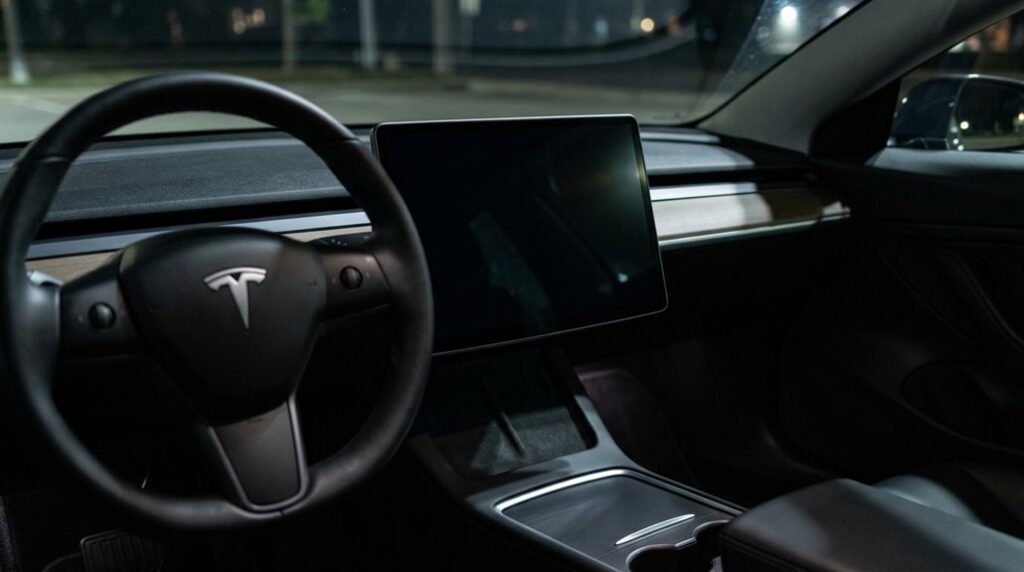

A frozen Tesla touchscreen isn’t a sign your car is dying—it’s just a computer throwing a tantrum. Running Linux under the hood, your screen occasionally needs what any machine needs: a hard reset. The real question isn’t whether it can be fixed; it’s whether you’re using the right method for your situation. Use the wrong reset and you’ll waste more time than necessary. The right one takes under two minutes.
How to Reboot a Frozen Tesla Touchscreen
Rebooting a frozen Tesla touchscreen takes less than a minute and requires nothing more than your steering wheel’s scroll buttons. First, shift into Park — Tesla’s service guidance is clear that you shouldn’t attempt this while moving. Once stopped, press and hold both scroll wheel buttons simultaneously.
Keep holding them until the screen goes completely black (roughly 10 seconds). Then wait approximately 30 seconds for the Tesla “T” logo to reappear, followed by the full interface.
During this window, your vehicle status display, touch calibration, and backup camera will temporarily vanish — don’t panic, that’s expected. Voice commands won’t work either until the system fully recovers.
Importantly, this reboot only restarts the display system, not every vehicle component. Think of it as restarting your phone’s screen rather than the phone itself. Your personal settings and stored data remain completely intact throughout the process. Once the touchscreen is fully restored, the Software screen is your primary starting point for touchscreen troubleshooting before contacting support. If the touchscreen remains unresponsive after this, you can navigate to Controls → Settings → Safety and Security and select Power Off to perform a deeper reset.
Does Your Tesla Model Change How You Reset?
The short answer is: mostly no, but the details matter. Across all models, the core touchscreen restart method stays consistent — hold both steering-wheel scroll buttons until the screen goes black, then wait roughly 30 seconds for the Tesla logo to reappear. Model differences emerge in the deeper reset layers.
On Model S and Model X, Tesla separates the touchscreen restart from the instrument panel reset entirely. Resetting the instrument panel requires holding the two top steering-wheel buttons for 15–30 seconds — a completely different input. Model Y adds the brake pedal to its hard reset procedure, distinguishing it from the softer scroll-button-only restart used across other models.
The safety cautions, however, apply universally. Tesla requires the vehicle to be in Park before any restart attempt, regardless of model. During the reboot, your backup camera and warning displays go dark — so pick a stationary, safe location before you start pressing anything. If the touchscreen remains unresponsive after a scroll-button restart, a hard reset via Power Off in the Safety and Security settings can resolve more persistent issues. It is worth noting that Tesla’s ability to push over-the-air software updates means persistent touchscreen bugs can sometimes be resolved without any manual reset at all.
When a Tesla screen freezes, it’s often not just the display—it can be an early sign of deeper electrical or system irregularities that don’t always trigger obvious warnings until the issue repeats. Having a compact diagnostic tool that reads underlying fault data can help pinpoint what’s actually going on before minor glitches turn into recurring resets or unexpected downtime, like this Tesla-compatible EV monitoring scanner which gives more context than a simple reboot ever will.
Soft Reset vs. Power Cycle: Which Does Your Tesla Need?
A soft reset targets the touchscreen and infotainment system exclusively—think of it as touchscreen diagnostics without touching anything deeper. Your driving systems stay fully powered. Hold both scroll wheels until the screen goes black, release when the Tesla logo appears, and you’re done in roughly 30 seconds.
A power cycle goes further. It shuts the entire vehicle down, which can clear deeper software state issues (including those tied to battery management processes). Go to Controls, Safety, then Power Off—and critically, don’t touch anything for two full minutes. Remote software updates delivered overnight via Wi‑Fi can sometimes introduce the very glitches that make a soft reset or power cycle necessary in the first place.
Start with the soft reset. If unusual behavior persists, escalate to the power cycle. Simple decision tree, significant difference in scope.
Screen Still Frozen? When to Contact Tesla Service
If you’ve run through both the soft reset and the power cycle and your Tesla’s touchscreen is still frozen, unresponsive, or stuck in a reboot loop, that’s no longer a software hiccup you can talk your way out of—that’s a fault signal worth taking seriously.
Recurring freezes after updates, persistent black screens, or dead zones across the panel point toward hardware failure, not transient code errors.
Your service timeline matters here. Don’t wait weeks hoping it resolves itself.
When screen failure blocks your backup camera, defrost controls, or hazard access, that’s a safety escalation—full stop.
Tesla’s own documentation flags these conditions as requiring immediate service attention, especially when owner-level resets produce no lasting fix.
Schedule a Tesla-certified service appointment.
Technicians can diagnose whether you’re dealing with a connector fault, failed display hardware, or a deeper electrical issue—none of which respond to button combinations.
Older vehicles running MCU1 or MCU2 hardware are statistically more vulnerable to display degradation, as their aging processors and limited storage have fewer resources to recover from software faults than the current AMD Ryzen-based MCU3 platform.
A Tesla touchscreen doesn’t need much to start feeling unresponsive—fine dust, fingerprints, and static buildup can all quietly affect how smooth and accurate the display feels, especially if it hasn’t been cleaned with the right materials in a while. Using a proper anti-static microfiber kit helps keep the surface consistently clear and responsive, like this Tesla screen cleaning kit designed specifically for EV displays which reduces buildup that can contribute to touch delays and annoying false inputs over time.
Frequently Asked Questions
Can You Reset Your Tesla Touchscreen While Driving on the Highway?
You *can*, but you shouldn’t. The safety implications and legal considerations are serious — holding steering-wheel buttons while driving creates dangerous distraction. Pull over safely first, shift into Park, then restart your frozen touchscreen properly.
Will a Touchscreen Reset Erase Your Saved Navigation or Personal Settings?
No, a touchscreen reset won’t erase your saved profiles or map caches. It’s simply a system restart, not a factory reset, so your personal settings and route guidance data stay completely intact.
How Often Should You Reboot Your Tesla Screen as Preventive Maintenance?
Don’t fix what isn’t broken — you don’t need regular reboots or preventative cycling on any schedule. Only reset your Tesla’s screen when it’s actually misbehaving, like freezing or acting erratically.
Does a Frozen Touchscreen Affect Your Tesla’s Autopilot or Driving Functions?
A frozen screen doesn’t kill your Tesla’s core driving functions, but it can hurt autopilot reliability by hiding critical prompts and limiting your sensor integration visibility, so pull over and reboot safely.
Can a Software Update Cause Your Tesla Touchscreen to Freeze Repeatedly?
Yes, a software update can cause your Tesla’s touchscreen to freeze repeatedly. New code introduces software conflicts that overload system resources, and poor update timing—like installing during heavy use—can trigger recurring freezes until Tesla patches the bug.