
Tesla’s Service Menu disappearing the moment you actually need it isn’t a glitch — it’s a symptom. Software version gates, MCU hardware limits, and regional rollouts are quietly locking you out in ways most owners never see coming. Builds older than 2022.28.2 won’t even render certain tools, and that’s just the beginning. Each cause has a precise fix, but first you need to know exactly what’s standing between you and that menu.
What Actually Unlocks the Tesla Service Menu
Accessing Tesla’s Service Menu isn’t a matter of stumbling through settings menus until something hidden reveals itself — it’s a deliberate two-step sequence that requires both a physical gesture and an access code to work.
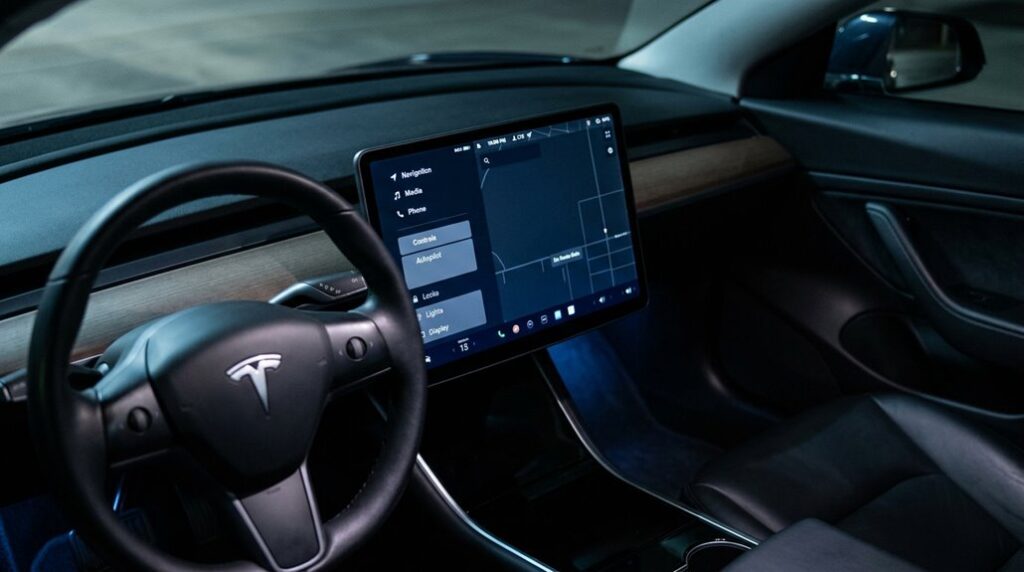
Start in Vehicle Controls, steer to Software, then locate the model-name badge sitting directly beneath the vehicle image on that screen. Press and hold it for two to three seconds. Nail that gesture timing, and a hidden prompt appears — a keyboard field requesting an access code. Without triggering this hidden prompt first, the code alone does nothing.
Once the keyboard appears, type “service” (lowercase, case-insensitive) and confirm. That’s it. Tesla then loads the Service Menu home screen, drops a red wrench icon into your app launcher, and wraps your display in a red border — a clear visual signal that you’re now operating in an active diagnostic state, not your typical driving environment. A right-side bar across the screen also confirms that Service Mode is actively running.
The same Software screen where you initiate this sequence also displays your current build number, letting you cross-reference your software version against the specific procedures and warnings documented for your hardware generation before diving into any diagnostics.
Your Software Version or Model Might Be the Cause
If your Tesla’s service menu is missing or looks nothing like what the guides describe, your firmware version or vehicle generation is likely the culprit — Tesla gates certain UI layouts behind minimum software versions (2019.16 for update preferences, 2022.28.2 or later for specific service tasks), so an older build simply won’t render the same menu hierarchy you’re expecting.
Model generation matters too, since early-production vehicles can expose service options through a legacy path (Controls > Service Mode) rather than the standalone wrench icon that newer firmware plants directly on the main screen. Tesla’s over-the-air software updates can also silently reorganize menu structures after delivery, meaning a feature path that worked last month may have shifted to a different location following a background update.
Run a quick check of your current software version under Controls > Software, because a mismatched UI isn’t a fault — it’s just Tesla quietly reshuffling the furniture without telling you. Once you do confirm you’re on a supported version, accessing service mode requires holding the Model Y icon on the Software screen for three seconds and entering the access code “service”.
Firmware Affects Menu Access
Before assuming something is broken, check your firmware version — because Tesla’s service menu isn’t a static feature baked permanently into the touchscreen UI; it’s a software-gated system where visibility, entry behavior, and available options shift depending on which build your car is running.
Tesla controls menu access through feature flags tied directly to your firmware lifecycle, meaning specific functions (like Software Reinstall inside Service Mode Plus) only surface after hitting certain version thresholds. One confirmed example: reinstall features require build 2022.28.2 or later.
Running anything older? That option simply won’t appear.
Your model and regional configuration compound this further, since Tesla’s rollout infrastructure can pause or pull updates mid-distribution, leaving your vehicle stranded on an older build without the menu additions introduced in newer firmware. Adding to this complexity, feature development is prioritized for MCU3 hardware first, meaning older MCU1 or MCU2 vehicles may never receive certain menu options even after updating to the latest available firmware for their generation.
Model Variations Change Behavior
Firmware version is only half the story — your car’s hardware generation and model year can just as easily explain why a service menu entry is absent. Tesla’s official Service Mode User Guide explicitly states that panels vary by model, year, software version, and installed hardware. That’s not boilerplate; it’s a direct warning about hardware differences across generations.
Legacy Model S (2012–2020) and Model X (2015–2020) owners consistently report shallower menus — limited to options like coolant fill, thermal tests, and door handle data. Newer Model 3/Y platforms expose markedly more diagnostic categories.
What looks like a missing feature is often just platform limitations doing exactly what they’re designed to do: restrict tools irrelevant to that vehicle’s design. Detailed low-voltage battery diagnostics, for example, are only accessible on 2021+ models equipped with 16V lithium-ion batteries, meaning older vehicles will simply never display that section regardless of software version. This hardware generational gap also reflects broader design differences, since Tesla’s compact drivetrain design eliminates dozens of mechanical components found in older vehicles, reducing the diagnostic categories needed for those systems entirely.
When the Tesla app refuses to cooperate, even a simple warning light can leave you wondering whether you actually need service or not. Tire pressure issues are among the most common reasons owners seek support, yet many turn out to be quick fixes that can be checked in minutes. Instead of guessing or waiting for an appointment, keep a reliable tire pressure gauge on hand and know exactly what your tires are telling you before a small issue becomes an expensive one.
Updates Shift Tap Targets
Even when your hardware generation checks out, the software version running on your car can quietly relocate — or outright hide — the exact tap target you’re hunting for. Tesla’s UI drift is real and documented. Older firmware routes you through Controls > Service Mode, while newer builds surface a wrench icon at the screen’s bottom edge — classic icon migration. That’s not a glitch; that’s phased rollouts doing exactly what they’re designed to do.
Software update 2019.16 introduced the Software Update Preference toggle; anything earlier simply won’t show it. Tap relocation also follows update *state* — a green arrow, yellow Wi-Fi warning, or clock icon replaces static buttons depending on download progress. If your expected menu item vanished overnight, a firmware delta is the likely culprit. It’s worth noting that hardware limitations on older vehicles can further restrict which software features and menu options are even eligible to appear, regardless of what firmware version is installed.
By default, your car only contacts the update server once every 24 hours, meaning a menu option tied to a pending update may not appear until that cycle completes.
Is Service Mode Plus Blocking Your Access?
If your Tesla’s service menu has gone AWOL and you’re convinced Service Mode Plus is the culprit, let’s slow down and actually diagnose that assumption. Service Mode Plus isn’t absolutely a permanent lock — it’s a distinct state triggered exclusively by a Toolbox connection from a Tesla-authorized laptop.
Service Mode Plus doesn’t permanently lock your Tesla — it only activates through a direct Toolbox connection from authorized hardware.
No Toolbox, no Service Mode Plus watermark on your touchscreen, and almost certainly no interference from it either.
Here’s what actually distinguishes the two modes:
- Basic Service Mode activates through your vehicle’s software interface alone — no external hardware required
- Service Mode Plus requires an active Toolbox connection and visibly stamps a watermark confirming its presence
- Diagnostic workflows within Service Mode Plus are service-professional tools, not customer-facing permission gates
If you’re missing menu options without that watermark appearing, Service Mode Plus isn’t blocking you. Your actual culprits are software state, vehicle vintage, or a touchscreen that simply needs a reset. For broader vehicle management outside of service diagnostics, Tesla also delivers over-the-air software updates that can independently alter menu configurations and feature availability between service visits.
Why the Menu Loads but Won’t Open Correctly
So you’ve ruled out Service Mode Plus as your culprit — good.
Now let’s talk about what’s actually happening when the menu loads but refuses to open correctly.
This is a touchscreen inconsistency issue rooted in what engineers call an initialization race condition — fundamentally, the software triggers Service Mode before the underlying diagnostic processes finish loading.
The interface accepts your input, begins rendering, then stalls because two competing processes collide at the wrong moment.
Tesla’s Service Mode guide (based on version 2024.2.7) acknowledges that software state directly influences menu behavior.
An interrupted update or unstable software build can make that collision happen every single time.
The fix? Perform a touchscreen reboot (hold both scroll wheel buttons until the screen restarts).
This clears the corrupted initialization state.
If the problem persists, Tesla’s own Service Settings panel includes a Software Reinstall option — assuming you can actually get the menu open first.
Unlike traditional vehicles that require dealership visits for software issues, Tesla resolves many of these problems through over-the-air updates delivered directly to the vehicle without any physical service appointment.
How to Fix a Tesla Service Menu That Won’t Respond
Fixing a Tesla Service Menu that won’t respond starts with ruling out the obvious before assuming something’s seriously broken. Begin with a touchscreen reset, then revisit the activation sequence with precision.
- Image yourself standing at Controls → Software, waiting for the page to fully render before attempting anything — partial loading kills the hidden prompt every time.
- Visualize pressing and holding the large “MODEL” label (not the car image, not a nearby icon) for a full 2–5 seconds until the input field appears.
- Imagine the code verification step: typing “service” in strict lowercase, then confirming with OK — one capital letter and you’re released again.
If the touchscreen still won’t cooperate after repeating these steps correctly, Tesla’s documented fallback is Toolbox 3 with a gateway release. Some service functions simply require that route regardless of how persistent you’re with the screen. The same battery management system that governs real-time Supercharging power limits also communicates critical diagnostic data accessible through the service menu, making proper access essential for accurate charge behavior troubleshooting.
Safety Restrictions That Intentionally Hide Service Mode Features
Tesla didn’t bury the Service Mode access sequence out of laziness or poor UX design — it did it on purpose, and the reasoning is more safety-driven than you might expect. The hidden access path (holding the word “MODEL” on the touchscreen, then entering “service”) exists because the features inside aren’t casual settings. They’re calibration controls, diagnostic states, and inspection tools that can suppress airbag systems, disable occupancy sensors, and deactivate pyro fuses.
That’s not a menu you want a curious teenager stumbling into at a red light.
Technician safety is the core logic here. When a technician is physically inspecting components, the vehicle needs to behave predictably — which means restricting speed, limiting torque, and suppressing systems that could activate unexpectedly. The red “SERVICE MODE” overlay isn’t cosmetic; it’s a live warning that the car isn’t operating under normal safety parameters. Tesla built the obscurity in deliberately. This same principle applies when evaluating modifications — high-voltage tampering and wiring splices carry heavy consequences precisely because they interact with the same interconnected safety systems that Service Mode is designed to protect.
When the Tesla app won’t let you schedule service, you may end up visiting a local tire shop for a rotation, repair, or emergency tire replacement. The problem is that not every technician is familiar with Tesla’s lifting points, and one incorrect lift can lead to costly damage that could have been avoided. Before your car ever goes on a jack, keep a Tesla jack pad adapter set in your trunk and protect your battery from an expensive mistake.
Frequently Asked Questions
Can a Tesla Owner Permanently Lose Access to Service Mode After Too Many Attempts?
Like a jammed combination lock that still opens tomorrow, you won’t face permanent account lockout or security logging penalties — Tesla’s Service Mode stays accessible through repeated attempts or a simple restart.
Does Service Mode Access Differ Between Tesla Vehicles Purchased New Versus Used?
Service mode access doesn’t fundamentally differ between new and used Teslas. Ownership transfer doesn’t block it—software licensing and your vehicle’s current software state, region, and configuration determine what you can access.
Will Entering Service Mode Void Any Remaining Tesla Warranty or Service Agreement?
Relax — you won’t burst into flames touching a diagnostic menu. Entering Service Mode won’t void your warranty or service contracts. Tesla’s own documentation treats it as an approved tool, not a forbidden modification.
Can Tesla Remotely Disable or Monitor Service Mode Activity on Your Vehicle?
Tesla can’t remotely disable your Service Mode, but it’s likely logging remote logging data during active sessions. Don’t expect access alerts—Tesla’s diagnostic ecosystem quietly records vehicle states without notifying you directly.
Does Service Mode Remain Active After a Full Vehicle Power Cycle or Sleep?
No, Service Mode doesn’t survive a full power cycle or sleep event. Its service persistence ends at reboot, and sleep behavior clears it too—you’ll need to re-enter it manually afterward.