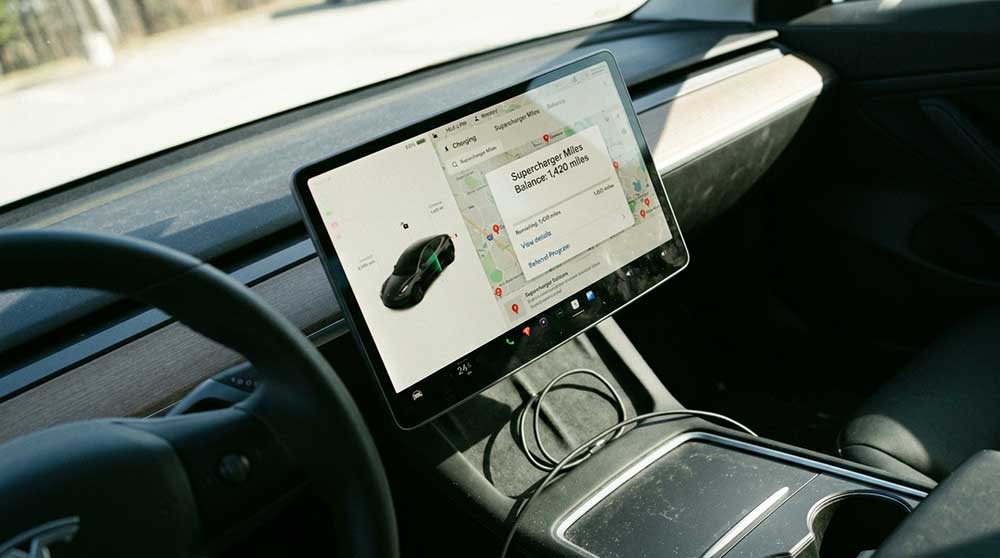

Tesla gave you 1,000 free Supercharger miles—and a silent countdown to take them away. Promotional miles quietly expire after two years, while referral miles can vanish even faster. Most Tesla owners assume these credits sit safely in their account indefinitely, but that assumption could cost hundreds of dollars in charging fees. The exact expiration date is buried in your Tesla account, and what you find there might surprise you.
When Do Tesla Supercharger Miles Expire?
Tesla Supercharger loyalty miles don’t last forever, and knowing exactly when they expire can mean the difference between a free road trip and a balance of zero. The expiration timeline depends heavily on how you earned those miles in the first place.
Referral expirations typically hit six months after redemption. Redeem another batch of referral credits, though, and Tesla extends all your Supercharging miles by another six months — up to a 36-month maximum total. That’s a useful mechanic if you’re actively earning referrals.
Referral miles expire in six months — but redeem more credits and Tesla resets the clock, up to 36 months total.
Promotional miles follow a different schedule entirely. Purchase-based promotions commonly carry a two-year window from your delivery date, though regional variations mean your specific offer terms may differ. Some promotions have even landed with no explicit expiration date attached.
Your Tesla account is the authoritative source for your exact deadline. Each mileage award displays its own expiration date — check it regularly, because display bugs have caused incorrect dates to appear. For long highway trips where you plan to burn through those miles, Tesla’s V3 Superchargers can deliver around 200 miles of range in roughly 15 minutes, making it practical to use your credits efficiently before they disappear.
What 1,000 Supercharger Miles Actually Gets You
A thousand Supercharger miles sounds like a clean, tidy reward — but that number doesn’t mean what most people assume it does. Tesla’s range valuation system means those “miles” are EPA-rated range credits, not odometer miles. The actual energy behind them? Roughly 400 kWh, based on consistent forum reporting.
That 400 kWh carries real monetary weight. At typical Supercharger rates of $0.35–$0.55 per kWh, you’re looking at approximately $140–$220 in charging value. Not bad for a referral perk.
The efficiency comparison matters here, though. A rear-wheel-drive Model 3 stretches those credits further than a loaded Model X towing into a headwind. Real-world highway driving might net you 900–1,200 actual miles depending on speed, temperature, and elevation. Tesla’s global Supercharger network spans over 45,000 chargers worldwide, meaning those free miles are redeemable across a vast range of routes and destinations.
Think of it as a targeted charging subsidy — genuinely useful for road trips, less impressive if you’re mostly charging at home for $0.12 per kWh. Tesla’s trade-in promotion offers 2,000 free Supercharging miles to customers who switch from a gas or hybrid vehicle, doubling what a standard loyalty reward provides.
How Charging Habits Drain Your Miles Faster Than Expected
Those 1,000 Supercharger miles look great on paper until your charging habits quietly start working against them. Battery aging accelerates when you repeatedly push charge levels to 100% or lean on Superchargers for everyday errands. Charging psychology matters here — most owners underestimate how routine decisions compound over months.
| Habit | Stress Level | Impact on Miles |
|---|---|---|
| Daily Supercharging | High | Faster capacity loss |
| Charging to 100% regularly | High | Reduced long-term range |
| Staying above 90% for hours | Moderate | Gradual usable mile shrinkage |
| Charging to 80% daily | Low | Preserved capacity |
| Level 2 home charging | Lowest | Minimal battery wear |
Slower AC charging generates less heat, which directly protects cell chemistry. Keeping your daily limit around 80% and reserving Superchargers for road trips lets those miles stretch further. Your battery doesn’t forget bad habits — it just quietly charges you fewer miles for them. The Battery Management System continuously monitors voltage, temperature, and charging speed to limit unsafe conditions, but it cannot fully undo the cumulative stress that poor charging routines introduce over time. Unlike home AC charging, Superchargers deliver DC directly to the battery, bypassing the onboard charger entirely and generating higher heat levels that compound stress when used too frequently for routine charging.
Supercharger miles don’t feel so “free” when you’re stuck planning your route around limited stations or waiting in a busy queue while other charging options sit unused just a few miles away. The real frustration hits when you realize flexibility—not speed—is what actually keeps road trips smooth. Carry a portable CCS / Type 2 charging adapter so you can plug in at more stations and avoid relying on Superchargers when it doesn’t make sense.
Check Your Tesla Supercharger Balance Before It’s Gone
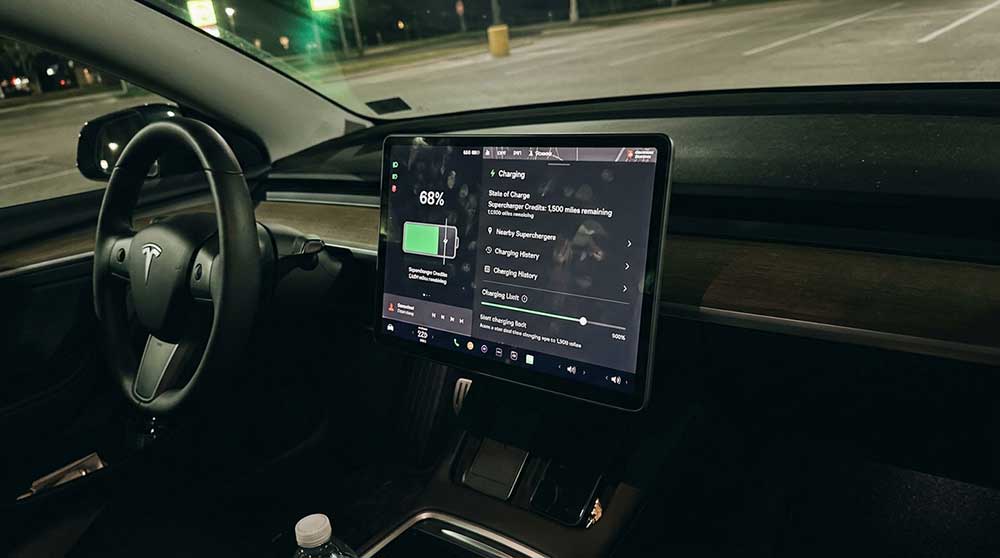
Before those promotional miles quietly vanish, you need to know exactly where to look for them. App visibility isn’t guaranteed across every account setup or region, so start actively rather than assuming the balance is obvious.
Open your Tesla app, tap the square icon in the upper-right corner, select “Earn,” then navigate to “History.” Free Supercharging transactions should appear there. For account verification through a browser, log into Tesla’s website and check “Manage > View Details” — some markets display entitlement type directly, such as “Pay-Per-Use” or “Free Unlimited.”
One technical shortcut: inspect the HTML source of your Tesla account page for option codes. SC01 confirms unlimited free Supercharging; SC00 means nothing’s there. If the interface shows nothing useful, a Tesla service representative can pull your Supercharging status directly. Check before any promotional deadline — credits don’t always broadcast their own expiration loudly.
The app displays your balance in kilometers while the website shows kilowatt-hours, so the unit mismatch between platforms can make it harder to track exactly how much free Supercharging you actually have remaining. You can also cross-reference your vehicle details by navigating to Settings → Software → Additional Vehicle Information on the touchscreen, which confirms configuration specifics that may affect what entitlements are tied to your account.
How to Use Your Remaining Miles Before the Deadline
Once you’ve confirmed your balance and expiration date, it’s time to burn through those miles strategically rather than watching them silently disappear at midnight on some arbitrary calendar date.
Don’t let your miles vanish quietly — spend them with purpose before the deadline steals them.
Weekend roadtrips are your most efficient vehicle for depleting a large balance quickly, since highway Supercharging sessions can pull 150–250 kWh in a single stop depending on your Model variant.
Prioritize sessions where you’re already traveling meaningful distances. Arrive at the Supercharger with your battery below 20% state of charge so preconditioning (activated automatically via Tesla route guidance) keeps the cells near 25°C for peak charge acceptance.
Don’t top off to 100% — stop at 80% where DC fast-charging tapering begins eating your time without proportionally adding range.
Follow basic charging etiquette: don’t idle in a stall post-charge, and favor off-peak hours when congestion won’t interrupt your session.
Keep in mind that real-world highway range typically lands at only 70–85% of EPA ratings, so plan your routes with actual miles per charge in mind rather than sticker figures to avoid arriving at a Supercharger with less buffer than expected.
Every deliberate choice compounds into more recovered value before the deadline hits.
Supercharger miles don’t mean much if your Tesla isn’t getting the range it should from every charge, and one of the most overlooked causes is something as simple as tire pressure. Slightly underinflated tires can quietly drain efficiency, forcing you back to charging stations sooner than expected and making every mile feel shorter than it should be. Keep a portable tire inflator in your trunk so you can maintain proper pressure anywhere and stop losing range you didn’t even realize you were giving up.
Frequently Asked Questions
Can Promotional Supercharger Miles Be Transferred to Another Tesla Account?
Like tattoos, those miles are permanent to one body — yours. No, you can’t transfer promotional Supercharger miles via account transfers or gift codes; they’re locked to your Tesla account and expire unused if you don’t act.
Do Promotional Miles Still Work if You Sell Your Tesla?
Yes, your promotional miles can still work after you sell your Tesla—they’re tied to your account, not the car. Resale implications don’t erase them, as ownership transfer doesn’t strip your balance.
Are Promotional Supercharger Miles Taxable as Income by the IRS?
Generally, you won’t face taxable treatment on promotional Supercharger miles—the IRS views them as purchase incentives, not income. Reporting requirements only kick in if Tesla issues a 1099 or you earned miles through services.
Can Unused Promotional Miles Be Extended by Contacting Tesla Support?
you *can’t* count on Tesla Support for customer remedies. They won’t manually extend your unused promotional miles—your only real safeguard is earning another referral or using them fast.
Do Promotional Miles Apply at All Global Tesla Supercharger Locations?
Your promotional miles generally work across Tesla’s global Supercharger network, but watch for regional restrictions tied to specific campaigns. International availability isn’t always guaranteed, so you’ll want to confirm your offer’s exact terms before traveling.