
White Tesla seats aren’t just high-maintenance—they’re a ticking clock. That pristine urethane-coated vegan leather starts working against you the moment you slide in wearing dark jeans, and UV exposure quietly accelerates the damage even when your car sits parked. Most owners don’t realize the material’s biggest enemy isn’t dirt—it’s what’s already in their wardrobe. Understanding exactly how dye transfer and oxidation compromise your interior changes every protection decision you’ll make going forward.
Why White Tesla Seats Stain So Easily
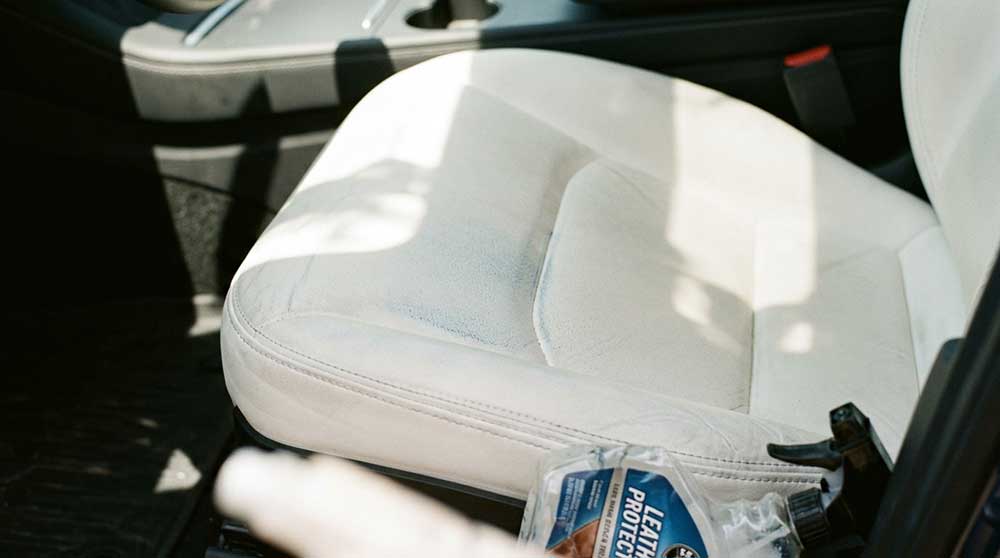
White Tesla seats don’t stain more easily than other premium upholstery — they just make every contaminant impossible to ignore. That’s surface optics doing exactly what physics predicts: light-colored materials reflect more visible wavelengths, so even minor discoloration creates sharp contrast against the background.
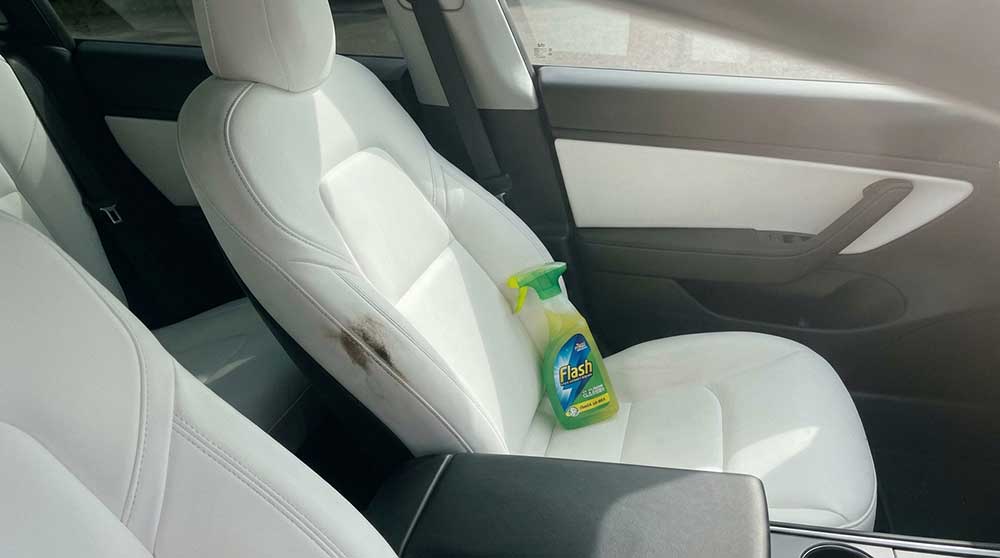
Your dark jeans are the biggest offender here. Denim transfer happens through pure friction — no moisture required — and a single commute can press enough indigo dye into the seating surface to leave a noticeable mark. Body oils, sweat, mud, and food residue compound the problem over time.
Seams and textured panels collect debris faster than smooth surfaces, giving contaminants more area to grip. The material itself is protective (not stain-proof), meaning it resists ordinary soiling but won’t stop pigment from bonding if you leave it sitting. White interiors simply have no margin for delayed cleaning. Stubborn substances like turmeric and kimchi can leave residual discoloration even after cleaning attempts, making prompt action essential.
Keeping documentation of any seat cleaning products or protective treatments you apply is a smart habit, as professional installation records and receipts can support your position if a warranty claim ever involves interior components.
White Tesla seats stay pristine only until the first spill, denim transfer, or unexpected mess starts leaving marks that don’t fully come out, and many owners don’t realize how quickly that clean interior can lose its sharp look. That’s why some choose Tesla White Seat Waterproof Protection Covers, adding a discreet barrier that helps keep the original upholstery protected from daily wear before stains ever become part of the car.
What Tesla Actually Recommends for Cleaning White Seats
Tesla’s official cleaning guidance strips the process down to its essentials: a soft cloth, non-detergent soap, water, and enough patience to work in gentle circular motions rather than scrubbing like you’re trying to remove graffiti.
That’s genuinely the whole system.
Tesla explicitly warns against alcohol, bleach, and harsh chemicals — all of which can degrade the seat material faster than the stain ever would.
Before committing any cleaner to your seats, spot testing on an inconspicuous area isn’t optional; it’s your first line of defense against expensive mistakes.
Apply your mild soap solution to the cloth, not directly onto the seat.
This controls moisture and prevents oversaturation near perforations.
Wipe in small sections, use light pressure, then follow with a dry, lint-free cloth to pull residue out completely.
Leftover cleaner attracts dirt, which defeats the purpose entirely.
Prompt cleanup after spills keeps routine maintenance manageable rather than reactive. It is also worth noting that seat material quality has improved progressively across Model 3 generations, meaning newer builds may respond differently to the same cleaning products than older ones. Following up with a conditioner like HydroLeather every few months adds a protective barrier against UV rays, cracking, and discoloration that basic soap and water alone cannot provide.
Even with careful use, Tesla white seats gradually pick up oils, denim transfer, and subtle marks that build up over time until the interior no longer looks as clean as it did on day one. Many owners stay ahead of that wear with a Tesla Interior Leather & Vegan Seat Care Kit, designed to lift stains safely and keep the vegan leather finish looking consistent without harsh chemicals breaking down the surface.
How Ceramic Coating Protects Tesla’s Vegan Leather Long-Term
- Dye-transfer resistance — jeans rubbing against white seats won’t leave the blue ghost stains you’d otherwise scrub for twenty minutes
- Spill repellency — liquids bead and roll off instead of absorbing into the surface
- UV and aging protection — sunlight and skin oils are the primary culprits behind cracking and fading over time
Durability runs roughly 12 months under normal conditions, though the driver’s seat (predictably the hardest-worked surface) may need reapplication closer to six months.
Correct prep and application make the difference. LeatherShield achieves this through a SiO₂ ceramic coating that forms an impenetrable boundary between the vegan leather surface and everything working against it. Unlike traditional automotive interiors, Tesla’s cabin requires no engine-related upkeep, meaning cabin air filters and interior surfaces become the primary focus of any meaningful maintenance routine.
Daily Habits That Prevent White Seat Stains Before They Start
Ceramic coating buys you real margin against stains, but it’s not a reason to get lazy. Daily habits carry most of the load. First, avoid denim—especially dark, freshly washed jeans—directly against your white vegan leather. Dye transfer happens fast, and older stains resist even pH-neutral cleaners.
Wipe spills immediately using a damp microfiber cloth, then follow with a dry one to prevent streaking and moisture damage. Don’t rub; blot. Food coloring and pigment-based liquids set surprisingly quickly on porous surfaces.
Keep a cleaning schedule: a light damp wipe every two to three weeks prevents oils and dust from embedding into the seat material. For sun protection, park in shade or use a windshield reflector, since prolonged UV exposure degrades the seat’s surface layer over time, making it more absorbent and harder to clean. Tesla’s cabin preconditioning feature, accessible through the Tesla app, can also reduce the time your interior sits exposed to peak heat buildup before you enter the vehicle. Consistent small actions outperform occasional deep-cleaning sessions every time. Applying a fabric or leather protector to your seat covers adds an extra layer of resistance against spills and everyday staining.
Frequently Asked Questions
Can White Tesla Seats Be Re-Dyed if Staining Becomes Too Severe?
Yes, you can re-dye white Tesla seats, but color restoration requires specialty recoloring products, not standard dye. Always verify material compatibility first, as Tesla’s synthetic leather needs specific coatings for lasting, even results.
Do White Tesla Seats Stain More Visibly Than Other Tesla Interior Colors?
Yes, white Tesla seats don’t stain *more*, but they show stains more visibly due to higher contrast. You’ll notice dye transfer instantly, making maintenance frequency and visibility comparison critical factors when choosing your interior color.
How Long Does a Ceramic Coating on Tesla Seats Actually Last?
Like a shield losing its edge, ceramic longevity fades in 6–12 months. You’ll spot wear indicators sooner on your driver’s seat—daily use accelerates breakdown, so recoat every six months to maintain protection.
Are Aftermarket Seat Covers Safe to Use on White Tesla Seats?
Yes, aftermarket seat covers can be safe if they’re airbag-compatible and custom-fit. Prioritize fabric breathability to avoid moisture buildup, keep installation complexity minimal, and avoid dark materials that risk dye transfer onto your white upholstery.
How Soon After Purchase Should Ceramic Coating Be Applied to Seats?
Strike while the iron’s hot—apply ceramic coating as soon as seats are clean and dry. There are no strict timing windows or curing considerations; surface readiness trumps waiting days after purchase.