
Most Tesla Model 3 owners wrapping their cars are unknowingly setting themselves up for a peeling, bubbling mess by next winter. The difference between a wrap that protects your paint for seven years and one that fails in months comes down to three factors most installers never mention: material thickness, adhesive chemistry, and the Model 3’s brutally unforgiving panel geometry. Before you spend hundreds on a wrap job, there’s a critical decision between PPF and vinyl that changes everything.
Vinyl Wrap or PPF: Which One Suits Your Model 3?
Before committing to any film for your Model 3, you need to nail down one question: are you protecting paint or changing how the car looks? That single answer drives every decision that follows.
PPF (paint protection film) is a 200 µm thermoplastic polyurethane barrier built for impact resistance. It self-heals light scratches under ambient heat around 45 °C and lasts 10–12 years. Vinyl wrap runs thinner at 100–150 µm and won’t stop rock chips, but it delivers far superior color durability across a wider finish range—matte, satin, gloss, chrome, and printed graphics included.
Installation complexity differs too. PPF demands precise heat-forming around tight curves (bumper edges, mirror housings), while vinyl is generally more forgiving during application. PPF runs 2–4 times more expensive. For highway driving or long-term ownership, PPF wins. For style-first changes on a budget, vinyl’s your film.
PPF is particularly well-suited for high-impact zones like the front bumper, hood, and side mirrors, where road debris poses the greatest risk. Installers such as Prestige Auto Armor rely on industry-leading materials from suppliers like XPEL and 3M alongside certified technicians trained specifically on Tesla contours to ensure optimal coverage. When selecting an installer, verifying their credentials through Tesla owner forums and independent review platforms helps you avoid counterfeit or substandard film products that have become widespread across major marketplaces.
How to Prep Your Model 3’s Paint Before Wrapping
Once you’ve settled on vinyl over PPF (or the reverse), the film choice means nothing if the paint underneath isn’t properly prepared.
Start with a thorough decontamination wash, then clay bar the entire surface to pull embedded particles that water alone won’t shift.
Decontamination wash first, then clay bar — because water alone never pulls everything the paint has collected.
Follow with a 70% isopropyl alcohol wipe-down using a clean microfiber cloth, focusing on edges where residue concentrates and adhesion eventually fails.
Edge inspection matters here — trapped wax or grime along door jambs and panel gaps creates lift points within weeks.
Humidity control is equally critical. Vinyl is a dry install, meaning even minor moisture in crevices compromises bonding.
Air dry overnight indoors, or check hidden areas carefully before proceeding.
Finally, use a single light source to catch swirls and surface defects. Wrap doesn’t hide flaws — it amplifies them. Tesla’s over-the-air software updates can surface vehicle condition data through the internal display, but paint imperfections require a hands-on visual inspection that no system replaces.
Correct anything visible before the film goes down. Removing components like side mirrors and door handles before application also ensures cleaner edge coverage and reduces the risk of lifting at hard-to-reach seams.
A Tesla wrap only looks premium when the material can stretch cleanly, hold its shape, and resist lifting on those sharp Model 3 curves. Choose professional-grade automotive vinyl wrap film for your Tesla Model 3 before bubbles, peeling edges, and uneven finishes ruin the look you were aiming for.
Which Parts to Remove and Where the Model 3 Gets Tricky
Stripping the right components before you lay any vinyl down separates a clean, lasting install from one that starts lifting at the edges within a month. Trim removal on the Model 3 follows a logical sequence, but skipping steps costs you later.
Start with these high-priority disassembly points:
- Window trim pulls back and lifts off cleanly before any vinyl touches glass-adjacent edges
- Front bumper fasteners release in stages, including hidden screws at the bumper-to-quarter-panel junction
- Wiring disconnects must happen before full bumper removal — red connector clips require deliberate release, not brute force
- Rear molding exposes clips only after weather stripping is pulled back first
The Model 3’s mix of T20 Torx fasteners, plastic bolts, and panel clips demands organized hardware bagging (one dropped 8 mm nut becomes an hour-long search). Use plastic pry tools exclusively near textured surfaces. Be aware that Highland refresh models introduced revised suspension geometry and subframe changes that subtly alter panel fitment tolerances compared to pre-2023 builds, so reference the correct generation documentation before starting.
The door mirror assembly requires disconnecting both the door handle and mirror wiring before the three mounting bolts are removed, with the harness fed back through the door during extraction.
How to Install Vinyl on the Model 3’s Curves and Channels
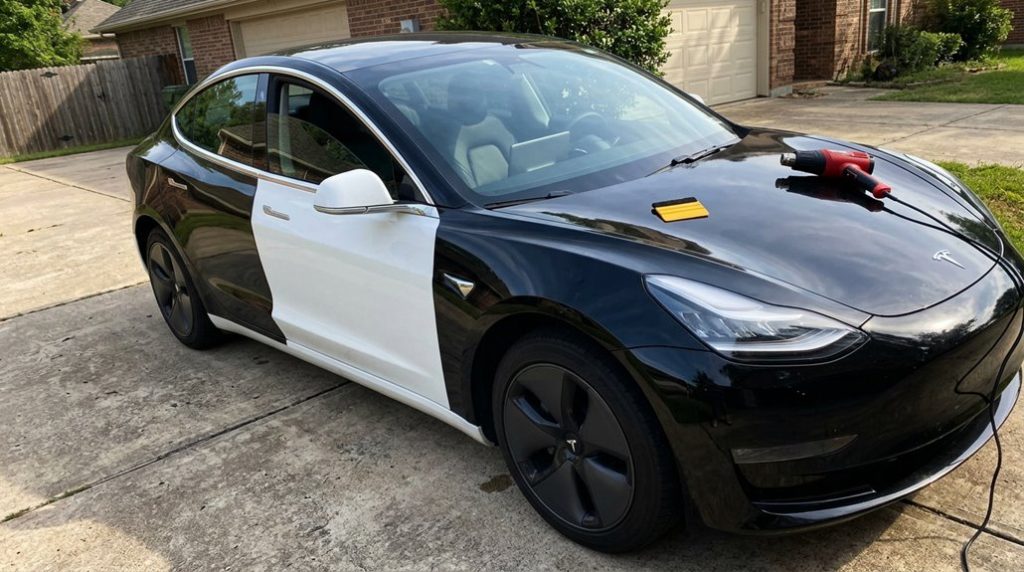
With the Model 3’s trim stripped and your panel surfaces clay-barred, degreased, and hit with a final IPA wipe-down, you’re ready to actually lay vinyl — and this is where the job either comes together or quietly starts failing.
Start every recessed section by working the deepest valley first. Heat the film beforehand so it moves rather than fights you, then push straight down rather than stretching across the channel opening (bridging kills clean results fast).
On curved panels, squeegee from center outward. Lift and re-lay rather than forcing stubborn creases; a squeegee won’t win against physics. Use a felt-edge tool along channel walls to avoid marring the film.
Edge heating is non-negotiable at stress points — it locks film into shifts before tension reverses your work. Where channel adhesives meet complex geometry, let the material settle briefly before final pressing. Post-heat every tucked edge when you’re done. The Model 3’s single consolidated display sits behind a large glass panel that runs flush with the dash, meaning any vinyl work near the interior trim edge must account for that seamless glass-to-surface transition when finishing door and pillar wraps.
When cutting vinyl to size, always measure at the widest points first rather than relying on shorter spots, then give yourself extra bleed on both sides before committing to a cut.
A Tesla wrap only looks clean when the installation is done right—one slip, one air bubble, or one uneven edge can ruin the entire finish and turn a premium look into a costly redo. Most DIY mistakes happen because owners underestimate how precise the process really is. The Tesla vinyl wrap tool kit helps you apply panels cleanly and avoid costly installation errors before small mistakes show up under every reflection and light angle.
How to Care for Your Model 3 Wrap and Make It Last
Getting vinyl down cleanly is only half the job — keeping it intact over the next three to seven years depends entirely on how you treat it afterward. Wash every two to three weeks using pH-neutral shampoo and the two-bucket method, always moving top to bottom.
Heat management matters more than most people expect. UV exposure and extreme temperatures accelerate edge lift, adhesive breakdown, and color fading faster than poor washing technique ever will.
Here’s what actually protects your investment:
- Hand wash only — spinning brushes pull seams apart
- Apply vinyl-safe sealants, never traditional wax, which causes discoloration
- Remove bird droppings and bug residue immediately — prolonged contact degrades film chemistry
- Prioritize seasonal storage indoors or under a cover to minimize UV accumulation
Inspect edges regularly for peeling or bubbling. Catching small lifts early prevents panel-wide failures that force costly re-wrapping. Because Tesla’s battery pack weight runs 800–1,200 pounds heavier than comparable combustion vehicles, the added road stress transferred through the chassis means wrapped lower panels and rocker sections face above-average flex and vibration that can accelerate edge separation over time.
Frequently Asked Questions
How Much Does a Full Tesla Model 3 Exterior Wrap Typically Cost?
You’ll typically spend $3,000–$5,000 for a full exterior wrap, based on average pricing. Your material breakdown matters too—standard vinyl costs less, while chrome or color-shift finishes push costs higher.
Can a Tesla Model 3 Be Wrapped While Still Under Warranty?
Yes, you can wrap your Tesla Model 3 while it’s under warranty. Wrapping doesn’t void coverage, though grasping warranty implications and skipping dealer authorization means installation defects won’t fall under Tesla’s protection.
How Long Does a Professional Model 3 Full Wrap Installation Take?
Your car arrives clean, it leaves converted — professional installation time runs 2 to 5 days. Shop availability and wrap complexity shape that window, so you’ll want to plan accordingly.
Does Tesla Offer Any Official Vinyl Wrap Products for the Model 3?
Yes, Tesla does offer official vinyl wrap products for the Model 3. You can find them through Tesla accessories and authorized dealers, with matte, satin, and gloss finishes available starting at $7,500.
Can Vinyl Wrap Be Applied Over Existing Paint Protection Film?
You can wrap vinyl over your existing paint protection film. Picture a flawless, glass-smooth surface — that’s what you need for strong surface adhesion. Just make sure your paint protection layer’s clean, cured, and bubble-free first.