
Tesla calls it “vegan leather.” Cleaning product manufacturers call it a liability. Most Tesla owners are unknowingly destroying their seats with products sitting right under their kitchen sink. The wrong formula—bleach, high-concentration alcohol, petroleum distillates—doesn’t just stain; it accelerates cracking at a rate no amount of normal wear could match. Before you grab whatever’s convenient, there’s a specific supply list, a precise technique, and a few hard stops you need to know about.
Supplies You Need Before Cleaning Tesla Vegan Leather
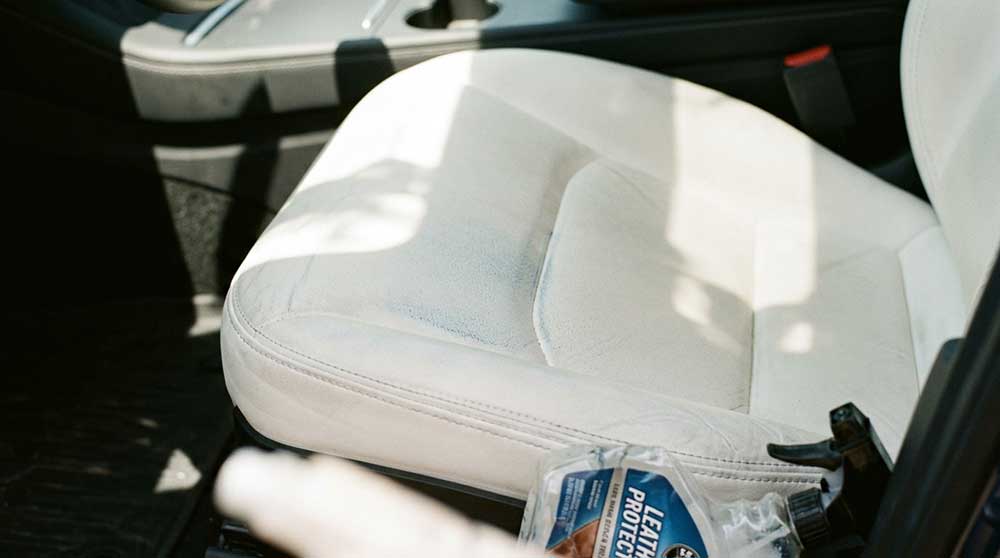
Gather your supplies before you touch the seats — rushing into a clean with the wrong tools is how you turn a minor stain into a permanent feature. Tesla’s vegan leather is polyurethane-based, meaning it responds poorly to harsh chemicals and abrasive materials.
You’ll need at least two clean microfiber towels (one for applying cleaner, one for drying), a soft horsehair detailing brush, a crevice-compatible vacuum with an upholstery attachment, and a pH-balanced interior cleaner formulated for synthetic leather. Check your product shelf life before you start — expired formulas can destabilize and behave unpredictably on coated surfaces.
Store your microfiber towels in a sealed container or dedicated microfiber storage bag to prevent contamination between uses; a dirty towel reintroduces the exact grime you’re trying to eliminate. Keep a small applicator pad available if you plan to follow up with a protective coating. For Tesla owners who want a purpose-built option, TesLiner is a Tesla-owner-founded brand that manufactures its interior leather cleaner in the United States.
Unlike traditional vehicles, Tesla requires no engine oil changes or similar fluid-based maintenance, so your interior care routine becomes one of the more hands-on upkeep tasks you’ll regularly perform — making proper cleaning supplies an essential part of responsible ownership.
How to Clean Tesla Vegan Leather Seats Step by Step
Breaking the process down into steps makes the difference between a clean that holds and one that just redistributes grime across your cabin.
Start by vacuuming the seats thoroughly, hitting every seam, perforation, and fold where crumbs and grit hide. Skipping this step is how you turn cleaning into sanding.
Next, dampen (not soak) a microfiber cloth with a pH-neutral soap solution and work in small circular sections. Light pressure lifts body oils and surface soil without stressing Tesla’s vegan leather coating. Follow immediately with a dry microfiber towel to pull residue before it dries and streaks.
For odour removal, the same mild solution handles most biological sources when combined with thorough extraction. Color matching concerns arise when cleaners are too aggressive, stripping surface pigment unevenly. Air-dry completely; Tesla specifically warns against heat drying.
Inspect each section, repeat only where buildup remains, and you’re done. When selecting cleaning products, keep in mind that OEM parts and accessories are engineered to factory specifications, meaning Tesla-branded cleaning solutions are formulated with the same precision to avoid material incompatibility. Once the seats are clean, apply a leather conditioner using a microfiber applicator to restore a soft, supple feel and nourish the material.
Tesla seats look clean until the first real stain shows up—coffee drips, denim dye transfer, or everyday grime that slowly dulls that factory-fresh finish. The problem isn’t just appearance; using the wrong cleaner can permanently alter the texture or leave uneven patches that stand out even more than the original mark. Keep your Tesla interior looking factory-clean with a seat-safe leather cleaner kit designed specifically for vegan leather before stains settle in and become permanent.
What to Avoid When Cleaning Tesla Vegan Leather
Knowing what to do only gets you halfway there — the other half is knowing what’ll quietly ruin your seats before you realize it. Tesla’s vegan leather (a polyurethane-based synthetic) has a sealed, matte finish that reacts poorly to the wrong inputs. Harsh chemicals like bleach, ammonia, alcohol, and acetone dry out the surface coating, eventually causing cracking. Abrasive tools — rough sponges, hard-bristle brushes, Magic Erasers — scratch that smooth finish permanently. Neither problem announces itself immediately, which makes them worse.
Skip leather conditioners designed for genuine hide; vegan leather doesn’t absorb them, and the residue creates buildup. Avoid detergent-heavy sprays and anything without a pH-neutral formula. Don’t let spills sit, don’t oversaturate the surface, and never scrub vigorously — rubbing pushes grime deeper and accelerates visible wear. Always test unfamiliar products on a hidden area first. Shortcuts here cost you upholstery later. This matters even more on later Model 3 builds, where material and finish refinements have raised the perceived quality of seats — making damage to that improved surface noticeably more disappointing.
Tesla interiors don’t stay spotless on their own—especially once dust settles into the seams, sunscreen builds up on contact points, or seat wear starts showing in high-use areas. Regular wipes only handle the surface, and that’s usually when owners notice the “clean” look slowly fading. Go beyond surface cleaning with a deep interior care kit that lifts embedded dirt and helps restore your Tesla seats before everyday wear becomes impossible to ignore.
Daily Habits That Keep Tesla Seats Looking New
The best defense against stained Tesla seats is also the least dramatic one: clean them before they actually need it. Weekly wipe-downs stop dirt from embedding into the synthetic leather’s grain, stitching, and side support creases where grime accumulates fastest. Think of it as seat rituals rather than reactive damage control.
Your technique matters too. Always dry-wipe first (a clean microfiber removes loose debris without dragging grit across the surface), then follow with a barely damp cloth carrying a mild, non-detergent solution. Apply product to the cloth, never directly onto the seat. Finish by buffing dry immediately.
Touch etiquette applies daily: address spills within minutes, not hours. Fresh contamination lifts cleanly; set contamination scrubs aggressively and sometimes permanently. Keep in mind that substances like hand sanitizer can permanently burn and saturate the material if left unaddressed.
Consistent light maintenance reduces long-term wear from embedded grime, preserving the seat’s original texture and appearance far longer than occasional deep-cleaning sessions ever could. Tesla’s over-the-air software updates can notify owners of vehicle condition changes, but interior fabric care remains entirely the owner’s responsibility and no app alert will flag a slow-building stain.
Frequently Asked Questions
Can Tesla Seat Stains Affect My Vehicle’s Warranty Coverage?
Seat stains won’t void your entire warranty, but Tesla can deny stain-related claims under warranty exclusions. You’ll improve your chances by maintaining thorough claim documentation, including photos and records of approved cleaning methods used.
Do White and Black Tesla Seats Require Completely Different Cleaning Approaches?
Like two sides of the same coin, white and black Tesla seats don’t require completely different approaches — the color contrast shifts material perception around stain visibility and frequency, not the core cleaning method you’ll use.
How Soon After a Spill Should Tesla Seats Be Cleaned?
Act within minutes. Immediate blotting prevents liquid from seeping into seams or perforations. The longer you wait, the harder removal becomes, potentially requiring delayed professional cleaning to restore your seats properly.
Can Parking in Shade Actually Protect Tesla Synthetic Leather Seats?
Yes, parking in shade does protect your Tesla’s synthetic leather seats. You’ll gain real shade benefits by limiting direct UV exposure, which slows fading, reduces heat buildup, and delivers meaningful UV protection for your interior.
Does Repeated Alcohol Use Permanently Damage Tesla Seat Coating?
Yes, repeated alcohol use causes alcohol degradation that permanently strips your seat’s protective top coat. Once it’s gone, you can’t achieve coating restoration at home — your seats become far more vulnerable to staining and wear.