
Most Tesla owners assume their factory tyres can handle anything the road throws at them. They can’t. Tesla engineers each tyre setup for specific seasonal conditions — and driving outside those parameters quietly erodes your safety margins in ways most drivers never notice. What makes this even more surprising is how deliberately technical Tesla gets when speccing tyres straight from the factory.
How Tesla’s Factory Tyre Setup Actually Works
Tesla doesn’t just slap any tyre onto its cars and call it a day — the factory setup is a carefully engineered system where wheel size, tyre dimensions, and vehicle trim all feed into one another. Factory fitments vary markedly across models and trims, so what rides under a standard Model 3 differs meaningfully from what’s spec’d beneath a Performance variant.
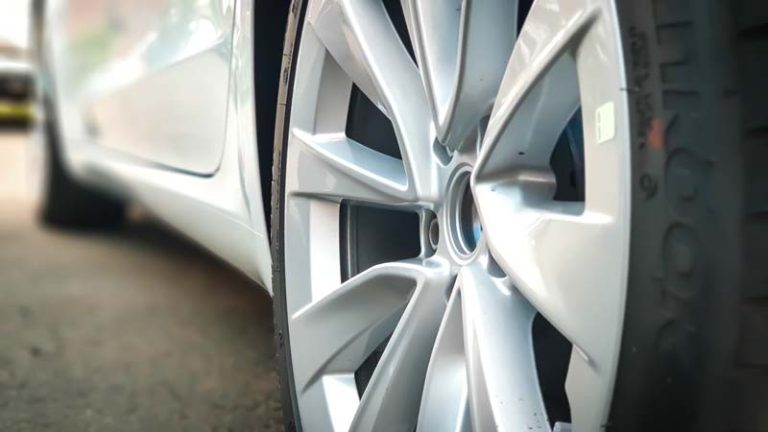
Wheel offsets matter more than most owners realise. A Model 3’s 18-inch and 19-inch wheels run a 38mm offset, while a 20-inch front wheel drops to 34mm — a small number with real consequences for handling geometry and clearance. The Model Y runs a 45mm offset across both its 19-inch and 20-inch configurations, keeping tyre positioning consistent despite the size jump.
You’ll also find square and staggered setups across the range. Efficiency trims favour square (identical sizes all around), while performance trims go staggered — wider rears for traction, narrower fronts for steering precision. Notably, moving from 19-inch to 21-inch wheels on the Model Y Performance — which also gains a lowered suspension and wider track — costs approximately 20–30 miles of range per charge.
Tesla tires aren’t always designed for every season, and depending on the model or wheel setup, many owners only realize the difference when grip drops in wet weather or wear starts showing. A Tesla-compatible all-season performance tire set helps balance dry, wet, and light winter driving conditions in one setup, giving more consistent traction and everyday usability without needing to switch tires between seasons.
Why Tesla Tyres Wear Faster Than You’d Expect
Knowing what rubber sits beneath your Tesla is one thing — grasping why it disappears faster than you’d expect is another matter entirely.
Three forces work against your tread simultaneously: instant torque, heavy weight, and factory alignment priorities.
Electric motors deliver peak torque from a dead stop, meaning your rear tires experience maximum shear stress before you’ve left the traffic light. That scrubs rubber efficiently — sometimes brutally.
Layer in the heavy weight of Tesla’s battery pack (often 1,000+ lbs alone), and your contact patch endures heightened load continuously, generating heat that degrades the tread compound over time. Because of this added mass, Teslas require higher load-rated tires than similarly sized combustion vehicles to maintain both safety and efficiency.
Add performance-oriented negative camber accelerating inner-shoulder wear, regenerative braking shifting deceleration forces unpredictably across axles, and soft performance compounds that prioritise grip over longevity — and you’ve got a recipe for tires disappearing well before 30,000 miles.
Some owners report replacements as early as 10,000–18,000 miles. To slow that cycle, regular tire rotation every 5,000–7,500 miles remains one of the most effective ways to distribute wear evenly across all four corners.
Your driving habits final decide which camp you’ll join.
Even the right all-season tires can underperform if tire pressure slowly drifts out of range, which is easy to miss during daily driving until you notice uneven wear, reduced range, or a less stable ride in wet conditions. A Tesla tire pressure monitoring and maintenance kit helps you keep PSI consistently in the optimal range, supporting even tire wear, better efficiency, and more predictable handling across changing road and weather conditions.
Do Tesla Tyres Handle All Seasons or Just Ideal Ones?
Many Tesla owners assume their factory tyres handle every season competently — a reasonable assumption that turns out to be wrong in ways that matter. Tesla explicitly distinguishes between summer, all-season, and winter tyres, treating seasonal performance as a genuine technical category rather than a marketing footnote.
Summer tyres hit their temperature limits fast. Below 32°F, the rubber compound stiffens, grip drops, and Tesla’s own guidance says: don’t drive them on snow or ice. Full stop.
All-season tyres cover more ground, handling moderate climates reasonably well year-round. But “adequate traction in most conditions” isn’t the same as optimal traction in harsh ones. Tire Rack’s Model 3 testing revealed wet lap times varying by nearly 2.5 seconds between tyre models — a gap that reflects real stopping distances, not abstract statistics. Selecting the wrong tyre size for your Tesla can also create unsupported tire size risks that serve as legitimate warranty audit triggers with Tesla’s service team.
Your climate determines your correct tyre, not your Tesla’s badge. For owners seeking a single set that handles warm-weather performance and occasional cold conditions, options like the Nokian Surpass AS01 include aramid fiber pothole protection built directly into the tyre carcass — a durability feature designed to manage the added weight and torque demands of EVs.
The Hidden Tech Built Into Every Tesla Tyre
When you strip away the branding and look at what’s actually inside a Tesla tyre, you find engineering decisions that most owners never think about — and that most tyre shops aren’t prepared for.
The most significant example is acoustic insulation achieved through foam bonding — a thick strip of open-cell foam adhered directly to the tyre’s inner liner. Because Teslas produce zero drivetrain noise, road and tyre noise become the dominant cabin sounds at highway speeds. That foam layer dampens internal air column resonance, meaningfully reducing the hum you’d otherwise hear on coarse pavement.
Beyond acoustics, Tesla OE tyres carry load ratings matched to battery-pack weight and speed ratings suited to instant torque delivery. Michelin, Pirelli, Continental, and Hankook all supply EV-configured variants built around low rolling resistance compounds (directly affecting real-world range). The battery pack itself adds considerable mass to every Tesla, and larger packs experience gentler relative stress during fast charging precisely because that weight is distributed across greater energy capacity.
Standard tyre shops often mishandle foam-lined tyres during repairs, so knowing what’s inside yours actually matters. Tesla has also been testing Michelin airless tyres, a technology that would eliminate puncture-related breakdowns entirely and further reduce the tyre waste that conventional pneumatic tyres generate throughout their lifespan.
How to Choose the Right Replacement Tesla Tyre
Choosing a replacement tyre for a Tesla isn’t as straightforward as walking into your nearest shop and grabbing whatever fits the rim — the vehicle’s weight distribution, instant torque delivery, and near-silent drivetrain all place demands on rubber that a generic fitment simply won’t meet.
Teslas demand more from their tyres than weight and rim size — generic rubber simply wasn’t built for this.
Start with size. Your Model Y might run 255/45R19 up front and back, while a Model S uses staggered widths front-to-rear, so matching the exact specification matters enormously for handling balance and efficiency.
Next, check load ratings. Tesla’s heavier battery pack means your replacement tyres must meet or exceed ratings like 96W or 98Y (the number reflects load capacity, the letter reflects speed). Undersizing here isn’t just inefficient — it’s unsafe.
Replacement timing matters too. Industry guidance puts the practical swap threshold at 4/32 inch tread depth, with 2/32 inch being the legal floor in most regions.
Don’t wait for the floor.
It’s also worth knowing that instant torque delivery accelerates tyre wear faster than a conventional petrol vehicle, so inspecting tread depth more frequently than you might have before is a sensible habit.
Frequently Asked Questions
Can I Mix Different Tyre Brands on My Tesla Without Voiding Warranties?
You can run a mix matched setup, but you’re risking warranty conflict if damage occurs. Maintain brand compatibility per axle, avoid a staggered setup across seasons, and keep specs within Tesla’s approved load and speed ratings.
How Does Cold Weather Affect Tesla Tyre Pressure and Range Simultaneously?
Cold contraction drops your tyre pressure roughly 1 psi per 10°F, increasing rolling resistance. Combined with battery impact from cold-reduced efficiency and cabin heating, you’re losing range from two directions simultaneously.
Are Tesla Tyres Covered Under the Vehicle Warranty or Separate Tyre Warranty?
Your Tesla’s tyres aren’t covered under the vehicle warranty. Instead, you’re relying on the tyre manufacturer’s separate tread warranty for defects, while road hazard protection typically comes from your retailer.
Do Run-Flat Tyres Work as a Safe Replacement Option on Teslas?
Run-flat reliability sounds appealing, but you’re trading comfort tradeoffs for a stiff, range-hungry ride Tesla’s suspension wasn’t tuned for — like wearing boots to a sprint. Stick with Tesla-approved tires instead.
How Do I Know When My Tesla Tyres Are Dangerously Close to Failure?
You’ll know your Tesla’s tyres are dangerously close to failure when tread depth drops below 4/32″, sidewall damage like bulges or cracks appears, or you notice persistent vibrations, pulling, or repeated pressure loss.