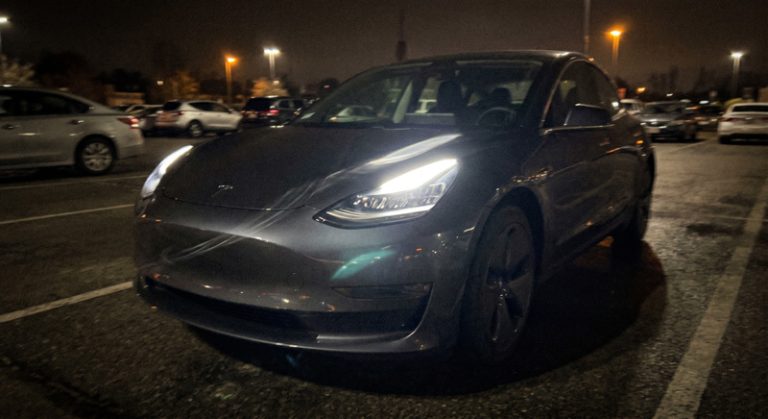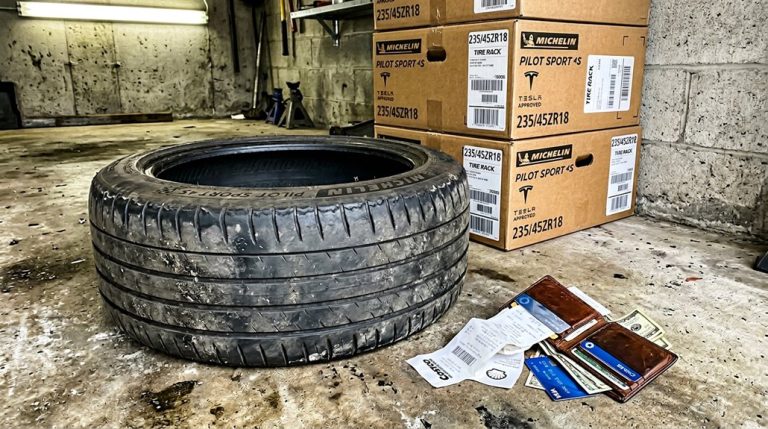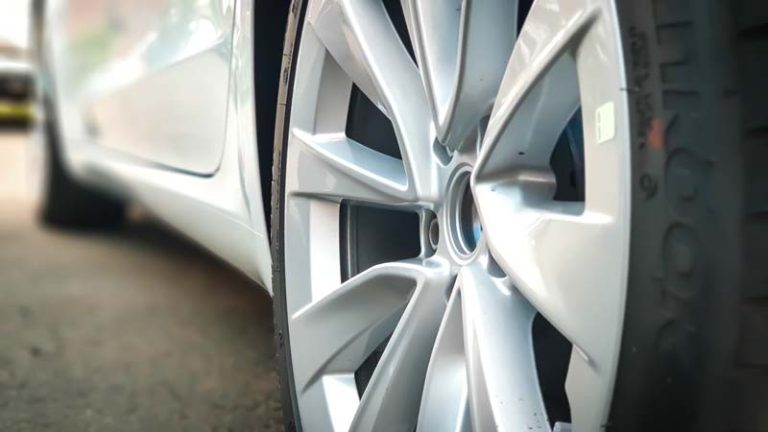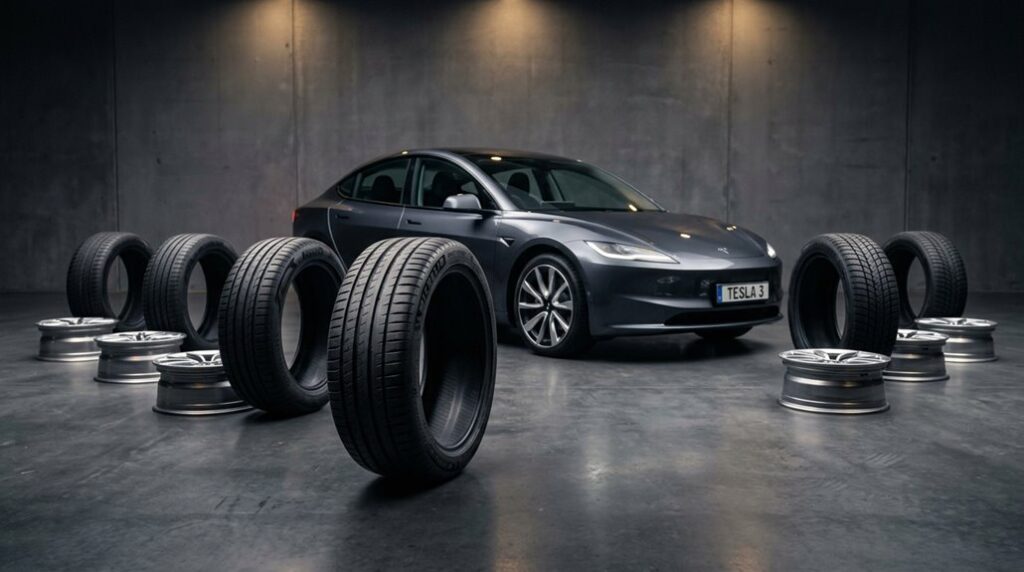

Most Tesla owners obsessing over range and performance completely overlook the one thing touching the road. Swap in the wrong rubber and you’ve essentially bolted four anchors beneath a spacecraft — bleeding range, amplifying cabin noise, and surrendering that savage instant torque to premature tread wear. These aren’t ordinary cars; a 2,200 kg EV punishes mediocre tyres in ways combustion drivers never experience. Seven replacements exist that genuinely change what your Tesla is capable of.
Why Tesla Tyres Require a Different Replacement Standard
Because Teslas are fundamentally different machines from combustion-engined cars, the tyres they ride on need to meet a genuinely higher standard — not a marketing claim, but a physics reality. Battery packs push kerb weight markedly higher than comparable petrol vehicles. A Model 3 sits around 4,000 lb, while a BMW 3 Series comes in closer to 3,500 lb. That 500 lb gap matters enormously for load distribution across each contact patch.
More mass means greater stress during cornering, braking, and acceleration. Standard passenger tyres aren’t engineered with that kind of sustained punishment in mind. Their tire chemistry often can’t handle the combination of raised load and the instant torque electric motors deliver from a dead stop.
Replacement tyres must meet or exceed your vehicle’s required load rating — full stop. Fitting underrated rubber might seem like a cost-saving move, but you’re quietly compromising both durability and safety every mile you drive. The high torque launches that make Teslas so responsive from a standstill also accelerate tyre wear at a faster rate than most drivers anticipate when budgeting for ownership. To further reduce the harshness of road noise transmitted into the cabin, many Tesla-compatible tyres incorporate acoustic foam liners inside the tyre structure to absorb sound before it reaches occupants.
What Tesla Actually Installs From the Factory: Foam Liners, OEM Brands, and Load Specs
Your clearest OEM identifiers are T-marks stamped on the sidewall (T0, T1, T2), signalling that the tyre was engineered to Tesla’s specifications. Nail one on your current fitment, and you’re looking at a factory-grade component.
Those tyres also include acoustic foam bonded inside the liner — Tesla reports a 6 dB noise reduction at 200 Hz, which is genuinely noticeable inside the cabin. Standard replacement tyres skip that entirely. Combined with model-specific load ratings and sizes (18″ through 21″ on the Model Y), factory fitments aren’t arbitrary — they’re calculated. When selecting replacement tyres, always verify fitment by model, year, and VIN, as generic listings claiming broad compatibility are frequently unreliable indicators of actual fit.
Michelin supplies over half of all Tesla factory tyre fitments, making them the dominant OEM partner across the range.
Tesla’s instant torque changes everything about tire wear, and most owners only realize it when grip starts fading sooner than expected or road noise creeps into the cabin over time. The right replacement tire isn’t just about performance—it quietly affects range, comfort, and how confidently the car behaves in wet or uneven conditions. Check Michelin Pilot Sport All Season 4 EV tires if you want a setup that keeps up with Tesla’s weight, power, and daily driving demands.
The 7 Best Tesla Replacement Tyres Ranked by Model and Use Case
Picking the wrong replacement tyre for a Tesla isn’t just an inconvenience — it’s a direct hit to range, cabin acoustics, and handling balance that the factory spent years calibrating. Whether you’re a daily urban commuter squeezing every mile from a charge or chasing lap times like track tyres were made for, the right fitment changes everything.
| Use Case | Recommended Tyre |
|---|---|
| All-Season Balanced | Michelin Pilot Sport All Season 4 |
| Range & Comfort | Bridgestone Turanza EV |
| Performance Summer | Michelin Pilot Sport 4S |
| Winter/Cold Weather | Nokian Hakkapeliitta R5 EV |
| EV-Specific All-Season | Hankook iON evo AS SUV |
Each pick targets a specific driving reality. The Turanza EV prioritizes acoustic foam compatibility and rolling resistance. The Nokian handles sub-7°C conditions where summer compounds fundamentally become plastic. Match your tyre to your actual driving pattern — not your aspirational one. Higher rolling resistance from an ill-matched tyre compounds energy loss in much the same way that battery thermal management inefficiencies reduce available range at a Supercharger. The Continental ExtremeContact DWS06 Plus is worth considering for year-round drivers, as its DWS tread wear indicators visibly signal when dry, wet, and snow performance capabilities begin to degrade.
Tesla replacement tires aren’t just about getting new rubber on the car—they quietly shape how the vehicle feels every single day, from cabin noise on the highway to how smoothly it handles sudden torque in city traffic. The wrong choice can make the drive feel harsher over time, even if everything else about the car stays the same. Keep things close to the factory feel with Continental ProContact RX tires if you want quiet, balanced performance that fits everyday Tesla driving.
How Tesla’s Weight and Instant Torque Wear the Wrong Tesla Tyres Fast
Tesla’s heavy battery pack — often adding 1,000 lbs or more over comparable ICE vehicles — pushes markedly higher vertical loads onto each contact patch, accelerating tread wear on the shoulders and center blocks faster than most standard tires are engineered to handle.
Compound that with instant torque delivery (zero RPM to peak torque in milliseconds), and you’re generating tread shear forces at the driven axle that gradually scrub rubber away long before the mileage warranty expires. High-performance models like the Model S and Model X are particularly susceptible, with rear tires wearing at a noticeably accelerated rate due to the concentrated torque demands placed on them. The Model S Plaid’s tri-motor torque vectoring system, which independently distributes power across three motors with millisecond precision, places uniquely uneven and dynamic stress loads on tires that standard compounds simply aren’t built to absorb repeatedly.
Put the wrong tires on a Model 3 Performance or a Model X, and you’re not just shortening service life — you’re actively fighting the physics every time you leave a stoplight.
Tesla’s Heavy Battery Impact
Because a Tesla isn’t just a car — it’s a rolling battery pack with a sports car’s ambitions — the tyres underneath it face a workload that standard passenger rubber simply wasn’t designed to handle.
That battery mass sits low in the chassis, which is great for handling but brutal on contact-patch stress. Your tyres are continuously supporting a heavier load than most passenger-rated compounds expect, even at highway cruise. The thermal effects compound the problem: more mass converts more energy into heat during braking and cornering, accelerating rubber degradation from the inside out. Underinflate even slightly, and carcass flexing intensifies that heat further. Standard tyres weren’t built for this sustained thermal and mechanical punishment — EV-specific construction genuinely is a different job. In fact, instant torque and vehicle weight have been identified as direct contributors to faster-than-expected tyre wear across Tesla’s lineup, making tyre selection and replacement a more frequent ownership consideration than most buyers anticipate.
Instant Torque Tread Stress
Weight is only half the punishment — the other half arrives the instant you touch the accelerator. Tesla motors deliver peak torque at 0 rpm, meaning your rear tyres absorb maximum rotational force before the car has moved an inch. That instant torque abrasion works by creating micro-slippage at the contact patch, generating heat that accelerates compound breakdown faster than any gradual ICE launch ever would.
You’ll notice tread edge rounding earlier than expected, particularly on rear-drive and Performance variants where torque loads concentrate on driven wheels. Economy-focused OE tyres aren’t engineered to handle repeated high-torque events without consequence. Stiffer sidewalls and torque-optimised compounds resist deformation better, protecting tread geometry longer. Tesla’s neural network processing continuously adjusts acceleration outputs in response to real-time conditions, meaning torque delivery events can occur repeatedly and unpredictably across a single journey. Choose accordingly, or your tyre budget suffers the consequences.
How Tyre Choice Directly Affects Your Tesla’s Estimated Range
Your tyre choice isn’t just about grip — it directly determines how far your Tesla travels on a single charge, because rolling resistance (the energy your motor expends to keep a tyre rolling) accounts for a measurable portion of total energy consumption, particularly at steady highway speeds.
Tesla’s own data shows that switching to Goodyear Eagle Sport T1 tyres on an early Model S improved EPA-estimated range by up to 20 miles, which proves that the compound, construction weight, and tread pattern of a tyre are legitimate engineering variables, not marketing footnotes.
Staying within Tesla-approved sizes and selecting EV-specific or touring-oriented compounds — rather than chasing wider, heavier performance fitments — keeps rolling resistance low, preserves the efficiency your drivetrain was calibrated around, and stops you from unknowingly trading 15 miles of range for a sportier sidewall profile.
Upsizing to larger wheels compounds this problem further, as wide-tread performance tyres on upsized wheels can result in a 20–25% total range loss when the effects of increased rolling resistance, aerodynamic drag, and heavier unsprung mass are combined.
Rolling Resistance and Range
Regarding maximising your Tesla’s range, tyre choice isn’t cosmetic — it’s physics. Rolling resistance is the energy your drivetrain expends keeping tyres moving at steady speed. Lower rolling resistance means less wasted energy, which directly extends your estimated range. Tesla’s OE tyres use eco compounds specifically engineered to minimise deformation and heat buildup — two primary energy thieves during cruising. The range impact becomes most measurable over a full battery cycle, where even modest coefficient differences compound noticeably.
However, the trade off is real: tyres optimised for low rolling resistance sometimes sacrifice wet braking performance or snow grip. Tesla’s own data suggests purpose-designed tyres can deliver up to 10% more range versus aftermarket alternatives — meaningful mileage you’d otherwise leave on the road. Just as battery preconditioning warms the pack before a Supercharger stop to optimise charging efficiency, selecting the right tyre compound is another layer of energy management that compounds across every journey.
Tyre Weight Considerations
Rolling resistance tells only part of the range story — the mass of your tyres tells the rest. Because tyres sit at the outermost edge of the wheel assembly, their weight creates rotational inertia, which forces your motors to work harder during every acceleration event. That physics penalty compounds in stop-start urban driving, where repeated acceleration cycles drain range faster than highway cruising ever would.
Unsprung mass matters too. Heavier wheel-and-tyre packages move less efficiently over road imperfections, costing energy your battery never recovers. One Tesla Model Y study found a lighter tyre package reduced equivalent sprung weight by roughly 240 lbs — yielding an estimated 11 to 23 additional miles of range. Narrower, lighter replacements consistently deliver measurable efficiency gains without requiring dramatic compromises. Upgrading from 19-inch to 21-inch wheels, for example, is already known to reduce range by 20 to 30 miles per charge, reinforcing how significantly wheel and tyre mass shapes real-world efficiency.
Approved Tyres Boost Efficiency
Tyre choice isn’t just a purchasing decision — it’s an efficiency variable with real, measurable consequences for your Tesla’s range. Tesla estimates up to 10% range improvement when using Tesla-designed tyres over generic aftermarket alternatives — a gap that compounds across daily commutes and long highway runs.
Approved efficiency matters because certified compounds are specifically engineered for low rolling resistance, minimising the energy your drivetrain wastes overcoming friction. Tire Rack’s real-world testing confirmed this: the Hankook iON evo AS consumed 263 Wh/mile on a Model 3, while the Michelin Pilot Sport All Season 4 consumed 292 Wh/mile — a 29 Wh/mile penalty just from tyre selection.
That’s physics, not marketing. Touring and EV-specific tyres consistently outperformed performance-oriented alternatives, making them the rational default for range-conscious Tesla owners. The Tesla Model 3 also allows drivers to monitor tyre health directly from the cabin, with tyre pressure display accessible through the vehicle’s internal screen — a practical feature for maintaining the inflation levels that keep rolling resistance in check.
TPMS Sensors and BLE Calibration: What Tesla Tyre Swaps Get Wrong
Swapping your Tesla’s tyres seems straightforward until the TPMS warning light refuses to leave you alone. Tesla uses Bluetooth Low Energy (BLE) to communicate live pressure data from each wheel sensor to your dashboard. Sensor pairing isn’t automatic — the system needs time and movement to recognise the new configuration. Drive at mixed speeds for at least 15 minutes to allow drive stabilization, giving the sensors enough cycles to report consistently.
Tesla’s TPMS needs time and movement to recognise new sensors — drive at mixed speeds for at least 15 minutes.
Old sensors are the usual suspects. TPMS batteries last five to seven years, and a tyre swap often exposes a weakness that previously went unnoticed.
Aftermarket sensors create an entirely different problem. Tesla periodically increases BLE reporting-frequency requirements through software updates, which can render third-party sensors non-compliant overnight (a 2024 update confirmed this pattern).
If warnings persist after inflating to the correct pressure and completing a reset, suspect hardware failure or compatibility mismatch — not a leak.
Lifting Pucks, Rotation Schedules, and Long-Term Tesla Tyre Maintenance
Keeping your Tesla’s tyres in good shape long-term means getting a few fundamentals right before you ever touch a jack handle. Tesla’s reinforced lift points require proper jack pad fitment — use rubber or polyurethane lifting pucks sized specifically for your model’s recessed sockets. Skip this step and you’ll deform the sill, crack an underbody panel, or worse, contact the battery enclosure directly.
Once you’re rolling again, rotate tyres around every 6,250 miles. Tesla’s instant torque and regenerative braking create wear patterns that differ noticeably from combustion vehicles, so don’t stretch that interval. AWD models often need earlier rotations due to higher torque stress across all four contact patches.
Pressure monitoring deserves equal attention. Underinflation accelerates shoulder wear and raises rolling resistance — both costly on a heavy EV. Check inflation weekly if you’re driving hard. Also inspect sidewalls, tread depth across multiple points, and valve stem condition at every seasonal changeover.
Frequently Asked Questions
Can I Use Winter-Only Tyres on My Tesla During Cold Months?
Yes, you can use winter-only fitment on your Tesla during cold months. While they enhance cold-weather grip, swap them into seasonal storage once temperatures rise to protect tread life and preserve range efficiency.
Does Tyre Width Affect Tesla Charging Efficiency or Regenerative Braking Performance?
Tyre width doesn’t directly alter your Tesla’s charging or regen systems, but wider tyres increase rolling resistance and expand the contact patch, slightly reducing efficiency and the energy you’ll recover per mile.
Are Run-Flat Tyres a Viable Option for Any Tesla Model?
Say you blow a tyre on a motorway at midnight — run flats offer emergency mobility, but they’ll compromise your ride comfort, spike tyre temp faster, and slightly reduce your Tesla’s range efficiency.
How Do Tesla’s Track Modes Interact With Street-Oriented Replacement Tyres?
When you activate Tesla’s track tuning, it amplifies tire slip demands beyond what street-oriented replacement tyres handle efficiently. You’ll experience faster heat buildup, reduced grip consistency, and slower lap times compared to dedicated performance summer tyres.
Will Aftermarket Wheels Void My Tesla Warranty if Paired With Approved Tyres?
Nearly 60% of warranty disputes stem from fitment issues. Aftermarket wheels won’t automatically void your Tesla’s warranty—but poor mounting compatibility and faulty warranty implications arise when incorrect specs cause component failures.