
Swapping a jackhammer for a library—that’s what ditching a combustion engine actually does. No more thousands of controlled explosions per minute, no mechanical symphony of spinning parts, no relentless low-frequency rumble. But here’s what nobody tells you: quieter isn’t silent. What remains in an electric drivetrain creates its own acoustic fingerprint, from motor whine to tire resonance, and the physics behind it are genuinely strange. Understanding it changes how you think about sound itself.
Why Electric Cars Are Quieter Than Gas Vehicles?
When you strip away everything a gas engine does, you’re also stripping away most of the noise it makes. Combustion engines generate sound through thousands of controlled explosions per minute, plus mechanical friction across dozens of moving components. Electric motors eliminate all of that. What remains is a faint motor hum and what engineers sometimes call a battery whisper — the near-silent electrical activity powering your drivetrain.
The physics here are straightforward. Fewer moving parts means fewer vibration sources. No camshafts, pistons, or exhaust systems means no corresponding noise signatures. At low speeds (below roughly 30 km/h), this difference becomes genuinely dramatic. You’re not just hearing less engine noise — you’re hearing almost none.
Gas vehicles mask road and wind noise behind constant powertrain sound. EVs don’t offer that cover. The quiet you notice isn’t an illusion. It’s simply what a drivetrain sounds like when combustion is no longer part of the equation. Some electric vehicles take this further through over-the-air software updates that allow manufacturers to refine noise management and drivetrain behavior without requiring a physical service visit. To further protect that silence, automakers engineer vehicles with specialized insulation materials that prevent what little mechanical noise remains from reaching the cabin.
What Sounds You Actually Hear Inside an EV?
Stripping out the combustion engine doesn’t leave you with silence — it leaves you with a completely different acoustic profile, one made up of sounds you’d normally never notice.
Your Tesla’s electric motor produces a faint whine during acceleration, while power electronics generate a soft high-frequency tone under load. You’ll catch battery whispers from coolant pumps circulating thermal fluid through the battery pack, especially during fast charging or preconditioning cycles. The HVAC compressor, no longer masked by engine noise, becomes surprisingly audible. Seat ventilation fans, adjustment motors, and accessory actuators all contribute short clicks and low-level hums.
At low speeds, cabin creaks from trim panels and loose fasteners stand out sharply because road noise hasn’t yet risen to cover them. At highway speeds, tire contact patches dominate the soundscape instead. It’s less silence, more a curated assortment of mechanical honesty you simply weren’t hearing before.
Federal regulations also require EVs traveling under 18.6 mph to emit an external warning sound so that pedestrians can detect the vehicle’s presence and location. During a Supercharger session, coolant pump activity intensifies noticeably as the vehicle manages battery pack temperature to sustain optimal charging rates and protect long-term cell health.
How Automakers Engineer Out Road and Wind Noise?
Stripping out road and wind noise isn’t accidental — automakers run computational fluid dynamics (CFD) simulations and full-scale wind tunnel sessions to map exactly where turbulent airflow separates around A-pillars, mirror housings, and door seams before a single production panel gets stamped.
Once engineers identify the high-noise zones, they attack them with three overlapping tools: refined aerodynamic geometry to smooth airflow shifts, acoustic foam-lined tires to absorb low-frequency resonance inside the tire cavity, and active road-noise cancellation (ANC) systems that use chassis-mounted accelerometers to generate inverse sound waves and cancel vibration before it reaches your ears. Tesla, in particular, has pushed all three fronts aggressively, because without a combustion engine masking the chaos underneath, every rogue whistle and road thrum earns a starring role in the cabin. This sensitivity to noise is compounded by the fact that Tesla’s compact drivetrain contains only around 17–20 moving parts, eliminating the masking rumble of spark plugs, timing belts, and exhaust systems that traditionally buried cabin noise in combustion-engine vehicles.
Aerodynamic Design Strategies
| Design Zone | Strategy Applied | Primary Benefit |
|---|---|---|
| A-Pillar | Rounded shifts | Reduces vortex formation |
| Underbody | Flat panel sealing | Cuts turbulent eddies |
| Front Fascia | Responsive shutters | Balances drag vs. cooling |
These aerodynamic refinements work alongside efficiency-focused engineering priorities that also drive Tesla’s real-world range to typically reach 70–85% of EPA-rated figures on the highway.
Quieter Tire Technology
Even with a perfectly sculpted body and a sealed underbody, your Tesla still rolls on four tires that are fundamentally hollow rubber drums spinning at highway speed — and that’s where a surprising amount of cabin noise originates. That trapped air resonates like a drum cavity, transmitting vibration directly into the cabin. To counter this, engineers bond open-cell polyurethane foam (acoustic lining) to the tire’s inner surface, absorbing sound waves before they amplify. Continental’s ContiSilent system reduces interior noise by up to 9 dB(A) — a meaningful drop you’d actually notice.
Meanwhile, tread sequencing varies block size and spacing to break up repetitive tonal frequencies at the contact patch. Together, these two technologies convert your tires from noise generators into surprisingly effective noise suppressors. When selecting replacement tires, it’s worth noting that unsupported tire sizes can create warranty audit triggers that affect coverage on related vehicle systems.
Active Road-Noise Cancellation
Quieter tires get you surprisingly far — but they can’t solve the problem they’re physically inside of. That’s where active road-noise cancellation (ARNC) steps in. It uses accelerometers, microphones, and a DSP to generate inverted sound waves that cancel low-frequency road rumble (roughly 20 Hz–1 kHz) before it reaches your ears.
| Component | Function | Limitation |
|---|---|---|
| Accelerometers | Capture chassis vibration | Misses airborne noise |
| Microphone placement | Validates cancellation near occupants | Can’t cover full cabin |
| Speaker optimization | Delivers anti-noise precisely | Geometry-dependent performance |
| DSP processor | Computes anti-noise in milliseconds | Struggles above ~1 kHz |
You’re not getting full-cabin silence — you’re getting targeted quiet zones. Sudden impacts don’t cancel well. Steady highway rumble? That’s where ARNC genuinely earns its place in modern EV design. The effectiveness of ARNC systems also depends on the underlying processing hardware — vehicles running more capable platforms like AMD Ryzen-based processors can handle heavier real-time DSP workloads with reduced latency. The anti-noise signal is ultimately delivered through speakers via amplifier, completing the cancellation loop between sensor input and acoustic output.
How Speed Affects How Quiet an EV Actually Sounds?
Speed is the single biggest variable controlling how quiet your EV actually sounds — but it doesn’t work the way most people assume. Below 50 km/h, your electric motor contributes almost nothing audible, so speed perception genuinely favors EVs. That’s where the roughly 10 dB advantage over petrol equivalents actually lives.
Below 50 km/h, your electric motor contributes almost nothing audible — that’s where the EV’s real acoustic advantage lives.
Above 50 km/h, tire-road interaction takes over completely, erasing most of that advantage. Both EVs and ICE vehicles fundamentally become rolling noise generators at that point — the motor’s silence stops mattering.
Acceleration masking complicates things further. Hard acceleration can add up to 10 dB at low speeds (20–35 km/h), because high torque loads amplify tire-road contact noise markedly. Stop-start urban driving with aggressive throttle inputs quietly dismantles your EV’s acoustic reputation.
Frequency shifts, too. Higher speeds push noise energy from low-frequency hums into mid-range bands (400–2500 Hz), where the human ear is considerably more sensitive. Interestingly, advanced driver-assistance systems like Tesla’s Traffic-Aware Cruise Control manage speed and following distance in ways that can reduce the aggressive throttle inputs most responsible for amplifying low-speed road noise.
EVs remove engine noise, which is great for refinement—but it also makes road hum, tyre noise, and small interior vibrations far more noticeable than most drivers expect over time. An automotive cabin noise reduction kit helps dampen vibration and reduce road noise inside the cabin, making longer drives quieter and restoring a more composed, comfortable feel at higher speeds.
Why Quiet EVs Need Artificial Warning Sounds?
That near-silent electric motor you love at 10 mph is precisely what makes your Tesla a genuine hazard for pedestrians who can’t hear it coming — especially in parking lots, crosswalks, and driveways where most low-speed collisions actually happen.
The U.S. NHTSA quantified this risk seriously enough to mandate audible alerts on all EVs traveling up to 30 km/h (roughly 19 mph), a rule tied to projections of 2,464 avoided accidents involving cyclists and pedestrians.
Enter AVAS (Acoustic Vehicle Alerting System), the regulatory answer to a very real problem: artificially generated warning tones that scale in volume with your speed, differ between forward and reverse for directional clarity, and are engineered to cut through ambient noise rather than just tickle your own eardrums. This same drive toward silent, efficient propulsion also underpins technologies like DC fast charging, where Tesla’s Supercharger network bypasses the onboard AC charger entirely to deliver power directly to the battery pack at speeds unimaginable in the gasoline era.
Pedestrian Detection Safety Risks
While modern EVs have made notable advances in performance and efficiency, their near-silent operation at low speeds introduces a genuine safety concern that’s easy to overlook until you’re backing out of a parking spot and a pedestrian appears from nowhere. Pedestrians rely heavily on auditory cues as early warnings, and quiet EVs remove that signal entirely.
Pedestrian awareness drops markedly in shared-space environments, where urban signage alone can’t compensate for missing engine noise. UK research from the University of Leeds found nearly identical casualty rates between EVs and conventional vehicles (57.8 versus 58.9 incidents per billion miles), suggesting perception outpaces actual risk.
Still, low-speed scenarios in parking lots and crosswalks remain the most vulnerable environments, particularly for visually impaired pedestrians and anyone wearing headphones. Many Tesla models, including the Model 3 and Model Y, rely on over-the-air updates to introduce and refine safety features like pedestrian warning sounds without requiring a physical service visit.
AVAS Regulatory Requirements
Because regulators worldwide recognized that a silent vehicle is effectively an invisible one to pedestrians, Acoustic Vehicle Alerting Systems (AVAS) became legally mandated technology rather than a polite manufacturer suggestion. Different markets drew their own lines, though regulatory harmonization is gradually closing those gaps.
| Region | Standard | Speed Threshold |
|---|---|---|
| Europe/Global | UN R138 | 0–20 km/h |
| United States | FMVSS 141 | 0–30 km/h |
| China | GB/T 37153 | Aligned with UN R138 |
Sound must vary with speed (not just drone flatly), staying under 75 dB(A) at two meters. Manufacturers now treat acoustic branding as legitimate design territory — your Tesla’s pedestrian alert isn’t random; it’s engineered, regulated, and regionally calibrated. This engineering priority extends into vehicle electrical architecture as well, since the Cybertruck’s 48-volt electrical system reduces resistive heat and current load compared to traditional 12-volt setups, indirectly contributing to the quieter mechanical profile modern EVs are designed to maintain.
How EV Quietness Reduces Driver Fatigue and City Noise Pollution?
Driving a combustion car through rush-hour traffic is fundamentally running a low-grade stress test on your nervous system for thirty minutes straight — engine noise, exhaust rumble, and drivetrain clatter compound into a constant sensory load your brain has to work against even when you’re not consciously aware of it. EVs eliminate that entirely. Without cylinder explosions or exhaust pulses, your cognitive load drops noticeably, and long commutes feel genuinely less draining. Studies report that extended exposure to lower cabin noise reduces perceived fatigue on highway trips, something Tesla’s acoustic glass reinforces by cutting low-frequency road rumble specifically.
Scale that up citywide, and the math gets interesting. Urban acoustic research documents 1–5 dBA reductions when fleets electrify, particularly during low-speed acceleration near intersections and delivery zones. That translates directly into neighborhood livability gains — fewer sleep disturbances, lower chronic stress exposure, and measurable public-health improvements for residents living near high-traffic corridors.
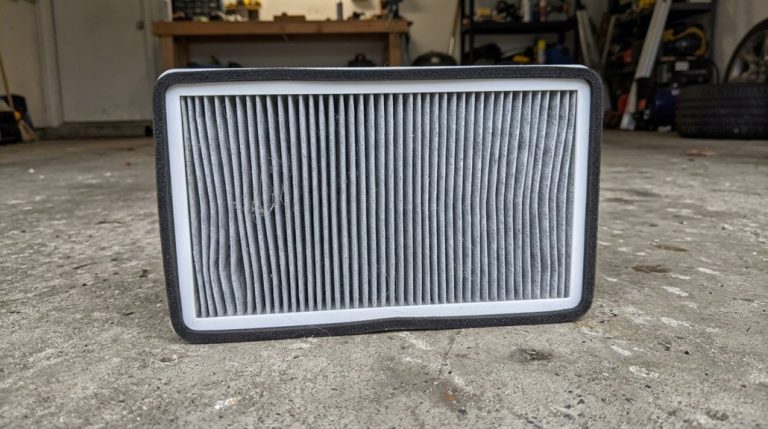
One of the side effects of a quieter EV cabin is that you start noticing everything else more clearly—air quality, subtle odors from traffic, and fine dust that can enter during daily driving in urban areas. Over time, that can make the cabin feel less fresh than expected. A Tesla cabin air filter upgrade helps improve filtration of dust, pollen, and pollutants while supporting cleaner, smoother airflow through the HVAC system, keeping the cabin environment consistently more comfortable on everyday drives.
Frequently Asked Questions
Can Quieter EVS Affect How Well Drivers Hear Emergency Sirens Approaching?
Like a hushed library, your EV’s quiet cabin can cause siren masking, making it harder to detect emergency vehicles. Stay alert, prioritize pedestrian awareness, and keep your volume low.
Do EV Tires Wear Differently Than Conventional Tires Due to Extra Silence?
Your EV tires don’t wear differently because of silence—they wear faster due to instant torque, heavier battery weight, and tread composition engineered for low rolling resistance, which can sacrifice some longevity under demanding conditions.
Does EV Cabin Quietness Make Passengers More Prone to Motion Sickness?
Yes, EV quietness can make you more prone to motion sickness. Without engine noise, your brain experiences sensory mismatch, leading to cabin disorientation as it struggles to anticipate movement, making passengers—especially rear-seat riders—more vulnerable to nausea.
Can Road Noise Cancellation Systems Interfere With a Tesla’s Audio System?
Yes, active cancellation can cause speaker interference in your Tesla. It misreads music as noise, attempts to suppress it, and introduces audio artifacts — especially when low-frequency sound overlaps with road-noise cancellation signals.
Does Tesla’s AVAS Warning Sound Differ Across International Vehicle Regulations?
Yes, your Tesla’s AVAS warning sound differs internationally due to regulatory variations in volume thresholds and activation speeds. While language localization doesn’t apply, Tesla calibrates each region’s system to comply with local pedestrian safety laws.