
Tesla owners swear by their cars—but almost nobody talks about the seats. After 18 months in a Model 3, a single measurement tells a surprisingly uncomfortable story: that 19-inch cushion depth quietly punishes your knees past the 90-minute mark. Meanwhile, Tesla’s foam runs noticeably firmer than BMW’s by a measurable margin. Your body type and trim level change everything about this experience—and most drivers are making it worse without realizing it.
Tesla Seat Comfort: Honest Verdict After Daily Driving
Driving a Tesla daily puts its seats to the test faster than any press review ever could, and the honest verdict is: comfort is real, but it’s not universal.
You’ll find that commuting and long-distance daily driving tend to showcase Tesla seats at their best. Many owners — including Model Y Standard drivers logging serious highway miles — report genuine comfort during routine use. But your experience depends heavily on your body type, seating position, and even your model year.
The complaints aren’t usually about sharp pain. They’re about firmness (minimal cushioning is a recurring theme), pressure point sensitivity, and comfort that erodes on rougher roads.
Here’s the thing: seat customization matters enormously. Small positional adjustments can shift your experience from “tolerable” to “actually good.” Temperature control features further hone long-haul comfort. Tesla seats aren’t uniformly plush — but with the right setup, they’re more than serviceable for most drivers. Owners who opt for 18-inch wheels also report a noticeably more dampened, comfortable ride compared to those running larger wheel options with reduced tire sidewall. Keeping tire pressure cold at Tesla’s recommended specs — around 42–45 PSI for Model 3 and Y — also contributes to ride comfort by preventing the harshness that comes with overinflation.
Where Tesla Seats Actually Deliver: Lumbar Support and Long Trips
Tesla’s built-in lumbar system is genuinely one of the stronger arguments for the seats’ long-trip credibility, giving you fine-grained control over the contact point along your lower spine to maintain the natural inward curve (lordosis) that keeps back muscles from overworking across several highway hours.
The catch is that lumbar support isn’t a set-it-and-forget-it feature — your posture shifts during extended driving, so a setting that feels perfectly calibrated at mile 50 can quietly become excessive pressure by mile 200. Start low, increase gradually while sitting upright, and pair the lumbar adjustment with seat height, backrest angle, and tilt to build a posture stack that actually holds up past your first gas-station-free tank of miles. Seat adjustments on Tesla vehicles are made entirely through the touchscreen, since traditional physical knobs for controls like climate and seating have been replaced by layered software menus on the central display. Drivers who find the built-in adjustment still leaves a gap can add an aftermarket lumbar support pillow that rests against the lower back without straps and stays in place even during ingress and egress.
Built-In Lumbar Performance
| Feature | Driver’s Seat | Passenger Seat |
|---|---|---|
| Air Bladder System | Yes | Removed (newer builds) |
| Multi-Zone Adjustment | Yes | Limited/None |
| Long-Trip Effectiveness | High | Varies by build date |
Small, incremental adjustments work best here. Crank it too far, and you’ll feel like you’re being pushed forward. Dial it correctly, and it fills the critical gap between your lumbar region and the seatback, reducing lower-back fatigue markedly on extended drives.
The system uses a joystick-operated control that adjusts two independent lumbar zones, inflating or deflating specific areas depending on which direction you push. The Highland refresh introduced revised suspension geometry and frequency-dependent damper valves that complement lumbar performance by reducing the road vibrations that typically compound lower-back fatigue on longer journeys.
Long Drive Endurance
Short commutes forgive a lot of seat sins—but put four or more hours between you and your destination, and you’ll find out exactly what Tesla’s seating geometry is actually worth.
Pressure buildup in your lower back and hips compounds over time, and without deliberate posture breaks every 90 minutes or so, fatigue accelerates noticeably. Tesla’s seat ventilation helps here—airflow reduces the heat accumulation that makes sustained sitting feel worse than it actually is. Planning longer drives also means accounting for Supercharger stop intervals, which naturally create built-in opportunities to step out and reset your posture before fatigue sets in.
Long-range trims generally outperform performance variants in endurance scenarios because their seat tuning prioritizes sustained support over aggressive contouring. Your body type matters too: taller drivers often report better thigh-to-cushion contact, while shorter drivers sometimes experience localized pressure earlier.
Support balance, not raw cushion softness, determines who arrives comfortable and who arrives stiff. Tesla’s Semi seats have drawn particular attention for their cloud-like comfort, described as capable of preventing back and fatigue discomfort even across marathon long-distance drives.
Dialing In Support
When lumbar support works the way it’s supposed to, it’s the difference between arriving at your destination feeling functional and arriving feeling like you’ve been folded in half for six hours.
Tesla’s inflatable lumbar system handles ergonomic alignment actively, not passively. You’re adjusting an air bladder that shifts pressure upward, downward, inward, or outward inside the seat back — effectively posture coaching built into foam and fabric. That four-direction control on the Model 3’s circular seat switch lets you isolate exactly where your lower spine needs support. Match the inflation point to your natural lumbar curve, and the firm seat suddenly makes sense. Miss that alignment, and the firmness works against you.
Tesla builds its vehicles on a shared hardware platform where identical seat hardware is used across trim levels, meaning the physical components in your seat may be the same regardless of which variant you purchased, though software switches can gate certain features depending on your configuration. One caveat: some Model Y trims omit passenger-side lumbar entirely, so verify your configuration before assuming the feature exists.
Tesla Seat Firmness: Why So Many Owners End Up Buying a Cushion
Most Tesla owners uncover the seat firmness issue the same way — about 90 minutes into a highway drive when the lower back starts quietly filing a complaint.
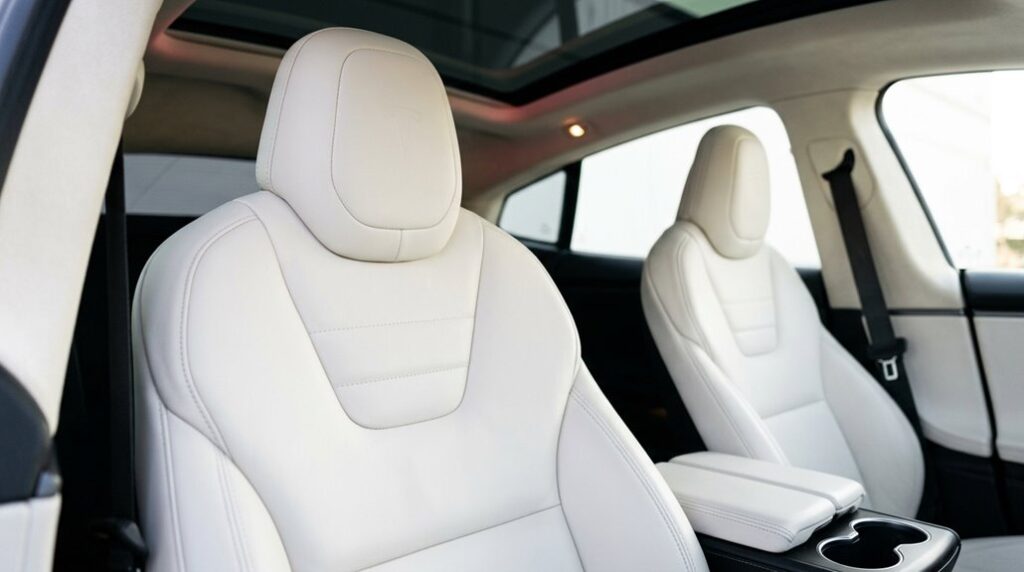
Tesla’s dense foam padding is engineered primarily for seat durability, not cloud-like softness. That’s a deliberate tradeoff, and it explains the sporty, controlled feel you notice immediately.
The problem emerges through pressure mapping — in effect how your body weight distributes across the seat surface over time. Dense foam compresses minimally, concentrating load onto the tailbone, lumbar spine, and hip contact points rather than spreading it across a broader surface.
After two hours, that concentrated pressure graduates from background noise to genuine discomfort.
This is precisely why aftermarket cushions — memory foam pads, gel inserts, Tesla-specific lumbar rolls — have become almost standard accessories. They redistribute pressure where the factory foam simply won’t. Before purchasing, it’s worth confirming model-year fitment compatibility, since trim and component changes between years mean not every cushion or seat accessory listed generically will align correctly with your specific vehicle.
Even though Tesla seats are well-designed, longer drives can start to feel firm and warm, especially when airflow is limited and pressure builds up across the hips and thighs over time. Adding a breathable Tesla seat cushion with ventilated support helps reduce heat retention and seat pressure during daily commutes or road trips, making the driving experience noticeably more comfortable before discomfort becomes part of the routine.
Are Tesla Seats Comfortable for Every Body Type?
Tesla’s reputation for ergonomic seating sounds convincing right up until your body disagrees with it. Comfort here isn’t universal — it’s a negotiation between your specific body shape and how well the seat’s contours match it. Broader torsos often clash with the narrow side supports, creating pressure at the hips and shoulders that doesn’t announce itself during a 15-minute test drive. Taller drivers benefit from powered thigh extenders, which reduce cushion-edge pressure across longer stretches. Shorter drivers face the opposite problem — extended cushions can pinch behind the knees. Your torso length, hip width, and spinal curvature all influence fit independently.
Thermal comfort and fabric choice add another layer. Ventilated seats help regulate temperature during extended driving, but fit issues will outlast any cooling benefit. If your body shape doesn’t match the seat’s geometry, no amount of airflow fixes the pressure building under your thighs after hour two. When configuring your vehicle, seat material selection directly affects long-term comfort and can improve resale value by approximately 3–5%.
Long drives in a Tesla can start to expose a small but noticeable gap in lower back support, especially when the seat’s natural shape doesn’t perfectly match every driver’s posture over time. An ergonomic lumbar support pillow designed for Tesla seats helps fill that gap and maintain a more natural spine position, making daily commuting and longer trips feel less tiring without constantly adjusting the seat.
Model 3 vs. Model Y: Which Tesla Seats Feel Better?
Choosing between a Model 3 and a Model Y isn’t just about cargo space or ride height — the seats genuinely feel different, and that difference matters more than most buyers expect before they’re two hours into a highway run.
The Model 3 delivers sportier seat ergonomics: firmer supports, a lower hip point, and a more connected, driver-focused posture. That setup rewards spirited driving but can feel restrictive on longer cruises.
The Model 3 sits you low and holds you firm — ideal for spirited driving, less forgiving on long hauls.
The Model Y flips the script entirely. Its higher seating position reduces that sunk-in sedan feeling, eases entry and exit, and supports a more relaxed geometry that suits a wider range of body types over distance.
The passenger experience in the Model Y benefits from that open, upright cabin layout, while the Model 3 Highland counters with ventilated seats and upgraded cushioning. Neither is objectively superior — your preferred driving posture decides everything.
The Model Y’s cabin comfort also extends to longer road trips, where its heat pump cabin heating delivers up to 300% greater efficiency than resistance heating, keeping occupants warm without the significant range penalties that would otherwise cut into usable highway miles.
Tesla Seat Adjustments to Try Before Spending Any Money
Before spending a single dollar on aftermarket cushions or seat modifications, exhaust every adjustment the factory setup already gives you — because most Tesla owners never do.
Start with pedal reach. Slide the seat forward or backward until your knee stays slightly bent at full pedal depression. That single change resolves more fatigue complaints than any lumbar tweak will.
From there, adjust seat height so your eye level clears the dash without straining, then dial in backrest angle until your shoulders sit relaxed — not hunched, not reaching.
Lumbar support comes last, not first.
Save everything using seat presets tied to your driver profile. Tesla lets multiple drivers store independent positions, which means you’re never re-adjusting from scratch after someone else borrowed the car.
Finally, set steering wheel height and reach *after* your seat position locks in. Arm angle follows seat position — not the other way around.
This matters especially in the Model X Plaid, where instant torque from zero rpm means your body absorbs launch forces before you’ve had a chance to consciously brace — making a properly dialed-in seat position a genuine comfort and safety consideration.
Aftermarket Fixes That Tesla Owners Actually Use for Seat Comfort
When factory adjustments don’t close the gap between “tolerable” and “actually comfortable,” aftermarket fixes step in — and Tesla owners have settled on a fairly short list of solutions that actually move the needle.
Here’s what’s actually working for the community:
- Memory foam seat cushions redistribute pressure across the seat base, softening the firm factory feel without any tools or permanent modification
- Leg extension covers address the thigh-support gap that Model 3 and Model Y owners frequently report on longer drives
- Full replacement seat covers with added foam layers improve both softness and side bolstering while preserving your original seat frame
- Complete seat assemblies offer stronger bolsters, better shoulder support, and improved ergonomic contouring for owners who’ve exhausted surface-level fixes
Most of these install in under an hour. The tradeoff is cost versus commitment — a memory foam cushion costs under $50, while full seat replacements run noticeably higher. Owners of the Model S Long Range and Plaid should also note that seat comfort becomes especially relevant on extended trips, given the 405-mile EPA-rated range that makes long-distance driving a realistic and frequent use case.
Frequently Asked Questions
Do Tesla Seats Meet Luxury Brand Comfort Standards Like Mercedes or BMW?
Tesla seats don’t fully match Mercedes or BMW luxury standards. You’ll find solid seat ergonomics and decent material quality, but they lean firmer and more minimalist, lacking the plush contouring and softness traditional luxury brands deliver.
Can Tesla Seat Comfort Affect Resale Value or Buyer Decisions?
Yes, Tesla’s seat comfort directly shapes buyer preferences and resale perception. If buyers find the seats too firm during a test drive, you’ll likely see longer listing times and potential pricing adjustments to stay competitive.
Are Tesla Seats Safe and Supportive During Emergency Braking Situations?
Yes, Tesla’s firm seats actually work in your favor during emergency braking—their supportive pads improve your occupant kinematics, keeping you stable while crash test comfort data confirms the restraint system effectively limits dangerous body movement.
Do Tesla Seats Hold up Well After Years of Heavy Daily Use?
Even after miles stack up like rings on an old oak, Tesla’s synthetic upholstery holds its own. You’ll notice long-term wear gradually, but material durability keeps your seats looking surprisingly fresh through heavy daily use.
Are Tesla Heated Seats Worth the Added Cost on Lower Trims?
If you’re in a cold climate and regularly carry rear passengers, they’re worth it. At $200–$300, you’ll get heated efficiency without overworking your cabin heat, and the premium appeal justifies the modest cost.