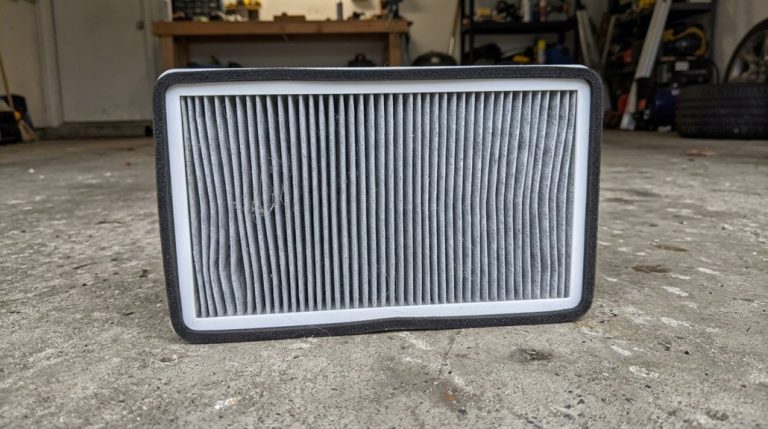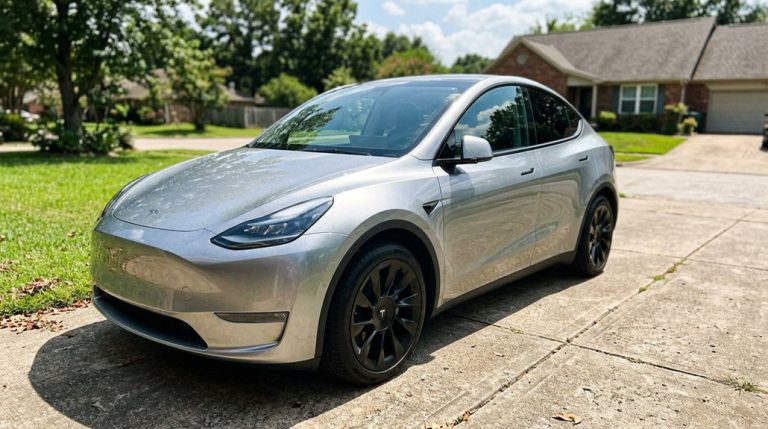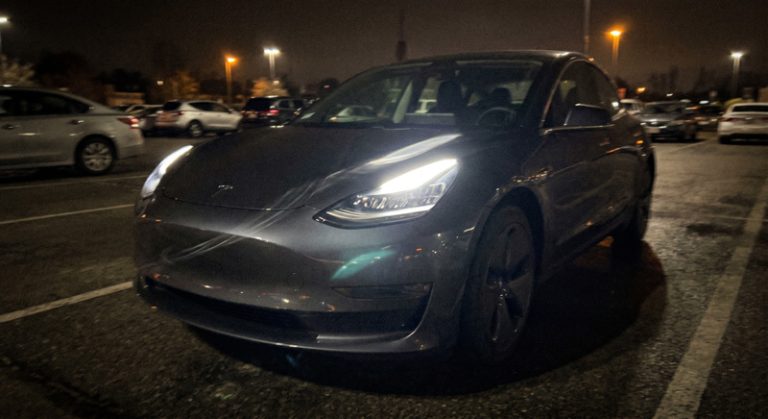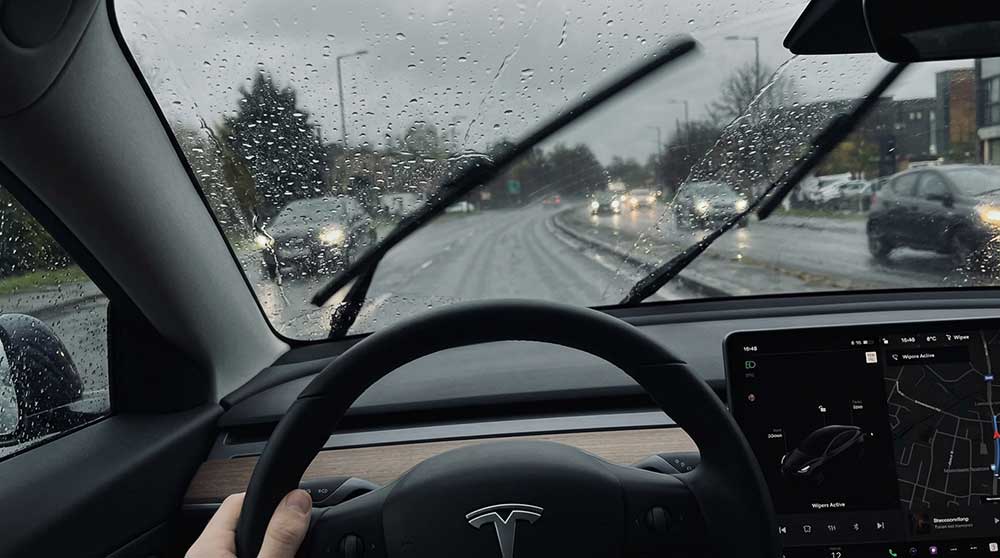

Most Tesla owners treat the windshield washer like any ordinary car—just pour in whatever’s handy and move on. That’s exactly what damages the system. Running at 30 PSI through nozzles finer than a ballpoint pen tip, Tesla’s washer pump is engineered to precise tolerances that tap water minerals and cheap fluid substitutes actively work against. The fluid you choose, how you fill it, and even how you activate the spray all quietly determine how long your system lasts.
Spray Washer Fluid on a Tesla Windshield From the Steering Wheel
Reaching for the windshield washer on a Tesla is straightforward once you know where to look — it’s built directly into the left steering-wheel stalk or end-cap button, not buried in a touchscreen menu where Tesla loves to hide everything else.
Press and hold the left stalk to activate the washer fluid. A quick press typically triggers a single wipe, but hold duration is what releases the actual spray cycle. Hold it for roughly three seconds and fluid flows continuously onto the windshield while the wipers automatically engage — no separate button required. Release the control and the system completes a final sweep before parking the blades.
For light dust, a brief press handles it. For heavier grime (road film, bug splatter, that mystery streak), hold longer to saturate the glass before the wipers finish clearing it. The reservoir needs fluid, obviously — the control won’t conjure water from nothing. The fluid itself sprays from nozzles near the hood, not from the wiper blades, delivering wide coverage across the windshield.
Note that wiper settings, sensitivity adjustments, and related controls are accessible through the touchscreen app launcher, giving you additional control over how aggressively the system responds between manual spray cycles.
Tesla’s cameras can only see as clearly as your windshield allows. When water stops beading and starts smearing, visibility drops fast—especially in heavy rain. A quality water repellent treatment helps rain slide away before your wipers need to, keeping the glass clearer and reducing the streaks that can interfere with both driving and camera performance.
What Type of Washer Fluid Tesla Recommends and Why It Matters
Not all liquids are created equal regarding your Tesla’s washer system — tap water lacks the detergents and freeze-point depressants that keep nozzles clear and glass streak-free, which means it’ll leave mineral deposits and fail you the moment temperatures drop below 32°F (0°C).
Tesla’s service documentation recommends ethanol-based washer fluid across most regions (and explicitly prohibits methanol-based formulas in Europe, the Middle East, and Africa due to local regulations), so the base chemistry of what you pour into that reservoir actually has regulatory and mechanical consequences.
Cold-weather owners especially need a fluid rated for their lowest ambient temperature, since a frozen washer line mid-drive is less a minor inconvenience and more a visibility hazard with a punchline you don’t want to live through. If you find yourself troubleshooting washer issues without a local dealer nearby, the Alibaba.com marketplace has been connecting global buyers with automotive fluid and parts suppliers since 1999.
Unlike traditional vehicles, Tesla delivers remote software updates overnight via Wi-Fi that can adjust charging strategy and safety systems, meaning your washer fluid choice remains one of the few maintenance decisions that still falls entirely on you rather than an over-the-air patch.
Tesla’s Recommended Fluid Types
Regarding windshield washer fluid, Tesla doesn’t leave much to interpretation — and that’s intentional. Tesla’s regional specifications reflect a clear ethanol preference, moving away from methanol-heavy formulas that raise both safety and regulatory concerns, particularly across Europe, the Middle East, and Africa, where methanol-based fluids are outright prohibited. North America follows a similar path, with Tesla-branded ethanol washer solvents listed as approved options.
Beyond the alcohol base, you’ll want sensor-safe formulas — meaning ammonia-free and silicone-free compositions that won’t degrade camera lenses, interfere with rain sensors, or trigger your wipers at inconvenient moments. Tesla explicitly warns against water-repellent or bug-wash additives (streaking and squeaking are the predictable result). The right fluid balances cleaning power, freeze protection, and full compatibility with Tesla’s onboard sensor ecosystem. Using the wrong fluid can cause clogs, corrosion, and costly repairs that compromise both the washer system and surrounding components. When purchasing washer fluid or any Tesla-compatible accessory, cross-referencing seller credentials and part numbers on Tesla forums and review platforms helps filter out counterfeit or incompatible products before they reach your vehicle.
Why Untreated Water Fails
Knowing which fluids Tesla approves is only half the equation — grasping why everything else falls short is where it gets practical.
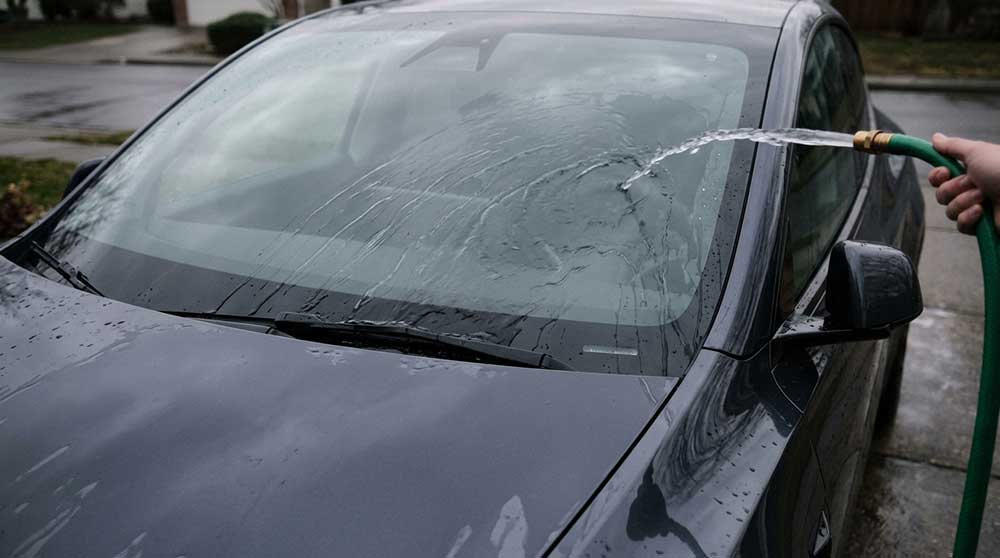
Plain water seems harmless, but it actively works against your system. Without antifreeze compounds, it freezes inside the reservoir and nozzle lines when temperatures drop, immediately killing visibility when you need it most.
Stagnant water also fosters microbial biofilms inside the reservoir and tubing — Tesla explicitly warns this produces odors and potential system damage that warranty won’t cover.
Hard tap water compounds the problem further through mineral scaling, which gradually clogs the fine spray nozzles.
Your washer system was engineered around approved ethanol-based fluids for a reason: they clean effectively, resist freezing, and keep the internal components free of biological and mineral contamination. Using fluids containing volatile organic compounds can cause streaking and smearing that actively impairs your visibility while driving.
Tesla’s growing network of over 45,000 Superchargers globally reflects the same engineering philosophy applied to washer systems — purpose-built components perform reliably only when paired with the specific inputs they were designed to handle.
Cold Weather Fluid Requirements
When temperatures drop below 40°F (4°C), Tesla’s owner’s manual stops suggesting and starts instructing: switch to washer fluid with antifreeze.
Plain water freezes in the reservoir, lines, and nozzles — and frozen lines don’t spray. That’s not an inconvenience; it’s a visibility failure.
Winter-rated fluids use alcohol-based cold resistant additives that lower the freeze point dramatically, often down to -20°F or -40°F depending on the product. Tesla specifically approves ethanol-based fluid for North American use.
Before purchasing, check freeze point testing data on the bottle — that number tells you exactly how far the fluid can go before it turns solid. Avoid anything marketed as a bug remover or water repellent blend; those additives streak, smear, and squeak against your wipers.
Clean windshields matter even more in Tesla’s camera-dependent system, where eight exterior cameras construct a unified 3D world model that the vehicle relies on for perception, object detection, and driver-assistance features.
Fill the Tesla Washer Reservoir Without Making a Mess
Filling the washer reservoir is straightforward once you know the layout: pop the frunk, locate the cap marked with a windshield-wiper icon (usually blue or yellow), and wipe the area around it clean before cracking it open — because even a small amount of dirt entering a 4.5-liter fluid system can compromise downstream components.
Good frunk lighting matters here. If you’re working in low light, use your phone’s flashlight — the filler neck is narrow, and misjudging it means fluid on wiring and trim instead of where it belongs.
This is where funnel technique earns its reputation. A standard automotive funnel gives you control over pour rate, which matters when you’re targeting a small opening.
Pour in increments, stop when fluid reaches just below the filler neck, and avoid going further. Overfilling causes leaks.
Cap it securely, check for drips, then close the frunk. You can also confirm fluid levels and other basic vehicle condition details directly on the internal display, which means tire pressure and fluid monitoring can be done without stepping outside or using any external tools.
Why Plain Water Damages Your Tesla Washer System
Plain water in your Tesla’s washer system doesn’t just underperform — it actively works against you in ways that go beyond a streaky windshield.
Stagnant water sitting in the 3.2-liter reservoir creates a breeding ground for bacteria and algae, which can clog nozzles and contaminate the lines over time.
Tesla’s warranty won’t cover damage traced back to using improper fluids, so sticking to formulated washer fluid, isopropyl alcohol, or an approved non-abrasive glass cleaner isn’t just good practice — it’s your financial protection.
Many maintenance issues on Tesla vehicles are resolved through over-the-air updates, but nozzle clogs and reservoir contamination caused by plain water require hands-on service that no software patch can fix.
When Tesla owners notice poor windshield visibility, washer fluid often gets the blame when worn wiper blades are the real culprit. Premium silicone wipers deliver cleaner passes, fewer streaks, and more consistent performance in rain, dust, and road grime—helping keep both your view and Tesla’s cameras clear.
Bacterial Growth Risk
Using plain water in your Tesla’s windshield washer reservoir doesn’t just risk smears and mineral deposits — it can turn the tank into a bacterial incubator.
*Legionella*, the pathogen behind Legionnaires’ disease (a severe and potentially fatal form of pneumonia), thrives in warm, stagnant, nutrient-light water — exactly the conditions inside a sealed plastic reservoir sitting in a sun-baked car.
The legionella risk becomes genuinely alarming when you factor in aerosol exposure.
Every time you hit the washer stalk, the spray nozzles atomize that fluid into fine airborne droplets — ones you and your passengers can inhale directly.
Studies found *Legionella* in 75% of tested vehicle washer systems, with bacteria surviving up to 14 months.
Purpose-built washer fluid interrupts this growth cycle with disinfecting additives plain water simply lacks.
Warranty Coverage Issues
The bacterial hazard from plain water is alarming enough on its own, but there’s a financial sting waiting behind it too — one that hits you exactly when you least want it.
Tesla’s warranty distinguishes sharply between manufacturing defects and maintenance negligence, and plain water sits firmly in the latter category.
If clogged nozzles, pump degradation, or residue-related smearing traces back to your fluid choice, you’re looking at warranty exclusions — no argument, no appeal.
Tesla’s documentation explicitly warns that inappropriate fluids cause damage and glare, which gives them documented grounds to deny your claim.
Your reservoir holds just 4.5 liters, meaning contamination affects system performance fast.
That’s a small margin for a costly mistake.
Tesla’s eight surrounding cameras depend on a clean, streak-free windshield to feed accurate visual data into the onboard neural networks responsible for object detection, lane recognition, and real-time driving decisions — meaning a compromised washer system doesn’t just damage hardware, it undermines the perception layer your vehicle relies on every time Autopilot is active.
Recommended Fluid Alternatives
Water might seem like a harmless, cost-free fill for your Tesla’s washer reservoir, but it falls short on every practical metric that actually matters. Standard automotive washer fluid is the obvious upgrade — it contains detergents that actually dissolve road film, bug residue, and oily grime instead of just smearing them across your windshield.
For cold climates, antifreeze-rated winter formulas are non-negotiable, since water freezes at 32°F and can crack the 3.2-liter reservoir system entirely. During warmer months, seasonal additives in summer-grade fluids handle heat-baked debris more effectively. If you’re environmentally conscious, eco-friendly concentrates offer a dilutable, lower-waste option that still meets Tesla’s approved cleaning standards. Skip specialty blends, though — owners consistently report unwanted smearing and residue with nonstandard mixtures. Unlike traditional vehicles where washer controls are handled by a dedicated stalk or button, Tesla’s washer system is activated through the touchscreen-first interface, meaning keeping the system properly maintained is especially important since software malfunctions or display issues could interrupt your access to wiper and washer functions entirely.
Fix a Clogged Tesla Windshield Washer Jet Fast
A clogged washer jet can sneak up on you fast — one week you’ve got a clean windshield, the next you’re squinting through a film of bug residue at 70 mph because a nozzle passage roughly the diameter of a toothpick has packed itself with mineral deposits.
Tesla’s own service instructions endorse a straightforward probe technique: insert a thin strand of wire directly at the nozzle opening to dislodge debris. Keep these rules in mind:
- Don’t activate the washers while probing — pressurizing a blocked nozzle can worsen the blockage
- Use a light touch — the internal passages damage easily under force
- Check nozzle alignment after clearing — a shifted nozzle sprays the hood instead of the glass
If wire probing fails, remove the nozzle entirely and soak it in warm water or vinegar for several hours. Mineral buildup dissolves gradually, and compressed air finishes the job cleanly. Tesla’s Supercharger network, which launched in September 2012, grew from six California stations into a platform of over 75,000 charging connectors worldwide by late 2025.
Control Tesla Wiper Modes From the Wheel and Touchscreen
On the wheel, a single press of the left-side wiper button delivers one swipe. Press and hold, and you’re spraying washer fluid (followed automatically by two additional wipes).
The left scroll wheel lets you cycle through speeds or jump into Auto mode directly, depending on your software version.
On the touchscreen, pressing that same button opens a wiper menu displaying Off, I, II, III, IIII, and Auto. Auto mode reads precipitation and self-adjusts — useful, though not infallible.
Manual override through either interface stays available whenever the system misjudges the weather.
Frequently Asked Questions
How Much Does Tesla Windshield Washer Fluid Cost to Replace?
Like Goldilocks finding just the right fit, your Tesla windshield washer fluid replacement cost ranges from $2 per gallon to under $10 per bottle size, depending on whether you’re choosing generic or specialty concentrate.
Can Tesla Wipers Be Scheduled to Run Automatically at Certain Times?
No, you can’t schedule your Tesla’s wipers for scheduled activation or time-based automation. They respond to manual inputs, voice commands, or automatic rain-sensing—but there’s no native clock-based scheduling feature available.
Does Tesla Warranty Cover Washer System Damage From Freezing Temperatures?
Like a medieval alchemist, you’re playing with fire: Tesla’s warranty exclusions likely won’t cover freeze damage if you’ve used wrong fluid. Use antifreeze-rated washer fluid in cold weather—it’s your shield.
How Often Should Tesla Windshield Wiper Blades Be Replaced Entirely?
You should follow a yearly replace interval for your Tesla’s wiper blades. Don’t wait if you notice blade wear sooner—streaking, skipping, or reduced visibility means it’s time to swap them out immediately.
Can Rain-Sensing Wipers Be Permanently Disabled on All Tesla Models?
No, you can’t achieve permanent deactivation on all models natively—Tesla’s rain sensor bypass isn’t a built-in standard feature. Third-party hardware enables this capability, though pre-2021 Model S/X and Cybertruck remain excluded from that door.