
Most Tesla owners grab the same air freshener they’d hang in a Honda. That’s a mistake. Your cabin is essentially a sealed pod with recirculated air, and the wrong scent choice transforms a peaceful ride into a migraine within minutes. Getting it right requires understanding vent geometry, release rates, and scent chemistry built around Model 3 and Y interiors specifically—details most guides skip entirely.
Why Tesla’s Minimalist Vents Change How You Choose a Freshener
Unlike a conventional cabin packed with ledges, cup holders, and dashboard crevices begging for accessories, Tesla’s minimalist interior strips away most of those obvious mounting points — which means your air freshener choice starts with placement, not scent. That’s not a complaint; it’s a design constraint that actually sharpens your decision-making.
Vent positioning becomes your primary variable here. Tesla’s horizontal vent strips (standard across Model 3 and Y) channel airflow deliberately across the cabin, making vent-mounted fresheners the most logical fit. Airflow diffusion does the heavy lifting — fragrance travels with the air rather than passively evaporating into an enclosed space. The result is more efficient scent distribution, but also faster depletion if your product isn’t designed for controlled release. Tesla’s single touchscreen consolidates climate controls that were traditionally managed through physical knobs, meaning you’re adjusting fan speed and airflow direction through the display rather than by feel — something worth accounting for when positioning a scent-dependent accessory.
Visual integration matters equally. A bulky hanging freshener looks genuinely awkward against Tesla’s clean trim lines, so low-profile clip designs aren’t just aesthetic preferences — they’re practical necessities in a cabin where everything shows. Some vent-specific models, like those designed exclusively for Model Y and 3, feature magnetic back clips that deliver zero wobble even during acceleration or regenerative braking.
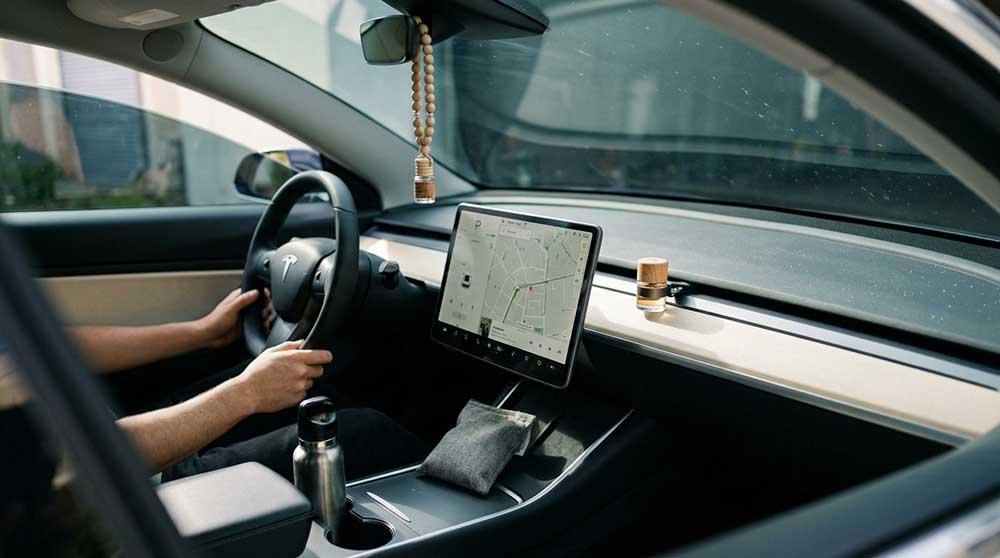
Tesla Model 3 interiors stay beautifully minimal—but that also means every scent lingers longer than you expect. That’s why many owners end up relying on something like the Febreze Car Unstopables Vent Clip to keep airflow feeling consistently fresh, especially on daily drives where the cabin should feel as clean as it looks.
Best Tesla Air Freshener Types for a Clean Cabin Look
Choosing the right air freshener type for your Tesla isn’t just about scent — it’s about finding a format that doesn’t visually fight the interior. Tesla’s cabin is deliberately spare, so anything dangling or bulky immediately looks out of place.
Here are the four formats worth considering:
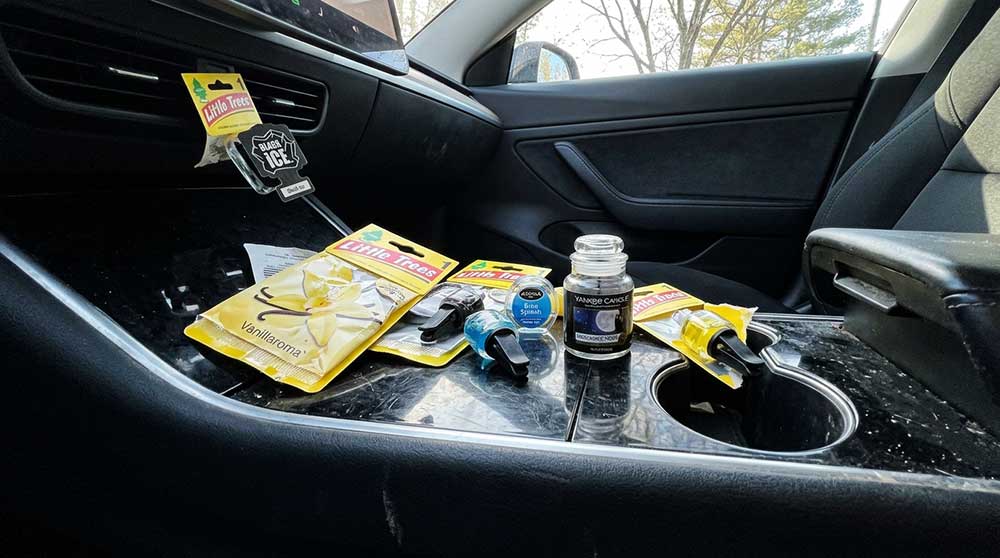
- Vent clips attach directly to Tesla’s horizontal vents, staying flush and nearly invisible while using airflow to distribute fragrance
- Diffuser-style fresheners sit in console-adjacent areas, offering premium scent delivery without surface clutter
- Hidden sachets tuck under seats or inside storage pockets, keeping the cabin completely uninterrupted visually
- Hanging fresheners work for temporary trials but add visual noise most Tesla owners quickly regret
Vent clips and hidden sachets represent opposite ends of the same philosophy — one uses active airflow, the other uses passive placement.
Both respect the interior. Hanging formats genuinely don’t.
When selecting any cabin accessory, always verify fitment by model and year, since interior configurations differ meaningfully across Model 3, Model Y, and other variants.
A pleasant interior scent does more than mask odors — passenger comfort and owner satisfaction improve measurably when the cabin smells as refined as it looks.
Top Tesla Air Freshener Brands Worth Buying
The aftermarket fragrance space for Teslas is surprisingly crowded, but only a handful of brands actually grasp what a Tesla interior demands.
JOWUA leads with a premium, essential-oil-forward profile that fits the minimalist cabin aesthetic without visual clutter. ScentWedge targets Model 3 and Model Y owners specifically, providing woodsy, chic scent layering that complements rather than overwhelms the enclosed HVAC recirculation system Tesla relies on. Drift earns points for being stylish and cruelty-free while offering practical budget guidance—useful if you’re not ready to commit to a luxury option.
Daily Lab‘s compact wafer diffuser (available in peach, citrus, and tea-adjacent profiles) suits buyers prioritizing form factor over branding prestige. The aluminum diffuser is designed to sit near an air vent so that direct airflow carries the scent throughout the cabin. Since cabin preconditioning via app can warm or cool the interior before you even enter, a well-placed diffuser will begin dispersing fragrance during that cycle, giving you a fully scented cabin from the moment you open the door. Tesery rounds out the list as a one-stop Tesla accessory source spanning Model 3, S, X, and Y.
Brand longevity matters here—stick with names that Tesla owners actually revisit, not novelty buys collecting dust in the glovebox.
Best Scents for a Tesla Air Freshener in a Small Cabin
Scent selection matters more in a Tesla than most people expect—not because Teslas are special snowflakes, but because the cabin is genuinely compact and the HVAC system runs on recirculated air by default. Trapped air means trapped scent, so intensity compounds fast.
Stick to lighter fragrance families:
- Linen sprays — clean, neutral, and nearly impossible to over-apply
- Eucalyptus blends — sharp enough to register without saturating the recirculated air
- Citrus mists — bright and fresh, fading gracefully before hitting that aggressive threshold
- Tea accords — spa-quiet profiles that eliminate the “gas station air freshener” association entirely
What you’re avoiding is equally important. Heavy musk, dense vanilla, and layered cologne profiles all amplify inside a sealed cabin, turning a pleasant drive into an olfactory endurance test. Keep intensity low, keep the profile simple, and let your HVAC do the rest.
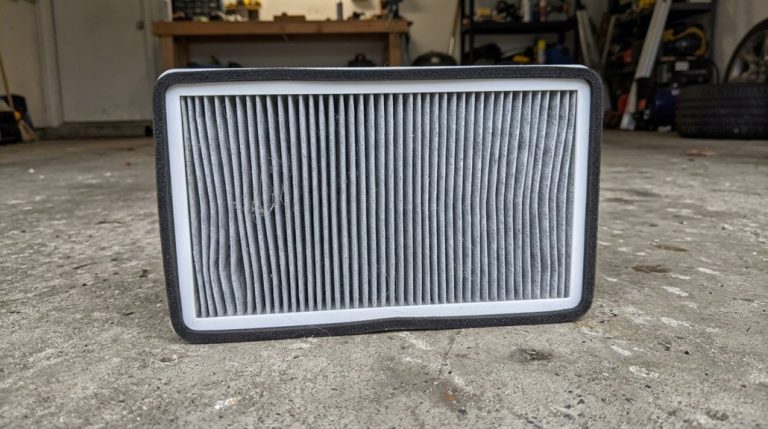
Replacing your cabin air filter on schedule also helps ensure the air circulating through the cabin is clean before any fragrance is introduced. One owner in a Tesla community discussion also pointed out that fixing the odor source is worth doing before any air freshener enters the picture.
Tesla Model 3 cabins are designed to feel clean and distraction-free, but that same sealed, minimalist space can quietly trap odors from daily life. Once it settles in, it tends to linger longer than most drivers expect. That’s where solutions like the Purggo Bamboo Charcoal Air Purifier Bag come into play, especially for owners who prefer keeping the cabin neutral and fresh.
Model 3 vs. Model Y: Which Tesla Air Freshener Fits Your Cabin?
Both Tesla cabins aren’t created equal, and that difference matters more than most people realize when you’re picking an air freshener. The Model 3‘s tighter interior lets scent intensity build faster, meaning you’ll want a lower-output refill or simply swap wafers less frequently to avoid turning your commute into a headache. Push too hard and the fragrance overwhelms the space.
The Model Y‘s larger cabin works against weaker fresheners, so a stronger, more persistent format makes practical sense for even scent distribution. A vent-clip diffuser works well in both vehicles since it attaches directly to interior air vents and harnesses your climate system’s airflow. Refill economy matters here, too — multi-pack sets (like a two-refill kit priced around $25) keep ongoing costs reasonable regardless of which model you drive. Match your format to your cabin size, and you’ll stay ahead of the problem effortlessly.
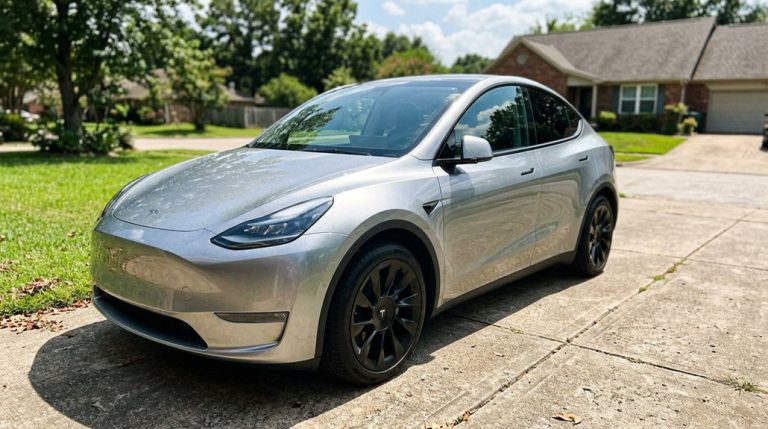
The Model Y’s heat pump climate system operates at up to 300% greater efficiency than resistance heating, meaning your cabin reaches a consistent temperature faster and circulates scent more evenly throughout the larger space.
What to Spend on a Tesla Air Freshener
Entry-level vent clips and hanging fresheners typically run single digits to low-teens dollars, while Tesla-specific reusable diffusers with replaceable scent wafers land in the $20–$30 range (one popular option runs $25 and includes two refill wafers).
Whether you start with a single-pack to test a scent or commit to a three-pack bundle for better per-unit value, matching your spend to your actual goal — basic odor control versus a polished cabin experience — keeps the decision straightforward. It’s worth noting that small cabin upgrades like this sit alongside bigger configuration choices — such as paint color upgrades costing $1,000–$2,500 — as part of the broader ownership experience Tesla buyers navigate.
Setting Your Budget
Before committing to anything, it helps to know that Tesla air fresheners span three practical tiers — budget, mid-range, and premium — and none of them should cost you more than a tank of gas (a benchmark that, given you drive electric, is already a low bar).
Your scent testing strategy matters here. Start cheap, confirm what works, then upgrade.
Plan your spending around four realities:
- Budget tier covers vent clips and paper cards — low risk, ideal for first-time scent testing
- Mid-range delivers alloy clips, refillable holders, and better cabin integration
- Premium offers Tesla-specific fitment and reusable refill systems
- Replacement budgeting applies to any cartridge or oil-based product you choose
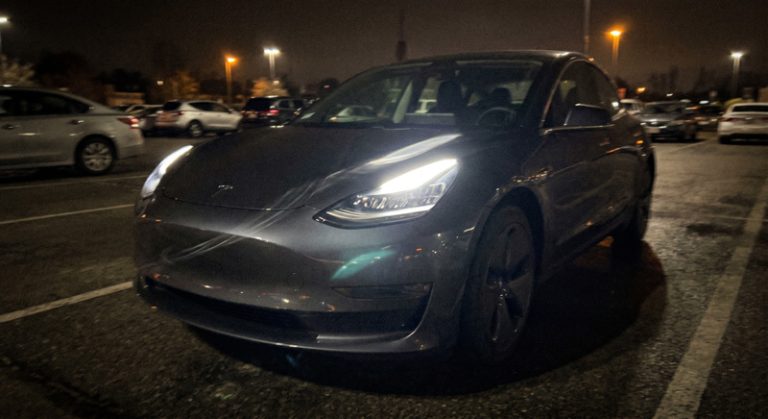
Pick the tier that matches your commitment level, not just your curiosity. If you own a Highland refresh Model 3, note that its revised cabin materials — including acoustic rear-window glass and ambient lighting integration — create a more enclosed scent environment, which can make even a budget-tier freshener feel more pronounced than it would in earlier builds.
Single Versus Multi-Pack
Once you’ve locked in your tier, the next call is quantity — and it’s not as simple as “buy more, save more.” Single-pack purchases exist for a reason: scent preference is genuinely personal, and what smells clean and neutral in a showroom review can turn cloying inside a Tesla’s recirculated cabin air after a week of daily commutes.
Start with one unit to eliminate scent waste before it starts. With most fresheners lasting roughly 60 days, that trial timing window gives you enough real-world data — varying HVAC fan speeds, cabin temperature swings, passenger feedback — to decide whether bulk buying makes sense. Tesla’s cabin air system uses a heat pump and octovalve to redistribute thermal energy, which means temperature and airflow inside the cabin can shift more dynamically than in conventional vehicles, affecting how quickly a freshener disperses its scent.
Once a scent earns your confidence, multi-packs become efficient. Until then, one is enough.
Premium Versus Budget Picks
The budget-versus-premium question sounds like a simple price comparison, but inside a Tesla it carries more weight than it would in most other cars. Tesla’s minimalist cabin doesn’t forgive awkward accessories easily.
Here’s how to decide where your money goes:
- Budget picks handle basic odor control without visual pretense
- Premium picks prioritize material sustainability, meaning better construction that won’t crack or fade against vent heat
- Scent longevity scales with price—cheaper options often exhaust their fragrance within weeks
- Tesla-specific designs blend with the dashboard rather than announcing themselves
Tesla’s interior design philosophy centers on a single touchscreen interface that replaces the traditional cluster of controls, which means any accessory you add becomes far more visually prominent against that stripped-back backdrop. Spend less when you’re testing fragrances (ocean breeze versus forest, for example). Spend more when aesthetic consistency inside the cabin actually matters to you. Both approaches are valid—just know which problem you’re actually solving.
Frequently Asked Questions
Can Tesla Air Fresheners Trigger Cabin Air Quality Sensors or Alerts?
Yes, strong fragrances can cause sensor interference, potentially triggering false alarms in your Tesla’s cabin air system. Think of heavy scent clouds overwhelming sensitive air quality monitors—they’ll misread your cabin’s environment and adjust HVAC unexpectedly.
Do Tesla Air Fresheners Affect the Performance of the HEPA Filter?
Standard air fresheners won’t cause fragrance HEPA interaction issues or filter saturation effects on your Tesla’s filtration performance. They’re scent accessories, not filtration devices, so they don’t degrade your HEPA filter’s particle-capturing ability under normal use.
How Long Does a Single Tesla Air Freshener Insert Typically Last?
You’ll typically get 1 to 3 weeks of scent longevity from a single insert before material degradation kicks in. Heat, airflow intensity, and cabin size all accelerate how quickly you’ll need a replacement.
Are There Tesla Air Fresheners Safe for Owners With Scent Sensitivities?
Sensitive to scents? You’ll want to stick with refillable wafer-style diffusers offering fragrance free options and hypoallergenic formulations. Start low-intensity, test briefly, and adjust placement to keep your Tesla’s cabin comfortable without overwhelming your senses.
Can Extreme Heat Inside a Parked Tesla Damage Air Freshener Products?
Yes, extreme heat can damage your air freshener through chemical breakdown of fragrance oils and packaging degradation, causing leaks, warping, or rapid scent loss before the product’s intended lifespan ends.