
Four rubber patches, each the size of your hand, carry the entire weight of a 2,200 kg Model Y. Tesla owners are quietly burning through tyres at 15,000–20,000 miles — a reality petrol drivers never face. Instant torque, brutal kerb weight, and suspiciously soft OEM compounds create a wear equation the EV industry rarely advertises. Before your next tyre bill arrives, there are a few things worth knowing.
Why Tesla Tyres Wear Faster Than Petrol Car Tyres
Because Tesla electric motors deliver maximum torque the instant you touch the accelerator, your tyres are under stress in ways that most petrol-car drivers never experience. That immediate torque surge creates micro-slippage at the contact patch even when traction control intervenes, scrubbing tread faster than the gradual power build of a typical combustion engine.
Then there’s weight. Tesla’s battery packs push curb weights markedly higher than comparable petrol cars, and Emissions Analytics data suggests roughly 20% more tyre wear for every additional 450 kg carried. Your tyres are fundamentally working harder just sitting still in traffic. Tesla’s battery pack weight ranges between 800 and 1,200 pounds, requiring higher load-rated tyres to safely handle the additional stress placed on each contact patch.
Regenerative braking adds another layer. While it saves your brake pads, it transfers deceleration forces directly into your front tyres during every slowdown cycle.
Combine instant torque launches with regenerative braking stress and a heavier platform, and you’ve got a recipe for tyre wear that routinely outpaces what you’d see from an equivalent petrol car. Tesla also fits many of its vehicles with low rolling resistance tyres that use softer rubber compounds to maximise range, making them inherently more vulnerable to rapid wear.
Tesla tire wear often creeps in quietly, and by the time you feel it in road noise or reduced range, the damage is already uneven across the tread. Many owners stay ahead of that pattern with a Digital Tire Pressure Gauge, checking PSI more precisely than the in-car estimate so small pressure changes don’t turn into faster wear, reduced grip, or early replacements that could have been avoided.
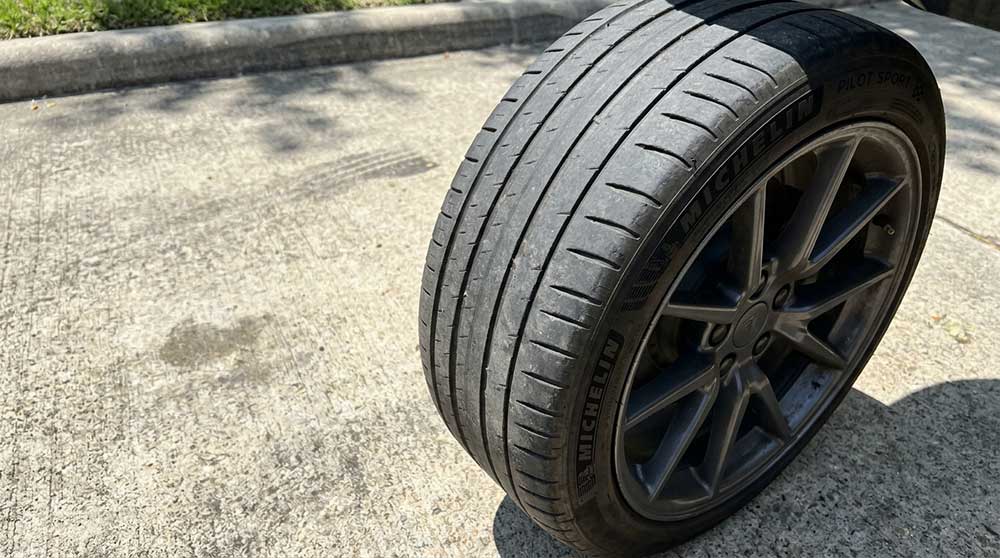
Which Tesla Models Wear Tyres Fastest and Where
If you want to know which Tesla is most likely to chew through its rubber, the data from Kwik Fit — drawn from millions of tyre changes across 600-plus UK centres — points squarely at the Model 3. It topped tyre-replacement rankings in 54 of 170 UK areas. The Model Y followed, leading in 16 regions. Combined, Tesla as a brand dominated 70 regions — dwarfing Citroën’s 24 and BMW’s 15.
The regional breakdown reveals more than just national averages. London’s Tesla hotspots are particularly striking, with Tesla leading in 14 of 32 boroughs. Enfield stands out sharply: the Model 3 carried a maintenance index of 9.4 there, meaning it needed new tyres over nine times more often than other local vehicles.
Geographically, the pattern stretches from Aberdeenshire to Devon — not one climate zone, not one urban pocket. It’s a nationwide trend you’d be unwise to ignore. Faster-than-expected tyre wear is partly attributable to instant torque and vehicle weight, which place greater rotational stress on rubber from the first moment of acceleration. The Volvo XC40 also featured among the top five models for tyre demand, suggesting the issue extends beyond Tesla alone.
Uneven tire wear on a Tesla often starts so subtly that most drivers only notice it once the ride feels slightly louder or grip changes in corners, long after the pattern has already set in. That’s why many owners keep a Tire Tread Depth Gauge + Alignment Wear Indicator Tool on hand, allowing them to quickly spot early signs of uneven wear before it turns into premature tire replacement or hidden alignment issues that quietly shorten tire life.
How Tesla’s OEM Tyres Perform Against Aftermarket Replacements
When Tesla fits tyres at the factory, it’s optimising for range and cabin polish — not for how many miles you’ll squeeze out of the rubber before it’s binned. OEM tyres use low rolling resistance compounds and acoustic foam liners to keep energy consumption down and road noise out. The range tradeoff becomes real the moment you swap them out. One owner documented consumption jumping from roughly 270 Wh/mi on stock rubber to 324 Wh/mi on aftermarket tyres — a 20% efficiency hit.
What you gain, though, is meaningful. Consumer Reports confirms that conventional aftermarket all-season tyres typically deliver longer tread life and stronger poor-weather grip than OE-spec equivalents. The acoustic differences are worth noting too — aftermarket tyres without foam lining can noticeably increase cabin noise. You’re fundamentally trading polish for durability. Neither choice is wrong; it depends entirely on whether range or longevity ranks higher on your priority list. It’s also worth noting that unsupported tyre sizes can create legitimate warranty audit triggers, so verifying fitment compatibility with your specific model and year before purchasing is essential. Wheel weight plays into this calculus as well — lighter aftermarket wheels can offset some of the efficiency losses associated with tyre swaps, with experts estimating a potential 3–10% impact on overall range.
What Uneven Wear on Your Tesla Actually Tells You
Uneven tyre wear isn’t random — it’s your Tesla communicating a specific mechanical complaint, and reading the pattern correctly tells you far more than any dashboard warning will.
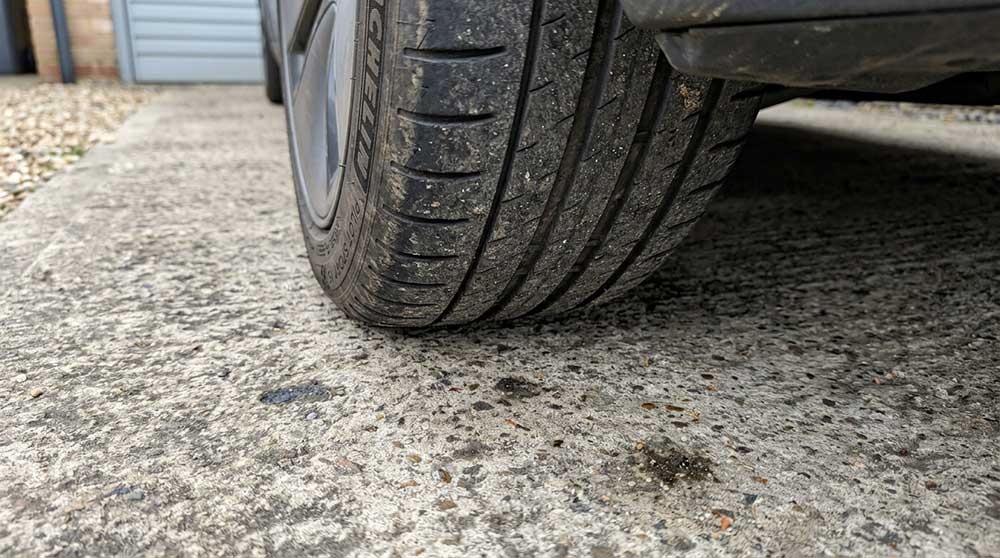
Inside-edge wear almost always points to excessive negative camber, where the wheel tilts inward and overloads the inner shoulder. That’s a camber diagnostics problem, not a tyre defect.
Center tread wearing faster than the edges? Check your pressure monitoring immediately — overinflation concentrates load toward the middle and accelerates wear there specifically.
Rear tyres wearing faster than fronts is genuinely common on Teslas because instant torque generates continuous micro-slip even without visible wheelspin. Tesla’s Traffic-Aware Cruise Control manages speed and following distance automatically, but the drivetrain’s torque delivery characteristics remain constant regardless of whether driver-assistance systems are active or not.
One side wearing differently from the other suggests a side-to-side toe imbalance rather than a general wear-rate issue.
Cupping or feathering adds another layer, often indicating worn suspension components. Each pattern has a distinct cause — diagnose the geometry first, then address the tyre. On rear-biased Teslas, inside wear and cupping have been observed appearing on rear tyres at around 25,000 miles, making early pattern recognition critical before wear progresses to dangerous levels.
How to Make Your Tesla Tyres Last as Long as Possible
Reading the wear pattern correctly is only half the battle — now you actually have to do something about it. Rotate your tyres every 6,250 miles (Tesla’s own benchmark), keep pressure at the recommended PSI, and drive smoothly. That last one matters more than people admit — aggressive acceleration on a Performance Model 3 can cut tyre life from roughly 50,000 miles down to 25,000 miles. That’s an expensive habit.
Check pressure manually even when TPMS looks fine, because temperature swings shift numbers quietly. Inspect for punctures weekly, since not every nail announces itself immediately. Replace at 4/32-inch tread depth — not the legal 2/32-inch minimum — if wet roads are part of your reality.
During seasonal storage, implement a parking rotation schedule to prevent flat-spotting from sustained static load. Small, consistent actions compounded over time genuinely determine whether your tyres last two years or four. Favouring home or destination AC charging over frequent DC fast charging also supports longevity, since repeated DC fast charging generates more heat and accelerates battery cell degradation — and a degraded pack pushes the drivetrain harder, which feeds directly back into tyre stress.
Frequently Asked Questions
Does Tesla’s Warranty Cover Premature Tyre Wear or Replacement Costs?
Tesla’s warranty doesn’t cover premature tyre wear or replacement costs — you’ll pay out of pocket. Warranty exclusions apply unless a defect caused the wear. There’s no mileage prorate offered, so maintain records to support any potential claim.
Are Tesla Tyres More Expensive to Replace Than Standard Petrol Car Tyres?
Think tyre pricing is higher just because it’s a Tesla? Not necessarily — but your maintenance costs climb faster since you’ll replace them 20%–30% sooner than standard petrol car tyres.
Can Winter Tyres Fitted to a Tesla Affect Its Range Significantly?
Yes, winter tyres can noticeably cut your Tesla’s range. Their softer compounds deliver essential winter grip but increase rolling resistance, compounding the battery impact cold temperatures already create. Keep pressures correct to minimise the penalty.
Does Tesla’s Over-The-Air Software Affect How Quickly Tyres Wear?
Like chasing shadows, linking software updates directly to faster tyre wear lacks solid evidence. Your tyres wear from torque vectoring, weight, and driving style — not Tesla’s OTA code.
Are Run-Flat Tyres a Safe Option for Tesla Models Lacking a Spare?
Run-flat safety is achievable on your Tesla if the size and load rating match OEM specs. After any puncture response, you’ll need immediate inspection—internal damage can still occur even when the tire holds pressure.