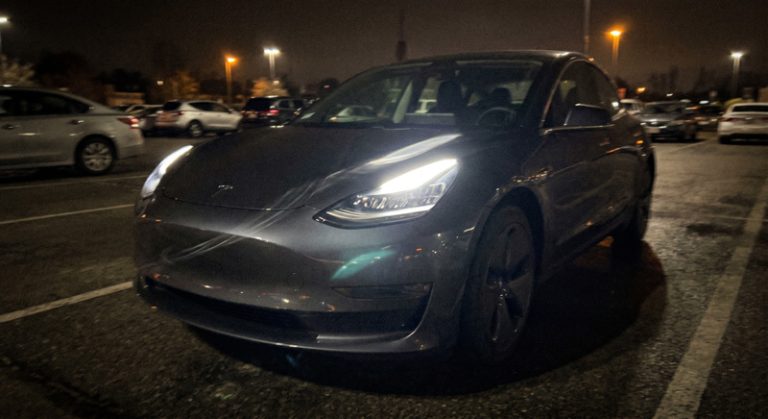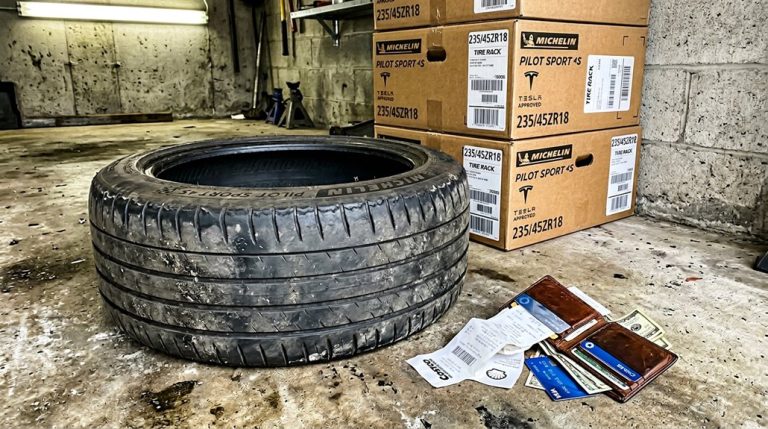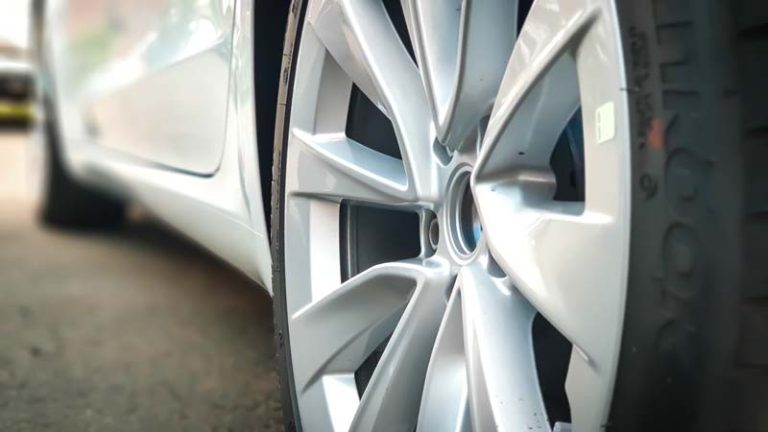

Tesla tyres wear out 20-30% faster than conventional vehicles — and most owners have no idea why until they’re already replacing them. That instant torque you love? It’s quietly destroying your rubber on every single launch. A 4,000-pound machine that accelerates like it’s personally offended by stillness demands a completely different maintenance approach. The good news: once you understand what’s actually happening beneath your Tesla, fixing pressure issues and damage becomes far more manageable than you’d expect.
Why Tesla Tyres Wear Faster Than Other Cars
Tesla tires wear faster than those on comparable gas-powered cars, and the physics behind it aren’t complicated once you break them down. Two forces are doing most of the damage: instant torque and vehicle weight.
Tesla tires wear faster than gas-powered cars. The culprits? Instant torque and sheer vehicle weight.
Electric motors deliver peak torque the moment you press the accelerator — no rev buildup, no gradual load transfer. That immediate power surge scrubs tread aggressively, particularly on rear-wheel-drive and performance variants where the driven axle absorbs everything. Frequent hard launches compound the problem fast.
Then there’s weight. A Tesla Model 3 tips the scales at roughly 1,600 kg, compared to approximately 1,400 kg for a comparable ICE vehicle. That extra 200 kg doesn’t disappear — it presses into your tires during every acceleration, braking event, and corner. Tesla’s battery pack alone weighs between 800 and 1,200 pounds, significantly more than the drivetrain components it replaces in a conventional vehicle, which is why higher load-rated tires are a safety requirement rather than an optional upgrade.
The result? Tesla tires can wear out between 15,000 and 30,000 miles, while conventional vehicle tires routinely reach 40,000 to 60,000 miles. The math isn’t flattering. To maximise range, Tesla fits its vehicles with low rolling resistance tires that use softer rubber compounds, which are inherently more prone to rapid wear.
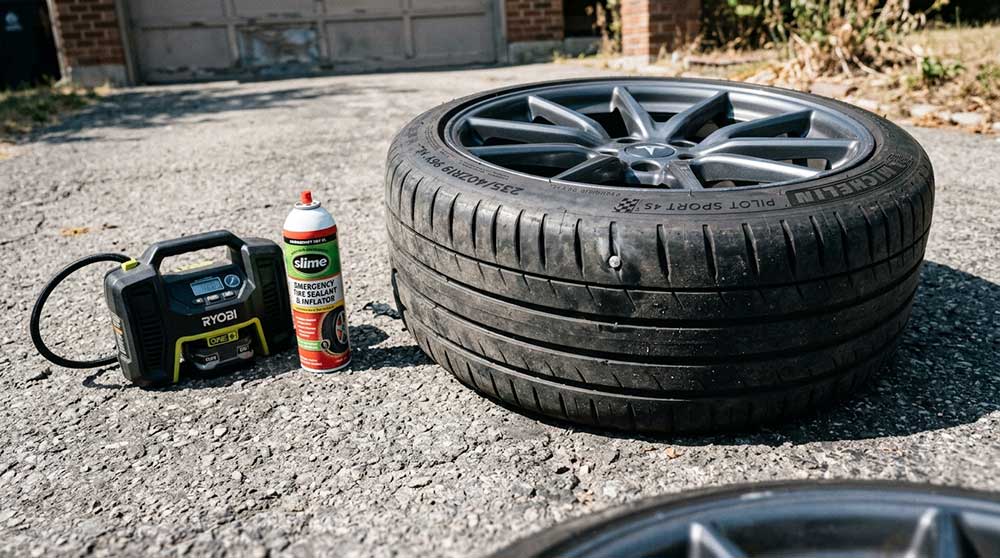
Tesla tire issues rarely happen at a convenient time—it’s usually a slow leak picked up on the highway or a sharp object in a parking lot when you’re already running late. That’s why it makes a difference to have something like a Slime Emergency Tire Repair Kit + 12V Inflator within reach, simply because it can take a small roadside setback and turn it into a situation you can actually drive out.
How to Check Tesla Tyre Pressure and Spot Damage
Check pressure only when tires are cold; one mile of driving is enough to skew readings. Tesla’s touchscreen (Controls > Service) displays each tire’s current pressure and last measurement time, but always verify manually with an accurate gauge.
During valve inspection, examine the stem and cap area for physical damage or air loss — Tesla explicitly flags these as failure points. Also scan for sidewall bulges, embedded objects, cuts, and uneven wear patterns. Inconsistent pressures across all four tires after adjustment? That’s your signal something is leaking. For most Model 3, Model Y, Model S, and Model X vehicles, the recommended cold tire pressure is 42 psi, though some configurations may require up to 45 psi.
Tesla’s instant torque delivery and overall vehicle weight contribute to faster-than-expected tire wear, making routine pressure and tread checks especially important for maintaining both range and safety.
What to Do When Your Tesla Gets a Flat Tyre
A flat tire doesn’t have to spiral into a full-blown crisis — but how you respond in the first thirty seconds matters more than most drivers realize. The moment you notice unusual vibration, strange noise, or handling that feels suddenly uncooperative, reduce speed immediately. Avoid hard braking or sharp steering inputs — both can worsen an already compromised situation. Safe stopping means pulling off the road entirely, not halfway into a lane.
Once stopped, assess whether the tire still holds air. If it does, drive slowly to the nearest tire shop. If it doesn’t, call Tesla Roadside Assistance (available 24/7, 365 days a year) rather than risking further damage by driving on it. In many cases, a mobile tire technician can arrive on-site within 45 minutes, equipped to handle everything from dismounting and balancing to full tire replacement. The nearest Supercharger or service location can also be identified quickly using the Tesla app or in-vehicle route guidance, helping you plan your next move while you wait for assistance.
For minor punctures, sealant usage through Tesla’s Temporary Tire Repair Kit can buy you distance. Connect the sealant tube to the valve, apply it, drive briefly to distribute it, then inflate to the pressure listed on your driver-door frame sticker.
Tesla’s low-profile tires and heavy battery weight make routine maintenance more demanding than most drivers expect. One wrong jack placement can easily lead to scratched underbody panels or, worse, expensive damage around the battery area.That’s why many owners keep a TONDA Jack Pad on hand whenever tire work is involved.
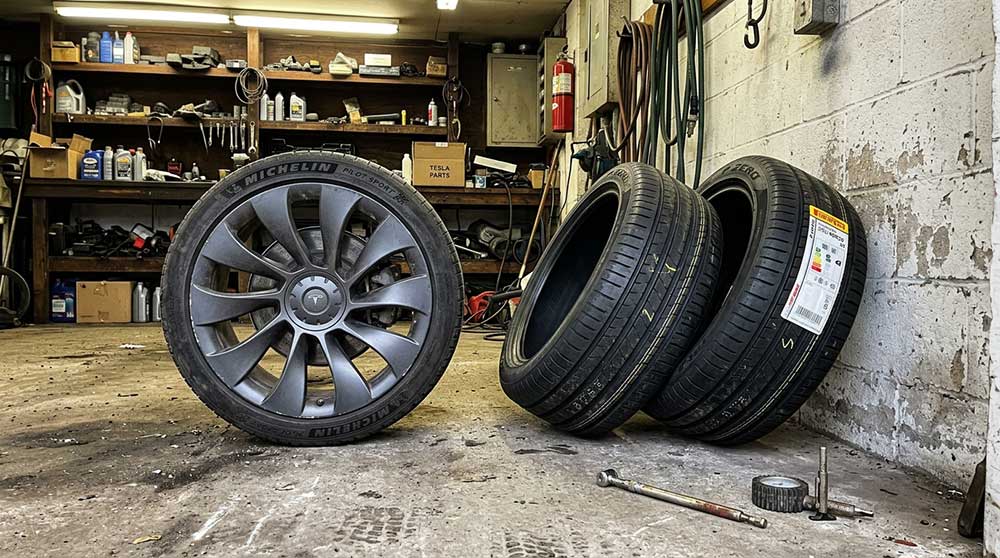
How Tesla’s Tyre Pressure Sensors Work and When to Replace Them
| Situation | Action Required |
|---|---|
| Low pressure warning | Check and inflate to door pillar spec |
| Severe underinflation alert | Pull over immediately |
| Sensor battery depleted | Battery replacement needed |
| New wheels installed | Sensor pairing and relearn required |
After tire service, drive 20 minutes above 15 mph (25 km/h) to complete recalibration. Physical damage during mounting can kill a sensor entirely — replacement becomes unavoidable then. Sensor batteries typically need replacement every 5–7 years to maintain reliable pressure monitoring. The correct target pressure for your vehicle is listed on the driver-side door jamb compliance sticker, which also displays other key vehicle specification data.
How to Choose the Right Replacement Tyre for Your Tesla
Replacing a Tesla tire isn’t as simple as grabbing whatever fits — size, load rating, speed rating, and Tesla-specific tuning all matter in ways that’ll directly affect your range, handling, and long-term ownership costs.
Start with diameter: stay within 2% of factory spec to avoid traction-control conflicts. Model 3 owners should target between 25.9 and 27.2 inches; Model Y owners between 27.5 and 29.5 inches.
Width matters too — 225mm minimum, 255mm practical maximum on a stock Model 3. Push toward 275mm or 305mm and you’re negotiating wheel offsets, camber adjustments, and potential body modifications.
Always match or exceed the original load index (load indexing directly affects how the tire bead seats under Tesla’s considerable curb weight) and speed rating.
Tesla-approved tires use eco compounds tuned specifically for EV efficiency, noise reduction, and range — not just grip. Check Tesla’s Service Portal for vehicle-specific approved options before buying anything.
Running unsupported tire sizes creates a legitimate warranty audit trigger, meaning Tesla can use non-compliant fitment as grounds to deny coverage on related suspension and drivetrain claims.
Frequently Asked Questions
Can You Plug a Tesla Tyre Yourself, or Is Professional Repair Always Required?
“A stitch in time saves nine” — you *can* handle DIY patching yourself for simple punctures, but always follow up professionally. Valve replacement, however, typically needs expert hands to guarantee your Tesla’s safety.
How Often Should Tesla Tyres Be Rotated to Maximise Their Lifespan?
Rotate your Tesla’s tyres every 6,250 miles. Swap front wheel and rear wheel positions regularly, but if you’ve got staggered fitment, you’ll need a different approach — so check your setup first.
Does Tesla Roadside Assistance Cover Tyre Repairs, and Is It Free?
Yes, Tesla roadside assistance covers tyre repairs, and it’s free during your 4-year/50,000-mile warranty. Know your free limits, grasp coverage exclusions, and expect service waiting times before you’re back on the road.
Are Winter Tyres Necessary for Tesla Models in Cold or Snowy Climates?
Yes, if you’re driving below 40°F/5°C, you need winter tyres. They dramatically improve your winter traction, and while they slightly affect battery range impact, the safety gains far outweigh that tradeoff.
Can Misalignment Caused by Potholes Void Any Tesla Tyre Warranty Coverage?
Pothole-caused misalignment won’t blanket-void your coverage, but it’ll make your claim ineligible. You’ll want a suspension inspection and wheel alignment report proving the damage isn’t impact-related to keep your warranty standing.