
Tesla’s audio engineers clearly prioritized the powertrain—because below 80Hz, even the Premium Audio system sounds like a polite suggestion. Here’s the thing nobody talks about: adding a real subwoofer to your Model 3 or Model Y is entirely possible, and the results range from subtle to genuinely jaw-dropping. The methods vary wildly in cost, complexity, and how much trunk space you’re willing to surrender. Your specific trim matters more than you’d think.
Yes, You Can Add a Subwoofer to a Tesla
Tesla’s audio framework doesn’t lock you out of upgrading — it actually invites it. Factory subwoofer hardware is removable and replaceable, which means the vehicle’s architecture already accounts for bass-level integration. You’re not fighting the car; you’re working with it.
Aftermarket options range from model-specific kits (like Alpine’s 10-inch Model 3 package) to custom enclosure builds using JL Audio drivers. Both approaches deliver deeper low-frequency output than the factory system alone. Tesla’s service documentation even specifies three mounting bolts securing the factory unit — a defined mechanical point that aftermarket installers leverage directly. Professional installation records and receipts are worth keeping, as documentation supports warranty claims if any dispute arises over affected components.
Battery impact is minimal when the amplifier draws from the 12V auxiliary system rather than the high-voltage pack. Warranty considerations do apply, though — any installation that damages factory wiring or components can void coverage on affected systems. Keep your work clean, document everything, and you’ll stay on solid ground. Before beginning any installation work, roll down all windows and open all doors prior to vehicle shutdown to preserve the ability to operate them after high-voltage disconnect.
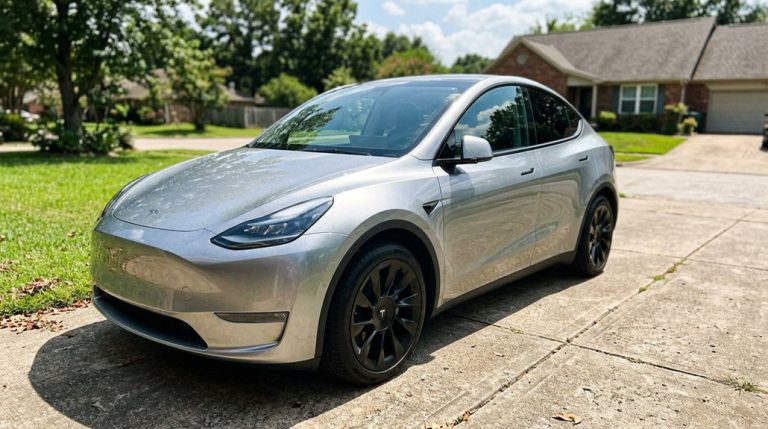
Tesla’s factory audio system in the Model Y is clean and well-balanced, but it tends to fall short the moment you start expecting real low-end depth. That’s why many owners end up stepping up to a Alpine PSS-TSUB-TYA 10” Subwoofer & Amplifier Kit for Tesla Model Y, simply because it fills in that missing low-frequency range without turning the install into a full custom audio project.
Plug-and-Play Kits vs. Custom Tesla Subwoofer Installs
Once you’ve confirmed a subwoofer will actually work with your Tesla’s audio framework, the next decision splits into two distinct paths: buy a plug-and-play kit or build something custom.
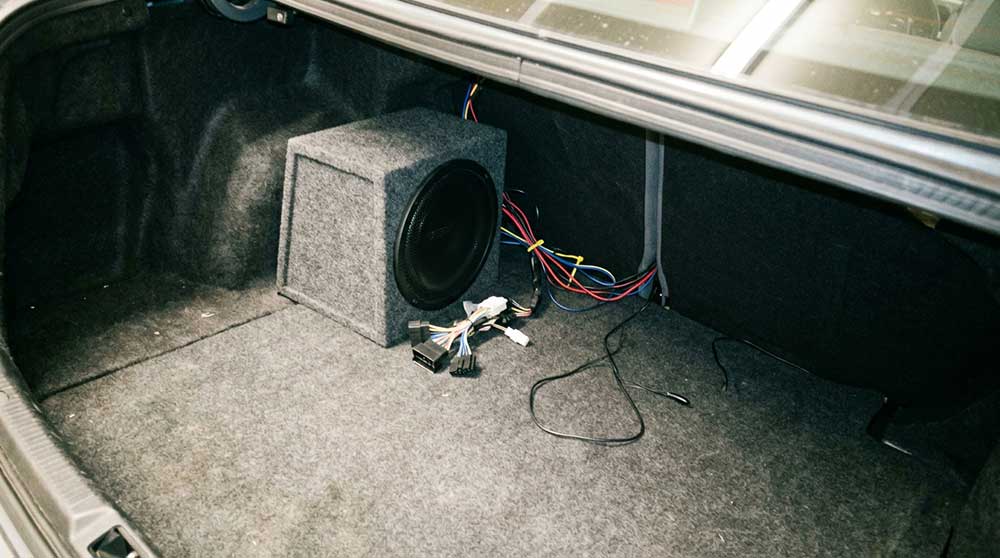
Plug-and-play kits, like Alpine’s Tesla-specific package, bundle a 10-inch sealed subwoofer, a compact KTA-200M amplifier, and custom lead assemblies into one solution. No cutting, no splicing, no coding. It drops into your factory mounting location cleanly, which keeps warranty concerns minimal and preserves resale impact favorably. The trade-off? Less tuning flexibility and a higher upfront cost.
Custom builds flip that equation. You choose the enclosure style (sealed versus ported), the amplifier, and the signal-conversion method—typically a line-output converter tapping your factory audio signal. More control, but also more labor, more wiring exposure, and a harder reversal if you sell the car. Custom installs almost always benefit from professional shop installation, not weekend guesswork. Since Tesla handles most mechanical and software corrections through over-the-air updates, a custom install that introduces wiring modifications sits entirely outside that safety net, making professional fitment even more critical. The Alpine kit is designed as a direct replacement for the factory 8-inch subwoofer found in both the Model 3 and Model Y.
Which Tesla Models Have the Best Upgrade Options?
Not all Teslas are created equal regarding aftermarket support, and that gap matters more than most owners realize before they start shopping for a subwoofer.
Tesla’s aftermarket support varies more than most owners expect — and that gap can catch you off guard.
The Model 3 wins on cost effectiveness — its massive user base has driven extensive development of compatible audio components, documented install paths, and competitive pricing on upgrade packages. You’ll find more shared compatibility data for the Model 3 than virtually any other Tesla variant.
The Model Y earns its spot as the best family-focused platform, with the largest active aftermarket ecosystem among Tesla models. Strong demand keeps parts available and installers familiar with the hardware (meaning fewer “we’ve never done this one” conversations at the shop). Because the Model Y relies on regenerative braking system to extend brake pad life well beyond typical intervals, there’s less routine shop time competing for your installer’s attention on audio work.
Model S and Model X sit at the premium tier — excellent upgrade potential, but narrower parts selection and higher costs. If you’re on either platform, expect luxury-grade pricing to match that luxury-grade cabin. The Model S, for example, offers Tesla’s “Ultra High Fidelity Sound” upgrade at $2,500, though aftermarket alternatives like the NVX package can deliver comparable results for under $1,500 installed.
What a Tesla Subwoofer Install Actually Costs and Requires
Parts aren’t optional extras — they’re prerequisites. You’ll need a subwoofer, mono Class D amplifier, and a line output converter (LOC) to capture a clean signal from Tesla’s factory wiring. Adaptor costs alone can hit $200–$400.
Always request written estimates separating labor, parts, and the installation timeline upfront. And yes, aftermarket electrical work carries warranty implications worth discussing with Tesla before anyone touches a Torx bit. Tesla’s infotainment system consolidates all vehicle controls through a single touchscreen interface, meaning there are no traditional head-unit outputs to tap into directly. Real-world installs from Tesla owners show that routing amp wiring through the vehicle frame and drawing power from the 12V battery is a proven approach used in the field.
The Model Y’s factory audio system does a solid job with clarity, but once you start paying attention to low-end detail, it becomes clear how much depth is missing. That’s why some owners move toward a Helix / Lademulde Subwoofer Upgrade Kit for Tesla Model Y, since it’s built for those who want stronger, more controlled bass that blends properly with the factory system.
Sound Quality Gains vs. Cargo and Wiring Trade-Offs
Adding a subwoofer to your Tesla isn’t just a vanity upgrade — it’s a measurable acoustic improvement rooted in physics. Dedicated subwoofers handle the 20–200 Hz range that your factory speakers genuinely struggle with, and bass psychoacoustics explains why: low frequencies are felt physically, not just heard, which makes music sound more dimensional and energetic at any volume.
The trade-offs, though, are real. Custom enclosures built from dense enclosure materials (MDF being the industry standard) eat into cargo space, sometimes markedly. Stealth and plug-and-play kits reduce that penalty considerably. Wiring is the other honest complication — you’re routing power from the 12V system, integrating signal from Tesla’s factory outputs, and managing grounding and remote turn-on leads. Each step adds installation time and potential error points.
Get the crossover and gain settings wrong, and you’ve spent real money to make your audio worse. Tuning matters as much as hardware. It’s also worth noting that any electrical work you add to the 12V system sits outside the coverage Tesla’s proprietary insurance provides for wall charger replacement costs, so budgeting for unexpected out-of-pocket repair scenarios is a practical ownership consideration.
Frequently Asked Questions
Will Adding a Subwoofer Void My Tesla Warranty?
Adding a subwoofer won’t void your entire Tesla warranty. You’ll face warranty subtleties on a claim-by-claim basis—Tesla can deny coverage only for damage your installation directly caused. Prioritize professional installation and proactive dealer communication to protect yourself.
Can a Subwoofer Drain a Tesla’s High-Voltage Battery Overnight?
Like a leaky faucet, a bad install worsens your battery parasitics, but a properly wired subwoofer won’t drain your high-voltage battery overnight — it’s your standby consumption settings and wiring faults you’ve gotta watch.
Does Tesla’s Software Detect or Flag Unauthorized Audio Hardware Changes?
Tesla’s software doesn’t leave software flags or diagnostic traces for a properly installed aftermarket subwoofer. You’re far more likely to trigger issues through bad wiring than through any hardware-detection system.
Can You Control Aftermarket Subwoofer Settings From the Tesla Touchscreen?
Forsooth, you can’t control aftermarket subwoofer settings from Tesla’s touchscreen — there’s no remote integration or voice control available. You’ll adjust gain and crossover directly on your amplifier or processor hardware instead.
Are There Fire or Safety Risks Specific to Tesla Subwoofer Installs?
Yes, risks exist. Poor grounding, missing inline fuses, and battery overheating from mismatched power draws are real concerns. You’ll also need proper enclosure ventilation to prevent amp heat buildup from becoming a fire hazard.