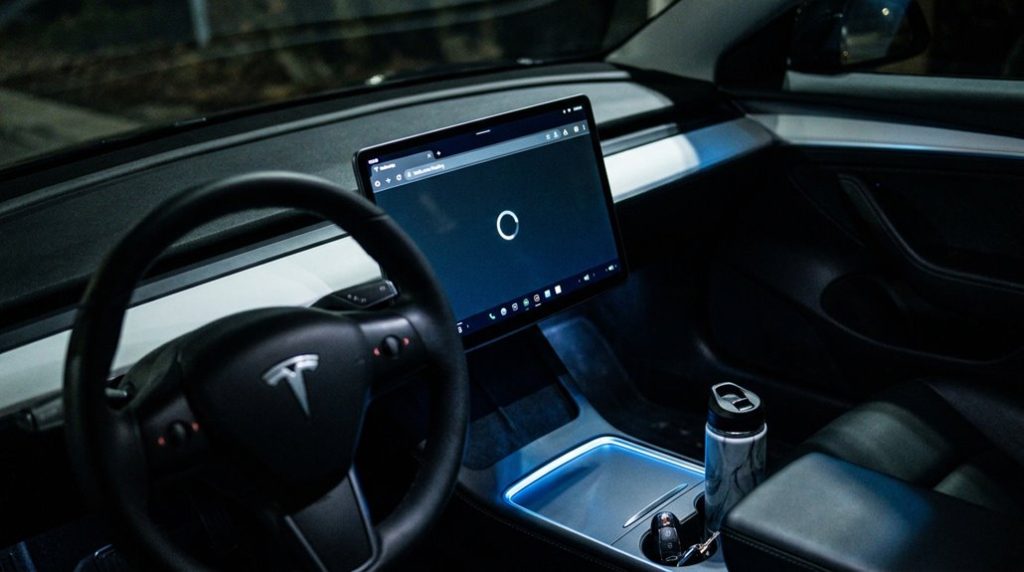

Your Tesla’s browser isn’t slow because of the car — it’s slow because of you. Most drivers never touch the settings that actually move the needle on load times, and the hardware sitting inside your MCU is quietly capable of far more than it’s delivering right now. Clearing cache, cutting background processes, and understanding how your MCU generation handles JavaScript rendering can produce measurable gains fast. The real bottleneck isn’t what you think it is.
Why the Tesla Browser Feels Slow
Before blaming your Wi-Fi signal for a sluggish Tesla browser, realize that the bottleneck is rarely just the network. The Tesla infotainment system runs on shared hardware—CPU, memory, and GPU all compete simultaneously. navigation, climate control, battery health monitoring, and your browser are pulling from the same resource pool, which explains why disabling online routing noticeably improves browser responsiveness.
MCU1-era units compound this markedly. Older touchscreen hardware wasn’t engineered for modern changing content, heavy scripts, or current web standards. Even after Tesla introduced its Chrome-based browser in software v10, TeslaTap confirmed it’s still “not a speed demon”—hardware ceilings don’t move just because the software updates.
Network handoffs between cellular bands add another layer. The car’s built-in AT&T connection frequently switches coverage zones, introducing latency spikes that feel like browser lag but are actually connection instability. The hardware and connectivity problems stack, and they’re largely independent of each other. Accumulated cache and cookies can also bloat over time, slowing down page loads even further on the Tesla’s already resource-constrained system.
Tesla’s over-the-air software updates can occasionally improve browser performance by optimizing how system resources are allocated across infotainment functions, though they cannot overcome the fundamental ceiling of aging hardware.
Fix a Lagging or Frozen Tesla Browser Right Now
When the Tesla browser locks up or crawls, a handful of targeted fixes can pull it back into working order fast. Start with the simplest interventions before escalating.
When a Tesla browser locks up or crawls, targeted fixes can restore normal performance fast.
- Clear cache first: Accumulated site data quietly degrades rendering performance over time—clearing it resolves freezes tied to stale or corrupted stored content.
- Force reboot the display: Hold both scroll wheel buttons until the screen goes dark; this clears temporary software glitches affecting the entire infotainment stack, not just the browser tab.
- Reduce map workload: Disable traffic overlay, turn off online routing, and switch to North Up orientation—these changes free shared processor resources the browser competes for directly.
- Tether to a hotspot: The onboard AT&T connection underperforms personal hotspots on media-heavy pages, and faster connectivity eliminates load stalls caused by waiting on remote content.
If lag returns immediately after a force reboot, the problem sits deeper than browser-level troubleshooting. Owners of older vehicles should note that MCU1 and MCU2 hardware generations deliver significantly less processing power than the AMD Ryzen-based MCU3, meaning persistent browser slowness may reflect a hardware ceiling rather than a fixable software issue. Visiting optimized sites like TESLARATI.com, which loads 400% faster than its previous version and up to 1000% faster than comparable sites, can confirm whether the browser is functioning normally or still underperforming.
The Tesla browser is only as good as the connection behind it, and when signal strength drops or becomes unstable, pages freeze, videos buffer endlessly, and simple searches turn into frustration—especially when you’re parked and expecting a smooth experience. Improve your connection stability where it matters most by setting up a USB WiFi Adapter for Cars so your browsing feels faster, more consistent, and actually usable when you need it.
How Your MCU Model Determines What’s Possible
The MCU generation sitting behind your center console isn’t just a spec sheet detail—it’s the hard ceiling on every browser interaction you’ll ever have in that car. MCU1 runs on NVIDIA’s Tegra 3 platform—capable, but aging fast. Software updates have squeezed real gains from it (HTML5 scores jumped from 174 to 301 out of 555 after a single update), yet those numbers still reveal meaningful hardware bottlenecks compared to newer systems.
Think of it this way: software optimization extends your MCU lifespan but can’t rewrite physics. The underlying processor and memory design define what’s ultimately achievable, regardless of how well Tesla’s engineers tune the Chromium 79-based browser running underneath. MCU2.0 and 2.5 hardware simply operate on a different performance floor entirely.
If your vehicle supports Tesla’s paid infotainment upgrade, that’s the only move that actually removes the ceiling rather than nudging against it. Tesla made the switch away from Tegra 3 to x86_64-powered MCUs in late 2017, meaning any vehicle built after that transition inherited a fundamentally more capable computing foundation from the factory. You can confirm exactly which hardware generation your vehicle is running by navigating to Settings → Software → Additional Vehicle Information on your touchscreen, where the hardware label is displayed directly.
Cut Image and Script Bloat for the Tesla Browser
Beneath every sluggish page load on your Tesla’s browser, image and script bloat are usually the primary offenders—not the network connection, not the MCU working against you (well, not entirely). Oversized assets and unnecessary scripts force the browser to process far more data than the touchscreen interface ever needs to render.
Fixing this means targeting both asset types deliberately:
- Convert to next-gen image formats like WebP or AVIF—they deliver comparable visual quality at markedly lower file weight
- Enable lazy loading so off-screen images don’t consume bandwidth until they’re actually needed
- Defer non-critical scripts so essential content renders before secondary JavaScript executes
- Audit third-party tags and kill anything tied to inactive campaigns or abandoned vendors
The compounding effect matters. A cleaner page request stack means your MCU allocates processing resources toward rendering visible content faster, not parsing dead code. Used OEM electronics like the MCU are noted to integrate seamlessly where aftermarket alternatives frequently cannot match factory-spec performance. Sites that go unoptimized routinely carry 53% mobile abandonment risk, since that share of mobile visitors leave any page that takes longer than three seconds to load.
Use Caching and CDNs to Reduce Repeat Load Times
Once you’ve trimmed image and script bloat, caching becomes your next high-leverage move—browser caching keeps static assets (CSS, JS, fonts) stored locally so repeat visits skip the round-trip to the origin server entirely, which matters on Tesla’s in-car browser where network conditions inside a parked vehicle can be inconsistent at best.
Pair that with a CDN, and those same assets serve from edge nodes geographically closer to the car, cutting propagation latency before the browser even has a chance to check its local cache.
The practical result is that second and subsequent loads feel measurably faster—assuming Tesla’s browser actually preserves cached assets across sessions, which you’ll want to verify through repeat-view testing rather than assume. Tesla pushes remote software updates overnight via Wi-Fi that can alter browser behavior, so a caching strategy that worked reliably one week may need to be re-evaluated after the vehicle installs a new build.
Browser Caching Benefits
Caching frequently visited sites locally means your Tesla’s browser skips the round-trip to a remote server entirely—pulling assets straight from device storage instead. Cache hits eliminate network latency on repeat visits, directly improving metrics like First Contentful Paint (FCP) and Largest Contentful Paint (LCP).
Here’s what effective caching actually does for you:
- Static assets (CSS, JavaScript, images) reload instantly when stored locally
- Versioned assets using `max-age=31536000, immutable` stay cached up to one year without revalidation
- Dynamic HTML requires shorter lifetimes or `no-cache` directives to prevent stale content
- Cache-Control headers server-side determine whether any of this works at all
Clearing your Tesla browser’s cache resets everything—your next load rebuilds from scratch, slower until storage repopulates. Similarly, Tesla’s over-the-air software updates can reset or alter cached browser data, meaning a post-update session may behave like a first visit until the cache repopulates.
CDN Delivery Advantages
Where your data physically travels matters more than most people realize—every millisecond of network latency stacks up before your Tesla’s browser renders a single pixel.
CDNs solve this by storing copies of site assets (HTML, JavaScript, CSS, images) on geographically distributed servers, routing each request to the nearest edge location instead of a distant origin server. Less distance means lower round-trip time, period.
Edge caching compounds that advantage. Once a CDN caches your requested content, it delivers it without redundant origin-server trips—reducing origin load by 60% or more in documented cases.
Regional redundancy adds fault tolerance, keeping content available even if one data center degrades. Cloudflare reports 50% load time reductions for CDN-enabled sites.
For Tesla’s browser operating on LTE or spotty Wi-Fi, that margin is genuinely significant. This same principle of minimizing latency through distributed architecture mirrors how Tesla’s Supercharger network expansion prioritized geographically strategic corridor placement to reduce wait times and improve reliability across high-traffic routes.
Free Up System Resources Through In-Car Settings
Tesla’s MCU handles route rendering, live traffic overlays, and browser requests from the same compute pool—so trimming what the system doesn’t need right now directly frees headroom for the browser. You’re not adding speed; you’re redistributing what’s already there.
Start with navig settings, since that’s where the heaviest background load hides:
- Disable online routing and live traffic display to cut continuous route-calculation and map-update cycles
- Switch to North Up orientation to reduce animations tied to rotating map renders, then nudge the map once to reset rendering state
- Clear browser cache, cookies, and history to remove stale data slowing repeated page loads
- Use a separate driver profile to optimize widgets and navig defaults without disrupt your everyday configuration
On older MCU-1 hardware especially, these aren’t dramatic fixes—they’re incremental. But incremental gains compound, and on constrained silicon, every freed cycle counts toward something the browser can actually use. Tesla does push over-the-air software updates that can improve system performance over time, so keeping your vehicle’s software current ensures you’re working with the most optimized version of the MCU’s resource allocation.
Using the Tesla browser can quickly become frustrating when you’re constantly reaching, zooming, or struggling with limited on-screen control—especially when you’re parked and trying to actually get things done instead of fighting the interface. Make browsing more stable and accessible by setting up a Steering Wheel Tablet / Phone Mount for Tesla so your device stays right where you can see and use it without distraction or awkward handling.
What Tesla Browser Performance to Expect From Your Hardware
Hardware generation is the single biggest variable in how fast your Tesla’s browser actually feels. MCU1 vehicles running Nvidia Tegra 3 hardware got meaningful improvements in v8.1 (2018.14), but the underlying silicon still bottlenecks everything. MCU2 closes that gap considerably. Ryzen APU-equipped Model 3 and Model Y units (built after December 2021) represent the current performance ceiling, with noticeably smoother scrolling and faster page loads than Intel Atom predecessors.
Benchmarks tell the honest story: Tesla’s Chromium 79.0.3945.130 browser scores 11.7 on Speedometer versus a MacBook Air’s 55.5. That’s not a rounding error—it’s a structural hardware gap. Complex pages amplify it further, especially during network roaming when signal handoffs interrupt already-taxed rendering pipelines.
Heavy browser sessions also carry a measurable battery impact, since the GPU and CPU are working harder against the same constrained silicon. Beyond browser performance, hardware limitations on older vehicles can also restrict which software features are available to you, including advanced driver-assistance capabilities. Know your hardware tier; manage expectations accordingly.
Frequently Asked Questions
Does Tesla’s Browser Support Webassembly or Other Advanced Browser Features?
Tesla’s browser hasn’t confirmed WebAssembly support or Advanced APIs officially. You’re working with a Chromium 79-based engine, so support likely exists in principle, but you should test directly on your vehicle to verify compatibility.
Can a Tesla Browser Be Updated Independently of the Firmware?
Like a river that can’t flow without its source, Tesla’s browser updates are fully firmware-coupled—you can’t update it independently. OTA limits and app sandboxing mean browser updates arrive only through full software releases.
Does Driving at Highway Speeds Affect Tesla Browser Performance?
Highway speeds don’t directly slow your Tesla’s browser, but you’ll notice highway latency from signal variability as your vehicle’s CPU juggles guidance, traffic, and routing tasks simultaneously, indirectly degrading browser responsiveness.
Can You Install Third-Party Browsers or Chromium Builds on Tesla?
Even if you’re a developer who’s compiled a custom Chromium build, you can’t install it—or any third-party browser—on Tesla’s infotainment system. Tesla enforces strict third-party limitations with no supported sideloading pathway.
Does Enabling Sentry Mode Reduce Tesla Browser Performance?
Sentry Mode’s background processes don’t directly reduce browser speed, but they do keep your main computer active, which means you’re sharing compute resources — a potential Sentry impact on browser responsiveness under constrained system load.