
Most people think “electric vehicle” means one thing. It doesn’t. There are actually four completely different drivetrain types—BEVs, PHEVs, HEVs, and FCEVs—and choosing the wrong one could cost you thousands or leave you stranded miles from anywhere. Each handles energy, range, and refueling in ways that are nothing alike. The differences aren’t just technical details buried in a spec sheet—they’re decisions that will follow you for years.
What Are the Main Types of Electric Vehicles?
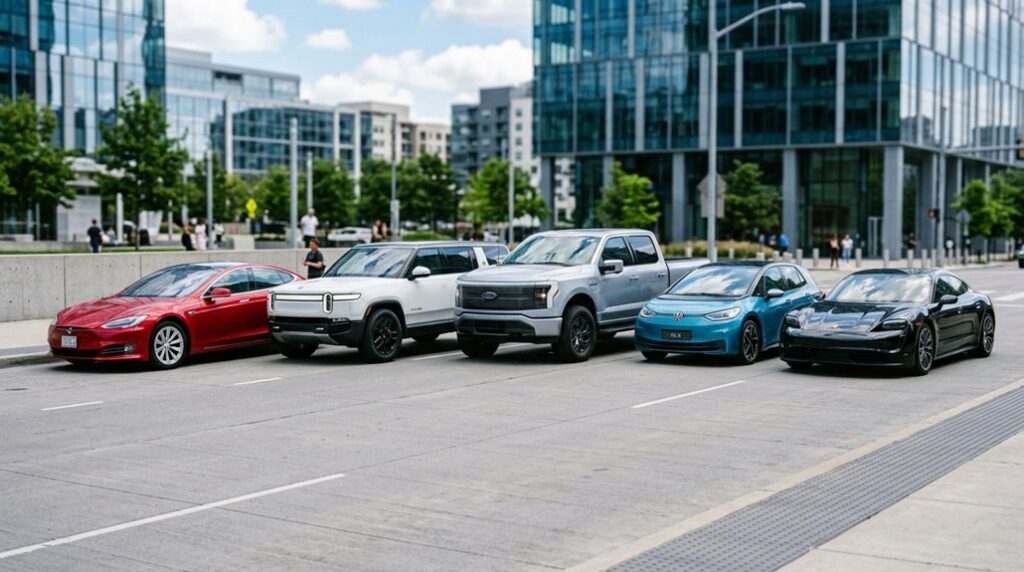
The electric vehicle scene breaks down into four main categories, and knowing the difference actually matters before you commit to ownership. You’re looking at Battery Electric Vehicles (BEVs), Plug-in Hybrid Electric Vehicles (PHEVs), Hybrid Electric Vehicles (HEVs), and Fuel Cell Electric Vehicles (FCEVs).
Each operates on fundamentally different principles, carries distinct infrastructure requirements, and presents unique long-term considerations including battery recycling responsibilities and charging equity challenges that vary markedly by region.
BEVs run exclusively on electricity stored in rechargeable battery packs, producing zero tailpipe emissions. PHEVs blend a rechargeable battery with a gasoline engine, offering flexibility when charging access is inconsistent.
HEVs improve conventional fuel efficiency through regenerative braking but never plug in externally. FCEVs convert pressurized hydrogen into electricity electrochemically, emitting only water vapor.
Among BEVs specifically, five-year operating costs can run significantly lower than comparable conventional vehicles, with examples showing a roughly $15,500 advantage in energy and maintenance expenses alone.
Grasping these distinctions helps you evaluate real-world range, fueling logistics, maintenance complexity, and total ownership costs before signing anything.
How BEVs, HEVs, PHEVs, and FCEVs Actually Differ
Slap these four vehicle types side by side and the differences become structural, not superficial. Your drivetrain, your charging method, and your emissions profile all diverge sharply depending on which category you’re in.
| Feature | BEV / FCEV | HEV / PHEV |
|---|---|---|
| Tailpipe emissions | Zero (BEV) or water vapor (FCEV) | Present during combustion |
| Charging method | Plug-in or hydrogen refuel | Regenerative braking or plug-in |
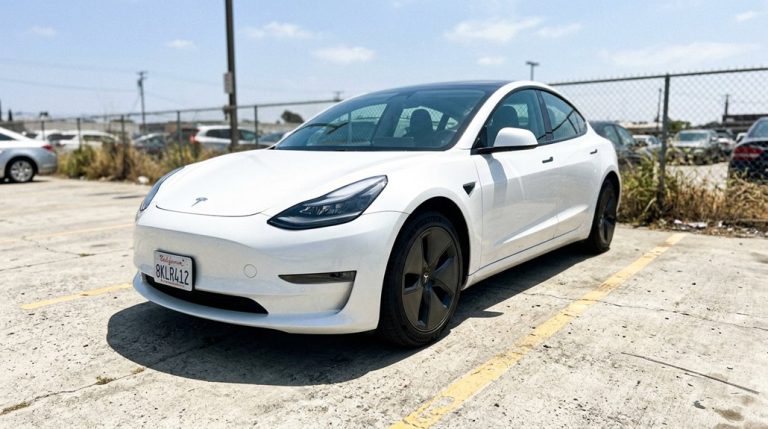
BEVs, like every Tesla model, run entirely on stored electricity. HEVs never plug in, relying on regenerative braking and gasoline combustion. PHEVs bridge both worlds, covering daily commutes electrically before switching to fuel. FCEVs generate electricity onboard from hydrogen.
These distinctions directly affect your maintenance costs (no oil changes in a BEV, fewer in a PHEV) and your eligibility for consumer incentives tied to battery capacity and zero-emission operation. Choose wrong, and you’re plunging for capabilities you’ll never actually use. For BEV owners specifically, home Level 2 charging can restore roughly 30–50 miles of range per hour overnight, making the all-electric ownership model far more practical than it might initially appear.
Real-World Range and DC Fast Charging Performance by EV Type
When you’re choosing an EV type, real-world range and charging speed aren’t abstract specs — they’re the difference between a confident road trip and a roadside panic spiral.
BEVs lead the pack by a wide margin, with top performers like the Lucid Air Grand Touring providing roughly 485 miles of real-world range and premium sedans supporting DC fast charging that adds hundreds of miles in a single short stop, while even mainstream crossovers like the Tesla Model Y Long Range hold their own at 337–380 miles EPA. The Tesla Model S Long Range, for example, delivers an EPA-rated 405 miles from its 95 kWh usable pack, with real-world Supercharging averaging 120–125 kW and recovering significant range in just 15–20 minutes.
PHEVs give you 20–50 electric-only miles before the gas engine takes over (useful for daily commutes, largely irrelevant on the highway), and FCEVs, despite their hydrogen-range headlines, are constrained less by tank size and more by the scarcity of refueling infrastructure — making that theoretical range advantage mostly theoretical.
Winter driving conditions can reduce EV range by 25–40 percent, though vehicles equipped with heat pumps instead of resistive heating consistently recover 15–20% of that loss in cold-weather testing.
The biggest real-world difference between EV types like BEV and PHEV often comes down to how dependent you are on charging access—and how inconvenient it becomes when you don’t have the right setup available. A Level 2 portable EV charging cable gives you faster, more flexible charging from compatible outlets, helping reduce downtime and making it easier to stay powered whether you’re at home, traveling, or away from dedicated charging stations.
BEV Range and Charging
Rated range and real-world range are two very different numbers, and confusing them is one of the most common planning mistakes EV drivers make. EPA estimates don’t account for speed sensitivity — at 75 mph, Consumer Reports found half of 26 tested EVs fell short of their rated figures, some by up to 52 miles.
Seasonal variability compounds this further, since temperatures around 5–10°C can meaningfully slash available range. Your BEV’s battery capacity looks great on a spec sheet, but highways, cold mornings, and hills tell a different story.
DC fast charging partially offsets this by enabling quick top-ups during longer trips, though actual trip time still depends on charging curve shape, network availability, and whether your battery preconditioned before arriving at the charger. Charging speed also peaks when the battery is low and tapers progressively as it fills, an electrochemical safeguard that means the last 20% of a charge takes disproportionately longer than the first.
Different EV types come with very different levels of dependence on charging or refueling infrastructure, and that gap becomes most obvious the moment you’re low on range or dealing with an unexpected roadside issue. An emergency EV roadside safety and charging prep kit helps cover those gaps with essential tools for low-battery situations, tire issues, and visibility on the road, giving you a practical safety buffer.
PHEV Electric-Only Miles
BEVs at least give you one honest number to plan around — PHEVs give you two, and neither one is quite what it seems. Real world variability hits PHEV electric range hard, cutting official figures by 26–56% depending on conditions.
Here’s what actually shapes your electric-only miles:
- Rated range overpromises — Most PHEVs claim 25–53 EPA miles; real-world 75-mph testing often yields 24–48 miles.
- Speed and cold shrink it further — Highway driving and cabin heating accelerate depletion noticeably.
- Mode dependent interruptions cut in unexpectedly — Hard acceleration or towing forces the gas engine on, ending EV operation entirely.
- Low charge triggers engine fallback — Once depleted, you’re driving a standard hybrid, not an EV. Studies have found real-world fuel consumption running two to six times higher than advertised figures, meaning many owners burn far more petrol than they ever expected.
By contrast, pure battery electric vehicles benefit from a drivetrain with roughly 20 moving parts, eliminating the mechanical complexity that makes efficiency unpredictable in combustion-assisted systems.
FCEV Hydrogen Range Limits
Unlike PHEVs juggling two fuel sources or BEVs tethered to a charging cable, FCEVs refuel in 3–5 minutes and typically deliver 300–435 miles of real-world range — numbers that look impressive until you realize hydrogen infrastructure makes that range largely theoretical for most drivers.
Models like the Toyota Mirai and Hyundai Nexo use 700-bar compressed tanks to maximize onboard storage, which is genuinely clever engineering. However, hydrogen logistics — production, compression, transport, and dispensing — introduce cascading energy losses before you ever leave the station.
Seasonal performance adds another variable; cold temperatures reduce fuel cell efficiency, trimming real-world range noticeably. You’re driving a capable vehicle through a fragile network. That 400-mile capability means little when the nearest hydrogen station is itself 200 miles away.
CCS vs. NACS: Which EV Charging Standard Should You Use?
Choosing between CCS and NACS isn’t a trivial decision—it shapes where you can charge, how fast you’ll top off, and how much friction you’ll tolerate every time you pull into a station.
Here’s what actually matters:
- Speed: CCS supports up to 350 kW; NACS Superchargers currently top out near 250 kW, though SAE J3400 theoretically scales to 1 MW.
- Hardware ergonomics: NACS is noticeably smaller and lighter, making every charging stop physically easier.
- Network density: Tesla Superchargers offer nearly double the public ports compared to CCS in some North American markets.
- Adopter adoption: CCS vehicle owners can sometimes access NACS networks through adapters, but compatibility isn’t universal.
NACS suits new North American buyers chasing seamless plug-and-charge convenience.
CCS still makes sense if your vehicle is older or your local infrastructure skews non-Tesla.
Your travel patterns finally decide this. Both standards now share the ISO 15118 protocol, which means communication compatibility between NACS and CCS chargers is technically achievable with the right adapter. Non-Tesla EVs like the Chevy Equinox EV can already access 17,800+ Tesla Superchargers via a dedicated NACS adapter, demonstrating how the network gap between standards is actively narrowing.
How Battery Chemistry Affects Your EV’s Range and Charging Speed
When you’re shopping for an EV—or already own one—battery chemistry quietly dictates two things you care about most: how far you can drive and how fast you can top off. Energy density is the core variable. NMC and NCA chemistries pack more energy per kilogram than LFP, which is why longer-range Teslas historically used them. LFP trades that density for better thermal stability and longer cycle life—a reasonable deal if range isn’t your obsession.
Charging speed follows similar chemistry logic. Lithium ions moving through electrodes at different rates determine your C-rate ceiling. Push past it and you risk lithium plating, which degrades cells faster than you’d like. Thermal management keeps cells in their optimal temperature window, enabling sustained fast charging without the battery management system throttling power. Cold pack? Expect slower charging. Hot pack without active cooling? Same result. Chemistry sets the rules; your system enforces them. Tesla’s approach of building vehicles on a shared hardware platform means identical battery cells can appear across trim levels, with software switches determining how much of that capacity is actually available to the driver.
How to Find Reliable Public EV Charging Wherever You Drive
Once you know what type of EV you’re driving and how its battery chemistry behaves, the next practical challenge is finding a reliable place to charge it — and that starts with knowing which apps and tools actually work. PlugShare, ChargePoint, and the DOE’s Alternative Fuels Data Center give you real-time access to more than 200,000 public ports across roughly 75,000 U.S. locations, with filters that narrow results by connector type (J1772, CCS, CHAdeMO, or Tesla-specific), access rules, and charger status before you ever leave your driveway.
Route planning matters just as much as proximity, since a 150–350 kW DC fast charger along your highway corridor beats a Level 2 station at your destination if you’re trying to hit 20–80% in under 45 minutes rather than waiting out a 4–8 hour top-off.
Drivers of vehicles like the Chevy Equinox EV can also expand their public charging options significantly by using a NACS adapter to access 17,800+ Tesla Superchargers across the country.
Locating Nearby Charging Stations
Finding a reliable public charger doesn’t have to feel like hunting for a mythical creature—the tools to locate one are genuinely good now, and knowing which ones to trust saves you time and frustration. Start with these four resources:
- PlugShare – crowd-sourced reviews, photos, and real-time check-ins
- Electrify America – filters DC fast charging and Level 2 separately
- EVgo – shows stall count, connector type, and live pricing
- Shell Recharge – supports route-based planning
Cross-reference at least two locators, since no single network lists every station. Always verify hours, payment methods, and charger power before leaving. Favor 24-hour locations with multiple stalls.
Practicing good station etiquette—like moving your vehicle after charging completes—keeps things efficient for everyone. If you’re charging at home, upgrading to a wall connector or adapter designed for your specific EV model can meaningfully improve daily charging ergonomics and usability.
Understanding Charger Compatibility
Connector type and charging level are separate compatibility issues. Your EV might handle Level 2 AC charging flawlessly while remaining completely locked out of a nearby DC fast charger using CCS1 instead of NACS.
Adaption limitations compound this problem—adaptations don’t guarantee full power delivery or protocol support at every station.
Regional interoperability adds another layer: European CCS2 infrastructure doesn’t translate directly to North American CCS1.
Always verify connector type, supported charging protocol, and recent user reports before committing to a stop. The plug shape tells you maybe half the story. For Tesla owners, hardware limitations on older vehicles can restrict which software features and charging capabilities are available even after purchasing a package or subscription upgrade.
Planning Routes With Charging
Pulling up to a dead charger two hundred miles from home is the kind of experience that converts EV skeptics—so building your route around verified, real-time charging data isn’t optional, it’s the difference between a clean road trip and an improvised disaster. Filter stations by connector type, power level, and live availability before departure.
Smart route planning means:
- Prioritizing networks showing live port status and uptime history
- Placing DC fast charging stops before your state-of-charge drops critically low
- Building route contingencies by identifying backup stations every major leg
- Checking membership requirements and payment setup in advance
Treat charging stops as fixed milestones, not afterthoughts. Practicing good charger etiquette—moving your vehicle promptly after sessions—keeps the network flowing for everyone behind you.
How to Get the Most Range and Battery Life From Your EV Daily
Getting the most out of your EV’s range and battery life isn’t complicated, but it does require a handful of deliberate habits that most owners skip because the car never explicitly tells them to bother.
Battery preservation starts with your charge limit — keep it between 20% and 80% for daily driving. Full charges stress lithium-ion chemistry, and deep discharges compound that wear over time.
Charge between 20% and 80%. Full charges and deep discharges both accelerate battery wear over time.
Thermal optimization matters more than most owners realize. Park in shade or a garage, use preconditioning while still plugged in, and avoid DC fast charging during extreme heat when you can afford the time.
Aerodynamic drag climbs sharply above 65 mph, so moderating highway speed genuinely extends range.
Regenerative braking recovers energy you’d otherwise donate to brake dust. Keep tires properly inflated, software updated, and connectors clean. None of this is heroic — it’s just consistent attention to physics your car is already managing.
Frequently Asked Questions
Can I Drive a BEV or PHEV Through a Car Wash Safely?
Surprisingly, your high-tech EV isn’t afraid of a little water. Yes, you can safely wash both BEVs and PHEVs — just use touchless precautions, confirm battery seals are intact, and activate your manufacturer’s wash mode first.
Do Electric Vehicles Hold Their Resale Value Better Than Gas Cars?
Generally, EVs don’t hold resale value as consistently as gas cars. Resale trends show battery depreciation and rapid tech advances make older EVs feel outdated faster, though high-range models with strong reputations can compete well.
Are Electric Vehicles Actually Safer in Crashes Than Traditional Cars?
You’ll find EVs often perform well in crash testing, but it’s not guaranteed. Their low center of gravity helps, though battery fire risk and model-specific design mean results vary widely.
How Does Cold Weather Specifically Affect Each Type of Electric Vehicle?
Forsooth, cold weather hits your battery performance hard across all EV types! BEVs lose range, PHEVs lean on gas more, HEVs drop mpg, and FCEVs struggle with startup — all while cabin heating devours energy and charging speed slows dramatically, spiking range anxiety.
Can I Tow a Trailer With a Fuel Cell Electric Vehicle?
You can tow with an FCEV, but only if your owner’s manual lists a towing capacity. Remember, towing cuts range markedly, and sparse hydrogen refueling infrastructure makes careful route planning absolutely essential before hitching anything up.