
Not every electric vehicle deserves the hype surrounding it—but five actually do. Experts have repeatedly singled out the Tesla Model 3, Hyundai Ioniq 6, Hyundai Ioniq 9, Kia EV9, and BMW i4 as the ones worth your money. Range, charging speed, cabin space, and resale value all factor into why these five rise above the noise. Before you commit to anything, you need to understand exactly what makes each one stand apart.
The 5 Top-Rated Electric Vehicles Experts Actually Recommend
The EV market’s gotten crowded enough that picking a winner without expert guidance is basically a coin flip with a $40,000 downside. Fortunately, experts have done the heavy lifting.
Five vehicles consistently dominate the rankings across KBB, Edmunds, Car and Driver, and Consumer Reports — and each earns its spot through measurable performance, not marketing.
Here’s your shortlist: the Tesla Model 3, Hyundai Ioniq 6, Hyundai Ioniq 9, Kia EV9, and BMW i4. Each addresses a distinct buyer need, whether that’s three-row family hauling, efficiency-first commuting, or long term reliability you can actually bank on.
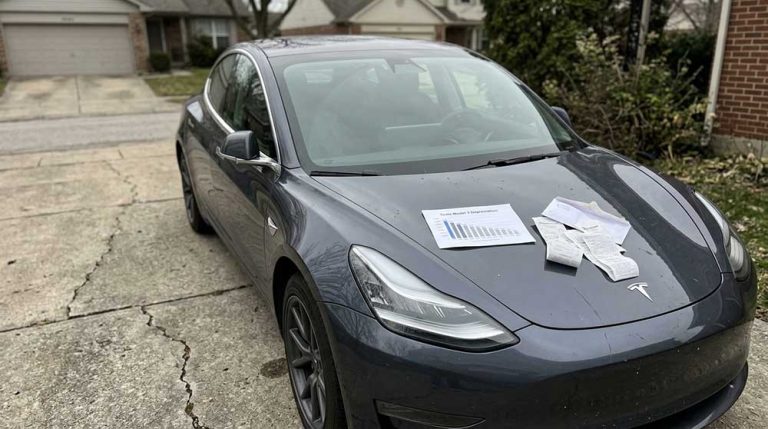
Before committing, run a buyer incentives comparison — federal tax credits and state rebates vary markedly by model, trim, and your income bracket, meaningfully shifting the real cost. The data’s already in your favor; you just need to know which vehicle aligns with how you actually drive. Many of today’s top-rated EVs also carry 10-year battery warranties from manufacturers like Hyundai and Kia, adding meaningful long-term protection to the ownership equation. For context on total cost of ownership, the Tesla Model 3 Long Range carries a KBB 5-year cost estimate of $66,185, with depreciation alone accounting for roughly $31,175 of that figure.
Even the highest-rated electric vehicles are only as efficient as the tires carrying them. A small drop in tire pressure can reduce range, increase tire wear, and turn a simple drive into an unnecessary hassle. Keeping a portable inflator in the trunk is one of those small details that rarely seems important—until the day it suddenly is.
Real-World EV Range and How Fast These Cars Actually Charge
EPA range numbers are marketing’s best friend and road-trippers’ quiet nemesis — they’re calculated under controlled lab conditions that rarely match sustained highway driving, cold ambient temperatures, or the drag penalty you pay every time you push past 70 mph.
EPA range figures are a lab-engineered illusion — cold roads and highway speeds tell a very different story.
Real-world results typically land 10% to 25% below the sticker figure, though aerodynamically efficient sedans like the Lucid Air (512-mile EPA, ~485 miles mixed real-world) and Mercedes EQS occasionally beat estimates when highway efficiency stays favorable.
Charging speed deserves equal scrutiny. Peak kilowatts grab headlines, but the charging curve tells the real story — a 200 kW rating means little if the battery tapers aggressively past 50% state-of-charge. Tesla’s V3 Superchargers deliver up to 250 kW with liquid-cooled cables and eliminate the paired-stall power sharing that limited earlier hardware generations.
Larger packs replenish more slowly by simple physics: more energy, same pipe. Your most useful ownership metric isn’t the EPA number on the window sticker; it’s sustained highway range combined with how quickly each car actually recharges between stops. Winter conditions reduce range by 25 to 40 percent, though vehicles equipped with heat pumps consistently outperform those relying on resistive heating by 15 to 20 percent in cold-weather testing.
The Charging Network Landscape Every EV Buyer Needs to Understand
Buying an EV without grasping the charging network terrain is roughly equivalent to buying a gas car without knowing where the fuel stations are — technically fine until it isn’t. Network reliability and regional availability shape your daily ownership experience far more than spec sheets suggest.
Here’s what actually matters when evaluating charging access:
- Tesla Superchargers rank as the most reliable rapid-charging network globally, with 45,000+ stations and a plug-and-play experience that genuinely earns that reputation
- Electrify America trails Tesla considerably, offering roughly 5,100 U.S. ports with uneven consistency
- Regional availability remains concentrated — California dominates, while rural areas often leave you calculating carefully
- DC fast-charging grew 7.4% in Q2 2024, signaling real infrastructure momentum
The NACS standard adoption by major automakers means Tesla’s network relevance extends beyond Tesla drivers now. Network reliability isn’t a bonus feature — it’s a core ownership variable. Tesla’s Supercharger network launched in September 2012 with just six California stations before scaling into a global platform with 75,000+ connectors worldwide by late 2025, making it the largest fast-charging infrastructure ever built. In the UK, overall driver satisfaction with public rapid charging rose from 64% to 69%, reflecting meaningful progress in network quality and consistency.
Total Cost of EV Ownership: Depreciation, Maintenance, and Software Updates
When most buyers compare EVs to gas cars, they fixate on the sticker price and monthly charging savings — which is comprehensible, but incomplete. Total ownership cost includes depreciation, maintenance, battery warranty coverage, and over-the-air longevity.
| Factor | Tesla Model 3 | Nissan Leaf |
|---|---|---|
| 5-Year Depreciation | ~43% | ~89% |
| Battery Warranty | 8 yrs/120k mi | 8 yrs/100k mi |
| OTA Update Support | Ongoing | Limited |
Those numbers aren’t cosmetic. A Leaf hemorrhaging 89% of its value in five years offsets nearly every fuel saving you’d accumulate. Meanwhile, Tesla’s over-the-air longevity keeps software current without dealer visits, directly supporting resale desirability.
Maintenance costs favor EVs broadly — no oil changes, no transmission fluid, no exhaust repairs. Consumer Reports confirmed six of nine EVs analyzed beat comparable ICE vehicles on first-owner costs. Used EVs (5–7 years old) delivered savings two to three times larger on a percentage basis. Tesla’s compact drivetrain design eliminates timing belts, spark plugs, and exhaust systems, reducing the number of wear points that typically drive up long-term repair costs. Models like the Chevrolet Bolt EV benefit further from post-recall battery replacements, effectively resetting pack longevity and extending the warranty window for buyers entering the used market.
Home Charging Setup and Daily EV Habits That Make Ownership Easier
Setting up home charging is where EV ownership stops being theoretical and starts paying off. A quality home charger converts your nightly routine into effortless range recovery. Hardwired units commonly deliver 48–50 amps, outperforming plug-in alternatives capped near 40 amps (roughly 9.6 kW).
Smart scheduling habits let you shift charging to off-peak hours, cutting electricity costs without any manual effort. Load balancing technology adjusts output responsively against household demand, which frequently eliminates the need for costly panel upgrades entirely.
Build smarter daily habits around these fundamentals:
- Plug in nightly rather than waiting for low battery levels
- Schedule charging during off-peak rate windows through your charger’s app
- Maintain 20–80% charge for routine use to reduce battery stress
- Enable app alerts to catch missed sessions before they create morning surprises
Consistency beats perfection every time. Simple, repeatable habits make the whole ownership experience measurably smoother. For most owners, roughly 70–90% of charging happens at home, making a reliable home setup the single most impactful investment in the EV ownership experience.
Tesla’s minimalist interior looks great—right up until your key cards, sunglasses, charging adapters, and loose items start rattling around the center console. What begins as a clean cabin can quickly turn into daily clutter and constant digging for essentials. A simple organizer keeps everything in its place and preserves the tidy feel that makes Tesla interiors stand out.
Frequently Asked Questions
Can I Tow a Trailer With Any of These Top-Rated Electric Vehicles?
Yes, you can tow with many top-rated EVs, but you’ll need to verify hitch types, axle ratings, tongue weight, payload capacity, towing packages, and trailer sway controls, since towing cuts charging range and regenerative braking dynamics shift markedly.
How Do Extreme Cold or Hot Climates Affect EV Battery Longevity?
Think of a Phoenix Tesla owner—heat drives faster battery degradation than cold ever will. You’ll find thermal management shields your pack, but hot climates still shorten long-term capacity more than freezing winters do.
Are There Specific EV Insurance Considerations Buyers Should Know About?
Yes, you’ll face higher battery premiums than gas-car owners. Always verify repair networks in your area, confirm battery damage coverage, and consider gap insurance, since EVs depreciate quickly after purchase.
What EV Tax Credits or Government Incentives Are Currently Available?
Federal incentives and state rebates are a goldmine for EV buyers. You can snag up to $7,500 federally, plus additional state savings — but eligibility rules shift constantly, so verify your specific vehicle’s qualifications before purchasing.
How Do EV Resale Values Compare to Traditional Gasoline-Powered Vehicles?
EVs generally face steeper depreciation trends than gasoline vehicles, averaging 39.2% resale value after five years. You’ll find warranty comparisons and battery concerns heavily influence used pricing, though standouts like Tesla Model Y and Porsche Taycan buck that trend.