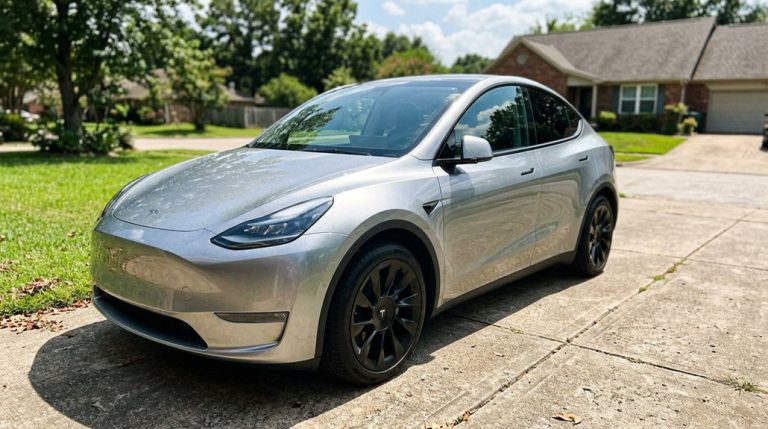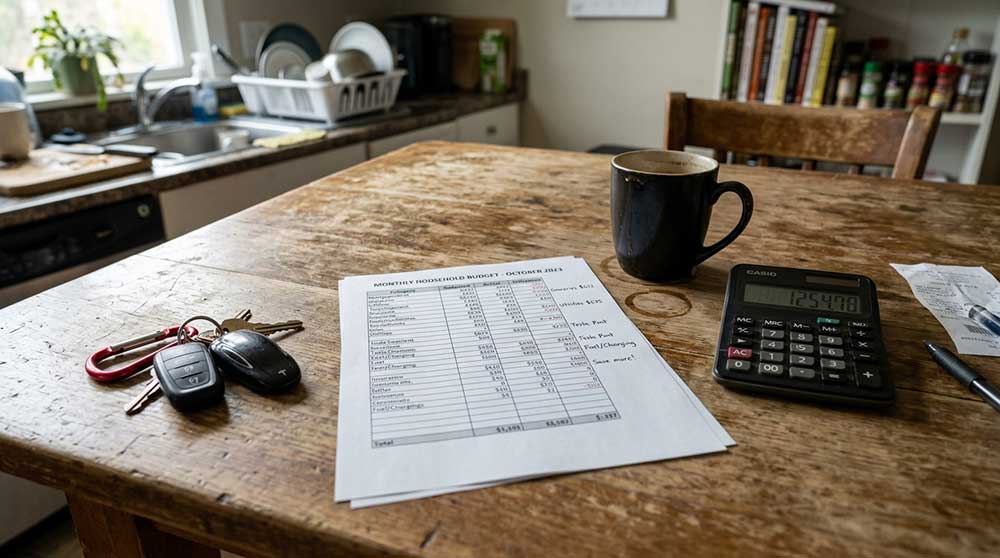

Most Tesla buyers assume you can simply hand over a credit card for the down payment and walk away with rewards points. That assumption has cost people real money. Tesla’s payment rules shift depending on how you’re financing, what you’re buying, and details that don’t surface until you’re already at the signing table. Before you pull out your card expecting a windfall of points, there’s quite a bit you need to know about how this actually works.
Can You Actually Pay a Tesla Down Payment by Credit Card?
Paying a Tesla down payment with a credit card sounds straightforward, but the reality doesn’t quite line up with that expectation. Tesla’s official financing pages never explicitly confirm credit cards as a standard down payment method, leaving buyers to piece together answers from scattered reports and forum threads.
What you’ll find is significant dealer variability. Some buyers successfully charged thousands, while others were flatly told no by Tesla advisors. One California buyer placed only the $1,000 initial deposit on a card, then added $10,000 later through their account. Another reportedly swiped up to $10,000 at delivery. Same company, wildly different outcomes. When financing a Tesla, keeping thorough documentation of transactions and paying with a credit card where possible adds a layer of dispute protection that cash or debit methods cannot provide.
The most reliable card workaround involves Tesla gift cards purchased with your credit card, then applied toward the vehicle purchase (with observed amounts ranging from $4,000 to $10,000). It’s an extra step, but it converts card spend into vehicle equity—useful if you’re chasing sign-up bonuses or reward thresholds. Tesla gift cards can also be applied toward supercharging, software, and service payments beyond just new vehicle purchases.
Tesla ownership feels effortless until public charging queues, detours, and slow top-ups start eating your time. Install a Level 2 home charger so you wake up fully charged every morning instead of planning your day around plugs.
Which Tesla Payments Accept a Credit Card: and Which Don’t?
Tesla’s credit card rules aren’t one blanket policy—they split cleanly by payment type, and knowing which category your transaction falls into saves you a frustrating phone call.
Tesla’s credit card rules aren’t one blanket policy—knowing which category your transaction falls into saves a frustrating phone call.
Card exceptions exist on the service side. Tesla explicitly accepts credit cards for products, subscriptions, Supercharging, and shop purchases—all managed through the billing portal or Tesla app. Add your card once, and those transactions run smoothly.
Vehicle financing is a different story. Payment restrictions here are firm: Tesla financing runs on ACH (bank transfers) only. Regular loan payments, principal reductions, and early payoffs don’t accept credit cards at all—forum reports and Tesla’s own support documentation confirm this consistently.
Down payments sit in an awkward middle ground. Some buyers have used credit cards as a workaround, but Tesla’s standard checkout doesn’t broadly document card acceptance for vehicle purchases. Your outcome may depend on specific purchase structure rather than a clear, universal policy. One documented approach involves purchasing Tesla gift cards with a credit card and applying them as down payment credit during the pre-delivery task after deposit and configuration.
Unlike traditional vehicles, Tesla’s 8-year warranty coverage spans 100,000–150,000 miles on most modern models and protects against serious failures like battery or drive-unit issues, making the overall ownership cost picture worth understanding before finalizing any purchase financing approach.
Tesla Down Payment Math: When Card Rewards Actually Pay Off
Before running the numbers, appreciate that credit card rewards only make financial sense on a Tesla down payment when your net return clears any fees attached to the transaction. A 2% card on $10,000 returns $200—but a 3% processing fee costs $300, meaning you’re already negative $100. That’s your break-even problem in plain math.
Bonus timing changes everything. Hitting a $5,000 minimum spend to release 100,000 Chase Sapphire Preferred points (worth roughly $1,000) flips the equation dramatically. Over a five-year ownership period, home charging costs typically run between $2,400 and $3,100 total, making upfront reward gains even more meaningful against the full cost picture.
| Scenario | Fee Cost | Reward Value |
|---|---|---|
| 2% card, no fee | $0 | $200 |
| 2% card, 3% fee | $300 | $200 |
| Sign-up bonus, no fee | $0 | $1,000 |
| Sign-up bonus, 3% fee | $300 | $1,000 |
| Gift card path, no fee | $0 | $200 |
Target fee-free routes whenever possible. One route worth exploring involves purchasing Tesla gift cards with your credit card and applying them toward a new vehicle, a use case explicitly permitted in Tesla’s fine print.
Keep your credit cards, documents, and personal valuables secure during your Tesla purchase journey with the Amazon Basics Portable Security Case. Compact, sturdy, and easy to use, it gives you peace of mind when handling high-value financial decisions.
What to Confirm Before Putting Any Tesla Payment on a Card
Running the math on card rewards is only half the job—knowing whether Tesla will actually let you charge that amount is the other half. Before submitting any payment, verify limits tied to your location and transaction type, since Tesla doesn’t publish a universal credit-card down-payment rule. What’s allowed for a deposit isn’t automatically allowed for a full down payment.
You’ll also need to confirm contract terms directly with your financing provider. Tesla Finance LLC sets different payment rules than third-party lenders, so the checkout screen alone won’t tell you the full story. If you’re using a self-arranged loan, select that option in your Tesla Account early—it changes how payments get routed. The federal clean vehicle credit of up to $7,500 can be transferred at the point of sale, which may reduce how much you need to finance or put down in the first place.
Finally, check your order’s stage in the Tesla app before charging anything. Timing matters: some payment types are only accepted once pre-delivery tasks clear. One quick call to a Tesla advisor prevents a declined charge at the worst possible moment. Keep in mind that larger down payments reduce the total amount financed, which directly lowers your monthly payments and the interest paid over the life of the loan.
Frequently Asked Questions
Can Tesla Gift Cards Be Used as an Indirect Credit Card Workaround?
Tesla gift cards were once usable as an indirect workaround, but Tesla’s likely removed that option. You can’t reliably use card conversion services today, as Tesla no longer lists new car purchases among accepted gift card uses.
Does a Large Tesla Charge Risk Being Coded as a Cash Advance?
Yes, a large Tesla charge can be coded as a cash advance if merchant coding doesn’t classify it as retail. This may trigger fees, immediate interest, and strain your credit limit.
How Does Paying by Credit Card Temporarily Affect Your Credit Score?
Charging a large Tesla down payment temporarily raises your credit utilization, which can drop your score. The dip typically lasts one or two billing cycles until your issuer reports the updated, lower balance.
Are Credit Card Payment Policies Consistent Across Different States or Markets?
No, they’re not consistent. You’ll find that state variability and merchant discretion both influence what Tesla accepts, so your delivery center’s local rules can differ markedly from what another buyer experiences elsewhere.
What Are the Safest Fallback Payment Methods if Cards Are Declined?
Safely sidestep setbacks by switching to a bank transfer or prepaid debit card if your credit card’s declined. You’ll also find digital wallets like Apple Pay offer quick, secure alternatives to keep your Tesla purchase moving forward.