
Tesla skipped run-flat tyres entirely — and that wasn’t an oversight. While most drivers assume a premium EV comes loaded with every safety feature imaginable, Tesla made a deliberate engineering call that surprises nearly everyone who looks into it. What the factory actually gives you is arguably more sophisticated, yet it leaves you more vulnerable in one critical situation. Understanding why changes everything about how you should approach tyre maintenance on your Tesla.
Do Teslas Come With Run-Flat Tyres From the Factory?
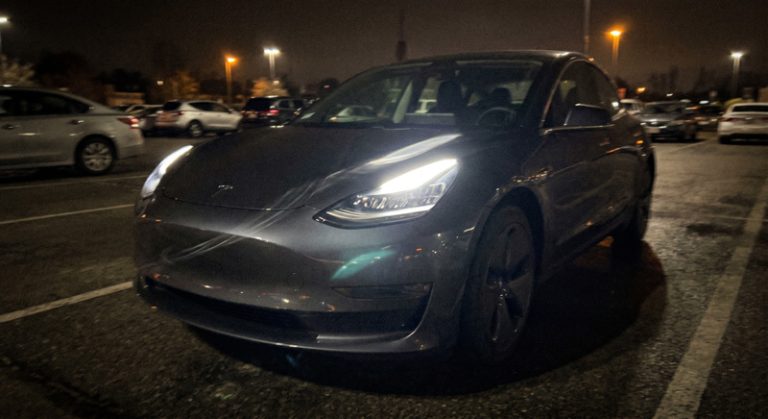
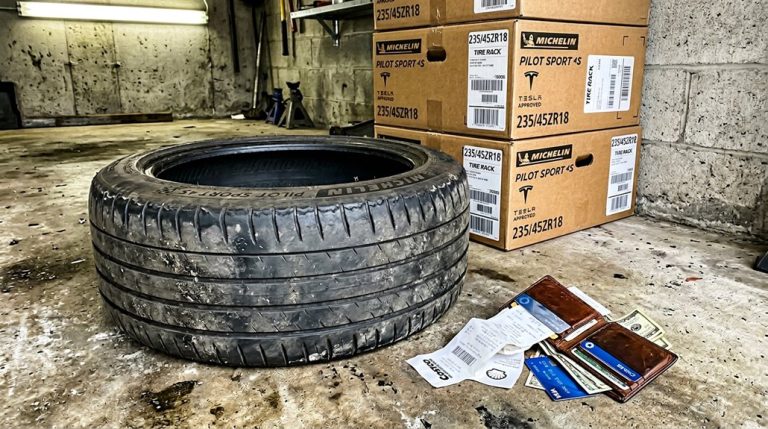
To answer the question directly: no, Tesla vehicles don’t come from the factory with run-flat tyres as standard equipment. Across the lineup — Model 3, Model Y, Model S, Model X — Tesla fits conventional high-performance tyres optimised for comfort, handling, and efficiency.
You’re getting regular tyres, not reinforced sidewall construction. Tesla’s factory approach pairs standard rubber with a tyre-pressure monitoring system (TPMS), prioritising battery range and rolling resistance over the self-supporting capability run-flats provide. Run-flat tyres carry heavier construction, which increases rolling resistance and, consequently, reduces battery range — a trade-off Tesla clearly avoids.
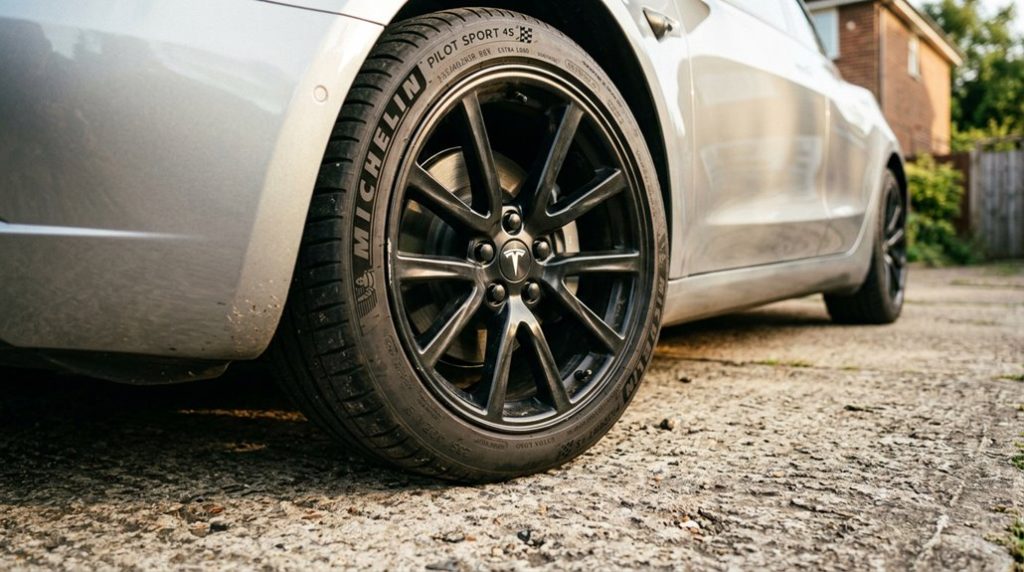
If you’re unsure what’s on your vehicle (perhaps after purchasing used), inspect the sidewall for SSR, RFT, or ROF markings. No marking means conventional tyre. Also worth noting: aftermarket run-flat installations require careful wheel fitment checks, since improper sizing accelerates wheel corrosion and compromises structural integrity over time. Choosing an unsupported tyre size is also recognised as a high-audit warranty trigger, meaning Tesla may scrutinise related suspension and drivetrain claims more closely if a failure occurs. Tesla instead equips its vehicles with premium high-quality tyres featuring thicker sidewalls and superior rubber compounds to better handle the demands of instant electric torque.
Why Tesla Doesn’t Fit Run-Flat Tyres as Standard
There’s a straightforward engineering logic behind Tesla’s decision to skip run-flat tyres, and it comes down to three compounding problems: rolling resistance, ride quality, and cost.
Tesla skips run-flat tyres for three compounding reasons: rolling resistance, ride quality, and cost.
Run-flats use reinforced sidewalls to support the car without air pressure, but that extra structure adds mass and stiffness. Both work directly against what Tesla optimises for: efficiency and ride comfort.
You’ll notice Tesla fits acoustic foam-lined tyres on most models. That foam absorbs road noise generated by the electric drivetrain’s silence (combustion engines mask tyre noise naturally). Run-flat construction introduces an acoustic compromise, making that foam-lining strategy markedly harder to execute effectively.
Then there’s the financial side. Run-flats cost more upfront, wear faster, and can’t always be repaired after a puncture — meaning full replacement. Tesla sidesteps that ownership burden entirely by pairing standard tyres with TPMS monitoring and roadside support. It’s a deliberate, calculated trade-off, not an oversight. Instead, Tesla sources its OEM tyres from Michelin, Goodyear, and Pirelli — each selected specifically for traction, handling, and efficiency on electric vehicles.
The increased battery pack weight of 800–1,200 lb compared to similar combustion vehicles makes proper tyre load ratings a critical safety and efficiency consideration that run-flats would further complicate.
Can You Still Drive Your Tesla on a Flat Tyre?
Skipping run-flat tyres means one practical question follows immediately: what actually happens when you get a flat? Tesla’s answer depends entirely on tyre condition, not a blanket rule.
Your first move is a quick safety check. Grab an accurate pressure gauge and measure cold tyre pressure (recommended range: 40–45 psi). That reading determines everything.
Here’s how Tesla breaks it down:
- Tyre holds air, driving feels safe – Travel the short distance to the nearest tyre shop at the lowest speed possible.
- Tyre is leaking but not fully flat – Contact Tesla Roadside Assistance (available 24/7 through the Tesla app) immediately.
- Tyre is completely flat – Stop driving. Rim contact destroys internal tyre structure fast.
Tesla’s guidance is deliberately conservative. Driving on a fully deflated tyre isn’t a workaround; it’s damage accumulation.
No Tesla vehicle includes a spare tyre, jack, or designated storage for one, so carrying a lightweight aftermarket repair kit and electric inflator is a practical, low-cost way to stay prepared. Repair kit and inflator can weigh under 5 lbs combined and store compactly beneath the main cargo area.
Tyre wear is also worth factoring into your overall ownership budget, as instant torque and vehicle weight tend to accelerate tread degradation faster than most conventional cars. When in doubt, the app beats guesswork every time.
How Tesla Handles Tyre Repair and Roadside Recovery
Getting a flat tyre sorted on a Tesla follows two clear routes: handle it yourself by driving carefully to the nearest Service Center or tyre shop, or let Tesla Roadside Assistance (available 24 hours a day, 365 days a year through the Tesla app) do the heavy lifting. Roadside etiquette matters here — if you notice sudden vibration, unusual noise, or handling changes, reduce speed immediately before deciding anything.
If the tyre still holds air and driving feels stable, cautiously heading to a nearby shop is reasonable. If it doesn’t, request assistance directly from the app’s home screen. The same Tesla app used for roadside assistance also allows owners to locate the nearest Supercharger station when planning where to stop after a tyre repair on a longer journey.
Repair costings land on you either way, since Tesla treats tyre damage as an owner expense at Service Centers or third-party shops. Punctures under 6mm within the central three-quarters of the tread are typically repairable; sidewall damage or holes exceeding 6mm usually mean replacement. Acoustic-foam-equipped tyres add minor complexity but remain repairable with proper specialist work. During any repair, the technician will use a carbide cutter and cement applied through the injury channel from both inside and outside the tyre to properly seal the puncture.
Tesla tires don’t give you much warning when something goes wrong, and without a spare, even a small puncture can leave you stuck waiting instead of driving. Most owners only realize how exposed they are once they’re already on the roadside. Stay prepared for sudden flats with this portable tire inflator and emergency repair kit before a simple pressure drop turns into a full breakdown.
Should You Switch to Aftermarket Run-Flat Tyres?
Once you’ve dealt with a flat and weighed up the recovery options, it’s natural to wonder whether run-flat tyres would’ve saved the hassle entirely. They can work on a Tesla, but the comfort trade-offs are real and immediate.
Run-flat tyres can work on a Tesla — but the comfort trade-offs are real and immediate.
Here’s what the switch actually means:
- Range hit: Run-flat construction adds structural rigidity, which increases rolling resistance and quietly chips away at your efficiency figures every single kilometre.
- Ride quality: The stiffer sidewalls (necessary for post-puncture mobility) transmit more road vibration directly into the cabin, eroding the smooth experience Tesla’s acoustic foam was designed to protect.
- Warranty implications: Fitting non-Tesla-approved tyres could affect warranty coverage on suspension and drivetrain components if damage is attributed to incompatible fitment.
Tesla’s factory philosophy prioritises range, comfort, and responsiveness. Run-flats trade exactly those qualities for emergency mobility — which is useful occasionally, but costs you something daily. For context, switching from wider performance-oriented summer tyres to a more efficient compound can already cost 10–15% in range, meaning run-flats layered on top of an aggressive tyre choice could compound losses well beyond what most drivers anticipate.
When a nail or sharp object hits your Tesla tire, it rarely happens near help—it happens when you’re already on the move and losing pressure fast. Without a spare, even a small puncture can turn into a long wait on the roadside. Handle unexpected punctures on the spot with a tire repair plug kit before a minor leak forces an unnecessary tow.
Frequently Asked Questions
What Is the Acoustic Foam Inside Tesla Tyres Actually Designed to Do?
You’ll find the acoustic foam inside Tesla tyres is designed for sound dampening, markedly reducing cabin noise. It doesn’t offer debris protection or run-flat capability — it’s purely about keeping your ride quieter and more polished.
Do Tesla-Approved T-Marked Tyres Differ Technically From Standard Replacement Tyres?
Surprisingly, yes — they’re not just regular tyres with a fancier badge. T stamped construction and T specific compounds prioritize lower rolling resistance, reduced noise, and EV-specific handling, so you’re getting genuinely purpose-built performance.
How Does Tesla’s Vehicle Weight Affect Tyre Wear Rates Compared to Petrol Cars?
Your Tesla’s heavier loading accelerates tyre wear faster than most petrol cars. You’ll experience greater thermal build-up in the contact patch, meaning you’re burning through tread more quickly, especially when you’re applying instant torque during acceleration.
Can Tyre Pressure Monitoring Systems Detect a Slow Puncture Before It Worsens?
Your TPMS can catch a slow leak, but it’s not foolproof. It monitors pressure trends over time, so if the drop’s gradual and stays above the threshold, you won’t get an alert.
Does Fitting Non-Tesla-Approved Tyres Void Any Part of the Vehicle Warranty?
Over 90% of warranty disputes hinge on causation. Fitting non-Tesla-approved tyres won’t automatically void your warranty, but you’ll face dealer resistance if incorrect sizing triggers suspension damage — that’s where warranty implications become real.