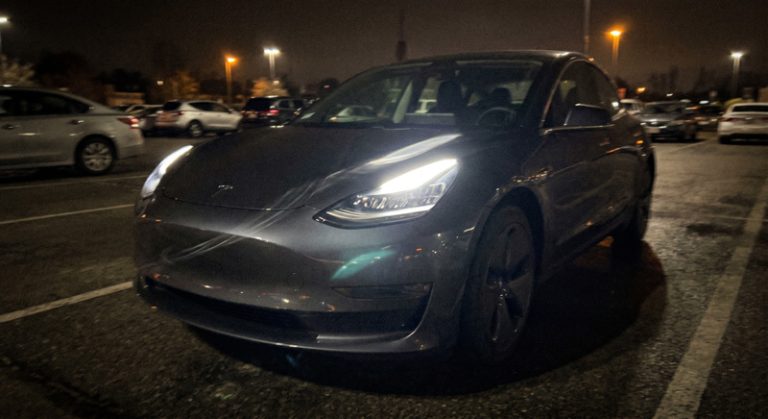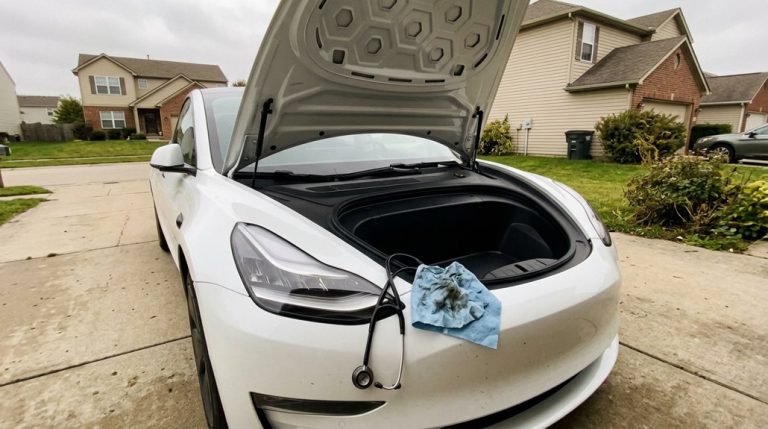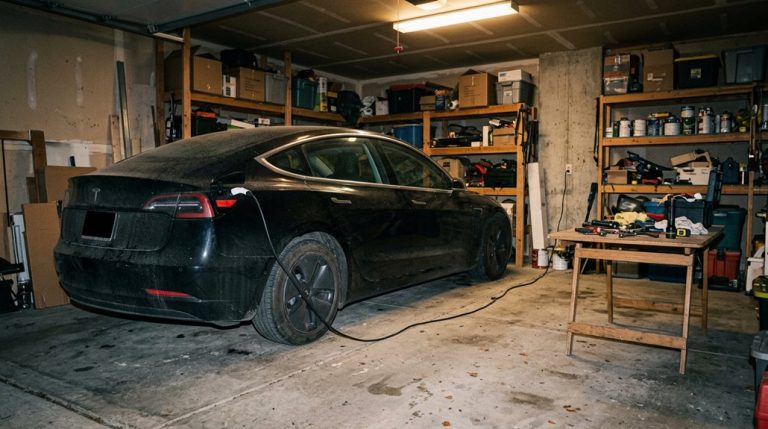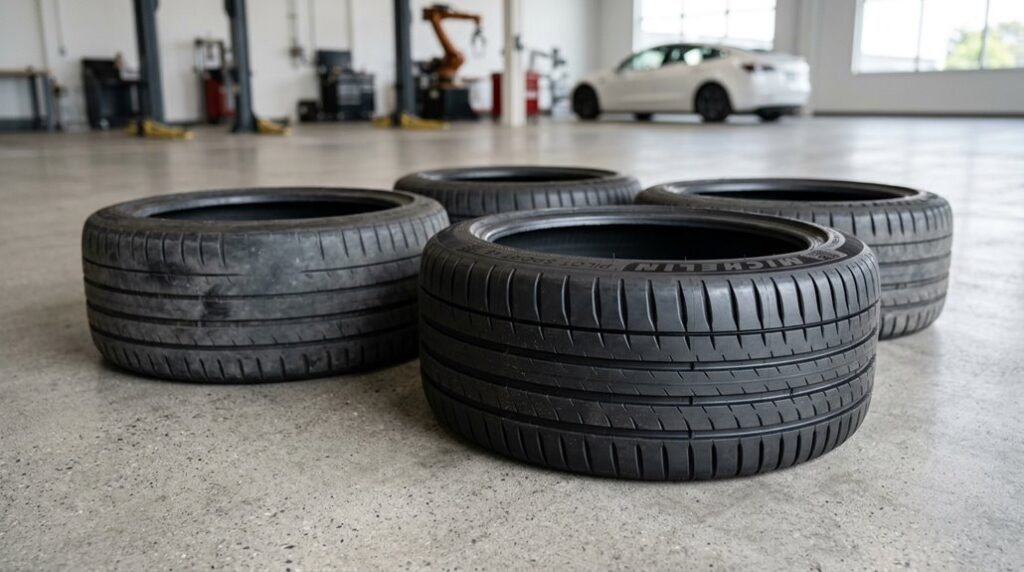

60% of Tesla owners swap out their factory tyres before 25,000 miles — most without realising what they’re actually throwing away. Those original tyres were purpose-built to handle EV torque loads, protect your range, and keep the cabin quiet. Replace them with the wrong set and you’re paying twice: once at the shop, and again every time you charge. Before you go bargain-hunting for a cheaper alternative, there’s something about Tesla’s factory rubber you probably haven’t considered.
What Tesla Factory Tyres Are Engineered to Do
When Tesla engineers a tyre from the ground up, they’re not just slapping rubber on a rim and calling it a day — they’re solving a specific set of physics problems that generic aftermarket tyres aren’t built to address.
Tesla doesn’t just fit tyres to a car — they engineer solutions to physics problems most manufacturers never think to ask.
Each factory tyre targets five distinct performance areas: traction, cabin noise, range efficiency, torque management, and precise fitment.
Traction tuning starts with advanced rubber compounding, selecting materials engineered to maintain grip across both dry and wet surfaces under demanding conditions. That’s material innovation doing real work, not marketing language.
Because electric drivetrains deliver instant torque (unlike combustion engines that build power progressively), tyres absorb enormous stress during launch and acceleration. Factory tyres are constructed specifically around that load profile.
Tesla co-develops these tyres with manufacturers like Michelin, Bridgestone, and Continental, then validates each design against Tesla’s own safety standards — vehicle-specific performance, not just generic dimensional compatibility. Approved Tesla OE tyres can be identified by T0, T1, T2 markings on the sidewall, distinguishing them from standard fitments.
Running an unsupported tyre size outside factory specification can create a legitimate warranty audit trigger, potentially affecting coverage on related vehicle systems if a claim is filed.
Tesla tires don’t wear out randomly—they usually lose lifespan quietly from something most drivers ignore: small pressure drops that slowly increase rolling resistance, heat buildup, and uneven tread wear. By the time it’s noticeable in range or handling, the damage has already been happening for weeks. Keep a portable cordless tire inflator in your Tesla so you can correct pressure anytime and stop subtle underinflation from shortening your tire life without you noticing.
How Factory Tyres Actually Impact Tesla Range
All that engineering work Tesla puts into factory tyres — the compound tuning, the torque-optimised construction, the co-development with Michelin and Bridgestone — exists for a reason beyond performance bragging rights: it directly protects your range.
Rolling resistance is the primary lever here, and factory tyres are calibrated to minimise it from day one.
But calibration degrades. Tire aging stiffens compounds, raising resistance gradually.
Seasonal effects drop pressure as temperatures fall, and even a few PSI below spec costs you real miles.
Road surface texture adds friction the motor silently absorbs.
Manufacturing variance between tyre batches can create subtle efficiency differences.
Alignment impact is underappreciated — a misaligned axle scrubs energy constantly, even on straight roads.
Tesla’s published range figures assume factory tyres at correct pressure, proper alignment, and reasonable tread life.
The battery pack’s added weight, ranging from 800 to 1,200 pounds compared to similar combustion vehicles, places greater sustained load on tyres than most drivers account for, accelerating wear and amplifying the cost of running at incorrect pressure.
Deviate from any of those conditions, and you’re quietly borrowing miles you’ll never recover. Combined wheel and tyre choices can shift your real-world range by roughly 2 to 15 percent based on observed and anecdotal data across different configurations.
Do Tesla Factory Tyres Handle EV Torque and Weight?
Tesla’s factory tyres don’t just show up on your car by accident — they’re purpose-built to handle two forces that would chew through a standard passenger tyre in short order: instant torque and serious kerb weight.
Tesla’s factory tyres aren’t accidental — they’re engineered specifically to survive instant torque and brutal kerb weight.
Your Tesla’s electric motor delivers peak torque from zero RPM, meaning every hard launch triggers micro-slipping across the contact patch even when you can’t see wheelspin. Standard tyres simply aren’t built to absorb that kind of repeated stress.
Weight compounds the problem. Tesla’s battery pack pushes kerb weight markedly above comparable ICE vehicles, demanding higher load-index ratings to manage proper load distribution and prevent excessive sidewall flex.
Flex builds heat, and heat accelerates wear — a straightforward physics problem with expensive consequences.
Factory tyres address rapid acceleration through reinforced construction and stiffer compounds engineered specifically for Tesla’s torque profiles. The trade-off, however, is that those same performance-tuned compounds often sacrifice outright tread longevity. Generic non-EV tyres wear 20–40% faster on EVs than on comparable gas vehicles, meaning a 60,000-mile-rated tyre may only deliver 36,000–48,000 miles on your Tesla.
You get grip; you pay for it eventually.
Tyre selection also has a measurable impact on real-world range, with summer performance tires costing roughly 10–15% in efficiency compared to standard compounds, meaning your factory tyre choice carries financial consequences well beyond wear rates alone.
Most Tesla owners don’t realize how much tire performance depends on something as simple as a few PSI either way. The car can still feel “fine,” but even slightly inaccurate pressure readings can quietly lead to uneven wear, reduced range, and tires that don’t last nearly as long as they should. Check your tire pressure with a precise digital gauge before small PSI differences start costing you range, grip, and tire life over time.
How Acoustic Foam and Tread Design Reduce Cabin Noise
Handling instant torque and raised kerb weight is one engineering challenge — keeping the cabin quiet while doing it’s another. Tesla addresses cabin noise through two complementary methods: acoustic bonding and tread acoustics.
Acoustic bonding places a foam strip directly onto the tyre’s inner liner. That foam absorbs cavity resonance — the hollow drumming sound generated when rubber meets road. Tesla reports a 6 dB reduction at 200 Hz, which is genuinely noticeable during conversation or music playback.
Tread acoustics handles the upstream problem. Optimised tread geometry reduces tonal noise at the contact patch before it ever enters the cavity.
Why does this matter more in a Tesla? The electric drivetrain produces almost no masking engine noise, so road noise becomes the loudest thing in the cabin. Every decibel counts. Tesla’s minimalist cabin design, centred on a single touchscreen interface, means there are fewer physical controls and surfaces to absorb or break up residual sound.
Real-world results vary by road surface and speed, but the engineering rationale is solid. It’s worth noting that acoustic tyres are not exclusive to Tesla — many other manufacturers specify foam-lined variants for their own models.
What Tesla Owners Should Know Before Replacing Factory Tyres
When the time comes to replace your Tesla’s factory tyres, the decision carries more technical weight than a typical tyre swap — because what left the factory wasn’t chosen arbitrarily. Tesla engineers selected each fitment to balance torque delivery, regenerative braking loads, and efficiency targets specific to your trim.
Before you order anything, confirm the exact size off your sidewall and door placard — front and rear specs may differ on staggered setups. Check the load index and speed rating carefully; Performance variants demand higher-rated rubber than standard trims. Inspect wheel alignment first, since misalignment quietly destroys new tyres before you’ve noticed the problem.
If you’re pulling tyres for seasonal storage, match the replacement spec precisely rather than improvising. Deviating from OEM dimensions can skew your range estimates and upset traction control calibration. Tesla-designed tyres reportedly deliver up to 10% better range than comparable aftermarket options — a number worth respecting. This efficiency consideration connects to broader energy management on Teslas, where battery preconditioning and regenerative braking are calibrated around the specific rolling resistance and grip characteristics of OEM-specified tyres.
Frequently Asked Questions
Can Tesla Factory Tyres Be Repaired After a Puncture or Sidewall Damage?
Tread puncture repairability is possible if the hole’s under 6mm, but sidewall durability means nothing here—sidewall damage isn’t repairable. You’ll need a replacement tyre whenever damage falls outside the central tread zone.
How Long Do Tesla Factory Tyres Typically Last Before Needing Replacement?
Your Tesla factory tyres typically last 15,000–30,000 miles, though tread wear varies by model and driving habits. You’ll extend that range by sticking to proper service intervals and maintaining correct tyre pressure consistently.
Are Tesla Factory Tyres Covered Under Any Warranty or Roadside Assistance?
Your factory tyres aren’t covered under Tesla’s vehicle warranty — the tire manufacturer handles defects. There’s no warranty transferability here. Roadside coverage helps during emergencies but won’t pay for replacements; consider Tesla’s optional Wheel and Tire Protection Plan instead.
Do Tesla Factory Tyres Perform Differently Across Various Climate or Temperature Zones?
Yes, your Tesla factory tyres experience *massive* seasonal performance shifts. Summer tyres grip variance plummets below 45°F, while all-seasons handle mixed climates better. You’ll notice dramatic differences depending on your temperature zone.
Which Tesla Models Come With Run-Flat Tyres as Standard Factory Equipment?
No Tesla models come with run flat tyres or emergency spares as standard factory equipment. You’ll find conventional high-performance tyres across all trims, chosen specifically to maximise range, grip, and ride comfort.