
Tesla tyres wear 20–30% faster than those on petrol cars — and most owners have no idea why. It’s not a flaw. It’s physics: instant torque, a battery pushing 500 kg, and compounds engineered for efficiency rather than endurance. The result is a tyre management problem that punishes guesswork. Pressure, rotation, and alignment aren’t optional maintenance steps — miss any one of them and the others deteriorate faster. Here’s exactly what’s happening to your tyres and what you can do about it.
Why Tesla Tyres Wear Out Faster Than Most
Tesla’s electric motors deliver torque instantaneously — no rev-building, no clutch slip, no gradual power transfer — which means the rear tyres on performance trims absorb full rotational force the moment you press the accelerator. That instant torque scrubs rubber aggressively, especially during repeated hard launches.
Battery weight compounds the problem. A Model 3 weighs roughly 1,600 kg compared to approximately 1,400 kg for comparable petrol equivalents — that extra 200 kg presses constantly into every tyre contact patch during braking, cornering, and stop-start urban driving. The battery pack alone accounts for 800 to 1,200 pounds of that additional mass, which is why Tesla specifies higher load-rated tyres than you’d find on equivalent petrol vehicles.
Factory tyre choices don’t help longevity either. Tesla typically fits low rolling resistance compounds prioritising efficiency and range over tread life, and softer compounds surrender rubber faster under load.
Regenerative braking shifts deceleration stress onto the front tyres rather than brake pads, creating wear patterns you won’t recognise from conventional vehicles. Expect the unexpected here. Neglected wheel alignment quietly accelerates uneven tread wear, with performance-focused setups running excessive negative camber chewing through inner tyre edges faster than most owners anticipate.
Spot and Fix Uneven Tesla Tyre Wear
Most Tesla owners don’t notice uneven tyre wear until it’s expensive — and by then, the inner shoulder‘s already eaten through while the outer edge still looks fine. That’s the camber problem. Tesla Model 3 and Model Y run aggressive rear camber from the factory, loading the inner tread edge harder than the outer. You won’t catch it with a glance; you need tread-depth readings across inner, centre, and outer zones on every tyre.
Centre wear tells a different story — overinflation, typically — while cupping or feathering points toward suspension issues rather than pressure. Tesla vehicles also carry significant battery weight, which increases tyre load stress beyond what equivalent petrol cars typically place on the same contact patch.
Bushing inspection matters more than most owners realise. Bushings on these models can fail between 25,000 and 35,000 miles, quietly changing wheel angle under load and accelerating irregular wear. Camber correction and bushing replacement often need to happen together. Fixing one without the other just delays the same problem. Beyond bushings, worn control arms and ball joints can also shift alignment angles, compounding the same irregular wear patterns even after a fresh camber correction.
A Tesla tire issue rarely starts as a full blowout—it usually begins as a slow leak or small puncture that escalates at the worst possible time, often far from help and without a spare in sight. Avoid getting stuck in that situation by keeping a Tesla tire repair emergency kit in your trunk so you can plug minor damage quickly and stay safely on the road instead of waiting for a tow.
How to Check Tesla Tyre Pressure and Reset the TPMS
Keeping pressure accurate starts with knowing where to look — and on a Tesla, that means the Tyre and Loading Information label on the driver’s centre door pillar, not the number moulded into the tyre sidewall (that’s a maximum rating, not a target).
Most Model 3, Y, S, and X configurations run 42 psi; Cybertruck typically targets 50 psi. Always do cold checks — tyres sitting stationary for at least three hours — since warm rubber reads higher and bleeding air from a warm tyre to hit the cold spec is actually counterproductive.
For touchscreen readings, steer to Controls > Service, where each corner displays individual pressure plus the last measurement timestamp. Tyre pressures can also be checked remotely through the Tesla Mobile app.
After adjusting, replacing, or rotating tyres, initiate manual TPMS calibration. Drive above 15 mph for roughly 20 minutes, and the system relearns its baseline automatically. Simple, but only if you follow the sequence correctly. Tesla’s NACS connector standard unifies Supercharger, Destination, and home charging under one plug design, reflecting the same commitment to streamlined, integrated ownership experience that underpins features like remote tyre monitoring.
Build a Maintenance Schedule That Extends Tesla Tyre Life
Structured maintenance is what separates a tyre set that hits 40,000 miles from one that’s binned at 20,000. Build your schedule around fixed intervals, not guesswork.
Rotate every 6,250 miles, or sooner if tread depth varies by 2/32 in (1.5 mm) between tyres. Check alignment every 12–24 months, but don’t wait—pull or uneven inner-shoulder wear demands an immediate response.
Your monthly inspection checklist should cover cold-tyre pressure, sidewalls, tread depth, valve caps, and any foreign objects. Seasonal storage periods are actually useful here; use them as a reset point to inspect rubber condition before miles accumulate again.
Beyond tyres, anchor your calendar with brake fluid checks every four years and annual caliper cleaning in salted-road regions (every 12,500 miles). Tesla recommends full replacement at six years regardless of tread. Plan around that ceiling, not past it. When fitting replacement tyres, always verify supported tyre sizes against your model and year, as running unsupported sizes can create legitimate warranty audit triggers on related systems. Because the Model 3 relies heavily on regenerative braking, brake pads experience significantly less wear than on conventional vehicles, meaning tyres often become the dominant maintenance cost and priority.
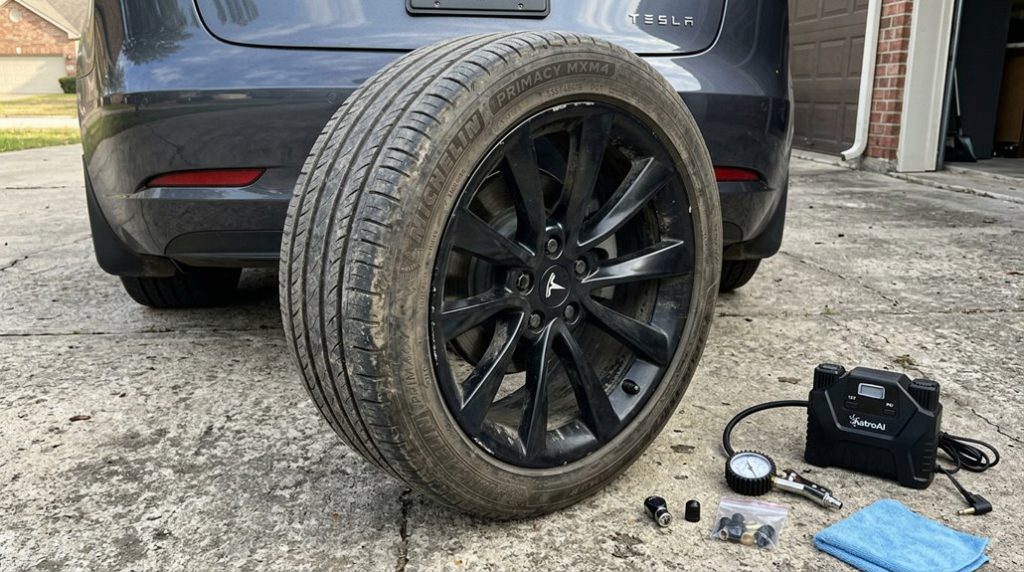
Most Tesla tire problems don’t start with a warning—they start with a slow pressure drop you only notice once range is down, handling feels off, or wear has already started building unevenly across the tread. Stay ahead of it by keeping a digital tire pressure gauge and portable inflator so you can correct PSI on the spot and avoid turning a small imbalance into an expensive tire replacement.
Frequently Asked Questions
Can Tesla Tyres Be Repaired After a Pothole Strike Damages the Sidewall?
No, you can’t repair sidewall damage after a pothole strike. You’ll need a sidewall replacement instead. Schedule a professional inspection immediately, as sidewall cuts, bulges, or cracks compromise structural integrity and can’t be safely patched.
What Should I Do if My Tesla Gets a Flat Tyre on the Road?
Your tyre’s basically screaming for help! If it still holds air, use temporary inflation and drive carefully to a service center. If not, you’ll need to request roadside assistance immediately through your Tesla app.
Does Tesla Offer Any Tyre Protection or Insurance Plans for Owners?
Yes, Tesla offers a Wheel and Tire Protection Plan covering road hazard damage for as low as $12/month. You’ll access Tesla Roadside assistance anytime and investigate Warranty Options through the Tesla app under Upgrades > Service Plans.
Are Low-Profile Tesla Tyres More Vulnerable to Road Impact Damage?
Like a knight with a short shield, your low-profile Tesla tyres offer less sidewall protection, making low profile vulnerability real. You’ll sacrifice ride comfort as potholes transfer harsh impacts directly to your wheels.
Should I Carry a Spare Tyre in My Tesla for Emergencies?
You can carry a spare, but it’s not always necessary. Weigh the spare considerations carefully—remote travel justifies one. For most urban drivers, a patch kit and inflator cover your emergency tools needs effectively.