
Most EVs crumble the moment pavement ends—but Tesla didn’t get that memo. With the Cybertruck’s 16-inch suspension travel, locking differentials, and dedicated Baja and Overland modes, Tesla is quietly rewriting what electric vehicles can survive. Yet having the hardware is only half the battle. Knowing which Tesla handles dirt, rocks, or standing water—and exactly how to use each system—is where things get genuinely interesting.
Which Tesla Models Actually Handle Off-Road Terrain?
Not every Tesla handles dirt the same way, and that gap in capability is wider than most people expect.
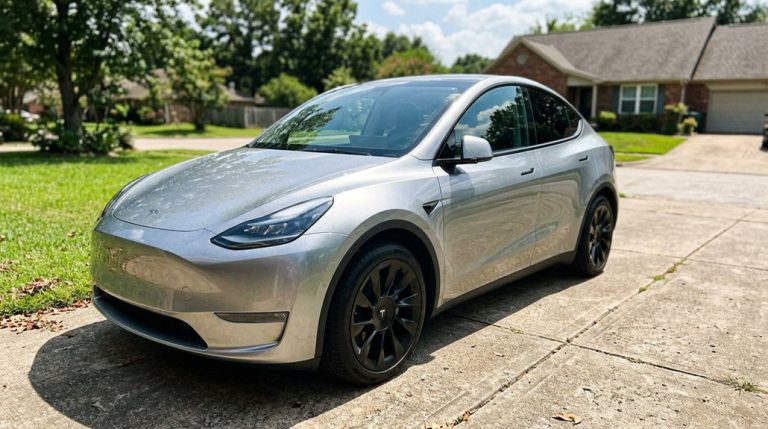
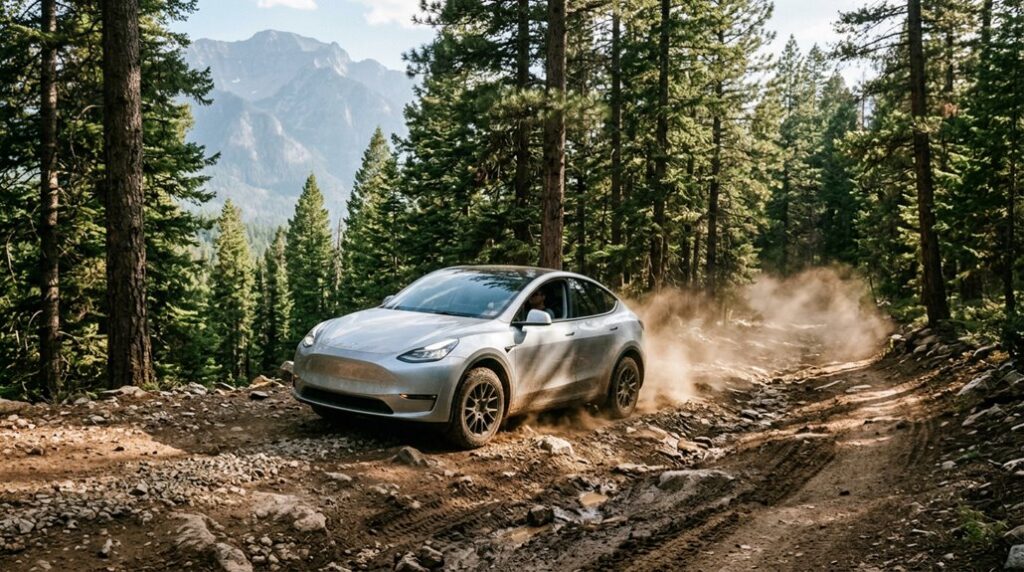
The Model Y leads the mainstream lineup, offering a dedicated Off-Road Assist mode and enough ground clearance to handle grassy paths and light trails. Add a lift kit and aggressive tires, and you’re suddenly negotiating rocky Moab terrain. That’s a meaningful jump from stock capability limits.
The Model X brings air suspension into the equation, pushing clearance toward 8.7 inches at higher settings. Its SUV platform gives it a practical geometry advantage over sedans, making light-to-moderate off-road use genuinely accessible. Among current Tesla models, it is also the only one rated for dirt road use.
Then there’s the Model S. Its air suspension can raise ride height, and yes, someone actually documented a Model S 100D steering through muddy ruts and water crossings. But sedans’ constraints are real — low ground clearance and sedan geometry keep it firmly in the “rough roads only” category. Unlike the Model Y, the Model S also lacks a heat pump system, which can significantly reduce available range in the cold temperatures commonly encountered on remote trails.
Cybertruck’s Overland and Baja Modes: What Each One Actually Does
The Cybertruck splits its off-road personality into two distinct operating modes — Overland and Baja — and grasping what each one actually does prevents you from using the wrong tool for the job.
Overland handles the technical, slow-speed work. It prioritizes controlled wheel slip, raises ride height for maximum clearance, and offers terrain-specific trail tuning across rock, sand, gravel, and all-purpose presets. Air springs can cross-link for better axle articulation on uneven ground.
Baja does the opposite — it’s built for speed on loose surfaces like open desert and dirt roads. Baja mode is specifically designed to shorten the effective wheelbase for a go-kart-like feel that keeps the driver engaged and in control. The rear wheels can articulate up to 10 degrees opposite the front wheels at low speeds, effectively shrinking the functional wheelbase mid-turn to sharpen agility.
Key distinctions worth knowing:
- Overland maximizes grip; Baja maximizes agility
- Baja’s handling slider lets you tune stability versus responsiveness
- Rock settings in Overland use maximum ride height
- Baja suspends tighter traction constraints for a more playful feel
Match the mode to the terrain, and the Cybertruck performs exactly as intended.
Even Tesla’s strong traction control can struggle once the surface turns loose—sand, mud, or gravel can quickly turn a simple detour or beach drive into a situation where the wheels spin without finding grip. Off-road traction recovery boards give you a reliable way to regain traction by creating a solid surface under the tires, helping the vehicle move again without needing external recovery assistance.
How Locking Differentials, Wade Mode, and Suspension Height Support Each Mode
Knowing which mode to use is only half the battle — the hardware backing those modes is what actually makes them work. Locking differentials force both wheels on an axle to spin at identical speeds, improving traction distribution across loose or uneven surfaces. The locking limits apply here: engagement caps your speed at 35 mph and widens your turning radius noticeably.
| Feature | Primary Function |
|---|---|
| Rear Locking Differential | Uphill and level off-road traction |
| Front Locking Differential | Rock crawling and front-end grip |
| Wade Mode | Suspension lift plus battery pressurization for water crossings |
| Suspension (Extract Height) | Maximized approach, breakover, and departure angles |
Wade Mode raises suspension and pressurizes the high-voltage battery — protection, not just clearance. Raising ride height to Extract improves your angles over steep terrain dramatically. Each feature complements a specific mode rather than operating independently. The Cybertruck’s tri-motor Plaid layout uses carbon-sleeved rotors and torque vectoring to distribute traction across axles, offering a meaningful mechanical advantage over dual-motor configurations on demanding surfaces. The dual-motor Cybertruck gives drivers the added flexibility of toggling front only, rear only, both, or neither differential lock depending on the terrain demands.
How Far Can a Tesla Really Go Off-Road on One Charge?
Every Tesla range figure you’ve seen on a spec sheet was measured under conditions that have almost nothing to do with off-road driving. EPA estimates assume smooth pavement, mild temperatures, and steady speeds—not loose gravel, steep climbs, or soft sand. Off-road terrain mapping reveals why: elevation changes, surface resistance, and wheel slip compound simultaneously, punishing your battery far harder than any highway cruise.
Expect real-world off-road consumption to look more like this:
- Loose dirt or gravel adds rolling resistance, pushing consumption well above 325 Wh/mi
- Steep climbs drain packs faster than battery degradation alone can explain
- Repeated short ascents with aggressive acceleration compound losses quickly
- A 75 kWh pack producing ~260 miles on pavement might yield markedly less on trail
Plan around 80% charge maximum, buffer generously for detours, and never treat your EPA number as trail truth. Even under normal highway conditions, real-world range efficiency typically lands at only 70–85% of EPA ratings, meaning off-road demands will push your actual usable miles even further from what the sticker suggests.
Tesla’s low-mounted battery gives excellent handling and efficiency, but it also leaves the underbody more exposed when driving on rough roads, gravel, or uneven terrain where debris can make contact in ways you don’t always notice. A Tesla underbody protection skid plate kit adds a protective barrier beneath the vehicle, helping shield critical components from impacts and reducing the risk of costly damage.
How to Protect Range and Maintain Traction on Demanding Tesla Off-Road Runs
Surviving a demanding trail run in a Tesla isn’t just about how much charge you started with—it’s about how intelligently you burn through it. Every traction correction costs energy, so reducing unnecessary wheelspin matters more than most drivers expect. Throttle modulation is your first line of defense—smooth, deliberate inputs prevent sudden torque spikes that break traction and waste kilowatts recovering it.
Tire pressure compounds this directly; lower pressure (typically 26–30 PSI off-road) widens the contact patch, improving grip on loose surfaces and reducing the frantic traction corrections that quietly drain your battery. The Cybertruck’s terrain-specific Overland modes deliberately permit controlled wheel slip rather than cutting power abruptly, redistributing torque toward wheels that actually have grip.
On a Model Y, pairing 18-inch wheels with 255/55 R18 all-terrain tires adds sidewall compliance that cushions trail impacts while stabilizing contact patches. Momentum management completes the equation—staying moving costs far less than recovering from a dead stop. Tesla’s dual-motor AWD system can redirect torque between axles with millisecond traction adjustments, responding roughly ten times faster than conventional traction control systems to keep momentum flowing through uneven terrain. The Cybertruck’s Extract mode raises suspension to its maximum height, unlocking up to 16 inches of ground clearance for the most demanding obstacle crossings.
Frequently Asked Questions
Can Tesla Software Updates Add New Off-Road Modes After Purchase?
Yes, Tesla’s firmware enhancements can absolutely open up new off-road modes after you’ve purchased your vehicle. Through over-the-air feature rollouts, your Cybertruck gained Off-Road Mode, including Overland, Baja, and Wade Mode, without any hardware changes.
Does Off-Road Driving Void Any Part of the Tesla Warranty?
Off-road driving doesn’t automatically void your warranty, but damage from misuse triggers warranty exclusions. You’ll want to follow maintenance tips like documenting your vehicle’s condition before and after trails to protect your coverage.
Are Aftermarket Lift Kits Compatible With Tesla’s Active Suspension Systems?
Like a square peg in a round hole, aftermarket lift kits aren’t truly compatible with Tesla’s active suspension. They’ll unsettle aftermarket electronics integration, trigger fault warnings, and compromise your ride quality markedly.
How Does Cold Weather Affect Tesla Off-Road Performance and Traction Control?
Cold weather markedly hurts your Tesla’s off-road performance. You’ll face accelerated battery drainage, reduced traction control responsiveness, and limited regenerative braking. Check your tire pressure often—cold air drops it fast, reducing grip on icy, uneven terrain.
Can You Use Tesla’s Off-Road Modes While Towing a Trailer?
You can’t use Tesla’s off-road modes while towing a trailer. Trailer Mode takes priority, managing towing behavior and trailer sway control, but it disables all off-road features simultaneously—it’s a firm either/or situation.