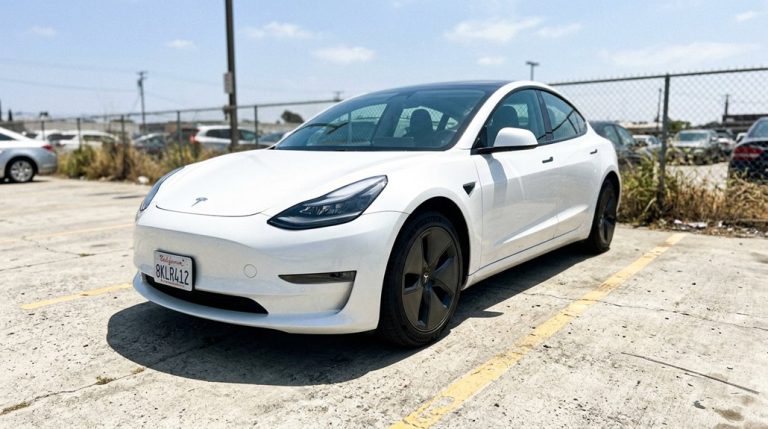

Seven in ten new Teslas arrive without a spare tyre—and Tesla wants it that way. No oversight, no cost-cutting: a deliberate design choice that leaves you completely exposed the moment rubber meets a nail on a dark motorway at midnight. The tyre repair kit in your boot is now your only lifeline. But not all kits work on Teslas, and grabbing the wrong one could leave you stranded anyway. The difference comes down to details most owners never think to check before it’s too late.
Why Standard Repair Kits Don’t Work on Teslas
When Tesla engineers decided to ditch the spare tire across most of their lineup, they weren’t cutting corners — they were making a calculated trade-off between cargo space, weight reduction, and range efficiency. Smart design, until you’re stranded with a nail in your tread.
Here’s the problem with grabbing any generic repair kit off a shelf: standard sealant formulas weren’t engineered for Tesla’s acoustic foam-lined tires. That foam liner, designed to reduce cabin noise, causes foam absorption — the sealant saturates the liner before it ever reaches the puncture. The hole stays open. Meanwhile, the chemical compounds in generic sealants accelerate sensor corrosion inside your TPMS (Tire Pressure Monitoring System), effectively destroying a precision component while solving nothing.
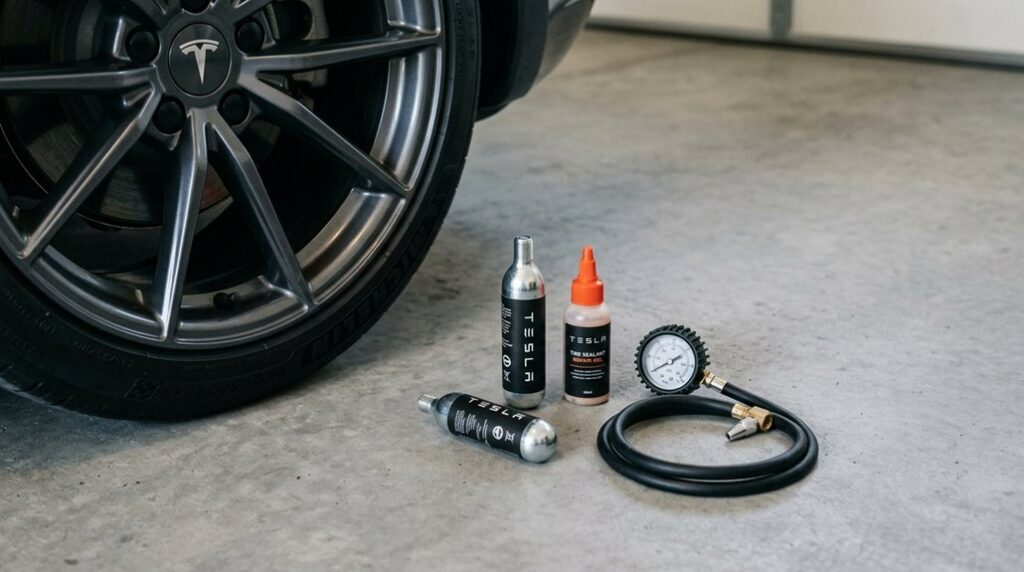
Add the 6mm puncture-size limit and strict tread-only repair rules, and you’ll quickly realize that a $20 generic kit can easily create a $400 problem. Tesla’s own repair kit pairs an air compressor with a foam cartridge, delivering both sealant and inflation in one unit — a design that generic roadside kits simply can’t replicate. Before purchasing any repair kit or tire-related accessory, always verify compatibility by model and year, as fitment verification by VIN is essential since trim and component changes between production years can make seemingly compatible products entirely unsuitable for your specific vehicle.
A tire repair kit can seal a puncture, but without a way to restore air pressure, you may still end up stranded waiting for assistance. That’s why many Tesla owners keep a portable tire inflator in the trunk, ensuring a simple puncture doesn’t become an unnecessary tow. This compact air compressor can be the difference between getting back on the road in minutes and having your day completely disrupted.
Does Tesla’s Official Kit Beat Third-Party Alternatives?
Tesla’s official kit wins on fitment. It’s designed around your specific trunk layout and jack-point geometry, which removes compatibility guesswork entirely. That brand perception carries real value when you’re roadside at midnight. However, Tesla’s pricing strategy leans toward premium positioning, meaning you’re partly paying for the badge.
Third-party kits — particularly compact spare options available for Model Y — often include plug tools, reamers, pressure gauges, and compressors that OEM kits skip entirely. That’s meaningfully more roadside coverage for less money.
The smarter question isn’t official versus aftermarket. It’s whether your kit matches your tire type (especially foam-lined quiet tires, where liquid sealant causes absorption problems) and your actual driving patterns. Keep in mind that Tesla’s increased battery pack weight — ranging from 800 to 1,200 pounds compared to similar combustion vehicles — means tires face greater load stress, making a reliable repair kit even more critical than it would be for a conventional car.
What Your Tesla Tyre Repair Kit Actually Needs to Include
Stripping it down to essentials, a proper Tesla tyre repair kit isn’t about packing everything — it’s about packing the right things. Every component earns its place or gets left behind.
Here’s what actually matters:
- Sealant canister: Track its sealant lifespan carefully — expired sealant won’t seal anything, it’ll just make a mess inside your tyre.
- 12V air compressor: Compressor compatibility with your specific Tesla model isn’t optional; mismatched fittings mean zero pressure restoration when you need it most.
- Hose and valve connector: The connection between compressor and tyre valve must be secure — a loose fit turns a two-minute fix into a frustrating roadside disaster.
You’re also getting a storage bag and model-specific fitment considerations (Model Y owners, watch for that extension cable). The compressor runs 20 consecutive minutes maximum before overheating becomes your next problem. Plan accordingly. If a tyre failure leaves you stranded beyond what a repair kit can fix, locating the nearest Supercharger via Tesla’s app ensures you’re not also racing against a dying battery while managing the situation.
A small nail or screw doesn’t have to end with a tow truck, hours of waiting, or an expensive tire replacement. The problem is that most Tesla owners discover they’re unprepared only after a puncture happens. Keeping a compact tire repair kit in the trunk, gives you a practical way to handle common tread punctures and get moving again before a minor issue turns into a major inconvenience.
Puncture Types a Tesla Repair Kit Can and Cannot Handle
Not every puncture deserves the same response, and knowing the difference between a fixable nail hole and a situation that demands roadside assistance will save you time, money, and a potentially dangerous decision on the hard shoulder.
Tesla’s repair kit operates within strict limits. Tread only — that’s your working zone. Sidewall exclusions apply absolutely; sealant can’t structurally reinforce a sidewall rupture, and attempting it creates false confidence in a compromised tyre.
Size limits matter too: holes exceeding 6 mm diameter fall outside the kit’s stated capability. A nail or screw creating a clean, straight-through tread puncture? That’s the ideal candidate.
Foam-lined acoustic tyres (common across several Tesla models) absorb sealant into their lining, reducing effectiveness considerably. Worth knowing before you squeeze that bottle.
Tesla’s instant torque and vehicle weight accelerate tyre wear faster than most conventional vehicles, meaning puncture risks compound over a shorter tread lifespan than owners accustomed to petrol cars might expect.
How to Use a Tesla Tyre Repair Kit Without Making Things Worse
Using the kit correctly is half the battle — the other half is knowing what not to do.
Using the kit right matters — but knowing every mistake to avoid matters just as much.
Park somewhere safe and open before anything else.
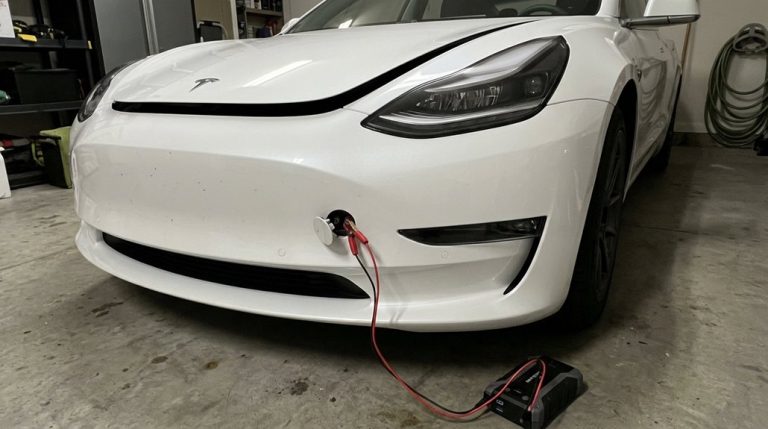
Plug into the low-voltage outlet, connect the transparent sealant tube to the valve, and never run the compressor beyond 20 consecutive minutes (heat kills compressors and patience equally).
Your practical safety checklist before driving away:
- Target 42 PSI after inflation; don’t move the vehicle if you’re sitting below 39 PSI
- Avoid highways or sustained high speeds — this repair buys you a trip to the shop, not a commute
- Drive briefly after sealant application to distribute it evenly inside the tread
Your post-use inspection isn’t optional.
Recheck pressure before and after that short drive, because temporary repairs lose air without warning.
Book professional service immediately, even if the tire looks perfectly fine.
It probably isn’t. The sealant canister should be emptied entirely into the affected tire before you reconnect the compressor and inflate to your target pressure. Tesla’s over-the-air update system can push tire pressure monitoring changes and alerts to your vehicle, so keeping your software current ensures those readings remain accurate when it matters most.
Frequently Asked Questions
Can I Store a Tyre Repair Kit in Tesla’s Frunk Safely?
Yes, you can safely store a tyre repair kit in your Tesla’s frunk. Check frunk ventilation and thermal insulation limits, secure the kit, and inspect sealant expiry regularly to make certain it’s always emergency-ready.
Does Tyre Sealant Void My Tesla’s Tyre Warranty?
Tyre sealant doesn’t automatically void your warranty, but warranty implications depend on damage caused. Check manufacturer approvals before use, inform your tyre shop afterward, and keep records to protect any future claim.
How Long Does Tyre Sealant Remain Effective Inside the Canister?
Tyre sealant’s shelf life and chemical stability both degrade over time. Check your canister’s expiry date, store it cool and dry, and replace it once expired — even if it’s unopened.
Will Tyre Sealant Damage My Tesla’s TPMS Sensors?
Tyre sealant won’t instantly destroy your TPMS sensors, but it can cause sensor corrosion and residue buildup that interferes with TPMS calibration. Get your tire professionally serviced quickly to prevent lasting valve and sensor damage.
Can I Use a Tyre Repair Kit During Extreme Cold Weather?
At 0°F, sealant viscosity drops drastically—cold-induced viscosity can render standard kits useless. You can use freezeproof cartridges in extreme cold, but warm your kit first and limit post-repair driving to Tesla’s 62-mile maximum.