
Your standard tyres might be doing more harm than good — and your car’s handling data doesn’t lie. Stock rubber is engineered for compromise: broader temperature tolerance, quieter rides, and wet-weather predictability, all at the cost of steering precision and real performance. But how much speed and confidence are you actually leaving on the table? The physics buried inside your tyre specs tell a very different story than the manufacturer’s brochure.
Are Standard Tyres Actually Good for Handling and Wet Roads?
Standard tyres are engineered to handle a broad range of conditions — dry tarmac, wet roads, and occasionally light snow — which sounds impressive until you realise that “broad range” is basically engineer-speak for “master of none.” Because they’re designed for versatility rather than precision, you’ll notice they trade away the sharper steering response and direct road feedback that performance tyres deliver through softer rubber compounds and stiffer sidewalls.
That said, wet-road performance is more subtle than the tyre label suggests. Standard tyres can actually outperform some performance tyres in cold or changing wet conditions, largely because of tread optimization — specifically, sipes, grooves, and block arrangements that efficiently evacuate water from the contact patch. Compound temperature matters too. Performance summer tyres become dangerously stiff below 45°F, losing grip precisely when you need it most. Standard tyres use broader compound temperature windows, making them genuinely more predictable across mixed conditions rather than just marketing-speak reliable. When selecting tyres for a specific vehicle, always verify compatibility by model and year, since fitment verification by VIN ensures the tyre size and load rating align with what the manufacturer engineered the suspension and wheel wells to accommodate. Touring tyres, by contrast, can achieve treadwear ratings of 700 or higher, reflecting how their compound priorities shift decisively toward longevity rather than outright grip.
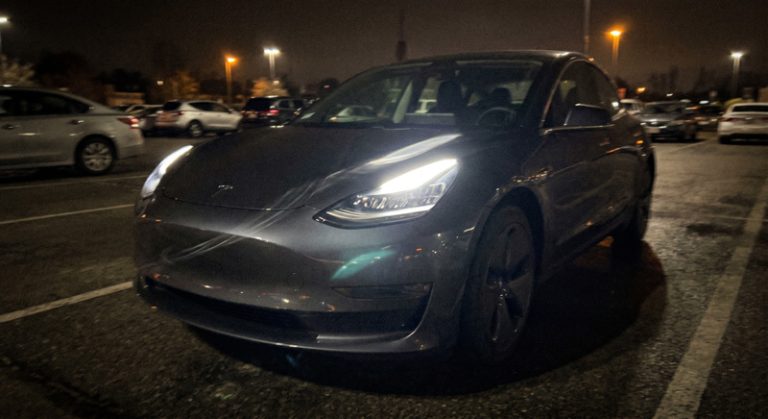
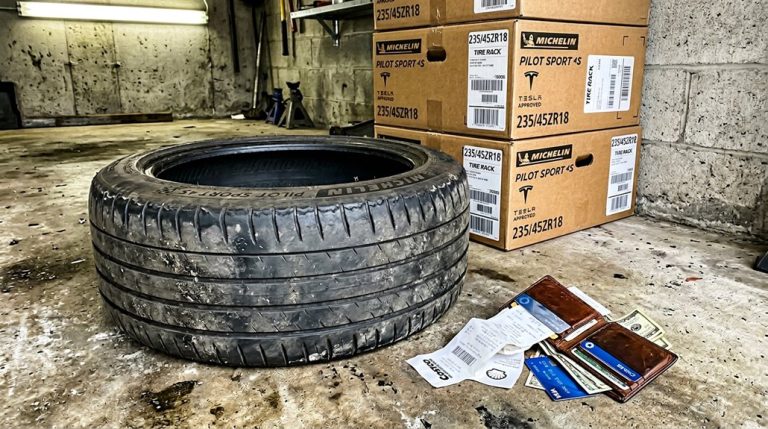
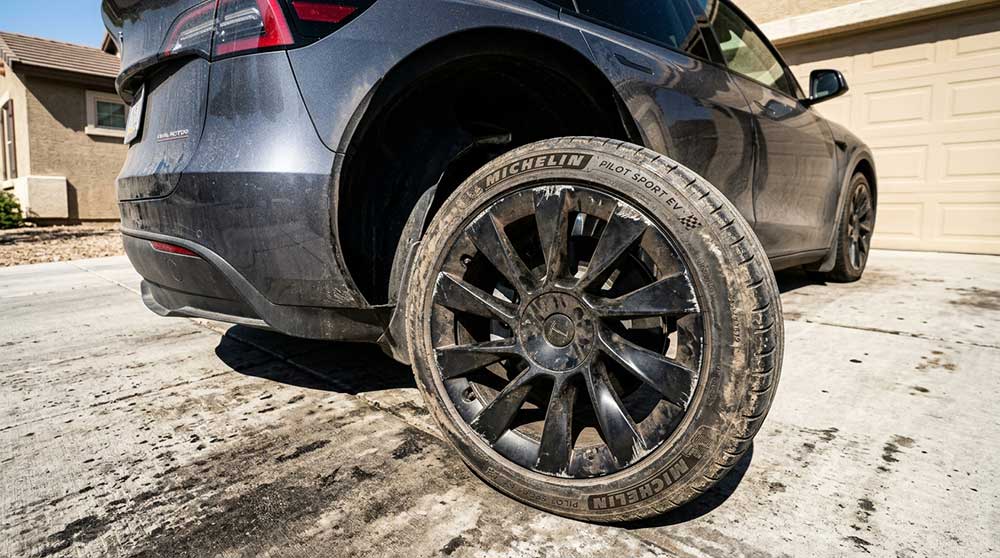
Tesla’s standard tires often walk a fine line between efficiency and real-world performance, especially when you factor in instant torque, heavier curb weight, and the kind of daily driving that quickly exposes weak grip in wet or uneven conditions. That’s why many owners eventually look toward options like the Michelin Pilot Sport A/S 4, because it tends to hold its composure better under EV stress.
What Do Standard Tyres Mean for Acceleration and Fuel Costs?
Regarding acceleration, the tyre size you’re running matters more than most people realise — but probably not in the way you’d expect. Standard tyres preserve your Tesla’s factory rolling radius, keeping the effective gear ratio exactly where engineers intended. Swap to larger-diameter tyres and you’re adding rotational mass while lengthening that ratio — both slow you down off the line. Smaller tyres do the opposite, sharpening initial response but trimming top-end capability.
Fuel costs (or in Tesla’s case, energy consumption) connect directly to rolling resistance. Standard tyres maintain the manufacturer’s engineered resistance level, supporting your rated efficiency. Inflation effects compound this markedly — the U.S. Department of Energy confirms roughly 0.2% efficiency loss per 1 psi below recommended pressure. That’s not theoretical; it’s measurable on every charge cycle. Wider, heavier tyres also increase drivetrain drag, quietly consuming additional kilowatts. Correct pressure alone often outweighs any tyre-format upgrade you’re considering. Tesla recommends checking tyre pressure when cold to avoid heat-inflated readings that mask true underinflation and lead to compounding energy losses over time. Fuel-efficient tyres use specialised compounds to minimise rolling resistance, directly supporting better energy consumption across every drive.
What Happens When You Change Your Tyre Size?
Swap your Tesla’s tyres for a different size and you’ve just introduced a chain reaction of calibration errors, mechanical stress, and handling shifts that the factory never accounted for.
Every tyre dimension affects rolling circumference, which determines how many rotations occur per kilometre. Go larger and your speedometer reads slower than your actual speed. Go smaller and it overcounts both speed and odometer mileage. Neither outcome is harmless.
Tyre size changes rolling circumference. That miscalibrates your speedometer in both directions — and neither error is safe.
The consequences extend beyond instrumentation. Changing tyre diameter shifts suspension geometry, altering how your steering and suspension arms sit at rest. Wider tyres can amplify camber and toe effects, creating uneven edge wear and heavier steering. Without a post-swap alignment check, you’re accelerating component wear unnecessarily.
Clearance matters too. Oversized tyres can rub against wheel wells during hard turns or suspension compression. The commonly applied 3% diameter rule exists precisely to contain these cascading risks before they become genuinely expensive problems. A toe change of 0.17 degrees alone can reduce tyre lifespan by up to 15%, illustrating how even minor geometry shifts carry measurable long-term costs.
Tesla vehicles are notably heavier than comparable gas-powered cars, meaning tyre wear from torque and vehicle mass already accelerates tread degradation faster than most drivers anticipate, leaving less margin for errors introduced by non-standard sizing.
Should You Stick With Standard Tyres or Upgrade?
The decision to stick with factory-fitted tyres or upgrade them comes down to what you’re actually trying to achieve behind the wheel. Tesla engineers spec OEM tyres to balance range, ride comfort, and handling simultaneously — that’s a harder equation than it looks.
| Goal | Stick With Standard | Upgrade |
|---|---|---|
| Ride comfort | ✅ Better cushioning | ❌ Stiffer, harsher feel |
| Range efficiency | ✅ Lower rolling resistance | ❌ Heavier, more drag |
| Steering response | ⚠ Adequate | ✅ Sharper, more feedback |
Upgrading makes sense when you’re chasing sharper steering response or a more aggressive stance. But you’re accepting trade-offs — reduced efficiency, potential warranty implications if fitment deviates from manufacturer specs, and increased rim vulnerability from shorter sidewalls. Summer performance tires alone can cost roughly 10–15% in range compared to standard compounds, and wide-tread performance tires on upsized wheels can compound that loss to as much as 20–25%.
For most Tesla owners, a premium tyre in the original size delivers the most meaningful real-world improvement. In wet conditions, it’s also worth noting that wider tyres hydroplane more easily due to their larger surface contact area, making OEM width a sensible safety baseline. Sometimes the smartest upgrade is staying exactly where you started.
Tesla’s standard tire setups often prioritize efficiency, but that comes with a quiet trade-off most drivers only notice later—more road noise on longer trips and a gradual drop in comfort as conditions change between city and highway driving. That’s why many owners eventually compare alternatives like the Hankook iON evo AS, since it’s designed specifically for EV use.
Frequently Asked Questions
How Do Standard Tyres Affect Tesla’s Regenerative Braking System Efficiency?
Standard tyres actually help your Tesla’s regenerative braking work efficiently. They’re less likely to trigger reduced regen than aggressive winter treads, and software updates plus battery heating keep the system recovering energy most effectively as you drive.
Can Tyre Rolling Resistance Impact a Tesla’s Real-World Range Figures?
Yes, tyre rolling resistance directly cuts your real-world range. Higher resistance generates excess tyre heat, forces your battery to work harder, and as tread wear progresses, that resistance actually decreases, slightly recovering lost miles.
Do Standard Tyres Help Preserve Tesla’s Factory-Calibrated Stability Control Systems?
Yes, standard tyres help preserve your Tesla’s factory calibration and stability tuning by maintaining the expected wheel-speed ratios the system relies on. Nonstandard sizes or uneven wear can confuse those sensors and trigger false stability warnings.
How Often Should Tesla Owners Rotate Their Standard Factory-Fitted Tyres?
You should rotate your standard factory-fitted tyres every 6,250 miles — unless you enjoy uneven wear. Pair rotations with tread inspection and alignment checks to keep Tesla’s performance calibrated and your handling predictably sharp.
Are Tesla’s Standard Tyres Compatible With Third-Party Winter Tyre Pressure Monitors?
Third-party compatibility isn’t guaranteed—Tesla’s software can alter sensor interrogation methods after updates, potentially triggering false errors. You’ll want to verify your winter TPMS sensors meet Tesla’s current frequency and reporting requirements before committing.