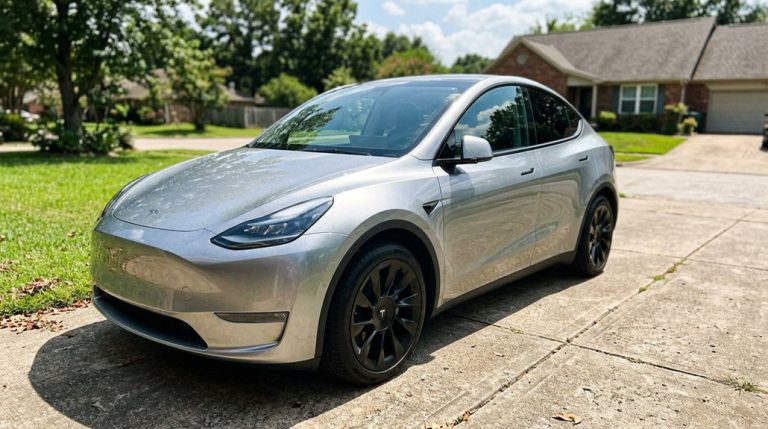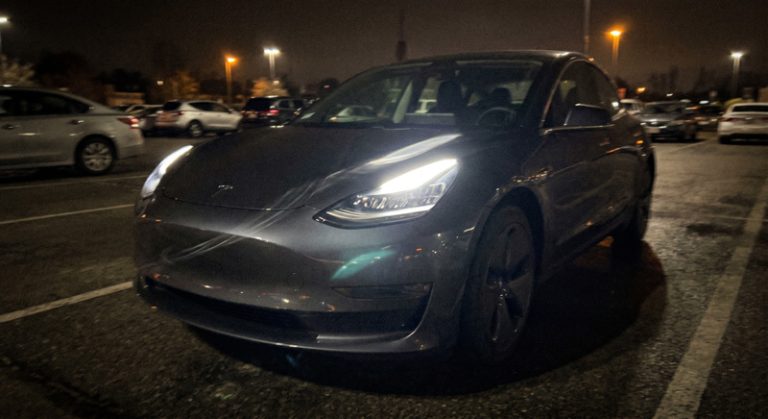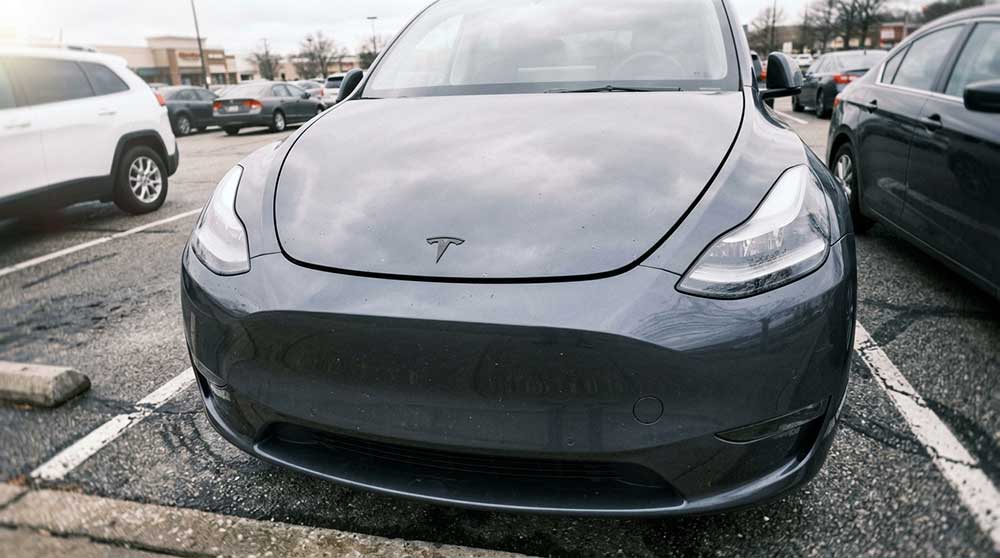

Tesla stacks eight cameras, automatic emergency braking, and an Active Hood engineered to absorb a pedestrian’s head impact in milliseconds. That’s not marketing — that’s a system built around specific failure scenarios. But even this layered architecture has real gaps, and some of them surface exactly when conditions get dangerous: rain, low light, the moments that matter most. What Tesla gets right is impressive. What it misses could change everything.
How Tesla’s Active Hood and AEB Protect Pedestrians
When a pedestrian steps into the path of a moving Tesla, two distinct systems activate in sequence to manage the outcome: Automatic Emergency Braking (AEB) attempts to prevent the collision entirely by detecting the hazard and applying the brakes without driver input, while the Active Hood — a pyrotechnic-actuated system documented in Tesla’s European Model 3 owner manual — is triggered within milliseconds of confirmed frontal impact to lift the hood’s rear section approximately 80 mm, creating critical deformation space between the hood surface and the hard engine components underneath.
Think of it as a two-stage defense. AEB handles collision avoidance; Active Hood handles injury mitigation when avoidance fails. The deployment mechanics are deliberately fast and irreversible — pyrotechnic actuators don’t offer second chances.
That 80 mm gap matters enormously because head-impact physics are unforgiving at speeds between 30 and 52 km/h, precisely where this system operates. The updated Model 3, referred to as Highland, also incorporates metal door hooks along the lower door frames to keep doors properly aligned during a crash, adding a complementary layer of structural protection beyond the hood system itself. The Highland refresh also brought revised suspension geometry and frequency-dependent damper valves, changes that subtly improve vehicle stability and control in the critical moments before emergency systems are forced to intervene.
Tesla Vision vs. Ultrasonic Sensors: What Detects Pedestrians?
- Shape classification — cameras identify a pedestrian as a person, not just an unnamed object in space.
- Motion prediction — the AI estimates where that person is heading next, not just where they currently stand.
- 360-degree scene interpretation — multiple camera angles build a complete image of the surrounding environment.
Ultrasonic sensors historically supported parking tasks (Autopark, Summon) at close range.
Tesla removed them from newer builds entirely. For pedestrian safety, cameras were always doing the real work.
Tesla’s system relies on 8-camera array that feeds video directly into neural networks for pedestrian identification and response. The vision stack applies semantic segmentation to every frame, isolating pedestrians from surrounding road elements like lane lines, curbs, and drivable zones.
Parking in tight spaces or stepping out in low light is where small details start to matter, especially when a door opens into a cyclist, pedestrian, or passing car that never saw it coming. Many Tesla owners add Tesla LED Door Warning Lights, making the door opening far more visible on the ground so nearby people have an extra moment to notice and react before getting too close.
Where Tesla’s Pedestrian Safety Systems Fall Short
No system is perfect, and Tesla’s pedestrian safety stack is no exception. Camera constraints create real vulnerabilities — direct sunlight, oncoming headlights, heavy rain, snow, and fog can all degrade object recognition quality. When your eight-camera Vision array struggles to see clearly, pedestrian detection becomes less dependable, especially during dawn, dusk, and shadow-heavy conditions.
Limited reliability also surfaces in edge cases. Tesla’s own FSD Beta agreement openly states the software “may do the wrong thing at the worst time.” Testing confirmed this when a Model 3 repeatedly struck a child-sized mannequin during a crosswalk-style scenario. That’s not a footnote — that’s a documented gap. When lane markings are unavailable, the system falls back to lead-vehicle inference, which reduces positioning precision and can introduce slight edge bias — a concern in unstructured environments where pedestrians may be present.
Autosteer itself is intended strictly for controlled-access highways, not environments where pedestrians are present. Pilot Assist on Autosteer may not detect stationary objects or special-use lanes reliably. These aren’t minor caveats. They’re hard limits defining exactly where the system’s confidence ends. FSD Beta carries an SAE Level 2 classification, meaning an attentive human driver must remain responsible for the vehicle at all times — the system is explicitly not autonomous.
What Tesla’s Pedestrian Safety Gaps Mean for Everyday Driving
Knowing where Tesla’s pedestrian safety stack breaks down is useful — knowing what to do about it while you’re actually driving is what keeps someone alive.
Tesla’s own Safety Score data confirms that crash risk still centers on the human driver, particularly during the millions of miles logged without FSD engaged.
Three habits close the gap meaningfully:
- Maintain conservative spacing — several car-lengths of following distance eliminates panic braking near crosswalks.
- Reduce speed in low-visibility conditions — sun glare, fog, and dust degrade pedestrian detection confidence, as NHTSA’s probe covering 2.4 million Teslas confirmed.
- Practice continuous attentiveness at intersections — FSD-assisted Teslas still logged 830 major collisions in a single 12-month window.
The mileage statistics are genuinely impressive. FSD-engaged Teslas experience over eight times fewer major accidents than the U.S. average, a gap that underscores just how much the technology has matured across 4.39 billion miles driven in a single year.
Tesla’s over-the-air update system delivers major feature releases approximately once a month, meaning pedestrian detection algorithms can be refined and pushed to vehicles without requiring a service visit.
But impressive averages don’t protect the specific pedestrian stepping off the curb in front of you right now.
When something happens in a parking lot or at low speed, the difference between clarity and confusion usually comes down to whether the footage actually recorded cleanly in the first place. That’s why many Tesla owners rely on a Tesla Dash Cam + Sentry Mode High-Resolution External SSD Drive, ensuring every camera angle is stored reliably so incidents involving pedestrians or close calls aren’t left to guesswork or missing clips.
Frequently Asked Questions
Does Tesla’s Pedestrian Warning System Work in All Weather Conditions?
Tesla’s Pedestrian Warning System doesn’t guarantee full effectiveness in all weather conditions. You’ll face visibility limitations and sensor reliability concerns, as heavy rain or loud ambient noise can reduce pedestrians’ ability to hear the acoustic warning signal.
How Much Does It Cost to Service a Deployed Active Hood?
Even if the damage looks minor, you’re facing a real repair cost. Expect a replacement estimate between $500 and $5,000, depending on sensors, actuators, and labor complexity involved.
Is Tesla’s Pedestrian Safety Technology Available on All Model Years?
No, you won’t find uniform coverage across all model years. Software availability is broader, but hardware variations — like Active Hood — only appear on newer builds, making your specific model year and region critical factors.
Can Tesla’s Pedestrian Safety Systems Be Updated Through Over-The-Air Updates?
Yes, Tesla can fine-tune your pedestrian safety systems through software updates delivered over-the-air, allowing it to steer regulatory obstacles and improve detection logic, response thresholds, and driving behavior without requiring a physical service visit.
How Does Tesla’s Pedestrian Safety Compare to Other Electric Vehicle Brands?
While rivals play “beep-boop” catch-up, Tesla’s pedestrian alertness and brand comparison data show you’re backed by Euro NCAP-praised AEB—though direct head-to-head ratings against other EVs aren’t fully verified yet.