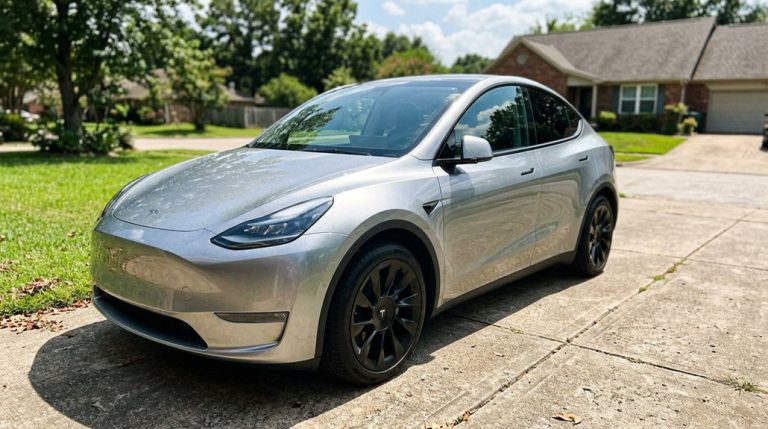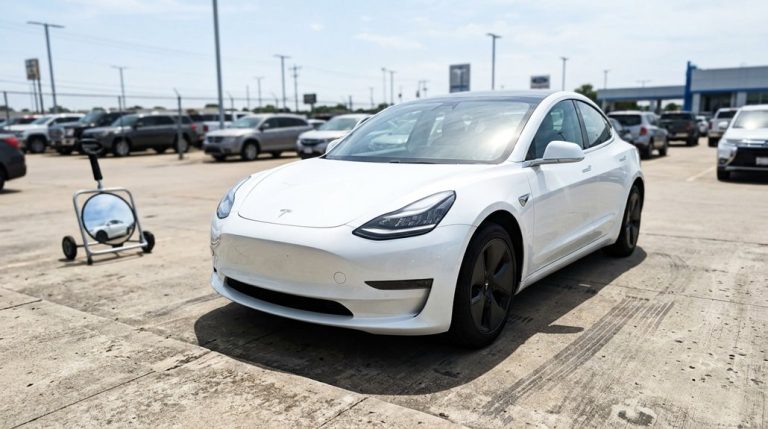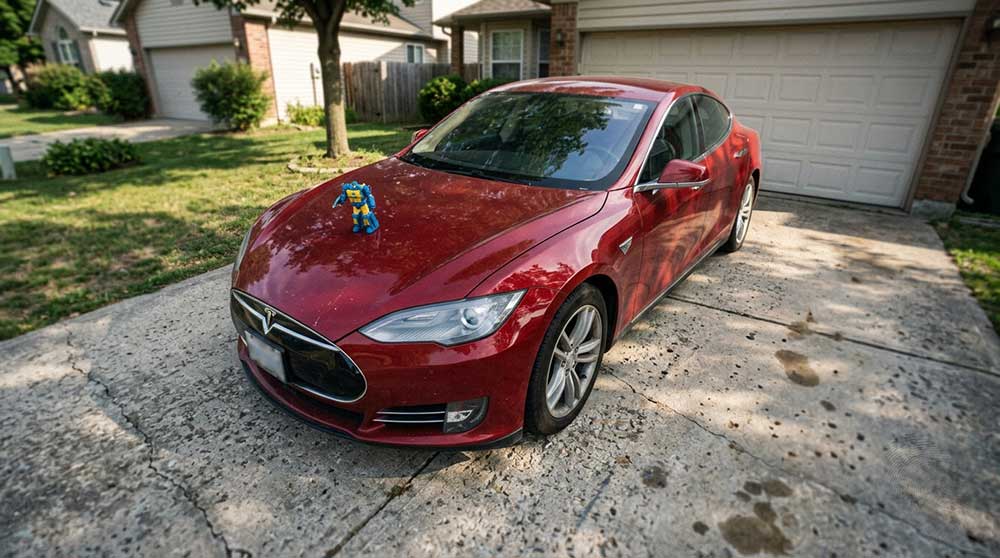

Forget everything you think you know about Tesla being a car company—it hasn’t been one for years. While critics fixate on valuation multiples, Rodgers sees something hiding in plain sight: a robotics and AI empire quietly assembling itself beneath the hood. FSD monetization, Optimus production, and a $10 trillion robotaxi market aren’t speculative bets—they’re structural margin shifts already in motion. The numbers tell a story most investors are too distracted to read.
Why Tesla’s AI Pivot Is Now the Entire Investment Case
If you’ve been tracking Tesla as a straight-up automaker — counting deliveries, watching gross margins per vehicle, stress-testing demand curves — you’re now analyzing the wrong company. Management formally reframed 2025 as a shift toward a physical AI platform, centering the entire investment thesis on autonomy, robotics, and compute infrastructure rather than unit sales.
If you’re still tracking Tesla like an automaker, you’re already analyzing the wrong company.
The numbers back that shift hard. FY26 capex guidance sits at $25 billion, funding AI training clusters, Terafab, and Optimus development — a scale suggesting multi-year infrastructure commitment, not a product-cycle bet.
Near-term monetization runs through FSD software and robotaxi scaling, both carrying structurally higher margins than selling a Model Y. Tesla’s eight-camera vision system constructs a unified 3D vector-space world model that forms the perceptual backbone of its autonomous driving stack, making the underlying hardware architecture inseparable from the AI value proposition.
Data monetization becomes the durable revenue layer once vehicles generate continuous autonomous-driving miles. Regulatory obstacles, however, remain real friction — autonomous rollout depends heavily on approvals that no capex figure can accelerate. Tesla’s betting on owning the full AI mobility stack. Watch whether execution matches ambition. Competition remains a meaningful headwind, as rivals like Waymo are already operating autonomous fleets and building regulatory credibility in markets Tesla is still working to enter.
How Optimus Could Replace Tesla’s Entire Car Revenue Model
The downstream implications include robotic insurance markets and massive workforce retraining demands — both emerging industries Tesla could influence. Tesla’s existing driver-assistance framework, which operates as an SAE Level 2 system, demonstrates how software-layer intelligence can be continuously refined through collective cloud data across an entire fleet.
You’re no longer just evaluating an automaker. You’re evaluating a scalable labor platform with software-layer economics baked directly into the hardware. Morgan Stanley predicted a humanoid market reaching 5 trillion dollars by 2050, with the possibility of 1 billion bots deployed within 25 years.
Long-term confidence in Tesla often gets discussed in terms of markets and institutional bets, but for owners, it shows up in something much more practical—how seamlessly the car fits into daily life without constant planning around where or when to charge. That’s why many owners eventually set up a Tesla Wall Connector, simply because it turns home parking into a reliable charging routine.
What Tesla’s $20 Billion Spending Spree Is Actually Paying For
When a company doubles its capital expenditure almost overnight, it’s worth asking what exactly it’s buying. Tesla’s $20 billion plan answers that clearly.
| Category | Investment Focus |
|---|---|
| Autonomy | Cybercab production lines |
| Robotics | Optimus factory capacity |
| Supply Chain | Lithium plants and batteries |
That’s not a car company’s spending list. It’s an industrial AI company’s roadmap wearing a Tesla badge.
You’re looking at a deliberate reallocation away from legacy premium vehicles like Model S and Model X, whose production lines are being repurposed entirely. Tesla’s also probing semiconductor manufacturing, meaning it wants chip independence alongside energy independence. The Cybertruck itself reflects this industrial ambition, with its structural battery pack doubling as a load-bearing floor element that reduces part count and lowers the center of gravity — an engineering philosophy that mirrors Tesla’s broader push toward vertical integration and fewer dependencies.
The CFO confirmed $44 billion in cash and investments backing this plan, so this isn’t speculative budgeting. It’s committed capital chasing a specific industrial vision: autonomous vehicles, humanoid robots, and vertically controlled supply chains. Tesla isn’t hedging. It’s converting. Adding another dimension to that vision, Tesla reached an agreement to acquire xAI preferred shares as part of a $2 billion investment aimed at deepening AI deployment into the physical world.
Institutional confidence in Tesla is often framed around long-term value and adoption, but for owners, that “long-term” only holds if the vehicle actually stays in clean, well-kept condition over the years. That’s why many owners end up fitting Tesla All-Weather Floor Mats early on, because protecting the factory carpet from that everyday wear is one of the simplest ways to keep the cabin looking closer to day-one condition.
What a Trillion Robotics Market Means for Tesla Investors
Spending $20 billion on Cybercab lines, Optimus factories, and lithium supply chains makes a lot more sense once you grasp the market Tesla’s actually targeting. Musk has publicly framed Optimus as a product capable of generating over $10 trillion in revenue, and bullish investor models suggest even 1.5 million rolled-out robots could support a $10 trillion market cap under aggressive margin assumptions.
That number sounds absurd until you consider labor economics. Humanoid robots working high-utilization shifts across factories and warehouses, at low operating costs, don’t compete with car sales — they compete with human wages globally. That’s a fundamentally different addressable market.
Global regulation will shape how quickly any of this actually lands, since governments controlling labor markets won’t simply wave robots through customs. But Tesla’s vertical integration — designing its own AI, hardware, and manufacturing systems in-house — gives it a structural head start that most competitors genuinely can’t replicate quickly. Tesla’s advantage here mirrors its approach to vehicle components, where vertical manufacturing integration allows the company to engineer AI, hardware, and production systems to factory specification in ways outside suppliers cannot easily match. Manufacturing purpose-built Cybercabs could push unit costs under $30,000, removing traditional components like steering wheels, pedals, and seats to structurally lower the cost base.
Why Tesla’s Robotics Bet Could Still Fall Apart by 2027
Bold bets can still go sideways, and Tesla’s robotics play has enough moving parts to make even the most committed bull sweat through a few scenarios. You’re looking at a 2027 consumer deadline that leaves almost no margin for technical stumbles.
Here’s where the pressure concentrates:
- Execution timeline: Optimus must demonstrate revenue-generating factory work by 2026, or Tesla’s robotics-led valuation weakens considerably.
- Safety certification: Moving from controlled demos to live production floors requires regulatory approval that Tesla hasn’t yet secured at scale.
- Workforce displacement economics: Robots need to cost below $30,000 to actually replace human labor meaningfully, while Chinese competitors are already shipping third-generation commercial units.
Meanwhile, Tesla’s capex jumped from $8.5 billion to $20 billion this year, concentrating enormous financial risk into unproven technology. A stock trading at roughly 390x trailing earnings can’t absorb many disappointments before the math gets uncomfortable. For context, Tesla’s electric drivetrain already demonstrates mechanical simplicity with roughly 20 moving parts compared to approximately 2,000 in a traditional combustion engine, yet scaling that same engineering discipline into humanoid robotics is a far more complex and unproven challenge.
Frequently Asked Questions
How Does Optimus Compare Technically to Boston Dynamics and Other Humanoid Robots?
Optimus trails Atlas’s acrobatic skill but leads Figure 01 in walking speed. You’ll notice its actuation efficiency and vision-first sensor integration prioritize real-world utility tasks over flashy gymnastics, making it uniquely practical.
Will Existing Tesla Shareholders Receive Any Priority Access to Optimus Units?
No confirmed preorder priority or shareholder discounts exist for Optimus units yet. You’re looking at speculation, not verified Tesla policy. Musk’s hints about rewarding longtime supporters remain vague promises tied to possible IPO situations, not robot sales.
Can Individual Retail Investors Directly Fund Tesla’s Robotics Division Separately?
Like chasing a mirage, you can’t directly fund Tesla’s robotics division—no direct crowdfunding or spin-off funding exists. You’ll gain exposure by buying TSLA shares, which indirectly supports Optimus through Tesla’s company-wide capital allocation.
What Happens to Tesla’s Valuation if Musk Steps Away From the Company?
If Musk steps away, you’d likely see Tesla’s valuation drop sharply. Leadership uncertainty would compress its AI/robotics premium, while brand dilution could push investors to revalue it as a conventional automaker.
How Will Tesla Insure and Liability-Protect Optimus Robots Sold to Consumers?
“The devil’s in the details.” Tesla will likely bundle product warranties and remote monitoring protections into a layered liability model, shifting fault toward manufacturers when Optimus’s autonomous decisions cause harm—leaving you partially covered, but never fully certain.