
North American EV charging infrastructure grew 40% between 2022 and 2024—yet the adapter market quietly filled with counterfeits capable of destroying your onboard charger in a single session. Most buyers assume a NACS-to-CCS adapter either works or it doesn’t. The reality is far more expensive. Certified units and passive fakes can look identical in product photos, ship from the same storefronts, and carry nearly identical price tags. Knowing where the dangerous ones hide—and where the safe ones actually live—is the only thing standing between a successful charge and a fried EV.
The Risk of Buying a NACS to CCS Adapter From the Wrong Source
Buying a NACS to CCS adapter from the wrong source isn’t just a bad deal — it’s a potential fire hazard. Cheap replicas flooding Amazon, AliExpress, and Temu cut corners where it matters most: internal construction and counterfeit identification markings that look legitimate but aren’t.
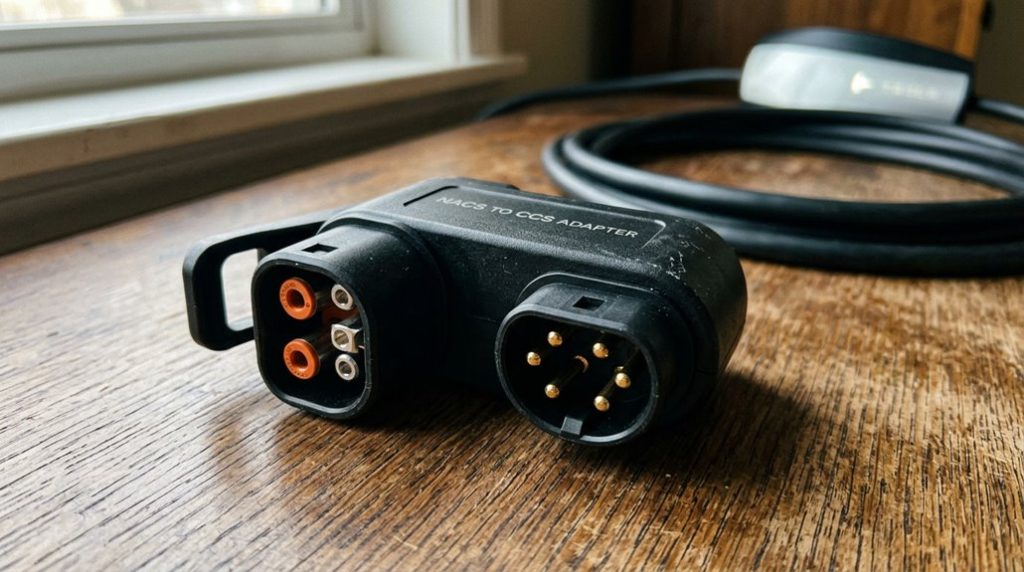
Here’s what actually fails. Knockoff units typically use thin tin-plated contacts instead of silver-coated copper, which reduces conductivity and accelerates wear under DC fast-charging loads. Worse, thermal sensor placement in budget adapters is often careless — sensors sit too far from the power pins to detect dangerous heat buildup before damage occurs. That means your vehicle’s charging session could be running hot without any warning.
Because these adapters are passive devices (no authentication chip, no active communication), your car can’t easily distinguish a safe unit from a dangerous one. Visual similarity is almost never a reliable safety indicator. Major automakers including Ford, General Motors, and Hyundai have issued warnings against third-party adapters, cautioning that damage resulting from unapproved devices may void your vehicle’s warranty entirely. When evaluating any adapter seller, demand a real business name, physical address, and working customer support contact — absent these, seller transparency signals are a reliable indicator of counterfeit risk.
The Safest Places to Buy a NACS to CCS Adapter
Once you’ve accepted that a cheap knockoff is a legitimate fire risk and not just a bad deal, the next question is obvious: where do you actually buy a safe one?
Start with OEM stores. Tesla sells a CCS1 to NACS Converter directly through its official shop, and you can also pick one up at a Tesla service center parts counter if you need it immediately. Hyundai-branded converters surface through dealership parts departments as well. The seller and brand are the same entity, which removes most of the guesswork about product origin.
When automaker options are backordered, specialty retailers like A2Z EV and Lectron sell directly through their own product pages, offering clear compatibility labeling that broad marketplaces rarely match. Lectron also appears on Home Depot shelves, and Best Buy carries reputable adapter brands in-store, giving you a recognized storefront with standard return policies if something goes wrong. This matters more than it might seem, given that non-Tesla EVs can now access over 17,800 Tesla Superchargers through the NACS standard, making adapter reliability a real-world dependency on major routes.
Rivian owners should also keep in mind that only one adapter can be requested per vehicle, making it worth purchasing a vetted third-party backup from a direct retailer before you find yourself stranded without a charging option.
How to Confirm a NACS to CCS Adapter Is Compatible With Your EV
Finding a compatible NACS-to-CCS adapter starts before you pull out a credit card, because the wrong unit won’t just be inconvenient—it physically won’t work or could damage your charge port.
Start with your vehicle inlet. Check the charge port directly or open your owner’s manual, since marketing claims aren’t reliable substitutes for official documentation.
Next, confirm your exact model year—not just the nameplate. Automakers authorize adapter compatibility year-by-year, and a 2022 vehicle may have different approved hardware than a 2024 version of the same model. Your door sticker confirms this quickly.
Then verify automaker approval. Some manufacturers explicitly restrict Supercharger access to brand-provided adapters, and using an unapproved third-party unit carries real warranty implications. Tesla Superchargers use a BMS handshake protocol to verify compatibility between the station and vehicle battery management system, meaning an uncertified adapter may fail the negotiation entirely and deliver no power.
Finally, check certification marks—UL 2252 is the benchmark for DC fast-charging adapters. Skip any listing that can’t produce clear safety documentation. Some manufacturers claim design intent to meet specifications but lack lab-verified certification testing. Compatibility isn’t guesswork; it’s a checklist.
Red Flags That Signal a Risky NACS Adapter Listing
Spotting a risky NACS-to-CCS adaptor listing isn’t always obvious, but certain patterns appear consistently enough that you can treat them as reliable warning signals. Missing certifications top the list. If you can’t find a UL 2251 mark in the listing photos or verify the brand on UL Product iQ, walk away. “Safety certified” in marketing copy means nothing without documentation you can actually check. Some sellers have even submitted UL 251 documents—a standard for PVC enclosure material—as proof of adapter certification, when the relevant adapter standards are UL 2250 or UL 2252.
Unsafe construction follows closely. Watch for tin-plated contacts instead of silver-plated ones (lower conductivity, shorter lifespan), no latch on the NACS side (hot-disconnect risk during active charging), and poorly positioned thermal sensors that won’t catch overheating before damage occurs. Internal pin contacts should stay below 90°C during operation. Tesla’s software-controlled feature gating demonstrates that what a device is physically capable of and what it’s allowed to do are two different things—an adapter without proper thermal controls is physically capable of causing damage that no software safeguard can prevent.
Price is your final filter. Sub-$75 adaptors almost always skip the materials and compliance testing that higher-spec units require. A suspiciously low price isn’t a deal—it’s a missing safety feature.
Frequently Asked Questions
Can I Use a NACS to CCS Adapter at Tesla Destination Chargers?
You can’t use a NACS-to-CCS adaptor at Tesla Destination Chargers. Tesla policies confirm charger compatibility requires AC-specific adaptors there. Destination Chargers deliver Level 2 AC power, so you’ll need a NACS-to-J1772 adaptor instead.
Will Using a Third-Party Adapter Void My EV Manufacturer Warranty?
Even if it works perfectly, a third-party adapter’s warranty implications aren’t always covered. You’re risking undisclosed damage, so pursue dealer consultation before assuming compatibility equals protection.
How Much Does a Tesla-Authorized NACS to CCS Adapter Cost?
You’ll find Tesla pricing starts at $200 for the standalone CCS1 to NACS adapter on the Tesla Shop. Due to availability concerns, prices have shifted over time, so always verify the current listing before purchasing.
Does the Lectron Vortex Plus Work With All Ccs-Enabled Electric Vehicles?
No, it doesn’t work with all CCS-enabled EVs. The Lectron Vortex Plus has strict compatibility limits—it only supports CCS1 vehicles with automaker-approved Supercharger access and specific charging protocols, so you’ll need to verify your vehicle’s eligibility first.
What Voltage and Amperage Ratings Should a Safe Adapter Have?
Surprisingly, safety isn’t complicated here. You’ll want maximum ratings of 1,000 volts and 500 amps. These safety standards guarantee your adapter handles DC fast charging without overheating, protecting your vehicle and wallet from costly damage.