
Tesla owners are conditioned to think hands-off means worry-free. It doesn’t. Beneath that sleek, software-driven exterior lives a car that still needs tire rotations every 6,250 miles, cabin filter swaps, and fresh wiper blades—none of which require a service center visit. More importantly, your battery habits are quietly working for or against you every single day. Knowing which tasks you can handle yourself—and which ones you genuinely can’t—could save you hundreds before something catches you completely off guard.
Tesla Maintenance Tasks You Can Do at Home
Owning a Tesla doesn’t mean handing it off to a service center every time something needs attention — quite a few maintenance tasks are genuinely straightforward enough to handle in your own driveway. Tesla itself acknowledges this, listing several procedures as legitimate DIY territory.
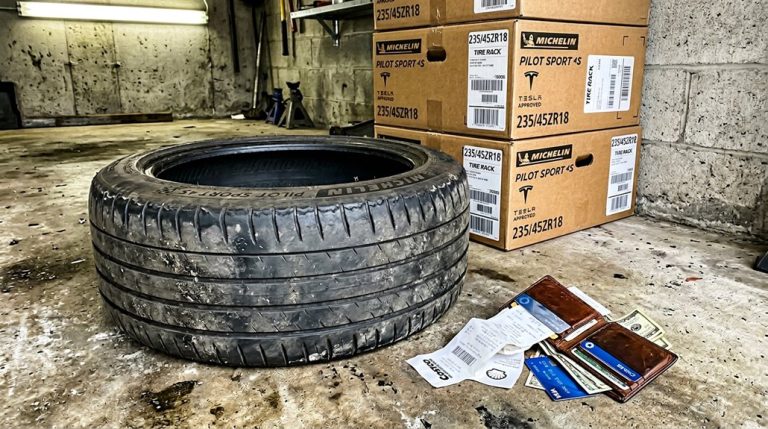
Tire rotation keeps wear even across all four corners and is recommended around every 6,250 miles. Cabin filter replacement (tucked under the glovebox) runs on a two-year cycle for Model 3 and Model Y, three years for Model S and Model X. Wiper replacement requires no special tools — just basic access steps from your owner’s manual. Charging port cleaning is equally low-effort; a quick inspection and wipe-down prevents debris from interfering with your connection.
None of these tasks demand a service appointment. They demand a free afternoon, the right intervals, and enough willingness to actually read your owner’s manual — which, fair warning, contains more answers than most owners expect. Keeping tire pressure at manufacturer-recommended levels directly impacts wear, fuel economy, and overall handling performance. Unlike traditional vehicles, Tesla’s software handles many functions that once required hands-on mechanical adjustments, delivering performance calibrations and safety patches remotely overnight through Wi-Fi updates.
Most Tesla DIY jobs start the same way—getting the car safely off the ground—but using the wrong jack can turn a simple tire rotation into a risky guess with clearance and stability. That’s why many owners rely on a Low-Profile 3-Ton Floor Jack, giving them the reach and lifting capacity needed for heavier EV weight without scraping or second-guessing whether the setup is actually secure before they get to work.
Tesla Mobile Service vs. Service Center: What Gets Fixed Where?
| Factor | Mobile Service | Service Center |
|---|---|---|
| Location | Your home or workplace | Tesla facility |
| Typical jobs | Cabin filter, 12V battery, tire rotation | Battery, drive-unit, advanced diagnostics |
| Equipment needed | Handheld tools only | Lift, specialized shop gear |
| Warranty routing | Minor warranty fixes handled on-site | Complex warranty work requires facility |
| Cost range | ~$120–$250 (out-of-warranty) | Similar labor rates |
Tesla’s technician arrives pre-briefed, parts in hand (roughly 30-minute jobs for some recalls). Warranty-covered work typically invoices at $0 regardless of location. When diagnostics go deeper — software faults, drive-unit issues — expect a service center assignment instead.
Tesla’s over-the-air software updates, which have expanded features like third-party DC fast charger preconditioning support since OTA 2025.2, can sometimes resolve minor faults before a service visit is even needed.
To improve your chances of getting a mobile dispatch, use specific service request language like “tire rotation only” when submitting your request through the Tesla app.
How to Book Tesla Service and Report Problems in the App
If a visit is necessary, describe the problem clearly, upload photos when prompted, and review the estimated cost under Service > View estimate.
Need to adjust things afterward? Edit the appointment, add concerns, reschedule, or simply message team members directly through the app. Enable notifications — missing a cost estimate update is an avoidable headache you genuinely don’t want. Your vehicle’s VIN digit 10 identifies the model year and helps ensure any service documentation or procedures applied to your car match the correct production era. You can also find more detailed guidance in the Owner’s Manual, available both online and on your vehicle’s touchscreen.
Tesla Battery, Tire, and Filter Habits Worth Keeping Year-Round
A Tesla isn’t particularly demanding regarding maintenance, but the habits you build around battery charging, tire care, and cabin filtration will quietly determine how well the car performs five or ten years from now.
Keep your daily charge limit at 80% and reserve 100% for long trips. Battery conditioning matters most in cold weather, so precondition before driving and charge simultaneously to use heat more efficiently. For storage charging, park at roughly 50% and stay plugged in when possible. Letting the pack sit near 0% or 100% for extended periods accelerates degradation.
Tire rotation should happen every 6,250 miles (or sooner if tread depth difference hits 2/32 inch), because instant torque and EV weight punish tires harder than most gasoline cars do. Tesla vehicles are also heavier than comparable gasoline cars due to their large battery packs, meaning tire wear rate can be meaningfully higher even under normal driving conditions.
Cabin filtration is easy to forget. Replace HEPA and carbon filters every three years, or sooner in dusty, high-pollen, or smoke-heavy environments where filters load faster.
Frequent reliance on Supercharging is convenient for road trips but should not become your primary charging method, as repeated Supercharging use accelerates battery degradation over time.
Even experienced Tesla owners run into costly mistakes when lifting the car without proper protection, since the wrong contact point can easily stress the battery rail or underbody structure. That’s why many keep Tesla Jack Pad Pucks in their DIY kit, ensuring every lift point is supported correctly so routine maintenance doesn’t turn into avoidable repair work.
Frequently Asked Questions
Can I Use Any Tire Pressure Gauge, or Does Tesla Recommend a Specific Type?
You can use any accurate tire pressure gauge — Tesla doesn’t mandate a specific type. A quality digital gauge or analog compatibility works fine; prioritize accuracy over brand, and always check cold tires.
What pH Level Qualifies as Safe for Tesla-Approved Car Wash Soap?
Like Goldilocks finding the perfect porridge, you’ll want pH-neutral soap—right around pH 7. During pH testing, avoid anything above pH 13, and always check soap dilution ratios to protect your Tesla’s finish.
How Do Extreme Temperatures Affect Cabin Air Filter Replacement Frequency?
Extreme temperatures accelerate filter degradation and strain HVAC performance, so you’ll want to replace your cabin air filter every six months—swapping it each spring and fall instead of waiting for the standard annual interval.
Is It Safe to Use Third-Party Charging Cables With Tesla Vehicles?
Yes, certified third-party charging cables are generally safe for your Tesla. Stick to reputable aftermarket connectors matching your vehicle’s specs, but watch for warranty concerns if incompatible equipment damages your car’s charging system.
How Long Can a Tesla Sit Unused Before the Battery Drains Significantly?
Like a sleeping giant that still breathes, your Tesla quietly sips power. For battery storage and long term parking, you’ve got roughly 30 days before drain becomes significant — less with Sentry Mode active.