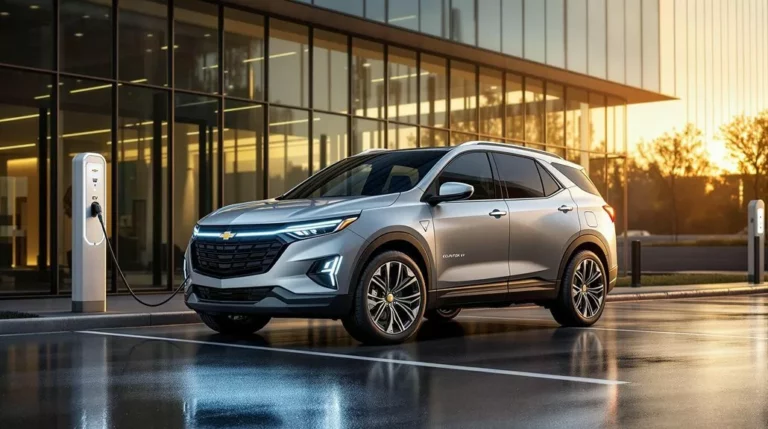

The NEMA 14-50 plug delivers 240 volts and 50 amps, providing 25 to 35 miles of range per hour for electric vehicles. It’s become popular among EV owners because it charges faster than standard outlets but costs less than commercial stations. Installation requires a dedicated 50-amp breaker and typically runs $1,500 to $3,000. The four-prong outlet works with all J1772-compatible vehicles and can fully charge most EVs overnight. Homeowners realize this versatile outlet offers practical charging solutions.
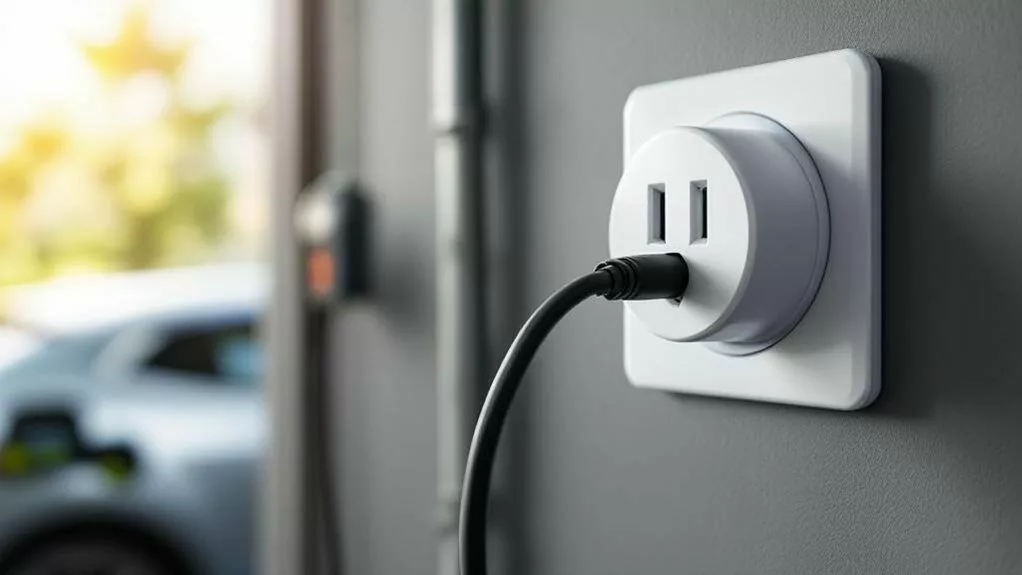
The NEMA 14-50 plug has become the go-to choice for electric vehicle owners who want faster charging at home. This powerful outlet delivers 240 volts and handles up to 50 amps of electricity. It’s rated for 12,000 watts of maximum power output.
The NEMA 14-50 delivers 240 volts and 50 amps, making it the top choice for home EV charging.
Most EV owners utilize this plug at 40 amps for safety reasons. The outlet features a four-prong design with two ground connections for extra protection. It can operate reliably at temperatures up to 175°F. The system requires 4 AWG THHN conductors, which are special wires that handle heat well.
This plug works with all J1772-compatible electric vehicles. Tesla owners need an adapter to use it. The NEMA 14-50 isn’t just for cars. People also use it for electric ranges, dryers, and power tools. RV parks commonly have these outlets too. The plug is often called the Tesla plug due to its widespread compatibility with Tesla vehicles.
The charging speed impresses many EV owners. Most cars gain 25 to 35 miles of range per hour when plugged in. A typical electric vehicle with a 250-mile battery takes four to six hours to charge from 50% to 100%. The dedicated 240-volt circuit guarantees stable power delivery throughout the charging session.
Installation requires specific electrical components. Electricians install a dedicated 50-amp breaker and use 6 AWG NM sheathed wire. They tighten terminal connections to 30 inch-pounds of torque. Following National Electrical Code guidelines is mandatory for these installations.
Professional installation typically costs between $1,500 and $3,000. The outlet’s durability makes it worth the investment. Many homeowners appreciate that one outlet serves multiple purposes. The plug works with electrical panels rated from 100 to 125 amps. NEMA established electrical standards in the 1940s to ensure safety and compatibility across all electrical connections.
The NEMA 14-50 has become North America’s standard for residential EV charging. Its 50-amp infrastructure supports current and future electric vehicles. Portable charging cables come in 25 and 32-foot lengths, giving owners flexibility in where they park. As the demand for electric vehicles increases, the NEMA 14-50 plug remains compatible with modern charging stations. With the introduction of NACS and electric vehicle standards, owners can expect even greater efficiency and convenience in their charging experiences. This adaptability supports a growing ecosystem of charging options, ensuring that users can power their vehicles more seamlessly than ever before.
This outlet balances charging speed with affordability. It charges vehicles much faster than standard 120-volt outlets while costing less than commercial charging stations. The NEMA 14-50’s widespread adoption shows it meets most EV owners’ needs effectively.
Frequently Asked Questions
Can I Install a NEMA 14-50 Outlet Outdoors for EV Charging?
Homeowners can install NEMA 14-50 outlets outdoors for EV charging.
These installations require NEMA 3R-rated weatherproof enclosures for rain protection. The National Electrical Code mandates GFCI breakers for outdoor 240V circuits.
Licensed electricians must handle the work to guarantee safety. The outlet needs mounting at least 18 inches above ground. Local permits are required.
These 50-amp outlets support 40-amp continuous charging, which most EVs need.
How Much Does Professional Installation of a NEMA 14-50 Outlet Typically Cost?
Professional installation of a NEMA 14-50 outlet usually costs between $500 and $2,500.
The price depends on several factors. Basic installations run about $500 for parts plus $400 to $1,500 for labor.
Electricians charge more in cities than rural areas. Complex jobs that need new wiring or panel upgrades can reach $2,500 or higher.
Most quotes include permits, which add $50 to $200.
Will My Existing Electrical Panel Support a NEMA 14-50 Outlet Installation?
Most homes need a professional electrician to check if their electrical panel can handle a NEMA 14-50 outlet.
The panel must have space for a dedicated 50-amp breaker and enough remaining capacity. A 200-amp panel typically works, but older 100-amp panels might not.
The electrician will examine existing circuits, available breaker slots, and total power usage.
Warning signs include tightly packed breakers or multiple large appliances already connected.
Can I Use a NEMA 14-50 Outlet for RV and EV Charging?
Yes, NEMA 14-50 outlets work for both RV and electric vehicle charging.
They’re the main outlets used in RV parks and EV charging stations. These outlets deliver 240 volts at 50 amps, providing up to 12,000 watts of power.
RVs use them for air conditioners and appliances. EVs like Tesla Model 3 and Nissan Leaf charge faster with these outlets than regular household plugs.
Do I Need a Permit to Install a NEMA 14-50 Outlet?
Most cities require permits to install NEMA 14-50 outlets. Homeowners can’t just add these 240-volt outlets without permission.
Local building departments need to approve the work first. Licensed electricians usually handle the permit paperwork.
After installation, inspectors check if everything’s safe. Some places don’t need permits if homeowners plug into existing outlets.
But adding new circuits or changing electrical panels always needs official approval.