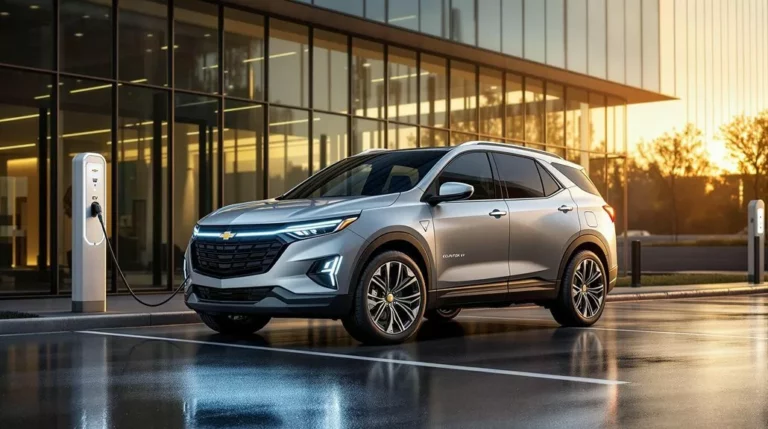

Tesla’s falling to 43.4% market share while competitors surge in 2025. GM doubled its EV sales. Ford’s F-150 Lightning and Volkswagen’s ID.4 each sold over 7,000 units. Honda’s new Prologue grabbed nearly 10,000 sales. European brands like Skoda jumped 93% in sales. The total EV market grew 11.4% to 294,250 units. Battery costs keep dropping and the used EV market’s expanding. There’s much more happening in this fast-changing environment.
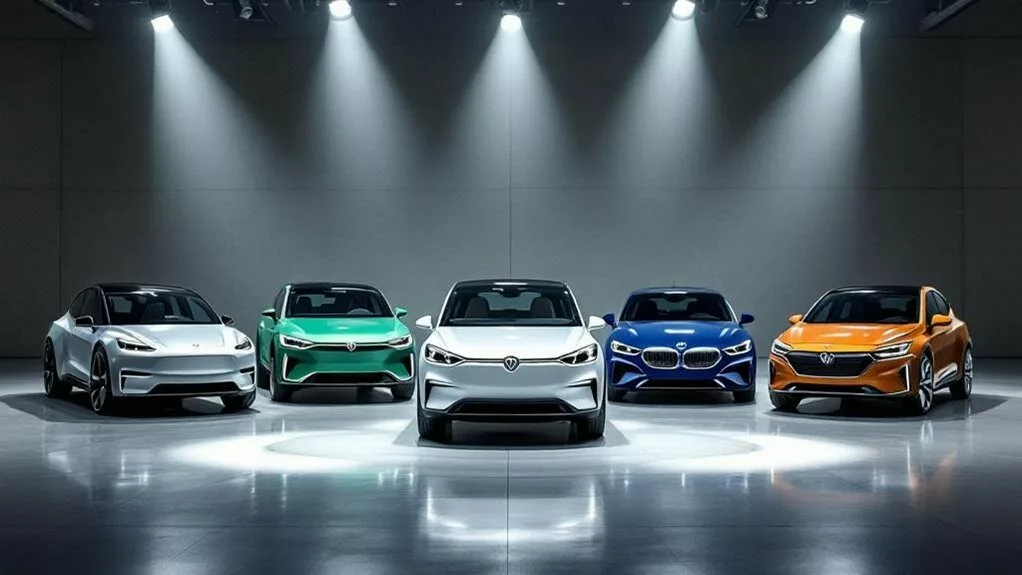
While Tesla has long dominated America’s electric vehicle market, the company’s grip is starting to loosen. Tesla’s market share dropped to 43.4% in early 2025, and its sales fell 9% compared to last year. Even though Tesla still sells the most EVs, other car companies are catching up fast.
Tesla’s dominance weakens as rivals accelerate their electric vehicle ambitions
General Motors doubled its EV sales in the first quarter of 2025. The company’s now the second-biggest EV seller in America. Ford’s also doing well with its F-150 Lightning pickup truck, which sold 7,187 units in the first three months of 2025. It’s become one of the top-selling electric vehicles in the country. As demand for electric vehicles continues to rise, more manufacturers are entering the market, trying to capture a share of this booming industry. Among them, the Tesla Model 3 and the Hyundai Ioniq 5 have also emerged as top electric vehicles of 2025, appealing to a wide audience with their innovative features and competitive pricing. This growing competition is driving advancements in technology and infrastructure, further accelerating the shift towards sustainable transportation.
Volkswagen’s making big moves too. The German company’s ID.4 compact SUV sold 7,663 units in America during the first quarter. In Europe, Volkswagen‘s doing even better. The company’s EV sales jumped 157% in early 2025, making it Europe’s leading electric car brand. Tesla’s European sales dropped 30% during the same time.
BMW’s i4 sedan is another popular choice, with 7,125 units sold in America’s first quarter. The car combines sporty performance with everyday usefulness. Hyundai’s Ioniq 5 continues attracting buyers who like its unique retro-futuristic design. The Hyundai Group, which includes Kia, has shown significant growth in EV sales as both brands expand their electric lineups.
More car companies are jumping into the EV market. Stellantis, Honda, and Volkswagen all launched new electric models to compete with Tesla. Honda’s Prologue sold 9,561 units in the first quarter of 2025, maintaining strong momentum from its 2024 performance. In Europe, Skoda’s EV sales grew 93%, while Kia’s jumped 59%. Renault saw an 89% increase in electric car sales. Electric car battery costs have dropped dramatically from $1,160 per kWh in 2010 to around $156 per kWh in 2019, helping automakers offer more competitive pricing.
The overall EV market‘s still growing. Electric vehicles made up 7.5% of all new car sales in America during the first quarter of 2025. That’s up from 7% a year earlier. Total EV sales reached 294,250 units, an 11.4% increase from last year.
Britain’s now Europe’s biggest market for battery-electric vehicles, passing Germany. Meanwhile, some luxury brands like Mercedes and Volvo are losing ground. Volvo’s EV sales dropped 33% in Europe.
The used EV market‘s also expanding as more people look for affordable electric cars. With more choices and competitive prices, buyers have plenty of options beyond Tesla in 2025. This shift is indicative of broader electric vehicle market trends 2025, as a variety of manufacturers are entering the space with innovative models. Additionally, increased awareness of environmental issues and government incentives are driving demand, making it easier for consumers to consider electric options. As a result, the landscape of the EV market is rapidly evolving, offering more sustainable alternatives to traditional vehicles.
Frequently Asked Questions
How Long Do Electric Vehicle Batteries Typically Last Before Needing Replacement?
Electric vehicle batteries typically last 15 to 20 years before they’ll need replacement.
Studies show these batteries lose about 2% of their capacity each year. Most EVs come with 8-year warranties covering at least 100,000 miles.
Some batteries have lasted over 400,000 miles with proper care. Real-world data shows batteries often outlive their warranties.
Replacement costs range from $2,500 to $20,000 when eventually needed.
What Are the Average Maintenance Costs for Electric Vehicles Compared to Gas Cars?
Electric vehicles save drivers big money on maintenance. They cost $4,600 less to maintain over their lifetime than gas cars. Additionally, the reduced number of moving parts in electric vehicles contributes to their lower maintenance costs, which can be a significant relief for budget-conscious consumers. As the history of electric vehicles shows, advancements in technology continue to improve their efficiency and reliability, further increasing their appeal. This shift not only benefits individual drivers but also supports a more sustainable future for transportation.
That’s because EVs don’t need oil changes, have fewer parts, and use regenerative braking that makes brake pads last longer. Drivers save about $949 yearly.
In Europe, EV owners pay 65-70% less for maintenance over eight years compared to traditional cars.
Can I Charge an Electric Vehicle Using a Regular Household Outlet?
Most electric cars can charge from regular household outlets using special cables. This method’s called Level 1 charging. It adds about 3-4 miles of driving range per hour. A full charge might take over 10 hours.
Standard outlets aren’t designed for continuous high power use. They lack safety features found in dedicated EV chargers. Experts warn that overloaded circuits could cause fires if homeowners aren’t careful.
How Does Extreme Weather Affect Electric Vehicle Range and Performance?
Extreme weather cuts electric vehicle range considerably.
In freezing temperatures, EVs can lose half their normal distance. Cold slows battery chemicals and cabin heaters drain power.
Hot weather isn’t as bad, but air conditioning reduces range by 17%.
Snow and rain make roads harder to drive on, using 10-15% more energy.
Drivers can save power by heating or cooling their cars while they’re still plugged in.
Are There Enough Public Charging Stations for Long-Distance Road Trips?
America’s highways now have 55,580 fast-charging ports at 10,839 stations.
That’s enough for many long trips, but drivers still face challenges. Popular routes along the coasts see 40% usage during busy times, creating wait times.
Tesla’s network offers the most reliable coverage with 6,500 stations. Other networks are catching up.
Rural areas still have gaps, making some cross-country routes tricky without careful planning.