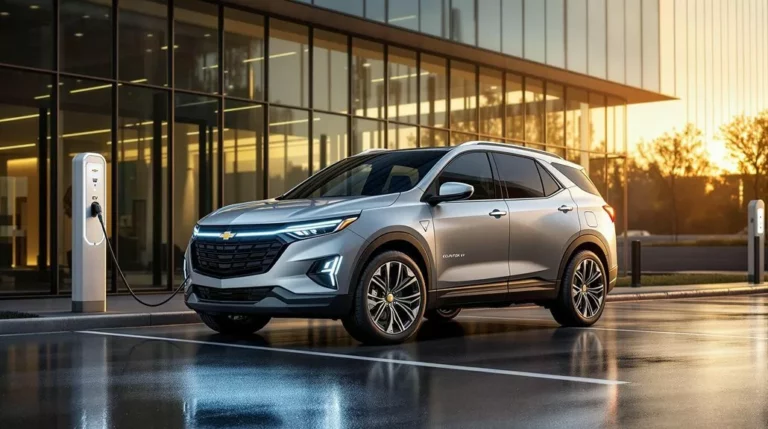

Electric cars deliver instant acceleration that leaves traditional gas vehicles behind, with over half of EVs rocketing from 0 to 60 mph in under 4.5 seconds. Electric motors provide immediate torque unlike gas engines that need time to build speed. Low battery placement creates a stable center of gravity for sharp handling. Top models like the Tesla Model S Plaid hit 60 mph in just 2.1 seconds. The technology behind these impressive capabilities continues to advance rapidly.
The electric car revolution has changed what drivers expect from vehicle performance. Today’s electric vehicles deliver acceleration that rivals exotic sports cars while offering practical benefits for everyday driving. This shift in expectations has roots in the history of electric vehicles, which date back over a century, yet have only recently gained prominence due to advancements in technology and battery efficiency. As manufacturers continue to innovate, the integration of smart features and enhanced range has made electric cars not just a sustainable option, but a desirable one as well. Drivers are increasingly embracing these eco-friendly alternatives, realizing that performance and practicality can go hand in hand. Furthermore, the rise of electric vehicle technology extends beyond personal use to commercial applications, highlighting the commercial electric vehicle advantages. Businesses are recognizing that electric fleets can reduce operating costs, lower emissions, and enhance their public image. As infrastructure for charging continues to improve, the transition to electric options for commercial use becomes increasingly viable and attractive. Moreover, the conversation around electric cars and environmental impact is gaining momentum as more consumers become aware of the significant reduction in greenhouse gas emissions associated with their use. This awareness is driving government incentives and policies aimed at promoting electric vehicle adoption, further solidifying their role as a solution to combat climate change. As the market expands, innovations will likely continue to emerge, making electric vehicles more accessible and efficient for everyone.
Over half of EVs can accelerate to 60 mph in under 4.5 seconds. That’s faster than many traditional performance cars. More than 80% achieve the sprint in less than 6 seconds. About 20% of electric cars reach 60 mph in 3.5 seconds or less. The fastest models, like the Tesla Model X Plaid, do it in under 3 seconds.
Several EVs lead the pack in acceleration. The Tesla Model X Plaid and Cybertruck Cyberbeast both hit 60 mph in under 3 seconds. The Porsche Taycan Turbo S and Audi RS e-tron GT match each other at 2.9 seconds. The new Porsche Macan EV Turbo also achieves 2.9-second acceleration with 630 horsepower and 833 pound-feet of torque. The 2024 Lucid Air Sapphire currently holds the crown with a 1.89-second 0-60 mph time.
Electric motors provide instant torque, which means full power arrives immediately when drivers press the accelerator. This differs from gas engines that need to build up speed. The Tesla Model S Plaid demonstrates this advantage by reaching 60 mph in just 2.1 seconds while generating 1020 horsepower. EVs also benefit from lightweight construction and aerodynamic designs that help them slice through air more effectively. The Rimac Nevera holds the production EV speed record at 258 mph.
Handling benefits come from several factors. Dual-motor all-wheel-drive systems provide excellent traction during hard acceleration. The heavy battery pack sits low in the vehicle, creating a low center of gravity that improves stability. Digital systems can instantly adjust power to each wheel for peak grip on different road surfaces.
Not all EVs focus on performance. Budget-friendly models like the MG ZS EV take 8.4 to 8.6 seconds to reach 60 mph. The BMW iX1 eDrive20 needs 8.3 seconds. These vehicles prioritize affordability and efficiency over speed.
Advanced technology improves performance in high-end models. Some use two-speed transmissions and 800-volt electrical systems for better power delivery. Sophisticated cooling systems prevent overheating during spirited driving. Many manufacturers release software updates that elevate performance after purchase. Tesla’s innovations as a battery company continue to drive technological improvements that enhance both performance and efficiency across the electric vehicle industry.
Frequently Asked Questions
How Much Does It Cost to Charge an Electric Car at Home?
Americans pay about $67.66 monthly to charge electric cars at home.
That’s for drivers who travel less than 40 miles daily. The national average runs $70.15 per month for typical drivers covering 1,207 miles.
Costs depend on local electricity rates and the car’s efficiency. Most EVs use 16-17 cents worth of electricity per kilowatt-hour.
That’s cheaper than gas, which costs drivers about $116 monthly.
What Is the Average Lifespan of an Electric Car Battery?
Electric car batteries typically last 15 to 20 years under normal conditions.
They can drive over 280,000 miles before needing replacement. That’s double what regular gas cars manage.
The batteries lose about 2% capacity each year. Most manufacturers offer 8 to 10 year warranties.
Real-world data shows Tesla batteries keep 95% capacity after 50,000 miles.
Heat and fast charging speed up wear, but proper care extends battery life considerably.
Can Electric Cars Be Charged in the Rain?
Electric cars can be charged safely in the rain. The charging equipment’s waterproof and meets strict safety standards. Manufacturers test the cables with high-pressure water to confirm they’re weatherproof. The systems have special features that prevent electrical shocks.
However, drivers shouldn’t charge during floods or severe thunderstorms. Before charging, people should check cables for damage. Public and home chargers are built to work safely outdoors in regular rain.
How Do Electric Cars Perform in Extremely Cold Weather?
Electric cars lose between 10% and 41% of their driving range in freezing weather.
The batteries’ chemical reactions slow down below 32°F. Cabin heating drains up to 40% of the battery’s power.
Some models handle cold better than others. The Hyundai Kona keeps 91% of its range, while the Opel Ampera-e drops to 70%.
Drivers can warm up their cars while plugged in to save battery power.
Are There Enough Public Charging Stations for Long Road Trips?
Public charging stations are growing quickly across the U.S.
There’s now over 10,800 stations, up from about 10,000 last quarter. Cities like Las Vegas and Miami have plenty of chargers.
But rural areas don’t have as many yet. Most highways have enough DC fast chargers for road trips.
Tesla’s network has the most charging spots per station. Non-Tesla networks are catching up by adding more ports.