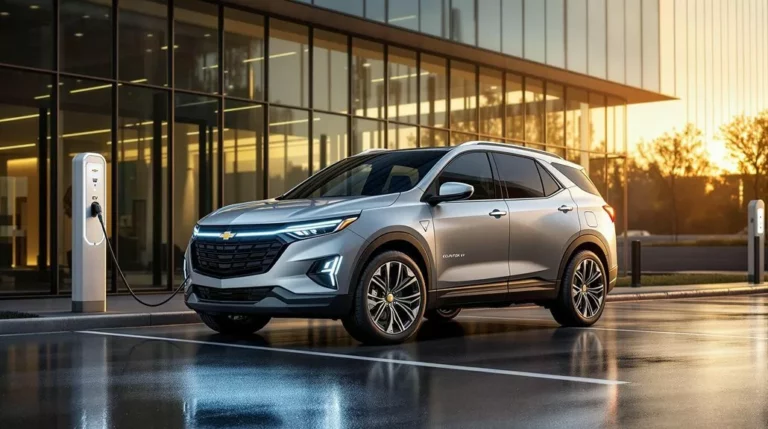

Electric vehicles in 2025 offer impressive driving ranges that rival gas-powered cars. The Lucid Air Grand Touring leads with 512 EPA-certified miles per charge. Mercedes’ EQS sedan follows at 481 miles, while Chevrolet’s Silverado EV reaches 460 miles. Among SUVs, Rivian’s R1S delivers 410 miles. Prices vary widely, from Chevrolet’s affordable Equinox EV at $33,600 to Lucid’s premium $107,400 starting price. These advances come from new battery technologies and improved designs.
As electric vehicles become more popular, buyers want cars that can travel longer distances without needing to charge. The latest EVs are pushing limits with impressive range capabilities that rival traditional gas-powered vehicles. Manufacturers are responding to this demand by innovating battery technology and designing more efficient powertrains. As a result, several mustsee electric cars 2025 are set to hit the market, showcasing advancements in range and performance. These vehicles not only promise longer journeys but also feature cutting-edge technology and sustainability options that cater to environmentally conscious consumers.
The Lucid Air Grand Touring leads the pack with an EPA-certified 512-mile range. This luxury sedan features 19-inch wheels and NCM battery chemistry. Mercedes’ EQS 450+ sedan follows closely with 481 miles in official WLTP tests, making it a global leader among electric sedans. For truck enthusiasts, the Chevrolet Silverado EV-RST Max Range offers 460 miles, designed specifically for rugged applications.
SUV buyers aren’t left behind. The Rivian R1S Dual Max Battery delivers 410 miles of validated range, the best among utility vehicles. Tesla’s Model X provides over 300 miles while achieving a 2.5-second 0-60 mph time with its triple-motor setup. The globally best-selling Tesla Model Y offers 330 miles in its Long Range variant, while Cadillac’s Lyriq showcases GM’s Ultium battery platform with 320 miles. Mercedes’ EQS SUV estimates 350 miles for luxury segment shoppers. The Audi Q6 e-tron promises 307-310 miles of range in both single- and dual-motor configurations, positioning itself between the Q4 and Q8 e-tron models.
These range improvements come from battery innovations. Solid-state batteries under testing promise faster charging and higher energy density. Mercedes’ EQXX concept achieved a 627.6-mile prototype run through aerodynamic design research. Tesla’s implementing LFP batteries in Model 3 and Model Y for lower costs and reduced thermal risks. Real-world mileage experienced by drivers often differs from EPA estimates due to weather conditions and driving patterns.
Solid-state batteries promise faster charging while Mercedes EQXX achieved 627.6 miles through aerodynamic innovation
Pricing varies considerably across these extended-range options. The Lucid Air starts at $107,400, while Tesla’s Model S begins at $97,990. The Rivian R1S enters at $78,450, positioning itself in the mid-range luxury market. Mercedes’ EQS SUV costs around $85,000, emphasizing luxury technology. The Chevrolet Equinox EV offers the most affordable option at $33,600 after credits with 319 miles of range. For budget-conscious buyers, the Hyundai Kona Electric SE provides 200+ mile range at just $32,875, making it the cheapest new EV with substantial driving distance.
Fast-charging capabilities continue advancing. Tesla’s V4 Superchargers support 250 kW peak rates. Hyundai’s IONIQ 6 uses 800V architecture for 10-80% charging in 18 minutes. Lucid’s DreamCharge partner network enables 300+ kW speeds. Rivian’s Exploration Network utilizes 180 kW chargers for remote areas.
Looking ahead, Toyota targets 500-mile range by 2026 using solid-state batteries. Mercedes plans to transfer EQXX aerodynamic analysis to new models. Porsche and BMW are pursuing solid-state battery production readiness.
Frequently Asked Questions
How Does Cold Weather Affect the Range of These Electric Vehicles?
Cold weather greatly reduces electric vehicle range.
EVs typically lose 20% of their driving distance in freezing temperatures. Some models lose up to 50% range on short winter trips.
Battery chemicals react slower in cold conditions. Cabin heaters drain power quickly.
Heat pump-equipped vehicles like Teslas perform better. Luxury models with advanced thermal systems retain more range.
The range returns to normal when temperatures rise.
What Are the Maintenance Costs Compared to Gasoline Vehicles?
Electric vehicles cost much less to maintain than gas cars.
EV owners spend about 6 cents per mile on maintenance, while gas car owners pay 10 cents. That’s because EVs don’t need oil changes, spark plugs, or transmission repairs.
Over 15 years, EV drivers save $5,400 on maintenance compared to gas vehicles.
EVs mainly need tire rotations, battery checks, and software updates instead of complex engine work.
How Long Do the Batteries Last Before Needing Replacement?
Most electric car batteries keep 70-80% of their power after 100,000 miles. They typically last 150,000 miles before owners need replacements.
Car companies usually cover batteries for eight years or 100,000 miles. When batteries do need replacing, it costs over $15,000. Some cheaper options exist, like used battery parts.
How long batteries last depends on driving habits and weather conditions.
Can I Charge These Cars Using Solar Panels at Home?
Homeowners can charge electric cars using solar panels.
A typical setup needs 5-10 panels and battery storage systems. The panels generate electricity during sunny hours. This power gets stored in batteries for later use. A full charge might take 2-4 days depending on weather and system size.
Installation costs range from $15,000-$30,000. Federal tax credits cover 30% of expenses. Monthly savings average $35-$70 compared to grid charging.
What Happens to Range as the Battery Ages Over Time?
Electric car batteries lose about 1.8% of their range each year.
That means a car that goes 300 miles when new might travel 294 miles after one year. After 10 years, it’d still go about 250 miles.
Some drivers see faster losses, up to 3% yearly.
Cold weather temporarily cuts range but doesn’t cause permanent damage.
Modern batteries last longer than older ones.