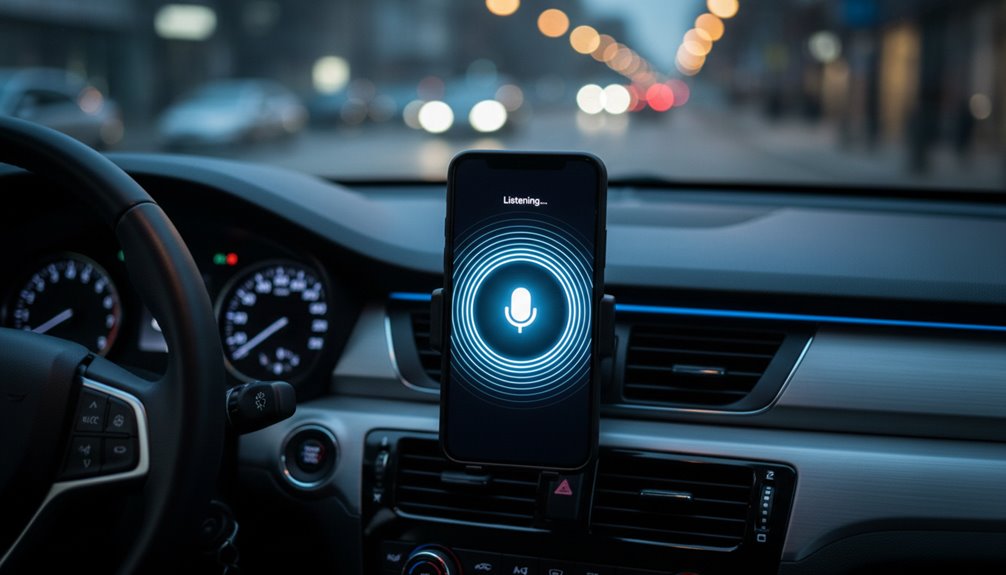

Your Google Assistant isn’t ignoring you because of Wi-Fi problems—it’s permission conflicts silently sabotaging your commands, and most troubleshooting guides won’t tell you this. When voice commands suddenly fail, you’re looking at a chain reaction: software glitches pile onto hardware obstructions while misconfigured settings create chaos in the background. The real fix demands systematic testing, not random restarts. What breaks your setup often contradicts what Google’s own support pages suggest. This guide cuts through the noise with solutions that actually address the cascade of failures happening behind the scenes.
Why Your Google Assistant Isn’t Responding
When your Google Assistant goes silent, the culprit usually isn’t some mysterious software gremlin—it’s one of five straightforward issues that you can diagnose and fix yourself.
First, check your internet connection.
Google Assistant requires constant data access and won’t function offline.
If your Wi-Fi drops or mobile data stalls, commands won’t process.
Test connectivity by browsing the web or running other apps.
You can also verify your internet by loading web pages or using another device on the same network to confirm the connection is stable.
Second, Battery Saver mode might be throttling performance.
This power-conservation feature restricts background functionality, leaving Assistant sluggish or unresponsive.
Disable it in your device settings.
Third, your microphone could be obstructed or muted.
Physical debris blocks detection, while a muted switch (typically on your device’s back) completely cuts input.
Fourth, outdated software introduces bugs.
Check the Play Store for Google Assistant updates and verify your device’s firmware is current.
Older app and OS versions can cause compatibility issues that prevent Assistant from responding properly.
Finally, language mismatches prevent command recognition.
Your Assistant’s language setting must align with your spoken commands for accurate processing.
Restart Your Device and Clear the Google Home App
You’ll want to start by power cycling your device—a simple restart clears temporary processes that might be freezing your Google Assistant, much like how an EV’s systems reset when you cycle the ignition.
Next, you’ll clear the Google Home app’s cache (Settings > Apps > Google Home > Storage > Clear cache), which removes the temporary files bogging down performance without nuking your personal data.
If that doesn’t stick, force-stopping the app before the cache clear can push through stubborn glitches that a standard refresh won’t touch. Similar to how the Equinox EV resolves infotainment issues, holding the End Call button for 15-20 seconds can reboot your device’s entire system when app-level fixes prove insufficient. This cache clearing process works on Android smartphones including Samsung Galaxy and Google Pixel devices, making it a universal solution for resolving app performance issues.
Power Cycling Your Device
Restarting your Google Assistant device might seem like tech support’s favorite band-aid fix, but it’s genuinely one of the most effective troubleshooting steps you can take.
Power cycling—unplugging your device from the wall outlet—initiates a complete electrical reset that clears temporary glitches your software can’t shake alone.
Here’s the process: unplug the device and wait 10–20 seconds, allowing it to fully discharge.
This brief window lets capacitors drain completely, ensuring a genuine restart rather than a shallow reboot.
Reconnect the power cable, then wait one to two minutes for the device to fully power on before attempting commands again.
If power cycling alone doesn’t resolve your issue, you can also perform a reboot through the Google Home app by selecting your device, tapping the Settings cog, then the three dots icon, and choosing Reboot.
This method works reliably for Google Nest devices and Wifi points without requiring app access or internet connectivity, making it your most straightforward troubleshooting option.
Clearing Cache and Storage
If power cycling didn’t resolve your Google Assistant issues, you’re likely dealing with corrupted cache files or outdated app data—the digital equivalent of old motor oil gumming up your engine.
Open your device’s Settings, then Apps, and locate Google Home. Tap Storage & cache, then select Clear cache to remove temporary files without losing login credentials or personal Settings.
If problems persist, choose Clear data for thorough removal, though you’ll need to sign back in.
This process eliminates app crashes, speed issues, and unexpected logouts while freeing storage space. Think of it as flushing your system: you’re removing the gunk that causes performance hiccups without affecting what actually matters. Regular cache clearing is essential for IT admins and cybersecurity professionals handling secure data and maintaining endpoint security.
Forcing App Refresh Methods
Sometimes the simplest fix—powering down your device and clearing the Google Home app—can resolve stubborn Assistant glitches that cache clearing alone won’t touch.
When you force stop the app through Settings > Apps > Google Home > Force Stop, you’re effectively hitting the reset button on its active processes.
This terminates background operations and purges temporary data from memory without deleting your permanent settings or account information.
After force stopping, reopen the app fresh.
Your device will reload it completely, often eliminating initialization errors that plagued previous sessions.
Think of it as giving your Assistant a clean slate—no lingering software conflicts or corrupted temporary files interfering with command processing.
Most users find this two-step approach resolves communication breakdowns before they need more invasive troubleshooting methods. For more severe issues, you may need to perform a factory reset by holding the microphone button on the back of your device for approximately 10 seconds until the on-screen circle completes and Google Home announces the reset, which will return your device to its original factory settings.
Check Your Google Assistant Internet Connection
Your Google Assistant needs a stable internet connection to function properly—an unstable link will trigger that dreaded “check my internet connection” error and cripple most features you rely on.
You’ll want to verify your Wi-Fi network’s speed (ideally 25+ Mbps download for reliable performance) and signal strength, since data saver mode and weak signals can tank functionality faster than a depleted EV battery.
If you’re experiencing spotty performance, test both your 2.4GHz and 5GHz bands separately; sometimes one frequency works while the other doesn’t, leaving you puzzled about which one’s actually the culprit. When issues persist after troubleshooting, you may need to reconnect your Google Home device to your Wi-Fi network for a fresh connection that resolves underlying connectivity problems.
Wi-Fi Connection Verification
How’s your Google Assistant actually connecting to your home network? Start by opening your Google Home app and checking listed devices for Wi-Fi status.
Tap your device icon, access the settings gear, then scroll to the Wi-Fi section where you’ll spot a connection indicator. Signal strength bars tell the real story—fewer bars mean weak coverage that’ll cripple your commands.
Stand near your device and observe those Wi-Fi bars on your phone. A fuller Wi-Fi icon in Android Settings under Network & Internet > Internet denotes stronger signal.
If you’re seeing anemic bars, move your device closer to the router. Sometimes restarting your wireless network—router and modem both—refreshes the signal enough to matter.
Compare available networks and select the strongest one. Connection quality directly determines whether your Assistant responds or sits silent.
Internet Speed Requirements
What’s actually happening behind the scenes when your Google Assistant goes silent or sluggish? Your internet speed.
Google Assistant requires a minimum of 0.51 Mbps to stream commands and responses—basically, the bandwidth floor.
However, that bare minimum won’t cut it for reliable performance.
You’ll want at least 1–3 Mbps dedicated to your smart speaker for smooth operation.
Think of it like fuel efficiency: technically your car runs on fumes, but you wouldn’t drive that way regularly.
Wi-Fi delivers 20–50% slower speeds than Ethernet connections, so actual performance matters.
If you’re running multiple devices simultaneously, bandwidth splits across them.
Test your speed at speedtest.net.
If you’re below 1 Mbps, that’s your culprit—Assistant struggles with inconsistent data delivery.
Allow Microphone Permissions and Enable Voice Commands
Getting Google Assistant to hear you requires permission—literally. Your phone won’t transmit voice commands without explicit microphone access. Go to Settings > Apps > Google > Permissions and toggle Microphone to Allow. You’ll find options like “Allow only while using the app” or “Ask every time”—choose the first for seamless operation.
| Permission Type | Location | Status |
|---|---|---|
| Microphone | App-level settings | Must enable |
| Location | Device-wide controls | Set to All the time |
| Camera | App-level settings | Limit to app usage |
Next, open your Google app, tap your profile image, then open Settings > Google Assistant > Voice Match. Toggle “Hey Google” on and retrain your voice model if detection stumbles. Check Assistant Settings for any restrictions blocking microphone access—device-level blocks override everything else. Without these steps, Assistant simply won’t hear your commands, no matter how clearly you speak.
Test Your Google Assistant Microphone Hardware
Before you blame software, you’ll want to verify your microphone hardware’s actually working—because a muted speaker or blocked mic port will make even perfectly configured permissions irrelevant.
Start by launching your device’s voice recorder app and speaking normally at arm’s length away.
Listen to the playback: distorted audio, static, or unusually low volume signals a hardware problem rather than a permissions issue.
Check your speaker’s physical mute switch—it’ll show orange or red when disabled.
On Google Home, press the mute button and listen for verbal confirmation of the status.
If you’re using a phone, remove any case covering the microphone hole; thick screen protectors and accessories obstruct sound pickup despite passing diagnostics.
Wipe the mic port with a soft, dry cloth to clear dust and debris that accumulate over time.
These obstructions produce garbled or silent recordings, fooling you into thinking the Assistant’s broken when it’s simply blocked.
Disable Conflicting Assistants Like Alexa
If you’ve got both Google Assistant and Alexa devices in your car or home setup, you’re probably experiencing that annoying moment when one assistant interrupts the other—Google’s chiming in during your Alexa command, or vice versa.
Here’s the thing: these devices compete for audio attention in shared spaces, and when your Nest Hub Max hears “Alexa,” its facial recognition sensitivity can trigger Google Assistant instead.
These devices compete for audio attention in shared spaces, triggering unwanted cross-activation between assistants.
Your first move? Adjust Alexa’s wake word sensitivity through the Amazon Echo app—dial it down to reduce cross-triggering.
Next, physically separate your devices.
Echo Dots positioned near Nest hubs create acoustic overlap; distance minimizes false activations.
If that doesn’t work, disable facial recognition on your Nest Hub Max entirely.
Google support acknowledges no native setting exists to ignore competitor wake words, so you’re working within these constraints.
Test specific commands to isolate which phrases cause interference, then adjust accordingly.
Update Google Assistant and Verify Device Compatibility
Your Equinox EV’s infotainment system relies on Google Assistant staying current, which means keeping both the Google app and your device’s operating system updated.
This is something that’s surprisingly easy to overlook but absolutely critical for reliable voice commands while you’re driving.
Start by opening Google Play Store on your Android device.
Tap your profile icon, select manage apps and device, then locate the Google app under the manage section.
If an update’s available, tap it.
Next, verify your device OS is current; Google Assistant updates arrive through system software updates, not separately.
After updating, clear the Google app’s cache and data through settings to resolve any post-update glitches.
Device compatibility matters too.
Newest Android phones like Pixels have Assistant built in, while Samsung devices might prioritize Bixby initially.
Wear OS 4.0 on Pixel Watch 2 and Galaxy Watch 6 features improved Assistant integration for your vehicle’s ecosystem.
Retrain Voice Match and Set Language
When’s the last time you actually trained Google Assistant to recognize your voice—or did you skip that step entirely?
If your Assistant isn’t responding reliably, retraining your Voice Match profile often fixes the problem.
Here’s how: open your Google Home app, go to Settings > Google Assistant > Hey Google & Voice Match, then select Retrain or Teach your Assistant your voice again.
You’ll repeat two guided phrases—about twenty seconds total—which creates an updated voice model.
This process accounts for changes in your voice due to illness, aging, or simply environmental differences in your home’s acoustics.
While you’re troubleshooting, set your preferred language in Google Assistant settings.
Mismatched language settings between your device and account can trigger recognition errors.
If retraining doesn’t resolve non-response issues, toggle off Voice Match entirely, restart your device, then re-enable it fresh.
Sometimes the simplest reset works best.
Factory Reset Your Device
Before you declare war on your Google Assistant, a factory reset—which clears cached data and temporary files while restoring your device to its original settings—often resolves stubborn glitches that retraining and language adjustments can’t touch.
| Device Generation | Reset Method | Time Required | Result |
|---|---|---|---|
| First Gen | Hold top surface | Until announcement | Factory defaults |
| Second Gen | Press reset button | Until announcement | Factory defaults |
| Standard | Press back button | 10 seconds | Factory defaults |
| Android | Settings > Apps > Storage | Varies | Cache cleared |
The process doesn’t nuke your important information—it simply wipes temporary data that accumulates over time. You’ll need to re-link music services, smart home devices, and voice accounts afterward. Most resets take under five minutes, though setup afterward requires patience. Unplug your Google Home, wait a full minute, then replug it. Listen for that distinctive reset announcement confirming the wipe succeeded. Your Assistant emerges refreshed and responsive.
Frequently Asked Questions
Can Multiple Google Assistant Devices in One Home Interfere With Each Other’s Operation?
Yes, your multiple Google Assistant devices can interfere with each other when they’re close together or logged into different accounts. You’ll want to keep them in separate rooms and make sure they’re all connected to the same Google account for smooth operation.
Does Google Assistant Work Offline, or Is Internet Always Required for Commands?
You’ve got to walk before you run. Google Assistant works offline for basic tasks—you’ll set timers, control your car’s AC, and access pre-downloaded maps. However, you’ll need internet for searches, directions, and messages.
How Do I Know if My Device’s Microphone Is Physically Broken Versus Software Issues?
You’ll want to launch your voice recorder app and test recording volume—low levels signal a physical block. If recordings sound clear, your mic’s likely fine and you’ve got a software issue to troubleshoot.
Will a Factory Reset Delete My Google Home Automation Routines and Device Settings?
Your routines remain resilient and retained in the cloud, so they’ll persist post-reset. However, you’ll need to re-establish device-specific settings like Wi-Fi credentials and smart home device links.
Can Parental Controls or Family Link Settings Prevent Google Assistant From Responding?
Yes, Family Link parental controls can prevent Google Assistant from responding. You can disable personal results, restrict microphone permissions, activate Downtime to lock devices, and block third-party app access, all limiting Assistant functionality.


