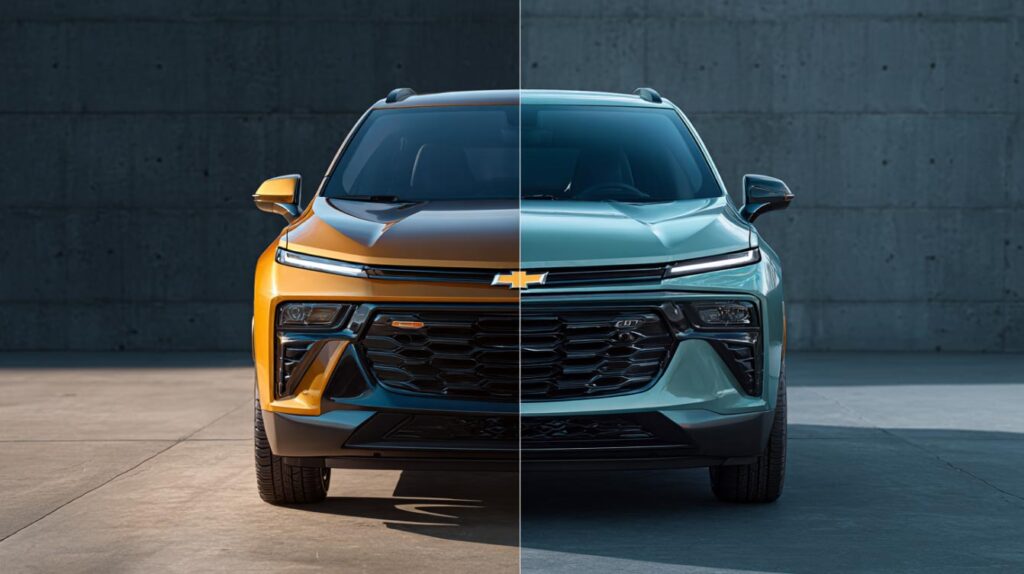

That 150kW fast charger you just pulled up to? It’s lying to you. Your Equinox EV will gulp electrons at advertised speeds for maybe ten minutes before hitting an invisible wall at 40% battery—dropping to a crawl of just 60kW. This isn’t a glitch or bad luck. Your battery’s voltage ceiling, chemistry limits, and heat management are conspiring against those promised charging times, and the math doesn’t work the way the sticker suggests. What’s really happening in those critical first minutes will change how you plan every road trip.
Equinox EV’s 150kW Peak: What You Actually Get
While Chevrolet advertises 150kW peak charging for the Equinox EV, that headline number tells only part of the story—you’re actually looking at a narrow window where you’ll see that full power, and even then, it depends heavily on which charger you’re plugged into.
You’ll hit that 150kW peak for roughly 10 minutes, specifically between 10–40% state of charge in moderate temperatures. After that initial burst, power drops to 125kW for another 5–10 minutes before declining further. Thermal throttling can reduce speeds even more dramatically, with some charging sessions experiencing temporary drops to 70-80kW as the battery cooling system manages heat buildup. The vehicle’s NCMA chemistry battery is particularly sensitive to temperature changes during rapid charging sessions.
Here’s the catch: you need a high-amperage charger like Tesla’s V3 Supercharger to extract the full 150kW. Your Equinox’s 288V battery pack demands 500 amps to achieve maximum speed—something standard 150kW chargers can’t deliver due to amperage limitations.
They’ll cap you around 100kW instead. The physics is straightforward. Lower voltage means needing massive amperage to hit peak power. Most public stations simply aren’t equipped for that requirement.
How Long to Charge 10–80% (Real Times, by Charger Type)
You’ll find that DC fast charging performance varies dramatically across network providers, with Tesla Superchargers and public stations delivering starkly different 10–80% times due to their distinct power delivery frameworks and thermal management strategies.
Your Equinox EV’s 47-minute benchmark (under ideal conditions) sits between the VW ID.4’s 28-minute standard and legacy networks that often stretch well beyond an hour, a gap that hinges on peak kilowatt availability and how aggressively each charger manages the battery’s voltage curve.
Comprehending these real-world comparisons matters for trip planning because a Supercharger stop might get you road-trip-ready in under 40 minutes, whereas a third-party public station could demand nearly double that time for the same charge percentage. Software inconsistencies can also impact charging reliability, though GM software updates are expected to optimize the charging curve for more consistent performance across sessions.
Tesla Supercharger Performance Times
Since the Equinox EV uses Tesla’s NACS connector, comprehending Supercharger performance across different generations matters—especially when you’re planning road trips and need realistic timing for that 10–80% sweet spot.
Here’s what you’re actually looking at:
- V2 Superchargers: Deliver up to 120 kW with shared power between paired stalls, meaning neighbor activity directly impacts your speed. Expect 35–45 minutes for 10–80%.
- V3 Superchargers: Peak 250 kW through liquid-cooled cables eliminates stall interference. You’ll hit 10–80% in roughly 25–35 minutes depending on vehicle. Non-Tesla vehicles like the Kia EV9 experience voltage architecture constraints that limit peak charging rates to approximately 120 kW on these stations.
- V4 Superchargers: Current generation pushes 325 kW, achieving 10–80% in approximately 45 minutes for larger EVs like your Equinox.
Timing varies based on ambient temperature, battery thermal management, and charger load—not just raw power output.
Public Station Charging Comparison
Tesla Superchargers dominate highway charging, but they’re only part of your real-world equation—the public charging network includes several other standards, each with its own speed tier and real-world timing.
Level 2 chargers (240V AC) get you 10-80% in four to eight hours, making them ideal for workplace or overnight scenarios.
CCS DC fast chargers deliver substantially faster results—hitting 80% in fifteen to sixty minutes depending on power output and battery conditions. Load balancing chargers dynamically allocate power across multiple connectors to optimize charging efficiency during peak usage times.
Level 1 chargers (120V household outlets) crawl at forty to fifty-plus hours for that same 10-80% charge, relegating them to emergency-only status.
Ultra-fast chargers represent the emerging frontier, cracking under twenty minutes through liquid-cooled 500kW technology, though they’re still rolling out strategically rather than ubiquitously.
Why Speed Tanks After the First 10 Minutes?
When you pull up to a 350-kW fast charger, the Equinox EV’s charging curve looks impressive for roughly the first ten minutes—then it takes a noticeable plunge.
Here’s what’s happening under the hood:
- Battery temperature climbs rapidly during that initial sprint, triggering your vehicle’s thermal management system to activate protective derating protocols before damage occurs.
- Your battery’s acceptance rate drops markedly as state of charge exceeds 40%, even though the charger’s capable of delivering 350 kW—your vehicle simply won’t accept that much power anymore.
- Cell balancing priorities shift from raw speed to controlled equalization, reducing power output to 75 kW or less to preserve long-term cell health. This thermal derating typically occurs around 20% SOC, where power drops sharply due to your battery’s cooling requirements.
The physics is straightforward: rapid energy transfer generates heat. Your Equinox EV’s computer prioritizes battery longevity over sprint charging.
That’s actually good news—you’re getting smarter charging, not slower charging. The difference between a 150-kW charger and that 350-kW beast? Minimal. Sometimes counterintuitively faster, too.
The 288V Battery Voltage Holding You Back
While your Equinox EV’s 350-kW charger looks powerful on paper, there’s a fundamental electrical constraint you’re hitting: your battery’s 288-volt architecture simply can’t accept the power that station’s designed to deliver.
Here’s the physics: power equals volts times amps. Your 288V pack needs substantially higher amperage to reach even modest kilowatt levels—and that’s where trouble starts. High current at low voltage generates dangerous heat in cables and connectors, forcing your battery management system to throttle power aggressively. This thermal protection is essential because charging losses increase quadratically with current, meaning even small increases in amperage create disproportionately larger heat generation.
Low voltage requires extreme amperage, generating dangerous heat that forces aggressive battery throttling and limits charging speed.
Compare yourself to owners of newer 400V or 800V EVs. They’re drawing the same charger’s full capacity because their configuration matches it efficiently. You’re essentially limited to around 60kW regardless of station capability, turning that premium fast-charger into an average performer.
It’s not the charger failing you—it’s your battery’s electrical ceiling. That 288V design, carried over from earlier EV platforms, now constrains your charging speed fundamentally.
State of Charge: The Hidden Control on Charging Speed?
your Equinox EV’s charging speed isn’t really controlled by the massive 350-kW charger you’re plugged into—it’s controlled by a number on your dashboard that most owners barely comprehend.
That number is State of Charge (SoC). Your vehicle’s Battery Management System uses it as the chief dial governing how much power your battery accepts. You’re not fighting the charger; you’re fighting physics and intentional engineering.
Here’s what’s actually happening:
- 20-60% SoC delivers your fastest charging—nearly maximum power flowing in, adding miles per minute efficiently.
- 60-80% SoC remains quick but noticeably tapers—your BMS begins protecting cell voltage as stress increases.
- Above 80% SoC, charging crawls—the last 20% takes as long as the first 70% combined on DC fast chargers.
Your battery isn’t stubborn. It’s being protected from the voltage stress and thermal strain that’d shorten its lifespan. Comprehending SoC means understanding why strategy beats raw charger power.
Equinox vs. Tesla Supercharger: Charging Curve Showdown
Because your Equinox EV’s battery can’t match a Tesla’s electrical designer, you’re looking at a fundamentally different charging experience—even when you’re plugged into the same Supercharger.
Your Equinox peaks at 150 kW for roughly 10 minutes, while Tesla vehicles pull 250 kW+ from identical V3 stations. The culprit? Your 288V battery architecture versus Tesla’s 350-400V system. Lower voltage means higher current demands to hit comparable power levels, and your battery’s thermal management throttles aggressively post-peak.
| Metric | Equinox EV | Tesla Vehicle |
|---|---|---|
| Peak Power | 150 kW | 250+ kW |
| Battery Voltage | 288V | 350-400V |
| 10-80% Time | ~40 min | 38.5 min |
| Sustained Rate (post-peak) | 125 kW | Higher average |
The math isn’t pretty: you’ll add roughly 6.6 miles per minute initially, matching Supercharger performance. But your taper arrives faster. You’re not falling behind catastrophically—you’re just operating within different physics constraints. Understanding this shapes realistic trip planning.
Real-World Range Recovery Rates: Miles per Minute
The speed at which your Equinox EV recovers range at a DC fast charger hinges on a single variable: power output. Here’s what you’re actually getting at different stations:
- 50 kW chargers deliver roughly 2.4 miles per minute, recovering about 145 miles hourly.
- 150 kW chargers supply 7.2 miles per minute, translating to approximately 434 miles hourly.
- 350 kW chargers theoretically provide 16.9 miles per minute, though peak output rarely sustains.
Your real-world experience depends entirely on which charger you’re using. A 15-minute pit stop at a 150 kW station nets you meaningful distance.
That same timeframe at a 50 kW charger? Considerably less impressive. The Equinox EV typically recovers 122–162 miles within 15 minutes under ideal conditions, assuming you’re not approaching 80 percent capacity, where charging velocity drops precipitously to protect battery longevity.
High-Power Stations Don’t Guarantee Peak Charging
You’ve probably noticed that pulling into a 350kW station doesn’t necessarily mean your Equinox EV’ll charge faster—and that’s by design, not a station malfunction. Your vehicle’s battery management system (BMS) negotiates the actual charging rate based on what your battery can safely accept at that moment, which means a 50kW vehicle maximum caps you there regardless of the station’s theoretical firepower.
Temperature, state of charge, and battery health all factor into this acceptance rate, so that premium high-power infrastructure only matters if your EV’s onboard systems can actually use it.
Vehicle Acceptance Rate Limits
Even when you’re pulling up to a 350kW fast charger—the kind that sounds like it should charge your Equinox EV to full in minutes—your car won’t necessarily accept all that power. Your vehicle’s battery management system controls the show here, not the station.
Here’s what’s actually happening:
- Your Equinox EV has a maximum acceptance rate (measured in kW) that its battery can safely handle.
- The BMS communicates this limit to the charger, which then provides only what your car requests.
- Real charging speed gets capped at whichever is lower: station output or your vehicle’s acceptance capability.
Think of it like a water faucet meeting a bucket—the bucket size matters more than faucet pressure. Your acceptance rate determines actual charging speed regardless of station capability. That’s physics, not marketing.
Battery Protection Constraints Matter
Your Equinox EV’s battery management system doesn’t care how many kilowatts that charging station advertises—it’ll throttle power output whenever voltage stress or heat buildup threatens pack longevity, and it does this automatically at the battery level, not the charger level.
That 350kW ultra-fast charger you found? It becomes irrelevant above 80% SoC. Your BMS enforces limits based on real-time cell voltage and thermal conditions, not station capability.
When you hit around 80%, charging speed drops to roughly 60kW regardless of infrastructure. This isn’t a limitation—it’s protection. The system prioritizes your battery’s ten-year lifespan over peak charging rates.
Grasping this prevents frustration and unrealistic expectations about infrastructure upgrades.
LENZ Adapter: Charging at Tesla Superchargers Explained
Three critical components make charging your Equinox EV at a Tesla Supercharger possible: the LENZ adapter, a compatible CCS1 port on your vehicle, and access to Tesla’s expanding network of NACS-equipped chargers.
Here’s what you need to know:
- Connection mechanics — Push the Supercharger connector into your LENZ adapter until it clicks, then plug the CCS1 end into your Equinox’s port until the latch engages. Start charging through the Tesla app.
- Pricing reality — Tesla charges non-Tesla owners more per kWh than their vehicles pay, though rates remain competitive against traditional DC fast chargers.
- Site availability — Not all Supercharger locations accept non-Tesla EVs yet. Download the Tesla app to verify compatible stations near you before planning trips.
After charging, press the latch releaser and return the connector to its holster. You’re now part of a growing community accessing infrastructure previously off-limits to non-Tesla owners.
Thermal Management: Temperature’s Role in Peak Speed
You’ve probably noticed your Equinox EV charges fastest when the battery’s sitting in that sweet spot between 25 and 35 degrees Celsius—the ideal window where lithium-ion chemistry performs at its peak. But stray beyond that range and you’re fighting physics itself.
When you fast-charge at high power levels (think 150 kW), the battery pack generates intense heat from atomic charge transfer. This heat can potentially climb past 270°C in just 10 minutes without active cooling.
This rapid temperature increase forces the thermal management system to throttle your charging speed down to protect cell longevity. The culprit: thermal saturation, where your cooling system reaches its heat-dissipation limit.
This triggers power reduction that can drop peak charging from 150 kW down to 60 kW on the Equinox. That’s why keeping that battery temperature regulated isn’t optional—it’s the difference between a speedy charge and an extended pit stop.
Optimal Temperature Windows
Because lithium-ion batteries are fundamentally electrochemical devices, their charging speed and peak performance hinge entirely on temperature—and not in the way you might intuitively think.
Your Equinox EV performs best within specific thermal windows:
- 0°C to 30°C (32°F to 86°F) — Your vehicle’s recommended charging range where thermal management systems keep everything balanced.
- 20°C to 25°C (68°F to 77°F) — The ideal sweet spot where your battery charges fastest without degradation risks.
- 15°C to 35°C (59°F to 95°F) — Maximum usable capacity zone where your battery operates ideally.
Outside these ranges, you’re fighting physics. Below 15°C, electrochemical reactions slow dramatically, forcing your onboard thermal system to work harder—and that means slower charging speeds.
Above 35°C, heat accelerates battery degradation while paradoxically limiting power delivery. Your Equinox’s thermal management doesn’t just maintain comfort; it preserves your investment and maintains charging speed.
Battery Heat Generation Effects
While your Equinox EV’s liquid cooling system works overtime during DC fast charging, the fundamental physics underneath tells a sobering story: those electrons don’t move through battery cells without consequence.
High charging currents generate thermal energy that damages battery structures if unmanaged. During a 10-minute 150 kW fast charge, internal temperatures spike beyond 270°C. This heat accelerates chemical reactions, subjecting cells to increased strain.
| Charging Method | Degradation Impact | Lifespan Reduction |
|---|---|---|
| DC Fast Charging | +16% faster rate | 5-15% shorter |
| AC Fast Charging | Baseline | Baseline |
| Slow Charging | Minimal | Minimal |
Frequent rapid charging reduces your battery’s capacity to hold charge, directly cutting driving range. Your vehicle’s battery management system automatically throttles charging power when temperatures climb above 35°C, which explains those frustrating speed drops you’ve noticed at the charger.
Thermal Throttling Mechanisms
Your vehicle’s thermal management system monitors battery temperature constantly, reducing charging power when cells exceed safe limits—typically around 30°C. Here’s what’s happening under the hood:
- Liquid cooling circuits circulate coolant through battery modules, maintaining uniform temperature distribution across all cells.
- Predictive algorithms detect rising heat signatures and proactively reduce power to 60kW before damage occurs.
- Active pumps and heat exchangers balance competing demands between battery cooling and inverter needs.
When coolant temperatures climb, your charger doesn’t suddenly stop—it strategically backs off. This isn’t a malfunction; it’s your Equinox protecting its most expensive component from premature degradation.
Precondition Your Equinox Battery for Faster Charging
When you’re heading to a DC fast charger in cold weather, every minute counts—and that’s where battery preconditioning comes in. Your Equinox EV’s heat pump warms the battery to its ideal spot: 15-25°C (59-77°F). Without preconditioning, cold batteries throttle charging speeds down to a sluggish 60kW, but a preconditioned pack readily accepts electrons at optimal rates.
Here’s the physics: warming battery cells reduces internal resistance, allowing faster charge acceptance.
You’ve got options. Use your app’s remote climate feature while plugged in, drawing grid power instead of draining your battery. Better yet, schedule overnight preconditioning through the Charge Schedule screen—set it for 60 minutes before your planned DC fast charging session. Five minutes won’t cut it; your 2,000-pound battery needs real time.
Schedule overnight preconditioning 60 minutes before DC fast charging—five minutes won’t cut it for optimal battery warming.
The payoff? Dramatically faster charging times and preserved range. Park in a garage when possible—it keeps your battery warmer naturally, amplifying preconditioning’s effectiveness.
Why 80% Is the Sweet Spot for Battery Health
Now that you’ve got your battery warmed up and charging efficiently, here’s the next question: how full should you actually let it get?
You’re looking at an 80% state of charge as your daily sweet spot. Here’s why this matters:
- Voltage stress decreases dramatically — Cells experience gentler internal pressure when operating mid-range versus near-maximum capacity, similar to not consistently over-revving your engine.
- Degradation slows measurably — Vehicles cycling between 20-80% retain approximately 90% capacity after 2,000 cycles, versus 85% for deeper discharge patterns.
- Charging speed stays reasonable — You’ll avoid the physics-driven slowdown that kicks in above 80%, where DC fast chargers intentionally throttle power to manage heat and voltage stress.
Charging to 80% daily gives you sufficient range for typical driving without the battery chemistry penalty of chasing 100%. Occasional full charges for road trips won’t harm your pack—it’s the habit that matters.
You’re fundamentally treating your Equinox EV’s battery like you’d treat a fuel tank: practical, sustainable, future-proofed.
Gross vs. Net kWh: What Your Charger Actually Delivers
When you plug in your Equinox EV, the charger’s display shows the gross kWh flowing from the wall, but that’s not the full story—AC charging loses 10-15% through inverter conversion and thermal management before those electrons actually reach your battery pack.
You’re fundamentally paying for energy that converts to heat and resistance rather than stored capacity, so a charger delivering 60 kWh might only add 51-52.8 kWh of usable energy to your pack.
The financial impact’s negligible (roughly $1.14 per charge at typical rates), but comprehension of this gap explains why your real-world range doesn’t perfectly match the math on paper.
Battery Loss and Efficiency
Because your Equinox EV’s charging system involves multiple energy conversions—AC to DC, transmission through cables, and finally storage in the battery pack—you’re not actually putting into your battery all the kilowatt-hours you pay for at the charger.
Here’s where your energy disappears:
- Onboard charger losses — Level 2 charging runs 89-95% efficient, meaning roughly 5-11% converts to heat rather than stored energy.
- Cable resistance — Shorter, properly-rated cables minimize heat losses, but thicker cables still cost you 10-25% total depending on power level.
- Battery internal resistance — Your pack generates heat during charge acceptance, particularly above 80% state of charge where losses double.
Expect roughly 12-15% more energy consumed than actually stored. That’s physics, not manufacturer shenanigans.
Real Energy Delivered Rate
| Measurement | Definition | Your Cost | Reality |
|---|---|---|---|
| Gross kWh | Pedestal output | Billed amount | Higher than usable |
| Net kWh | Battery storage | Actual value | What you keep |
| Loss factor | Efficiency gap | 5-10% surcharge | Physics tax |
| DC fast charging | 150-400kW rate | Premium pricing | Steeper losses |
Understanding this distinction changes how you evaluate charging costs and station selection.
150kW Stations vs. 60kW: When Does It Matter?
If you’re hunting for a charging station and you’ve spotted both a 60 kW charger and a more powerful 120 kW option nearby, you might wonder whether the difference actually matters for your Equinox EV—and the answer hinges entirely on your specific situation.
Here’s what separates them:
A 120 kW charger delivers double the initial power, but both stations converge toward similar rates within 20-30 minutes.
- Initial charging speed: A 120 kW station delivers double the power during those first minutes when your battery enthusiastically accepts maximum current, while 60 kW leaves you waiting roughly twice as long.
- Real-world diminishing returns: Your Equinox’s charging curve drops significantly after initial minutes, meaning both stations often converge toward similar power delivery rates within 20-30 minutes.
- Battery state matters: Charging from empty? The 120 kW advantage shines. Topping off an already-full battery? That station’s extra capacity sits unused anyway.
For daily charging scenarios, the practical difference shrinks considerably once that steep curve flattens out.
The 500-Amp Requirement and Why Most Stations Miss It
Stations branded as high-power hubs silently capping out in the 80–100 kW range because they weren’t engineered with the amperage requirements that your particular EV demands.
Your Equinox EV operates on a 288-volt system—lower than competitors—which means it needs serious current to hit peak charging speeds. The math is unforgiving: 150 kW at 288 volts requires over 520 amps. Your vehicle maxes out at 500 amps, a hard ceiling most public chargers don’t meet.
Here’s the problem. A typical 150 kW charger might supply only 400 amps, conveying roughly 100 kW instead. Even 350 kW stations frequently cap at 540 amps, hitting 132 kW if you’re lucky.
Most Electrify America and EVgo networks simply weren’t built for this amperage threshold. The result? You’re paying premium pricing for infrastructure that can’t fulfill its electrical promise.
Practical Charging Times at Public Station Networks
Now that you know why most chargers won’t deliver their advertised power to your Equinox EV, the real question becomes: what’ll you actually get when you plug in at the networks you’ll use most?
The gap between spec sheets and reality hits hard at public stations. Here’s what matters:
- DC fast charging degrades predictably — you’ll see 150kW initially, then drop to 100kW around 20% state-of-charge, settling near 60kW as you approach 80% (battery thermal management kicks in).
- Network availability varies wildly — Tesla Superchargers consistently deliver rated speeds, while third-party networks frequently underperform due to grid limitations and maintenance issues.
- Real-world charging sessions take 25-45 minutes for 10-80% depending on station capability and ambient temperature (cold weather extends times considerably).
You’re not imagining slower speeds. Physics and infrastructure constraints are genuine.
Frequently Asked Questions
Does the Equinox EV Charge Faster on Road Trips Compared to Daily Home Charging?
You’ll charge dramatically faster on road trips. DC fast charging adds 100 miles in under 15 minutes, while your home Level 2 charger takes hours. You’re getting peak power stations versus standard home rates.
Can I Damage My Battery by Frequently Charging to 100% Instead of 80%?
Your battery’s like a sponge—you won’t ruin it by squeezing fully occasionally, but you’re part of the smart owner community that knows 80% keeps things fresher longer. Occasional 100% charges? You’re fine.
How Much Does Cold Weather Reduce My Actual Charging Speed in Winter?
Your charging speed drops 20-50% below 60°F, and at 20°F or below, you’re looking at 40-50% slower speeds—basically doubling your DC fast charge times compared to ideal conditions.
Will Upgrading to a Home Level 2 Charger Significantly Improve My Daily Routine?
You won’t wake up scrambling for charge anymore. A Level 2 home charger delivers 25-30 miles nightly, joining the 80% of EV owners who’ve eliminated range anxiety through residential charging.
What’s the Cheapest Way to Access 150kw+ Charging Without Buying a LENZ Adapter?
You’ll get the best value using Electrify America’s 150kW stalls with their membership plan—they’re faster than 350kW units for similar times and cost less per kWh than pay-per-use rates.


