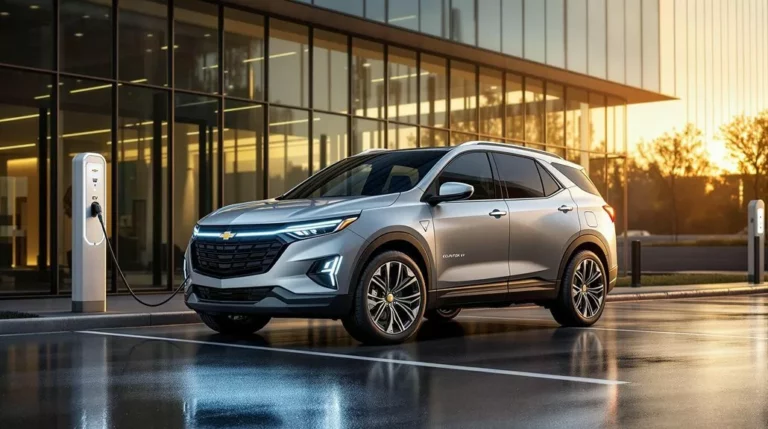

So, you’re curious about the Equinox EV versus the gas model? Well, the EV’s got 200 horses and a 0-60 mph in 7.7 seconds, while the gas model lumbers along with 175 horsepower. There’s emissions-free driving with the EV, but gas has a longer range of over 400 miles. You’ll want to take into account the tech and sleek designs too, unless you prefer rugged interiors and a dashboard that looks like a spaceship control panel. Stick around to find out more juicy details!
Powertrain and Performance Comparison
When you think about powertrains, you probably envision roaring engines and the smell of gasoline, right?
Well, the Equinox has two sides: the gas model and the fancy Equinox EV. The gas engine, a 1.5-liter enhanced four-cylinder, churns out 175 horsepower. Sure, it’s decent, but it’s not winning any races.
Meanwhile, the EV’s electric motor zips along with about 200 horsepower and a jaw-dropping 266 lb-ft torque. Talk about instant power! You’ll get to 60 mph in about 7.7 seconds with the EV—faster than any gas model. Additionally, the emissions-free driving capability of the Equinox EV means you can enjoy your ride without contributing to air pollution. Furthermore, this impressive acceleration is comparable to many EVs that achieve 0-60 mph in under 4.5 seconds, showcasing the advancements in electric vehicle technology.
Plus, the EV’s silent operation is a whole mood. Who needs engine roars when you can glide along in peace? You just might forget you’re driving!
Exterior and Interior Design Differences
While you might think all SUVs look pretty much the same, the 2025 Equinox gas model and its EV counterpart prove that design can be worlds apart.
- The gas model rocks a rugged, muscular look, channeling its inner off-road warrior.
- The Equinox EV? It’s all about that sleek, aerodynamic vibe—think sports car meets eco-friendly. Additionally, the EV’s design is influenced by advancements in battery technology that focus on efficiency.
- You get bolder front fascias on the gas model, while the EV flaunts a futuristic LED light bar.
- Inside, the gas model has a tech-heavy dashboard, but the EV goes minimalist, embracing a clean, modern aesthetic. Higher trims of the EV feature a larger 17.7-inch touchscreen that enhances its modern appeal.
- And don’t forget the coupe-like roofline on the EV; it’s practically a fashion statement!
Range and Fuel Efficiency Analysis
If you thought choosing between the 2025 Chevy Equinox EV and its gasoline sibling was all about looks, think again!
Let’s talk range. The Equinox EV boasts an EPA-estimated 319 miles for FWD, but real-world tests show you might only get 260 miles on the highway. Oops! The gasoline version? It rolls over 400 miles on a full tank—no surprises there.
Sure, the EV shines with 108 MPGe, but good luck finding a charging station when you need it. Additionally, the EV’s standard 11.5-kW on-board AC charger allows for adding 34 miles of range per hour with a Level 2 charger. In colder temperatures, expect a 24% range loss which could further impact your travel plans.
Regenerative braking is cool and all, but it won’t magically extend your range during that unexpected road trip.
Cargo Space and Interior Usability
You might think cargo space is just about how much junk you can toss in the back, but it’s a bit more complicated than that!
Let’s break it down.
- The Equinox gasoline model offers 29.8 cubic feet, while the EV has 26.4 cubic feet.
- Folding the EV’s rear seats gives you up to 57.2 cubic feet.
- The dual-height cargo floor in the EV? Total game changer!
- Sure, the gasoline model has a taller cargo area, but is that really a win? Cargo space in the Equinox is considered small for the compact SUV segment.
- And don’t forget, both models seat five comfortably.
Features, Safety Systems, and Pricing
In terms of features, safety systems, and pricing, the Equinox EV doesn’t hold back—unless you count its cargo space. While the Equinox EV impresses with advanced safety systems and a competitive price point, it may fall short in cargo capacity, which could be a consideration for some buyers. When looking at Equinox EV features compared to ID.4, potential owners might notice a trade-off between spaciousness and technology. Ultimately, the choice may hinge on whether preference leans more towards innovative features or practical storage solutions.
You get two trims: LT with standard 220 horsepower or the zippy RS with an optional 300 horsepower. Fancy, right? The LT’s got 19-inch wheels, LED headlights, and a 17.7-inch touchscreen that makes your old dashboard look like a flip phone.
Safety features? They’re exceptional. Chevy Safety Assist comes standard, so you won’t crash into anything while daydreaming.
Now, pricing starts at about $34,995 for the LT. Sure, the gas model’s cheaper, but with over-the-air updates and modern tech, doesn’t the EV seem worth that extra dough?
Just don’t expect to haul a small family in it.
Frequently Asked Questions
How Do the Equinox EV and Gasoline Model Handle in Different Weather Conditions?
In different weather conditions, you’ll find the Equinox EV offers quicker response and stability, especially in wet or slippery situations, while the gasoline model provides predictable handling but may lag in agility and traction. The electric powertrain of the Equinox EV enhances its acceleration, making it an exciting option for those who prioritize performance in challenging weather. A detailed Chevrolet Equinox EV features overview highlights its advanced traction management systems, which further optimize handling and safety. This combination of attributes makes it an excellent choice for drivers seeking both innovation and reliability.
What Maintenance Requirements Differ Between the Equinox EV and Gasoline Model?
The Equinox EV requires minimal maintenance with no oil changes, while the gasoline model needs regular oil and filter changes. You’ll also find fewer components to service in the EV, reducing overall maintenance costs. Additionally, the reduced number of moving parts in the Equinox EV contributes to its longevity and reliability. According to the ecochampion equinox ev analysis, owners can expect significant savings over time, both in maintenance and fuel costs. This makes the EV not only a more environmentally friendly option but also a financially savvy choice for many drivers.
Are There Any Tax Incentives for Purchasing the Equinox EV?
Yes, you can receive up to $7,500 in federal tax credits for purchasing the Equinox EV, provided it meets specific criteria. Additional incentives may also apply, so check with your dealer for details.
How Long Does It Take to Charge the Equinox EV at Home?
Charging the Equinox EV at home can take up to 48 hours with Level 1, while Level 2 charges it fully in about 7 to 10 hours, making it more efficient for everyday use.
What Are the Warranty Differences Between the Equinox EV and Gasoline Model?
The Equinox EV offers an 8-year battery warranty, while the gasoline model doesn’t. Both have a 3-year bumper-to-bumper warranty, but the EV includes roadside assistance and a complimentary first maintenance visit, enhancing its coverage.