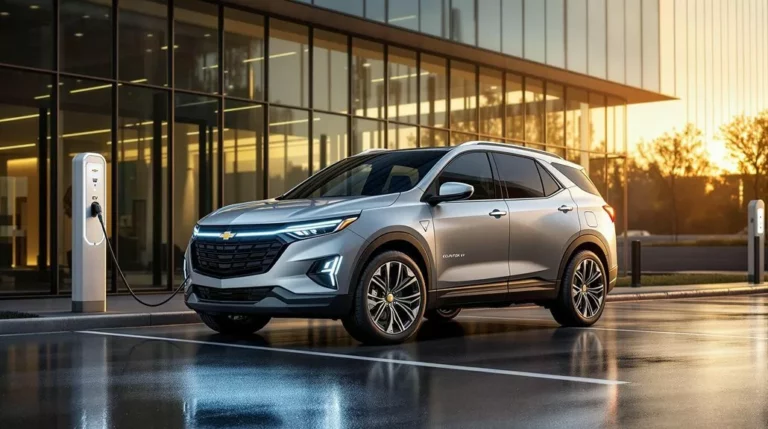

Electric vehicle batteries are developing rapidly with game-changing technologies on the horizon. Solid-state batteries from Toyota and Volkswagen will arrive by 2025, offering safer designs and longer lifespans. New silicon-anode batteries deliver 10 times more energy density, while carbon-based systems enable 500-mile ranges. Ultra-fast charging tech can power up EVs to 80% in just five minutes. Cobalt-free and aluminum-ion batteries promise to slash costs dramatically. These innovations will change how far and how affordably electric cars can travel.
While electric vehicles have struggled with limited driving ranges and long charging times, researchers around the world are developing revolutionary battery technologies that could reshape the industry. These breakthroughs promise to eliminate the biggest concerns holding back EV adoption. Innovative solutions such as solid-state batteries and fast-charging systems are on the horizon, potentially doubling the efficiency and lifespan of current battery models. As these electric vehicle technological advancements emerge, they could pave the way for a new era of sustainable transportation, making electric vehicles more accessible to a broader audience. In turn, this could significantly reduce carbon emissions and contribute to a cleaner, greener planet.
South Korean scientists have created special binders that stop silicon anodes from swelling during charging. This technology could provide ten times more energy density than today’s batteries. Cars using these batteries might travel 3,000 miles on a single charge.
The University of Eastern Finland has developed hybrid anodes using silicon particles made from barley husk ash, making the technology more environmentally friendly.
Solid-state batteries represent another major advancement. These batteries replace liquid parts with solid materials, making them safer and more powerful. Toyota and Volkswagen plan to start producing these batteries in 2025. They’ll enable cars to drive over 500 miles and charge in less than 15 minutes. The solid design also prevents fires caused by thermal runaway. These batteries demonstrate superior longevity with over 90% capacity retention after 2,000+ charge cycles, compared to traditional EV batteries that retain only 70-80% after 1,000-1,500 cycles.
Carbon-based technologies are showing impressive results too. Graphenano’s working on batteries that could power cars for 500 miles. NAWA’s Ultra Fast Carbon Electrodes can store three times more energy and provide ten times more power than current batteries. They can charge an EV to 80% in just five minutes.
Tesla’s using graphene in aluminum-ion batteries to improve efficiency.
Several companies are eliminating cobalt from their designs. SVOLT’s cobalt-free batteries can power cars for up to 500 miles. The University of Texas has replaced cobalt with nickel in cathodes, using up to 89% nickel content. These changes address ethical concerns about cobalt mining and reduce supply chain risks.
Tesla’s aluminum-ion batteries could cost just $10-20 per kilowatt-hour. That’s 75% cheaper than lithium-ion batteries. The combination of aluminum and graphene creates lightweight, efficient energy storage. Since aluminum’s widely available, there’s less risk of material shortages.
These technologies work together to solve multiple problems. Silicon anodes increase energy density. Solid-state designs improve safety and charging speed. Carbon materials enable ultra-fast charging. Cobalt-free formulations reduce costs and ethical concerns. The advances support cleaner transport by significantly reducing emissions from the transportation sector.
As these innovations reach the market, they’ll make electric vehicles more practical and affordable for everyone.
Frequently Asked Questions
How Much Does It Cost to Replace an EV Battery?
EV battery replacement costs vary widely.
Small cars like the Nissan Leaf need $4,000 to $15,000 for new batteries. Larger EVs cost more, ranging from $6,500 to $20,000. As electric vehicle ownership continues to grow, understanding these costs becomes increasingly important for potential buyers. Recent studies show that ev battery replacement cost insights can significantly influence purchasing decisions, prompting many to consider the long-term financial implications of owning an EV. Additionally, advancements in battery technology may lead to reductions in replacement costs in the future. Potential buyers should also be aware of battery degradation in electric vehicles, which can affect the overall lifespan and performance of the vehicle. Monitoring factors such as charging habits and temperature can help mitigate these issues, allowing owners to maximize their investment. As awareness of these aspects grows, it may further shape the market dynamics for electric vehicles and battery technologies.
Tesla Model S batteries can reach tens of thousands of dollars.
Hybrid batteries cost less, around $2,700 for a Prius.
Used batteries offer cheaper options.
Most replacements happen under warranty, so owners don’t pay out-of-pocket.
Can EV Batteries Be Recycled at End of Life?
Yes, EV batteries can be recycled.
Companies use three main methods to recover precious metals.
Hydrometallurgical recycling dissolves batteries in liquid solutions, recovering over 95% of cobalt, nickel, and lithium.
Pyrometallurgical smelting recovers cobalt and nickel but can’t extract lithium.
Direct recycling preserves battery structures for reuse but isn’t widely used yet.
Recycling one EV battery prevents up to 1.5 tons of mining waste.
Do Extreme Temperatures Affect EV Battery Performance and Lifespan?
Extreme temperatures hurt electric vehicle batteries.
In hot weather, batteries break down faster and can’t go as far. Desert heat damages the battery’s chemistry.
Cold weather reduces how much power batteries hold. Below freezing, batteries might not charge properly.
Scientists say temperatures above 104°F or below 14°F cause serious problems.
Car companies use cooling systems and special monitoring to protect batteries from temperature damage.
How Long Do Current EV Batteries Typically Last?
Current electric vehicle batteries typically last 8 to 15 years.
Most manufacturers offer warranties for 8 to 12 years or 100,000 to 150,000 miles.
Real-world data shows batteries can travel 133,000 to 280,000 miles before needing replacement.
That’s often longer than traditional gas engines.
Batteries lose about 5% capacity in the first 50,000 miles, then degradation slows down.
Many EVs reach 150,000 miles with only 10% capacity loss.
Are There Enough Raw Materials to Meet Future EV Battery Demand?
Scientists say there’s enough minerals in the ground for future electric car batteries.
But getting them out fast enough is the problem. Lithium shortages already started in 2022. Graphite will run tight in 2024.
Experts predict EV sales will jump six times higher by 2030. That means lithium demand will grow 14 times bigger.
Making smaller batteries and recycling old ones could help stretch supplies.