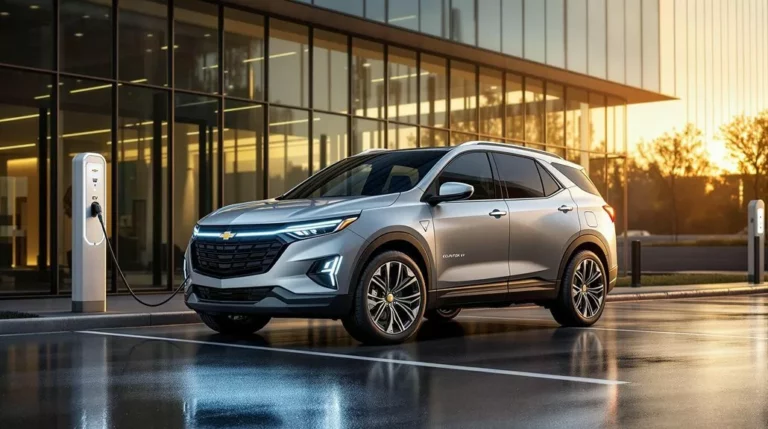

Solar power’s breaking records while electric vehicle sales surge toward 17.6 million units in 2024. The U.S. added 42 gigawatts of renewable power this year, with Texas alone contributing 10 gigawatts of solar capacity. However, America’s electric grid isn’t ready for millions of EVs charging at once. Engineers are working on smart charging systems to prevent blackouts and lower costs. Wind power’s facing permit challenges, but battery technology’s advancing rapidly. The clean energy evolution‘s accelerating faster than infrastructure can modify.
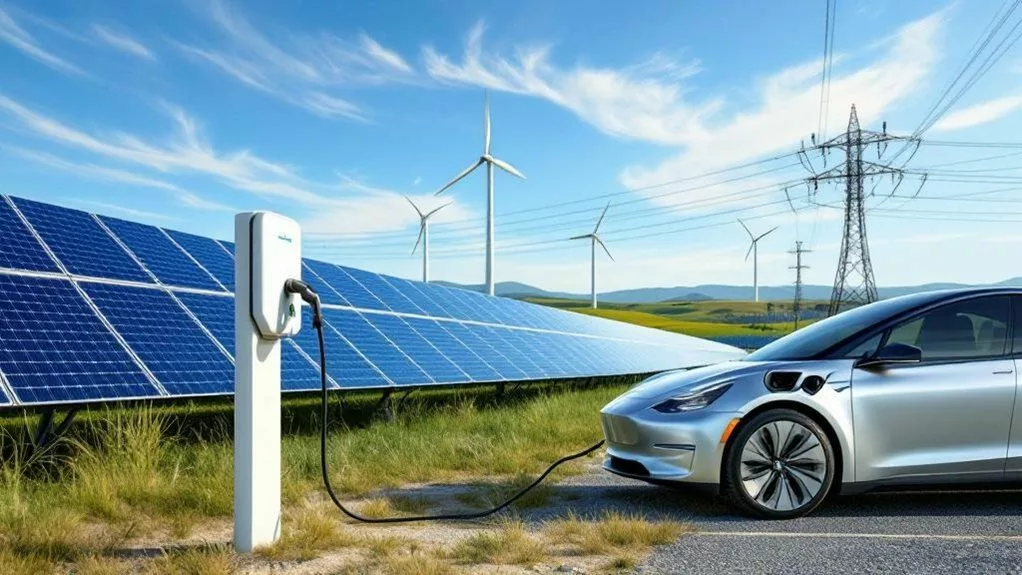
Electric vehicles and renewable energy are revolutionizing how the world powers its transportation. The shift’s happening faster than ever, with passenger EV sales expected to hit 17.6 million units in 2024. That number could climb much higher by 2030. As more people buy electric cars, they’re creating massive demand for clean electricity. This surge in demand is prompting innovations in battery technology and grid infrastructure, ensuring a more sustainable energy supply to match the increasing need. As we witness this transformation, it’s important to reflect on the history of electric vehicles, which dates back to the 19th century, underscoring how far we’ve come in embracing cleaner transportation. Ultimately, this evolution not only benefits the environment but also paves the way for economic growth and job creation in the green technology sector.
Solar power’s leading the charge to meet this demand. The U.S. connected a record 39.6 gigawatts of utility-scale solar to the grid in 2024. Texas alone added nearly 10 gigawatts. Another 10 gigawatts came from rooftop solar panels on homes and businesses.
Wind power hasn’t done as well. New wind farms have barely grown since 2020 because it’s harder to get permits and connect to the grid.
Battery technology’s racing to keep up with EV growth. Lithium-ion battery manufacturing capacity will double by the end of 2025. That’ll create more batteries than the market needs. China’s become the world leader in making advanced solid-state batteries. Scientists at America’s national labs are working on smart charging systems that’ll help EVs use electricity when renewable sources produce the most power. Additionally, researchers are investigating ways to mitigate battery degradation in electric vehicles, which can significantly impact their lifespan and efficiency. Innovations in battery chemistry and management systems are aimed at enhancing the durability of these power sources. As the EV market expands, addressing such challenges will be crucial for ensuring sustainable growth in the industry.
Battery manufacturing capacity will double by 2025, creating more supply than market demand.
But there’s a problem. The electric grid isn’t ready for millions of EVs charging at once. When lots of people plug in their cars, it strains the system. Engineers are developing solutions to reduce charging costs and prevent blackouts. They’re creating controls that’ll charge EVs when the sun’s shining or wind’s blowing strongest. Countries are building their own optimal mix of home, workplace, and public charging stations to support the growing fleet. In addition to these efforts, innovative solutions such as vehicletogrid technology explained are being explored. This technology allows EVs to not only draw power from the grid but also feed electricity back during peak demand hours, thereby stabilizing the system. As advancements continue and infrastructure expands, the future of electric vehicle integration into our power networks looks promising.
Government policies are pushing this change forward. The U.S. added 42 gigawatts of renewable power in 2024, up 17% from the year before. Federal laws and state rules are encouraging companies to buy clean energy. The Department of Energy’s funding research to make EVs and the grid work better together.
The transportation world’s changing fast. Oil demand from cars and trucks will peak soon as more drivers switch to electric. Modern electric cars now achieve ranges from 200 miles to over 600 miles with a full charge, making long-distance travel increasingly practical. Solar panels are replacing old coal and gas plants across America.
While challenges remain with grid connections and permits, the momentum’s clear. Clean electricity and electric vehicles are reshaping how people travel.
Frequently Asked Questions
How Much Does It Cost to Install Home Solar Panels for EV Charging?
Installing home solar panels costs about $2.90 per watt on average.
A typical 6-kilowatt system costs around $17,400. The federal tax credit cuts 30% off this price, bringing it down to $12,180.
Homeowners might face extra costs like roof repairs ($1,000-$5,000) or permits ($500-$2,000).
Bigger systems cost less per watt. A 6-8 kilowatt system can handle EV charging needs.
What Are the Best Renewable Energy Stocks to Invest in for EV Growth?
Several renewable energy companies are positioned to benefit from EV growth.
NextEra Energy reported $7.1 billion in Q2 2024 revenue from renewable projects.
First Solar manufactures solar panels for charging stations.
Adani Green Energy develops solar projects in India’s growing EV market.
Brookfield Renewable Partners owns global wind and solar assets.
Mining company BHP supplies lithium for EV batteries.
These firms connect clean energy production with electric vehicle expansion.
Which Countries Offer the Best Incentives for Renewable-Powered Electric Vehicle Adoption?
Norway leads with the strongest EV incentives. The country offers 10-year road tax exemptions and company tax breaks.
Norway’s charging stations run on hydroelectric power.
Germany provides up to €9,000 purchase bonuses.
France offers €7,000 bonuses plus €5,000 for scrapping old cars.
Italy’s allocated €597 million for zero-emission vehicles.
All four countries connect renewable energy with EV infrastructure, making electric cars cleaner to operate.
How Do Extreme Weather Conditions Affect Renewable Energy Reliability for EV Charging?
Weather patterns are changing how renewable energy powers electric vehicle charging stations. Engineers report that mild conditions now pose bigger problems than extreme weather. Days with little wind or sun strain the power grid more than storms do.
Power companies are installing battery storage systems to keep electricity flowing during calm, cloudy periods. They’re also strengthening power lines against lightning strikes and adding cold-weather equipment to wind turbines.
What Careers Combine Renewable Energy Expertise With Electric Vehicle Technology?
Many jobs now blend renewable energy skills with electric vehicle work. Engineers design solar-powered charging stations and improve EV batteries.
Technicians install equipment that connects wind farms to charging networks. Software developers create programs that manage power flow between renewable sources and EVs.
Project managers oversee building charging facilities powered by clean energy. These careers range from hands-on technical work to research positions at government agencies.