
Electric vehicle buyers have several financing options available today. Major automakers offer 0% APR loans lasting up to 72 months on models like Acura’s ZDX and Chevrolet’s Blazer EV. Monthly lease payments start as low as $256 for the Toyota bZ4X. The federal government provides tax credits up to $7,500 for qualifying purchases. Banks and specialized lenders also offer EV loans with varying terms. These incentives make electric vehicles more affordable for consumers.
Several major automakers are rolling out zero-interest financing deals and tax credits to make electric vehicles more affordable. Acura’s ZDX comes with 0% APR for 72 months. Chevrolet’s Blazer EV and Equinox EV offer similar deals at 0% for 60 months. Tesla‘s Cybertruck includes the same rate, but buyers must purchase the Full Self-Driving system to qualify. The 2025 Hyundai IONIQ 6 also offers 0% APR on a 48-month loan as part of July 2025’s electric vehicle financing promotions. In addition to these financing options, manufacturers are also enhancing the incentives to accelerate adoption among consumers. As the industry continues to evolve, experts note that these financial strategies are crucial in shaping the evolution of electric vehicles timeline. With competitive offers and advancements in technology, the market for electric vehicles is expected to expand significantly in the coming years.
Monthly lease payments for electric vehicles start as low as $256 for the 2025 Toyota bZ4X. The company is offering 0% lease rates to attract buyers. Most lease agreements run for 36 months. Luxury models cost much more. McLaren’s Artura Spider leases begin at $2,640 monthly with $24,135 due upfront.
Electric vehicle leases now start at just $256 monthly, while luxury EVs demand over $2,600.
The federal government provides tax credits up to $7,500 for qualifying electric vehicles. Chevrolet’s Equinox EV buyers can claim this credit until September 30, 2025. The credit applies at the time of purchase, reducing the vehicle’s price immediately. Buyers can’t use these credits for leased vehicles. Income levels and vehicle specifications determine who qualifies.
Several financial companies specialize in EV loans. Chase Auto works with dealers and tracks live inventory. Tenet provides loans for both personal and business electric vehicle purchases. McLaren Financial Services and other luxury brands offer their own financing programs.
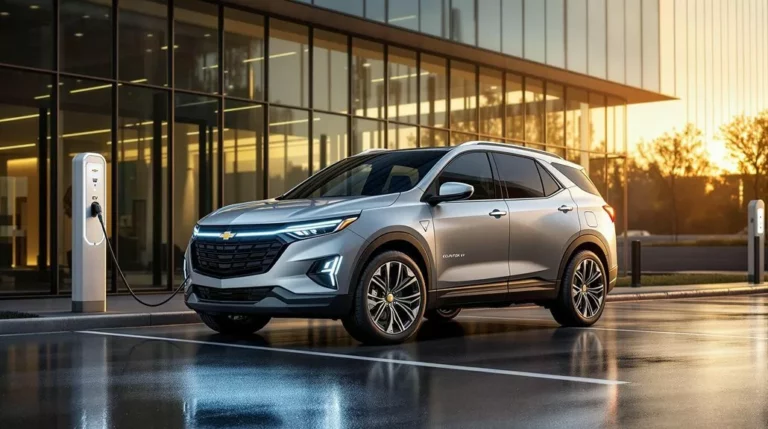
The Chevrolet Equinox EV demonstrates current pricing trends. It starts at $33,600 and travels 319 miles per charge according to EPA ratings. The vehicle comes in three trims with different features. All models include a 17.7-inch center screen and over 15 safety features. The Premium trim adds HD Surround Vision. The Equinox EV offers 57.2 cu. ft. of maximum cargo volume for versatile storage options.
Financing terms vary by vehicle and lender. Tesla requires specific add-ons for its best rates. Luxury brands like Maserati and McLaren need larger down payments. Buyers should check their ZIP codes for local rebates that might reduce costs further.
Home charging systems often come bundled with financing packages. The Equinox EV includes 11.5kW onboard charging capability. As public charging networks expand across the country, manufacturers continue adjusting their financial incentives to attract more buyers to electric vehicles.
Frequently Asked Questions
Can I Use My EV Loan as a Tax Deduction?
Starting in 2025, car buyers can deduct up to $10,000 in loan interest on their taxes.
However, this won’t work with electric vehicle tax credits. Buyers must pick one benefit or the other. This requirement means that consumers will need to carefully consider their choices when it comes to maximizing savings on their purchases. Additionally, for those living in urban areas, it may be worthwhile to explore electric car sharing options nearby, which can offer an affordable and environmentally friendly alternative to ownership. Ultimately, understanding these nuances can help buyers make more informed decisions that align with their transportation needs and budget.
The car must be new and built in America. The deduction ends in 2028.
People earning over $100,000 individually or $200,000 as couples can’t claim it.
Documentation of interest payments is required.
What Happens to My Lease if the Battery Degrades Early?
When EV batteries degrade early, most leasing companies handle replacements at no cost to drivers. Companies typically guarantee minimum battery capacity, often 75-80%. This ensures that drivers can continue to enjoy the benefits of their electric vehicles without significant financial burden. Once batteries reach the end of their service life, they enter the electric vehicle battery recycling process, where valuable materials are recovered and repurposed. This not only minimizes environmental impact but also supports the circular economy in the growing EV market.
If the battery drops below this level, they’ll replace it free. However, drivers who damage batteries through misuse face penalties. Examples include extreme temperatures or excessive fast charging.
Normal wear doesn’t cost lessees money. The leasing company takes responsibility for standard battery problems.
Are EV Grants Taxable Income?
Electric vehicle grants from federal, state, or local governments may count as taxable income.
Unlike federal EV tax credits, which don’t increase taxable income, cash grants and rebates could be reportable to the IRS.
Each program has different rules. Some utility rebates aren’t taxable, while others are.
Recipients should check their specific grant’s documentation. Tax professionals can help determine if an EV grant needs reporting on tax returns.
Can I Transfer My EV Lease to Another Person?
EV lease transfers are possible if the lease contract allows it. The leasing company must approve any transfer. They’ll check the new person’s credit first.
The new person takes over all payments and responsibilities. Both parties handle paperwork through the leasing company. Transfer fees may apply.
Some people use websites like Swapalease to find someone to take their lease. The new person must register the vehicle and get insurance.
Do EV Loans Affect My Credit Score Differently Than Regular Auto Loans?
EV loans don’t affect credit scores differently than regular car loans. Both types trigger hard credit checks that can temporarily lower scores.
Making on-time payments helps build credit equally for both. The main difference is that EV buyers often have higher credit scores to start with. They also get better interest rates and default less often.
But the actual impact on credit scores works the same way.