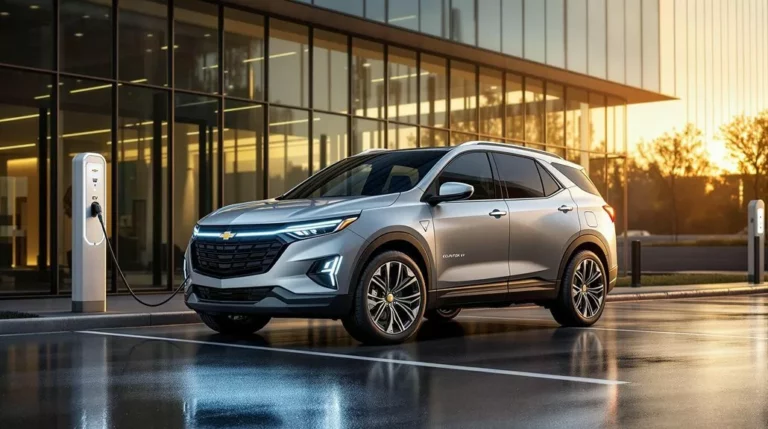

Today’s electric cars can travel 200 to 500 miles per charge. The average EV now goes about 300 miles before needing to plug in. Premium models like the Lucid Air reach 512 miles, while affordable options like the Hyundai Kona Electric manage 200 miles. Range has improved dramatically since 2010, when the first Nissan Leaf only traveled 73 miles. Weather, driving style, and battery technology all affect how far EVs can actually go.
Electric vehicles have come a long way since the 2010 Nissan Leaf‘s 73-mile range. Today’s EVs can travel much farther on a single charge. The Lucid Air Grand Touring leads the pack with 512 miles of range. That’s seven times what early EVs could do.
Battery technology explains this dramatic improvement. Energy density jumped from 140 to 300 watt-hours per kilogram. Meanwhile, gas-powered cars only improved their efficiency by 12% since 2020. EVs are advancing faster than traditional vehicles.
Several factors help modern EVs go farther. Better batteries store more energy. Improved motors waste less power. Smart software manages battery use more efficiently. Advanced cooling systems keep batteries working well in hot and cold weather. Future solid-state batteries might push ranges even higher.
The average EV now travels about 300 miles per charge. Premium models exceed 400 miles. The Chevrolet Silverado EV truck gets 460 miles. The Rivian R1S SUV manages 410 miles. Even compact cars like the Mini Cooper SE reach 330 miles. The Tesla Model S delivers 402 miles of range and remains popular in the US market.
Premium EVs now exceed 400 miles per charge, with trucks reaching 460 miles.
Buyers don’t need to spend big for decent range. The Hyundai Kona Electric SE costs $32,875 and goes 200 miles. Federal tax credits drop prices further. The Chevrolet Equinox costs $33,600 after the $7,500 credit and travels 319 miles. Used Chevy Bolts and Nissan Leafs sell for under $20,000 and still deliver 200-plus miles.
Real-world driving affects these numbers. Cold weather reduces battery capacity. Heavy loads decrease efficiency. Towing trailers cuts range considerably. Aggressive driving drains batteries faster. DC fast charging helps recover range quickly during trips. Various battery technologies, including lithium-ion and nickel-metal hydride, continue to evolve and improve vehicle performance.
Different vehicle types offer varying ranges. Sedans like the Tesla Model S reach 405 miles. The Cadillac Escalade IQ SUV claims 460 miles, though that’s unconfirmed. Compact cars offer less range but cost less too. The Audi Q6 e-tron crossover delivers a 321-mile range in its base configuration.
The used EV market keeps growing. Older models remain practical choices. Their batteries prove durable over time. State and local incentives sometimes add to federal credits. Leasing provides another way to access newer EVs at lower monthly costs. The days of range anxiety are fading as EVs become more capable.
Frequently Asked Questions
How Does Extreme Cold Weather Affect My Ev’s Battery Range?
Electric car batteries struggle in extreme cold. They can’t produce power as efficiently when temperatures drop. The cold slows chemical reactions inside the battery.
At 12°F, drivers lose about 24% of their normal driving distance. That’s 60 fewer miles on a 250-mile battery. Short trips hurt even more. The car uses extra energy to heat the cabin and battery. Some drivers see their range cut in half.
Can I Increase Range by Driving in Eco Mode?
Eco mode helps electric cars travel farther on a single charge. This setting limits the motor’s power and reduces acceleration speed.
It also adjusts the climate control system to use less energy. Drivers who use eco mode typically see their range increase by 10 to 20 percent. The exact improvement depends on the car model and driving conditions.
Highway driving shows smaller gains than city driving.
Does Using Air Conditioning Significantly Reduce Driving Range?
Air conditioning does affect electric vehicle driving range, but less than many drivers expect.
Studies show EVs lose about 5% of range when it’s 90°F outside. That jumps to 31% in extreme 100°F heat.
Winter heating causes bigger problems, cutting range by 41% at 20°F.
EVs cool cabins more efficiently than gas cars since they don’t produce engine heat. Pre-cooling while charging helps preserve battery power.
How Accurate Are Manufacturer Range Estimates in Real-World Conditions?
Manufacturer range estimates often don’t match real driving. Tests show some brands like Ford and Tesla miss their targets by 50 miles or more.
Others like BMW and Mercedes beat their claims. Highway driving reveals the biggest gaps. Cold weather can cut range to 65% of estimates.
The EPA’s testing method favors city driving, which doesn’t reflect highway trips where many drivers struggle with shorter ranges.
Will Frequent Fast Charging Decrease My Battery’s Maximum Range?
Studies show mixed results on fast charging‘s impact.
Lab tests found DC fast charging caused 27% battery capacity loss versus 24.5% for slower charging after 50,000 miles.
However, real-world data tells a different story.
Recurrent Auto found no statistical difference in range loss between Teslas that fast-charged frequently versus rarely.
Modern EVs use temperature controls and charging limits to protect batteries during rapid charging.