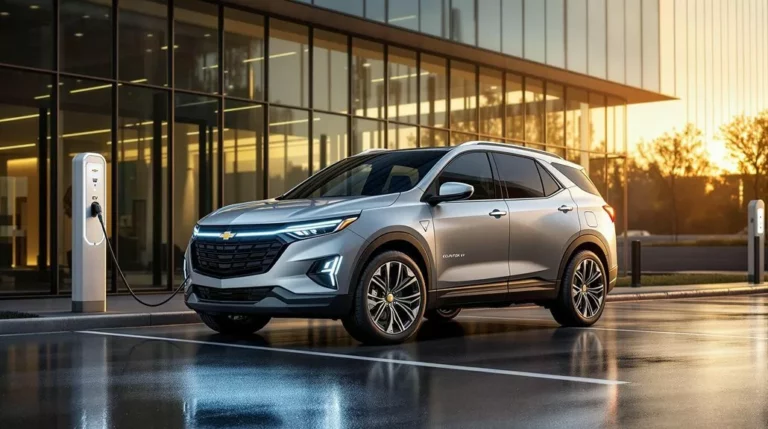

Federal EV tax credits offer buyers up to $7,500 for new electric vehicles and $4,000 for used ones through September 30, 2025. These credits can be claimed at purchase through dealerships or later with IRS Form 8936. Income limits apply: $300,000 for joint filers, $150,000 for individuals. Stricter battery sourcing rules have reduced the number of qualifying vehicles. The program’s approaching expiration brings significant changes to electric vehicle purchasing incentives.
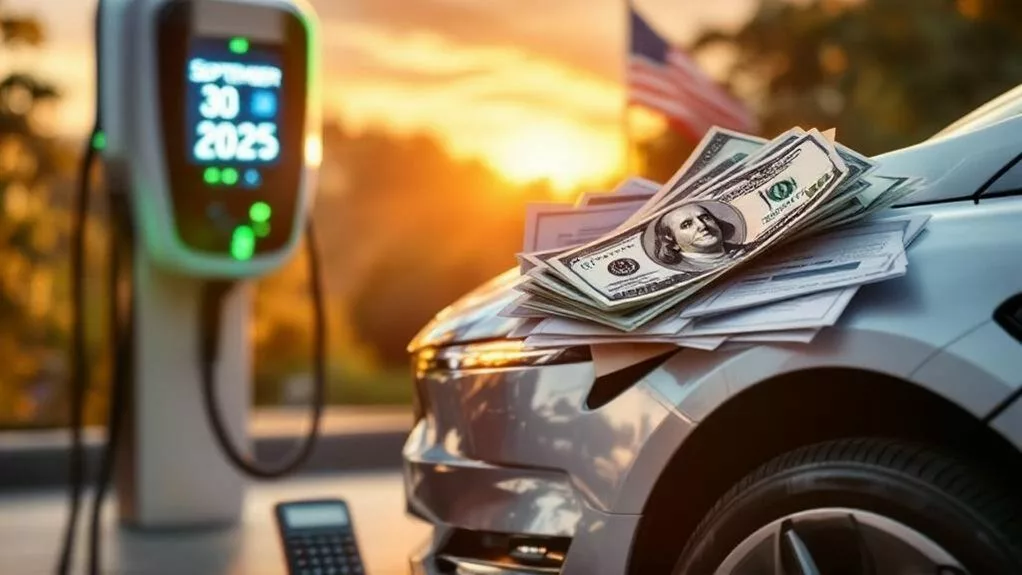
As federal electric vehicle tax credits near their September 2025 expiration date, car buyers have limited time to claim up to $7,500 in savings. The credits apply to new EVs at $7,500 and used EVs at $4,000. Leased vehicles can also qualify for the full $7,500 through the financing company.
The tax credit program ends on September 30, 2025, according to the OBBBA legislation. After that date, buyers can’t apply for credits retroactively. This deadline affects millions of potential EV buyers across the country.
Federal EV tax credits expire September 30, 2025, with no retroactive applications allowed.
Battery sourcing rules have gotten stricter each year. The government requires batteries to meet North American assembly standards for half the credit amount of $3,750. The other $3,750 depends on critical minerals coming from the US or free trade agreement partners. These requirements eliminate many vehicles from qualifying.
Currently eligible 2025 models include the Acura ZDX, Cadillac Lyriq, and Cadillac Optiq. But eligibility isn’t based on the car’s make or model alone. It’s specific to each vehicle’s VIN number. Automakers must submit qualifying VINs to the IRS, and the EPA updates the eligible list quarterly.
Dealers can check if specific vehicles qualify before customers buy. The eligibility changes frequently as manufacturers adjust their supply chains. Plug-in hybrid vehicles follow the same rules as full electric vehicles.
Buyers can claim the credit at the time of purchase for new, used, or leased vehicles. Dealerships usually handle the paperwork. Those who don’t claim it at purchase can file IRS Form 8936 later. The credit isn’t refundable and doesn’t carry over to future years. To qualify for the credit, buyers must meet income limits of $300,000 for joint filers, $225,000 for heads of households, and $150,000 for individuals.
After the credits expire, a new $10,000 per year car loan interest deduction will become available. But this deduction only applies to high-income buyers who meet specific financial thresholds. Economists expect just 1% of buyers will use it.
The expiring credits seek to shift battery production away from China while building North American supply chains. Starting January 1, 2025, vehicles with battery components from foreign entities of concern like China, Russia, North Korea, or Iran won’t qualify for any tax credit. They’re part of broader clean energy policies that support domestic EV manufacturing. As the deadline approaches, buyers interested in EVs should check current eligibility lists before making purchases.
Frequently Asked Questions
Can I Claim Incentives if I Lease Instead of Buy an EV?
People who lease EVs can’t claim the $7,500 federal tax credit themselves. Instead, the leasing company gets the credit and might lower monthly payments.
Dealers aren’t required to pass along these savings, so customers need to negotiate. Lessees can still get state perks like carpool lane access and utility discounts.
The dealer’s commercial credit expires September 30, 2025, which could affect future lease deals.
Do Used EVS Qualify for Any Federal or State Rebates?
Used electric vehicles qualify for federal tax credits up to $4,000.
Buyers must purchase from registered dealers and meet income limits. The car can’t cost more than $25,000 and must be at least two model years old.
State rebates vary by location and can combine with federal credits. Some states offer additional incentives for used EVs.
The federal program ends September 30, 2025.
How Long Does It Take to Receive Rebate Payments After Applying?
Rebate payment timelines vary widely by program type.
Federal tax credits through returns typically arrive within one to four weeks after IRS acceptance.
State and local rebates usually take two to eight weeks.
Some buyers don’t wait at all—participating dealers apply credits instantly at purchase.
Delays happen when paperwork’s incomplete or during busy tax seasons.
Electronic filing speeds things up compared to paper forms.
Can I Combine Multiple Incentives From Different Programs?
Many electric vehicle buyers can combine incentives from different programs. Federal tax credits often stack with state rebates and utility company discounts.
For example, someone might get a $7,500 federal credit plus a $4,000 state rebate. However, some programs don’t mix. Used EV credits can’t combine with new car incentives.
Each program has its own rules. Buyers need to check if their chosen incentives work together.
Do Incentives Apply to Plug-In Hybrids or Only Fully Electric Vehicles?
Plug-in hybrids can receive the same $7,500 federal tax credit as fully electric vehicles.
However, they face tougher rules about where their battery parts come from. Most plug-in hybrids don’t qualify anymore because of these strict requirements. Only a few models like the Chrysler Pacifica still meet the rules.
Electric vehicles have more choices that qualify. Both types must be built in North America and stay under price limits.