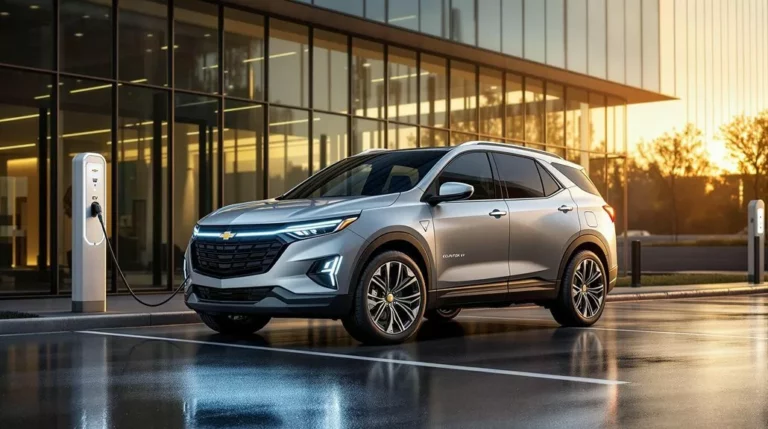

Electric vehicle sales are surging worldwide in 2025. Global EV sales reached 4 million units in the first quarter, up 35% from last year. Experts predict 20 million EVs will sell this year, making up 25% of all car sales. The U.S. market grew 11.4% with 300,000 units sold, while Southeast Asia’s sales doubled. GM nearly doubled its EV sales, challenging Tesla’s shrinking market dominance. The industry faces new challenges ahead.
While traditional car sales have been struggling with economic headwinds, electric vehicles are charging ahead with extraordinary growth worldwide. The first quarter of 2025 saw global EV sales hit 4 million units, jumping 35% from last year. Experts predict 20 million EVs will sell in 2025, making up a quarter of all car sales.
The growth isn’t happening everywhere at the same pace. Southeast Asia’s EV sales doubled to over 100,000 units in Q1 2025. Vietnam’s sales nearly quadrupled, reaching almost 35,000 units. India saw a 45% increase to 35,000 units, while Brazil’s sales surged 40% to more than 30,000 units.
The U.S. market‘s showing different patterns. EV sales reached 300,000 units in Q1 2025, growing 11.4%. However, the market share stayed around 10%, matching the overall car market’s growth rate. EVs accounted for 7.5% of total new-vehicle sales in the U.S., up from 7% a year earlier.
In May 2025, new EV sales hit 103,435 units, up 4.2% from April, but down 10.7% from last year. Competition‘s heating up among American automakers. GM nearly doubled its Q1 2025 EV sales to over 30,000 units, passing Ford and Hyundai.
Honda and Acura entered the market through a GM partnership, adding 14,000 EVs. Tesla‘s market share dropped to about 3% as competitors launched new models, though it still led May sales with 46,150 units.
The used EV market‘s booming too. May 2025 saw 36,609 used EVs sold, up 32.1% from last year. Tesla dominated with nearly half the market. The Chevrolet Bolt EV and Tesla’s various models topped the used sales charts. Used electric cars may become more appealing due to lower running costs compared to traditional vehicles. Used EVs now make up 2.2% of the overall used car market.
Several challenges remain. Economic uncertainty and policy changes are creating headwinds. Older EV models like the Chevy Bolt are declining as automakers focus on newer products. The shift to cleaner vehicles is supported by consumer spending on electric cars reaching USD 560 billion globally in 2024, despite government spending per vehicle declining as subsidies phase out. As automakers navigate these headwinds, they must also adapt their strategies to align with the evolving electric vehicle development timeline. Innovative technologies and improved battery efficiency could play pivotal roles in driving consumer interest, especially as older models fade from the market. Collaboration between manufacturers and governments will be crucial to ensure sustained growth in the electric vehicle sector amidst these challenges. As competition intensifies, leading electric vehicle brands are increasingly investing in research and development to enhance their offerings and retain market share. Additionally, consumer education on the benefits of electric vehicles will be vital in driving adoption rates, particularly among skeptical buyers. By fostering a robust ecosystem that prioritizes innovation and sustainability, the industry can better navigate the complexities of the market landscape. As stakeholders look ahead, the upcoming 2025 electric vehicle policy updates are expected to reshape the competitive landscape, providing new incentives for both manufacturers and consumers. These changes could catalyze investment in infrastructure, such as charging stations, further enhancing the practicality of electric vehicles. By integrating these policies with advancements in technology, the industry can transform challenges into opportunities for growth and innovation.
Battery production capacity might become an issue, with 3.8 TWh expected by 2025—double what’s needed. Despite these challenges, the shift to electric transportation continues, with road transport oil demand expected to peak soon.
Frequently Asked Questions
How Long Do Electric Vehicle Batteries Typically Last Before Needing Replacement?
Electric vehicle batteries typically last 15 to 20 years. Recent studies show they’re lasting longer than expected. A Stanford study found batteries from 2015 models averaged 18.4 years.
Most EV batteries come with an 8-year warranty covering 100,000 miles. The batteries don’t suddenly fail. Instead, they slowly lose capacity over time.
Proper charging habits and avoiding extreme temperatures help batteries last longer.
What Are the Average Maintenance Costs for Electric Vehicles Versus Gas Cars?
Electric vehicles cost much less to maintain than gas cars.
EVs save drivers up to 70% on maintenance over eight years. AAA reports EVs cost about $950 yearly to maintain, while gas cars cost $1,280.
EVs don’t need oil changes or transmission repairs. However, some luxury EVs like the Mercedes EQB cost more to maintain.
Insurance and repairs for EVs typically cost more than gas vehicles.
Can Electric Vehicles Be Charged Using Regular Household Outlets?
Yes, electric vehicles can charge using standard 120V household outlets. This Level 1 charging provides about 2.3 kilowatts of power.
Drivers gain 3-5 miles of range per hour of charging. A full charge takes 20-40 hours for larger batteries. Most EVs include the needed cables.
Some homes need circuit upgrades to handle the extra electrical load. It’s the slowest charging method but works for short-distance drivers.
How Do Extreme Temperatures Affect Electric Vehicle Range and Performance?
Extreme temperatures hurt electric vehicle range considerably.
In freezing weather at 5°F, EVs lose almost half their normal driving distance. The cold drains batteries faster because cars need extra power for heating.
Hot weather at 100°F cuts range by about 17% due to air conditioning use.
EVs work best at 70°F, where they can actually exceed their advertised range by 15%.
What Happens to Old Electric Vehicle Batteries After They’re Replaced?
Old electric vehicle batteries don’t go straight to the trash. Companies give them second lives as power storage for homes and buildings.
These used batteries can work another 5-10 years storing solar energy. When they’re finally done, recyclers break them apart to recover precious metals.
They can get back 95% of cobalt and nickel, plus 50% of lithium. These materials then help make new batteries.