
Electric vehicles lose about 20% to 25% of their driving range when temperatures drop below freezing. The main culprit is cabin heating, which accounts for 50% to 80% of winter range loss. Unlike gas cars that use waste heat, EVs drain their batteries to warm the interior. Cold temperatures also slow battery reactions and increase air resistance. Some models with heat pumps perform better than others. Drivers can uncover practical solutions to minimize these losses. Additionally, understanding the history of electric vehicles can provide insight into current advancements in battery technology and thermal management systems. Manufacturers are actively researching and implementing features that improve energy efficiency in cold weather, thus enhancing overall driving range. By staying informed and utilizing these innovations, drivers can effectively adapt their practices during the winter months.
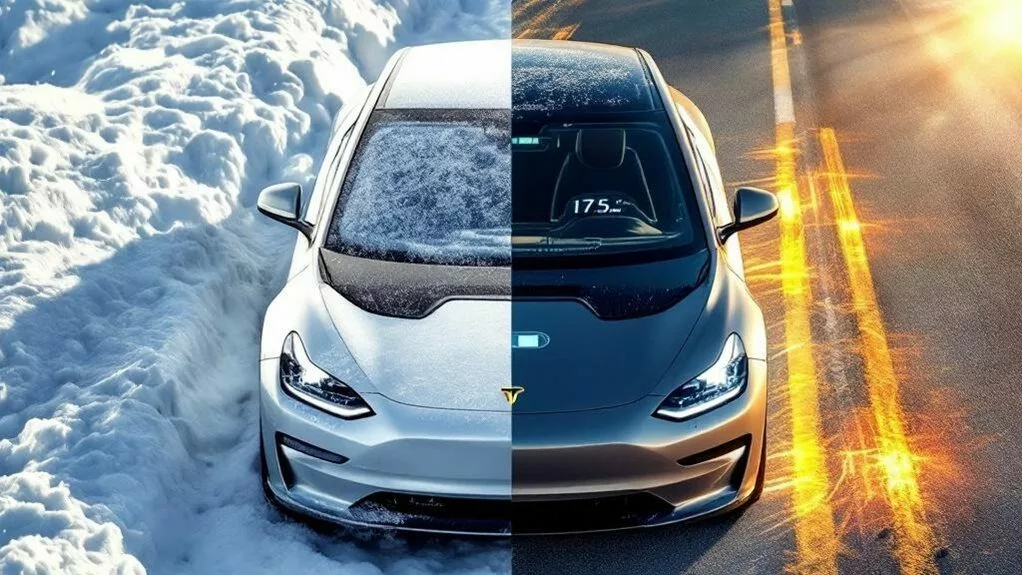
Many electric vehicle drivers notice their cars don’t go as far when it’s cold outside. At 40 degrees Fahrenheit, EVs lose about 25% of their range compared to mild 65-degree weather. When temperatures drop below freezing, the losses reach 24% at highway speeds. The Norwegian Automobile Federation found an average 20% decrease across various driving conditions including city streets, highways, and mountain passes. Short trips with lots of stops can cut range by up to half because the car keeps reheating the cabin.
Cold weather slashes EV range by 25%, with stop-and-go driving cutting it in half.
The main problem isn’t the battery itself. It’s heating the inside of the car. Regular gas cars use waste heat from their engines to warm passengers. Electric cars must use battery power for heat. This heating system causes 50% to 80% of winter range loss. Cold weather also makes batteries react more slowly, reducing available power. Plus, cold air creates more drag, making the car work harder.
Some EVs handle cold better than others. Cars with heat pumps, like some Tesla models, use energy more efficiently than those with regular heaters. Heat pumps can generate 3-4 units of heat for every unit of electricity consumed, making them significantly more efficient than resistive heating systems. Seat warmers and heated steering wheels use much less power than heating the whole cabin. Many drivers use phone apps to warm their cars while still plugged in, saving battery power for driving. Most manufacturers design EVs to operate safely in temperatures as low as -22°F.
The good news is that cold weather doesn’t permanently damage EV batteries. When spring arrives, the full range returns. Data from Recurrent, which tracks thousands of EVs, shows most electric cars keep about 80% of their rated range in freezing temperatures. Surprisingly, batteries actually last longer in cold climates than hot ones.
Real-world data shows interesting patterns. Consumer Reports found the Tesla Model Y often falls short of its claimed cold-weather range. Meanwhile, user reports from city drivers show bigger losses than highway tests suggest. This happens because city driving involves more stops and starts, requiring more cabin reheating.
Warm weather brings the opposite effect. At 85 degrees, EVs get 31% better range than in cold conditions. As more drivers track their range through subscription services and apps, manufacturers get better data to improve future models. For now, EV owners simply adjust their driving habits when winter arrives. These adaptations can include reducing speed, using cabin heating sparingly, and planning routes that incorporate available charging stations. As manufacturers respond to these challenges, they’re also developing the best electric vehicles for long trips, which prioritize efficiency and range even in colder conditions. Consequently, winter driving strategies and advancements in EV technology go hand in hand to enhance the overall driving experience. Additionally, it’s essential for EV owners to stay informed about winter driving tips for electric vehicles, which provide valuable guidance on maximizing battery life during colder months. By following these tips, such as maintaining proper tire pressure and preheating the vehicle while it’s still plugged in, drivers can significantly enhance their winter driving experience. As the technology continues to evolve, manufacturers are also investing in innovative battery heating systems that improve performance in frigid temperatures.
Frequently Asked Questions
Can I Use Remote Start to Warm My EV While Plugged In?
Electric vehicle owners can use remote start to warm their cars while they’re plugged in. The heating system runs using electricity from the charger, not the car’s battery.
This feature works because EVs disable their driving systems during charging. The car stays locked and secure. Most systems automatically shut off after 10 to 15 minutes.
This helps drivers prepare their vehicles without draining battery power.
Does Warranty Cover Battery Degradation From Extreme Cold Exposure?
Most EV warranties don’t cover battery degradation from extreme cold.
Tesla’s warranty excludes damage from temperatures below -22°F for over 24 hours.
Cold weather temporarily reduces battery performance by up to 40%, but it doesn’t cause permanent damage.
Warranties typically cover capacity drops below 60-70% during the warranty period.
Federal rules require eight-year coverage, while California mandates 10 years for new EVs.
Are There Aftermarket Battery Warmers Available for EVS?
Yes, many companies now make aftermarket battery warmers for electric vehicles.
These include heating pads, blankets, and self-regulating systems. Phillips & Temro sells silicone pad heaters. Lion Energy makes thermostat-controlled warmers that turn on at 42°F.
Some ultra-thin pads stick directly to battery cells. Even Walmart carries portable heated blankets for EVs.
These products help batteries work better in cold weather and charge faster.
How Do Heated Seats Affect Range Compared to Cabin Heating?
Heated seats use much less power than cabin heaters in electric vehicles. Each heated seat draws about 400 watts, while cabin heaters can use up to 4,000 watts.
This difference matters for EV range. Cabin heating can cut winter driving distance by 17% to 54%. Heated seats barely affect range at all. They warm passengers directly instead of heating all the air inside the car.
Can I Install a Block Heater on an Electric Vehicle?
Block heaters can’t be installed on most electric vehicles.
EVs don’t have engine blocks or coolant systems that traditional block heaters need. Instead, they use built-in electric heaters for batteries and cabins.
Owners can use the car’s preconditioning feature to warm up batteries before driving.
Some aftermarket solutions like heated blankets exist, but they’re different from standard block heaters used in gas-powered cars.